• What Being of Mixed Heritage Has Taught Me About Identity

    VICE
    2016-12-10

    Salma Haidrani

    This article originally appeared on VICE UK

    “What are you?” When you think about it, it’s a pretty stupid question to ask another person, especially when you already know the answer: a human, just like you mate. But that doesn’t stop people directing it at people like me, who are of dual ethnic heritage or “mixed-race.” If your parents are of distinctly different ethnic groups, you feel like you have to “pick a side”—and the inevitable questions vary from ones shouted in a crowded pub to those staring up in black-and-white next to a checkbox on a form.

    We’re so far down the road of thinking about race as a biological reality that we’ve forgotten it’s a construct. There are no links between how much melanin someone has in their skin and their culture. There are no links between melanin and intellect, physical abilities or creative skills. Proximity and language have tended to have more to do with what makes people of the same ethnic group seem similar—the colour of their skin doesn’t determine that.

    For that reason, it’s silly to think that the experiences of the 1.2 million people in the UK who identify as “mixed” would be identical. Some are happy to define themselves in that way, while last year the British Sociological Association deemed deemed the term mixed-race as “misleading since it implies that a ‘pure race’ exists”…

    Read the entire article here.
  • From Her Dad To Her ‘Jamish’ Roots, A Poet Pieces Her Story Together

    All Things Considered
    National Public Radio
    2014-12-28

    Arun Rath, Host

    Growing up in 1970s England, Salena Godden stood out. Her mother was Jamaican and her father was an Irish jazz musician who mysteriously disappeared from her life when she was very young.

    In her memoir, Springfield Road, the writer, poet and musician tells the story of finding her personal identity, beginning with the word she made up to describe her race: Jamish.

    “It’s kind of … a mix of being Jamaican, Irish, English,” she tells NPR’s Arun Rath. “It’s the name I gave myself.”…

    Read the story here. Download the interview (00:06:15) here. Read the transcript here.

  • Trevor Noah Still Doesn’t Get It

    BuzzFeed
    2016-12-06

    Tomi Obaro, BuzzFeed News Reporter


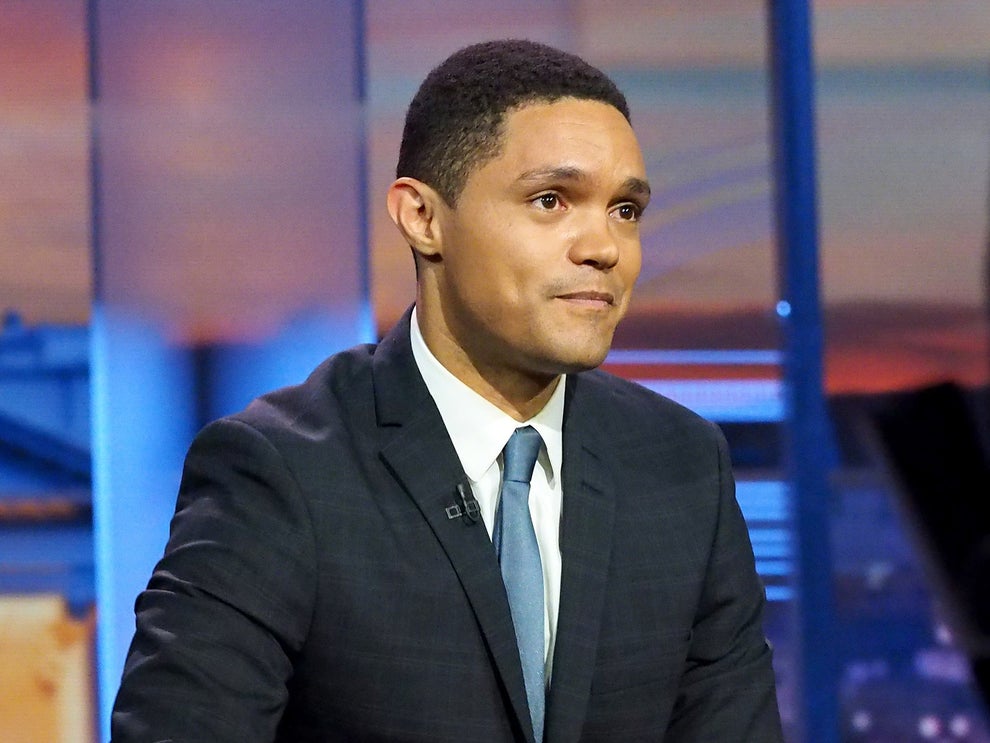
    Trevor Noah (Paul Zimmerman / Getty Images)

    The Daily Show host and biracial South African comic’s recent comments suggest a profound misunderstanding of the way racism works in America.

    There’s many assumptions I’ve made about America that I’ve realized were wrong,” said Trevor Noah toward the beginning of his 2013 stand-up special, African in America. Slightly heavier than he is now and sporting a leather jacket and baggy jeans, this was Trevor Noah before he became the third host of Comedy Central’s The Daily Show and, by extension, the latest purveyor of a pervasive, noxious type of moderate liberalism.

    “For one,” Noah said in the special, “I thought people spoke English here.” He paused, allowing for a few bouts of laughter. Then he flashed a smile. “Far from it. It’s just what Americans have done with the language you guys have, just, wow. You’ve done something, you’ve put 22’s on the English language. It’s got rims — it’s pimp my language.”

    Then Noah launched into an anecdote about meeting a woman who wanted him to look at something. “She was like” — here Noah began wagging his head from side to side — “Oh my god, look over thurr!” he exclaimed, using African-American vernacular. It was a cringeworthy moment, indicative of a troubling reflexive tendency toward anti-blackness that Noah often seems blithely unaware of. And although he has moved away from this sort of overtly racist humor, his recent work as host of The Daily Show has shown that Noah still doesn’t quite grasp the reality — the frustration, the difficulty, the literally life-and-death stakes — of the black American experience…

    Trevor Noah’s American breakthrough happened rapidly. He had appeared on Jon Stewart’s Daily Show only three times before he was tapped to replace him in March 2015. Before Noah even began the job, he was roundly chastised for some old, unfunny tweets about fat women and Jews, among others. But Noah was quick to put those things behind him: “To reduce my views to a handful of jokes that didn’t land is not a true reflection of my character, nor my evolution as a comedian,” he tweeted later that month. Instead, he decided to embrace his perspective as an outsider. As the biracial child of a Xhosa mother and a Swiss-German father, he occupied a liminal space in his home country. “I’ve lived a life where I’ve never really fit in anywhere,” he told an interviewer in a 2011 documentary about his life, Born to Walk. And so his foreignness and his biracial identity became the primary lens through which he would approach his comedy in America…

    Read the entire article here.

  • Springfield Road

    Penguin Books UK
    2014-09-30
    272 Pages
    129mm x 198mm x 18mm
    Paperback ISBN: 9781783520558
    eBook ISBN: 9781783520565

    Salena Godden

    Springfield Road is a journey into childhood in the late 1970s, a time of halfpenny sweets, fish and chips in newspaper, scrumping apples and foraging for conkers. Set in the dawn of Thatcher’s Britain, it’s a salute to every curly-top, scabby knee’d, mixed-up, half-crazy kid with NHS glasses, free school dinners and hand-me- downs, as told by the daughter of an Irish jazz musician and a Jamaican go-go dancer.

    It’s about discovering that life is unfair, that there are bullies out there, and that parents die; yet it is the very antithesis of a misery memoir. It’s a vivid, uplifting tale that seeks out the humour, colour and tenderness in the world, and when you read it you will say Hey! I remember, we did that too!

    You might say: I remember being closer to the ground; I remember summers were longer and how oranges were bigger; I remember struggling to comprehend sex and war, life and death, heaven and hell, and perhaps you’ll say, I remember I missed my dad too…

  • Loving Star Ruth Negga on Biracial Politics: “I Get Very Territorial About My Identity”

    Vogue
    2016-12-07

    Gaby Wood

    With her mesmerizing performance in Jeff Nichols’s subtly groundbreaking film Loving, the Irish-Ethiopian actress Ruth Negga has become a star for our time.

    “I’m a rag of a woman today,” Ruth Negga says in her faint Irish accent. She is pointing to her chipped green nail polish and apologizing for her eyebrows. She cut her hair herself, she says, before asking a professional to tidy it up. Earlier today she went to get her passport renewed. “Maybe . . . you could—blend?” the photographer said, gesturing around his face. She took a look and realized she had been quite slapdash with her bronzer and powder.

    By lunchtime, there’s no trace of this—with her huge, doll-like eyes and closely cropped hair, she is as glamorous as a thirties aviator in Paige jeans and an olive bomber jacket—but it’s easy enough to imagine Negga dismissing vanity as a fool’s game. Her gift for self-mockery and her appetite for the craic—an Irish expression for fun or gossip or high jinks—are matched only by her levels of propulsion: Her neat, tiny frame always seems to move forward at great speed.

    When director Jeff Nichols was trying to get financing for Loving, in which Negga and Joel Edgerton star as Mildred and Richard Loving—the real-life interracial couple whose quest to be considered legally married in 1958 Virginia became a landmark civil-rights case—he kept hearing the same thing: “Who’s Ruth Negga?” Few people are asking that now, but even so, Negga is not offended. “I’ve been working. Keeping a low profile—until bam!” She laughs. “Nothing slow and steady about me.”…

    Read the entire article here.

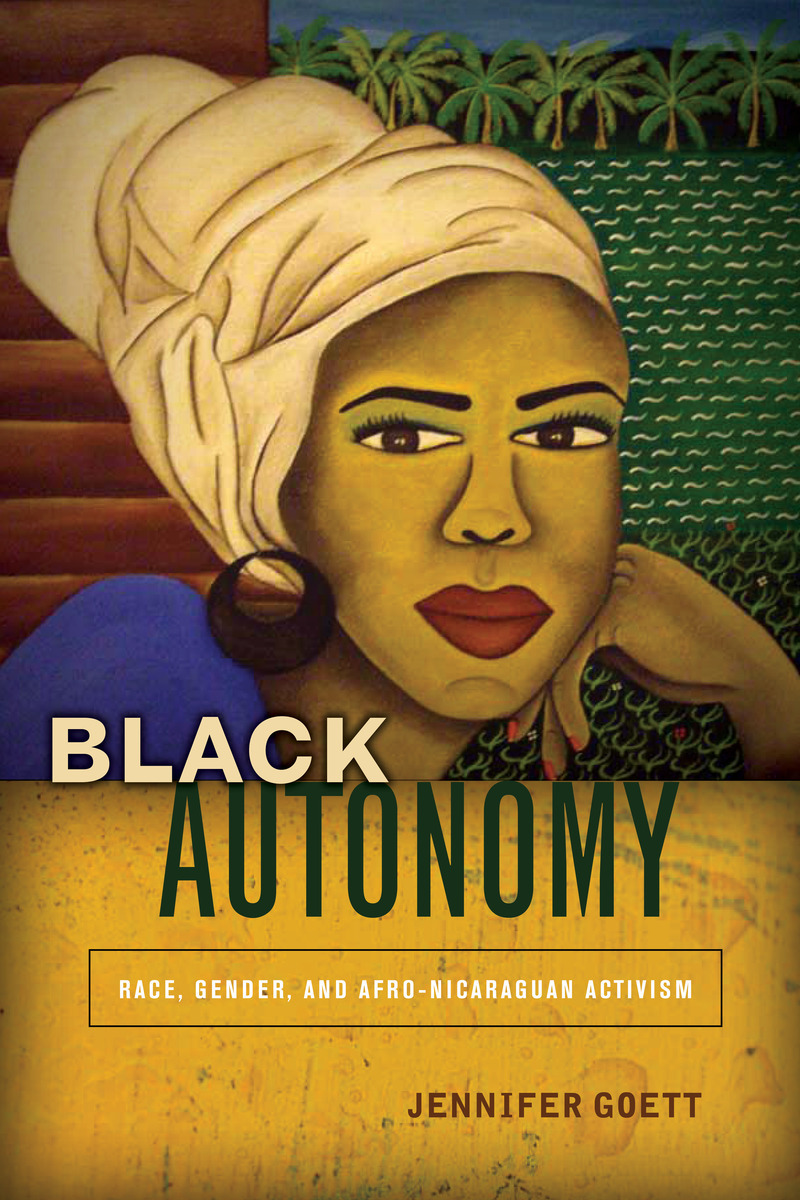
  • Black Autonomy: Race, Gender, and Afro-Nicaraguan Activism

    Stanford University Press
    2016-11-30
    248 pages
    Cloth ISBN: 9780804799560
    Paper ISBN: 9781503600546

    Jennifer Goett, Associate Professor of Comparative Cultures and Politics
    James Madison College, Michigan State University

    Decades after the first multicultural reforms were introduced in Latin America, Afrodescendant people from the region are still disproportionately impoverished, underserved, policed, and incarcerated. In Nicaragua, Afrodescendants have mobilized to confront this state of siege through the politics of black autonomy. For women and men grappling with postwar violence, black autonomy has its own cultural meanings as a political aspiration and a way of crafting selfhood and solidarity.

    Jennifer Goett’s ethnography examines the race and gender politics of activism for autonomous rights in an Afrodescedant Creole community in Nicaragua. Weaving together fifteen years of research, Black Autonomy follows this community-based movement from its inception in the late 1990s to its realization as an autonomous territory in 2009 and beyond. Goett argues that despite significant gains in multicultural recognition, Afro-Nicaraguan Creoles continue to grapple with the day-to-day violence of capitalist intensification, racialized policing, and drug war militarization in their territories. Activists have responded by adopting a politics of autonomy based on race pride, territoriality, self-determination, and self-defense. Black Autonomy shows how this political radicalism is rooted in African diasporic identification and gendered cultural practices that women and men use to assert control over their bodies, labor, and spaces in an atmosphere of violence.

  • The Color of American Genomics: Genetics in the Era of Racialized Medicine

    University of California, Los Angeles
    306 Royce Hall
    340 Royce Drive
    Los Angeles, California 90095
    Friday, 2016-12-09, 13:30-16:30 PST (Local Time)

    SPEAKERS:

    Michael Montoya, Associate Professor
    University of California, Irvine

    Sandra Soo Jin Lee, Senior Research Scholar
    Stanford University

    Joan Donovan
    University of California, Los Angeles

    Élodie Grossi
    University of California, Los Angeles/EPIDAPO

    Since the 1960s, American ethno-racial categories have been increasingly used to respond to the inclusion of ethnic and racial minorities in biomedicine and genetics. It has been the researchers’ very dedication to the positive ideals of diversity and to the struggle against medical disparities that has paradoxically allowed racial categories to massively gain ground in science. This half-day symposium aims to shed light on the scope of racialized science and the political and ethical considerations raised by this new paradigm.

    This workshop is free and open to the public

    Presented by EPIDAPO.  Co-sponsored by the UCLA Institute for Society and Genetics.

    For more information, click here.

  • Skin deep

    North By Northwestern
    Fall 2016

    Mira Wang


    Photo by Alex Furuya / North by Northwestern

    Cracking the foundations of white beauty.

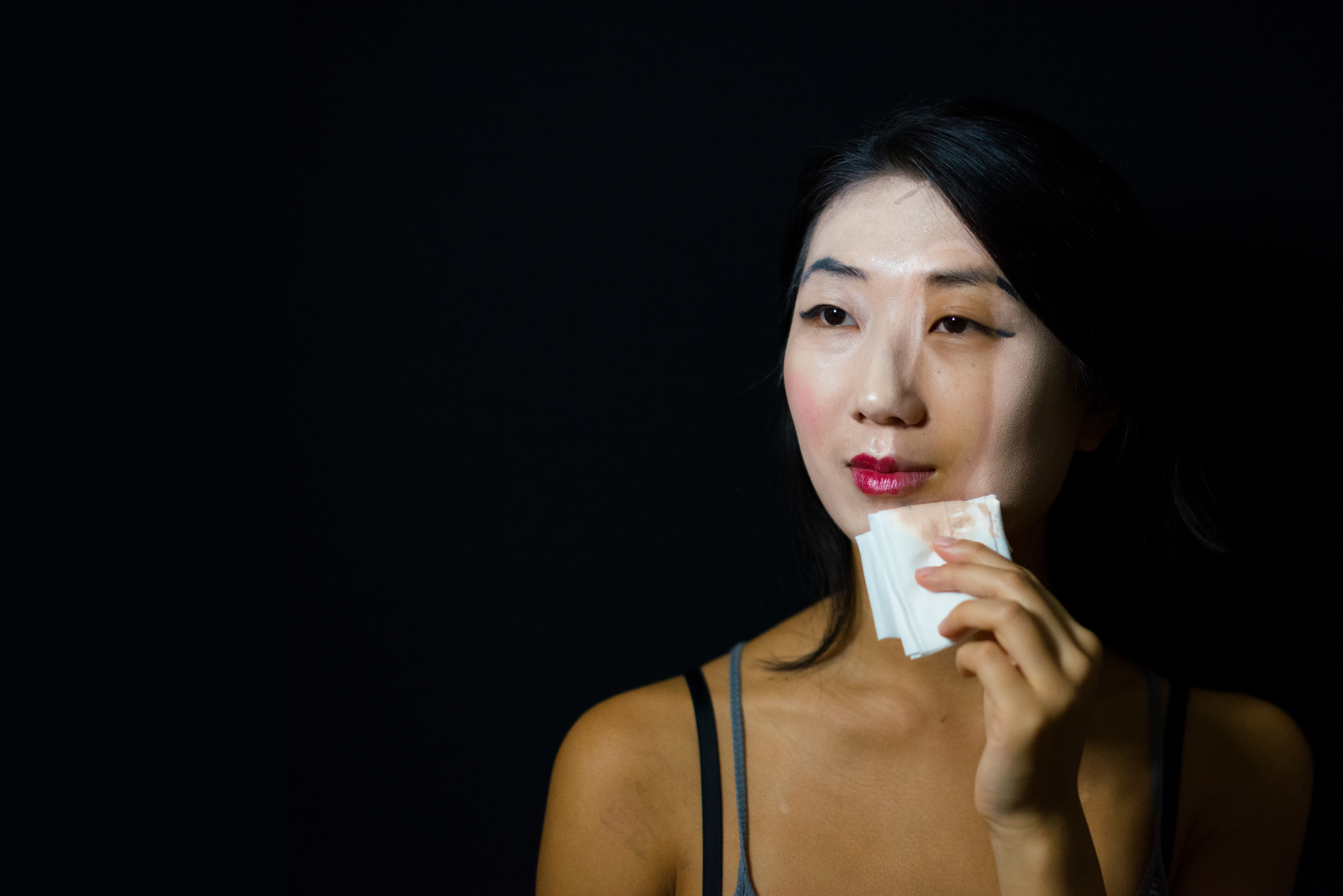
    When I was younger, my Asian American friends and I would play house. We’d be older, popular and wise to the world. We’d have cars and phones and play dates at the mall. We had freedom there. I could be anyone.

    I could even be white.

    “Jordan,” my most-loved pretend character, had brunette-not-black, wavy-not-straight hair. She didn’t wear glasses. She played some white-dominated sport like volleyball and went to the mall whenever she wanted. All the boys wanted to date her – even the white boys. She was “American,” as my parents would say. She looked like she belonged.

    I didn’t. I can tell stories about being paired automatically with the only other Asian boy in my classes, about “chink!” being screamed through an open car window as my sister and I walked home from school, about avoiding one of the only other Asian girls in my sixth grade class because the bullies were after her, for being too Asian, too quiet.

    Instead, I’ll tell what I learned. People treat me differently because of how I look. White beauty norms are narrowly defined: My eyes are too small, and my hair too black, for white people to count as theirs. This means that I am “Asian” – I am labeled, and everything else they know about me will be in the context of that one racial signifier. It means people will meet me and think “Asian,” quiet, boring, studious – or even just “Asian,” chink. It means I am either only beautiful enough for Asian boys, or only beautiful because I am Asian…

    Read the entire article here.

  • Caitlyn Jenner, Rachel Dolezal and instability in gender and race

    Maclean’s
    2016-12-04

    Sujaya Dhanvantari

    Sociologist Rogers Brubaker examines transgender and transracial differences

    TRANS

    By Rogers Brubaker

    In Western culture, gender and race were traditionally thought to be unchangeable and fixed for life. Black or white, male or female: These were forever separated by the binary logic of absolute difference. But even as the old colonial theories of racial determinism have long been discredited, the notion of changing race is still ethically troubling. Not so for changing gender, which is now socially accepted in unprecedented ways. That is why celebrity trans woman Caitlyn Jenner and transracial civil rights activist Rachel Dolezal, born white but now identifying as black, are not the same kind of “trans.” Inspired by those two news stories, UCLA sociologist Rogers Brubaker explores the unstable categories of gender and race in his new book

    Read the entire review here.

  • Race In The Northwest: Hood River Man Learns His Family’s Surprising Truth

    Oregon Public Broadcasting
    2016-12-07

    Anna Griffin, News Director


    Hood River writer and cidermaker John Metta.
    Anna Griffin/OPB

    Hood River, OregonJohn Metta grew up thinking of himself as mixed race: His mother was white. His father’s side of the family proudly proclaimed themselves a blend of African-American and Native American.

    “Actually, I grew up always being the Indian kid at school,” he said. “I have pictures of myself in like fourth and fifth grade, and my hair was dead straight parted in the middle. I looked like the typical Native American.”

    The family wasn’t entirely clear on where that Native American element entered the mix — someone at some point had spent time on the Seneca reservation in Western New York. Still, they embraced their native side…

    …A few years ago, Metta’s sisters got curious about precisely which tribes and parts of the country their relatives came from. They asked an uncle to swab his cheek and had the sample tested. How much Native American blood did they find?…

    Read the entire article here.