• The Philosophy Of Multiracial Identity Vs. The Cult Of Antiracism

    The Daily Caller
    2017-05-03

    Charles Michael Byrd, Freelance Writer
    Queens, New York

    Born the illegitimate, white-looking son of a dark-skinned woman in a small Virginia town in the 1950s, I squandered countless years wandering in the darkest mental ignorance before ultimately discovering that my atma-dharma (the natural devotional inclination of the soul or atma) or purpose on this planet was not to be a loyal servant to racial identity politics. Our eternal atma-dharma has nothing to do with the dharma of body, dynasty, caste or race. Those falsely identifying the body as the real self cannot fathom this.

    That racial inheritance made me keenly aware, however, of the struggles multiracials endure regarding personal identification in a society that has only grudgingly begun publicly accepting the notion of hybridity. Even Barack Obama spent eight years on the global stage identifying exclusively as black, although the entire world knew of his white mother.

    Against that backdrop, critics deride as naive post-racialism the notion that multiracial self-identification on the part of an ever increasing number of people may be, as the late mixed-race poet, novelist and philosopher Jean Toomer opined, “the turning point for the return of mankind, now divided into hostile races, to one unified race, namely, to the human race.”…

    Read the entire article here.

  • What Does Identifying as Afro-Latina Really Mean?

    Hip Latina
    2017-05-04

    Johanna Ferreira
    Brooklyn, New York


    Pic of author. Photo Credit: Karina Munoz

    Racial identity for a lot of U.S. born Latinos, is a very complex, multi-dimensional, and multi-faceted thing. As a Dominican-American woman born and raised in Queens, New York, I can attest to that. All I have to do is take a good look in the mirror to know that aside from being a Latina, I am also mixed race. I see it in my tan complexion, my light hazel eyes, my dark curly hair (that’s neither tight nor loose), my plump lips, my small nose, and my bottom-heavy figure I inherited from my Dominican mother. I am a beautiful blend of European and African ancestry and yet there still seems to be so much confusion around me identifying as Afro-Latina. Why is that?

    The term Afro-Latino is a term some Latinos use as a way to identify their racial background but it’s one that still triggers a lot of confusion, pain, and shame for many. This is due in large to the complex and varied nature of racial identity in the Latino community.

    According to a 2016 Pew Research study, one quarter of all U.S. Latinos self-identify as Afro-Latino, Afro-Caribbean or of African descent with roots in Latin America. Mind you, this is only taking into consideration the amount of Afro-Latinos who actually identify that way. The study shows that a lot of Afro-Latinos in the states don’t identify as Afro-Latino.

    So much of our Latin American culture and history involves strong African influence. We see it in our varied skin tones, facial features, and hair textures and we experience it in our food and music. According to Pew Research, in Brazil, half of the population is of African descent (Black or mixed-race Black). In Cuba, Blacks and mixed-race Blacks make up more than a third of the country’s population. And according to the Central Intelligence Agency, 11 percent of the population in the Dominican Republic is Black while 73 percent of the population is mixed-race Black. That’s huge!

    So why are there still so many Latinos out there hesitant to call themselves Afro-Latinos? Well for starters, not everyone understands the actual definition of Afro-Latino…

    Read the entire article here.

  • Playing in the Light: A Novel

    The New Press
    November 2007
    224 pages
    5 1/2 x 8 1/4
    Paperback ISBN: 978-1-59558-221-8

    Zoë Wicomb, Emeritus Professor
    University of Strathclyde, Glasgow, United Kingdom

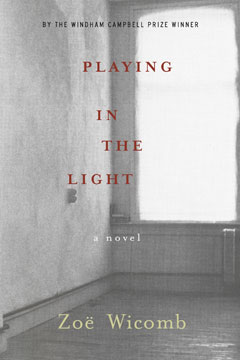
    Set in a beautifully rendered 1990s Cape Town, Zoë Wicomb’s celebrated novel revolves around Marion Campbell, who runs a travel agency but hates traveling, and who, in post-apartheid society, must negotiate the complexities of a knotty relationship with Brenda, her first black employee. As Alison McCulloch noted in the New York Times, “Wicomb deftly explores the ghastly soup of racism in all its unglory—denial, tradition, habit, stupidity, fear—and manages to do so without moralizing or becoming formulaic.”

    Caught in the narrow world of private interests and self-advancement, Marion eschews national politics until the Truth and Reconciliation Commission throws up information that brings into question not only her family’s past but her identity and her rightful place in contemporary South African society. “Stylistically nuanced and psychologically astute” (Kirkus), Playing in the Light is as powerful in its depiction of Marion’s personal journey as it is in its depiction of South Africa’s bizarre, brutal history.

  • I speak, therefore I am: Meus idiomas

    Varsity
    Cambridge, England
    2017-02-10

    Eduardo Baptista


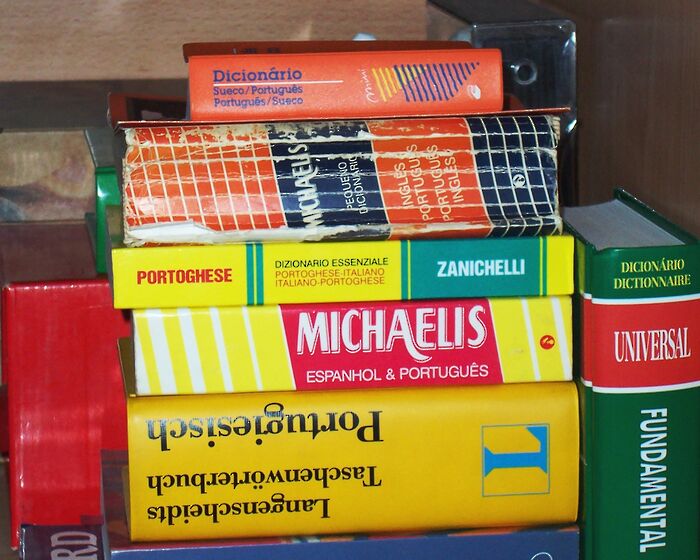
    “But who am I to patronise them? I seem to have developed a tendency to shout mata (literally ‘kill’ in Portuguese) whenever I or my teammates execute a play under high pressure.”
    Bianca Bueno

    Eduardo Baptista talks about identity at the crossroads of swearing in Portuguese, struggling with Korean fluency, and sounding like a History student in English

    It’s no news that we use language everyday to convey knowledge, ideas, and emotions of the most diverse kind. But it’s more intriguing how language directs us as much as we direct language, kind of like a stubborn GPS that doesn’t adjust to the driver’s every whim. It is often difficult to be self-aware of just how much language affects our personality and how we express it.

    In my case, this self-awareness came about naturally, a consequence of being a mixed-race international student in Cambridge, spending holidays in Portugal, skipping Korean school as a kid, and experiencing some other fantastic cultures along the way…

    Read the entire article here.

  • Rachel Dolezal: why ignoring the painful past of “passing” is indefensible

    The Conversation
    2017-05-04

    Londiwe H. Gamedze, Tutor, MA student
    University of Cape Town


    Civil rights advocate Rachel Dolezal has been accused of falsely claiming she is African-American. Stephanie Keith/Reuters

    In 2015, American Rachel Dolezal captured the public imagination when the media discovered that she was white and had been passing as black for nearly a decade.

    Dolezal, who has had white ancestors for over three centuries, checked boxes like “black” and “African-American” on application forms, darkened her skin, and began to wear her hair in African-American styles. She lied about her past and family, and attempted to sue her alma mater, historically black Howard University for reverse racism.

    “Black” Dolezal was a lecturer in Africana studies and president of her local chapter of the National Association for the Advancement of Colored People NAACP.

    She recently visited South Africa to discuss non-racialism, but received resistance against her self-identification as “trans-black” and her claim to an authentic, internal black identity. This isn’t surprising given the brutality of the country’s racial past.

    Read the entire article here.

  • The long history and legacy of passing in America

    The Washington Post
    2017-05-03

    Alex Laughlin


    (Illustration by Chris Kindred for The Washington Post)

    Anita Hemmings was Vassar College’s first African American graduate. But no one was supposed to know that she was black.

    A light-skinned mixed-race woman, Hemmings passed as white for most of her time at Vassar — until her roommate hired a private investigator to find out the truth.

    Hemmings graduated college in 1897 and continued passing as white for the rest of her life. Her story fits in with a broader history of African Americans passing in this country for personal safety, economic and social reasons.

    In this episode of “Other: Mixed Race in America,” we learn the story of Hemmings, and we also learn about the legacy of passing that is inherited through generations of mixed-race Americans…

    Listen to the podcast (00:19:12) here.

  • The Death of Race: Building a New Christianity in a Racial World

    Fortress Press
    2016-11-01
    182 pages
    Paperback ISBN: 9781506408880
    Ebook ISBN: 9781506408897
    5.50 x 8.50

    Brian Bantum, Neil F. and Ila A. Professor of Theology
    Garrett-Evangelical Theological Seminary, Evanston, Illinois

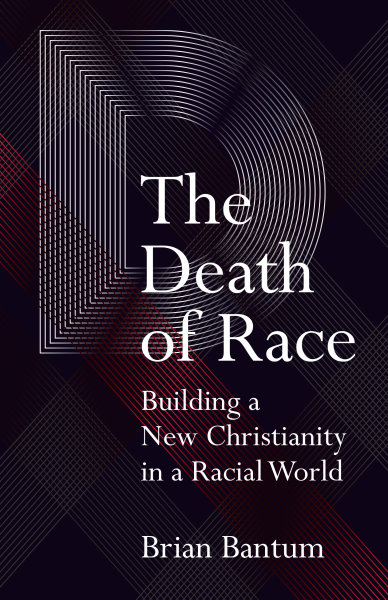
    Brian Bantum says that race is not merely an intellectual category or a biological fact. Much like the incarnation, it is a “word made flesh,” the confluence of various powers that allow some to organize and dominate the lives of others. In this way, racism is a deeply theological problem, one that is central to the Christian story and one that plays out daily in the United States and throughout the world.

    In The Death of Race, Bantum argues that our attempts to heal racism will not succeed until we address what gives rise to racism in the first place: a fallen understanding of our bodies that sees difference as something to resist, defeat, or subdue. Therefore, he examines the question of race, but through the lens of our bodies and what our bodies mean in the midst of a complicated, racialized world, one that perpetually dehumanizes dark bodies, thereby rendering all of us less than God’s intention.

    Table of Contents

    • 1. Race Is a Story Written on My Body
    • 2. Bodies Matter
    • 3. Naked and Ashamed
    • 4. This Is My Body, Born for You
    • 5. Jesus Walks
    • 6. Jesus Makes Us Free to Become Like Mary
    • 7. Race Must Die
    • 8. There Is Life in the Tomb
    • Epilogue
  • One Drop of Love: Fanshen Cox discusses mixed race in America

    The Williams Record
    Williamstown, Massachusetts
    2017-05-03

    Alex Medeiros, Opinions Editor


    Fanshen Cox discusses her new work, ‘One Drop Love,’ while exploring history, family, class and love. Photo courtesy of Fanshen Cox

    Last Thursday, the Students of Caribbean Ancestry (SOCA) coordinated a one-woman show produced and written by Jamaican-American Fanshen Cox DiGiovanni. This performance was part of “Heritage Week” celebrating SOCA heritage. Cox’s interactive show, called “One Drop of Love,” explores history, family, class, justice and love. It challenges the audience to recognize the enduring power of the “one drop rule.”

    In the 18th century, when the slave trade was in full force, many of the colonists who came to the Caribbean islands raped their slaves, resulting in mixed race children. Although some of these children were lighter skinned, like Cox, the “one drop rule” pronounced that one drop of African blood meant that the child was of African descent and therefore could not benefit from being the son or daughter of a white man. In fact, many millions of people in the United States still endure the repercussions of such an arbitrary rule, centuries after it was created.

    Cox’s performance, also produced by Ben Affleck and Matt Damon, aimed to address this issue of the “one drop rule.” As a half-Jamaican half-Caucasian woman, Fanshen has experienced her fair share of racial confusion…

    Read the entire article here.

  • The continued rejection of racial mixing lies in deep-seated notions of racial difference and maintenance of racial boundaries. In the U.S., we are still highly segregated in our neighborhoods and friendship circles. Even in our favorite TV shows and movies, interracial couples are infrequent, and biracial children even rarer. Most individuals will maintain that race does not matter in terms of who they work with or are friends with. But despite that, it remains socially acceptable for us to discriminate in terms of who we date. Most whites will not admit they do not want a black neighbor, but will freely admit their racial preferences in dating, referencing physical attraction and lack of cultural similarities as reasons not to consider dating anyone of another race.

    Erica Chito Childs, “Williams’s Pregnancy Proves Interracial Couples Still Aren’t Accepted,” Fortune, May 3, 2017. http://fortune.com/2017/05/03/serena-williams-pregnant-fiance-alexis-ohanian-photo/.

  • The Asian Turn in Mixed Race Studies: Retrospects and Prospects

    Asia Pacific Perspectives
    Volume 14, Number 2: Spring 2017

    Emma J. Teng, T.T. and Wei Fong Chao Professor of Asian Civilizations; Associate Professor of Chinese Studies
    Massachusetts Institute of Technology

    In 1930, the young Han Suyin (pen name of Rosalie Chou, 1916-2012) read this passage in a book called Races of the World: “Racial mixtures are prone to mental unbalance, hysteria, alcoholism, generally of weak character and untrustworthy…” Shaken, she prayed, “Oh God… don’t let me go mad, don’t let my brain go, I want to study.”1

    Probably the most famous Eurasian author of the 20th century, one who served as a major interpreter of China to the West during the tumultuous Cold War era, Han was haunted by these words and driven throughout her life by a determination to prove them untrue, fighting the pronounced stigma and the obstacles faced by mixed-heritage individuals during her era. As she highlighted in this famous scene from her autobiographical A Mortal Flower (1965), such stigma was not only a product of social prejudice, but also heavily reinforced by scientific and pseudoscientific discourses of the time.

    From our vantage point today, it is a good moment to take stock of how far we have come (or failed to come) over the century that separates us from Han’s birth. How have popular perceptions of “mixed-race” peoples changed in Asia and across the globe? How have academic discourses evolved? And perhaps most importantly, how have “mixed” individuals themselves advocated for their equal rights and recognition? The articles in this pathbreaking issue of Asia Pacific Perspectives address these vital questions and others, focusing their analyses on historical and contemporary manifestations of “mixedness” across East Asia…

    Read the entire article here.