Mixed Race Studies

Scholarly perspectives on the mixed race experience.

    • About This Site
    • Bibliography
    • Contact Information
    • Date and Time Formats
    • Forthcoming… (Updated 2021-09-01)
    • Likely Asked Questions
    • List of Book Publishers
    • List of Definitions and Terms
    • My Favorite Articles and Papers
    • My Favorite Posts
    • My Recent Activities
    • Praise for Mixed Race Studies
    • Tag Listing
      • Tag Listing (Ordered by Count)
    • US Census Race Categories, 1790-2010
    • 1661: The First ‘Mixed-Race’ Milestone
    • 2010 U.S. Census – Some Thoughts

recent posts

  • The Routledge International Handbook of Interracial and Intercultural Relationships and Mental Health
  • Loving Across Racial and Cultural Boundaries: Interracial and Intercultural Relationships and Mental Health Conference
  • Call for Proposals: 2026 Critical Mixed Race Studies Conference at UCLA
  • Participants Needed for a Paid Research Study: Up to $100
  • You were either Black or white. To claim whiteness as a mixed child was to deny and hide Blackness. Our families understood that the world we were growing into would seek to denigrate this part of us and we would need a community that was made up, always and already, of all shades of Blackness.

about

  • Twitter
  • Facebook
  • Instagram
  • Multiraciality Enters the University: Mixed Race Identity and Knowledge Production in Higher Education

    2016-07-11

    Multiraciality Enters the University: Mixed Race Identity and Knowledge Production in Higher Education

    University of Maryland
    2016
    DOI: 10.13016/M2QB78

    Aaron Allen

    “Multiraciality Enters the University: Mixed Race Identity and Knowledge Production in Higher Education,” explores how the category of “mixed race” has underpinned university politics in California, through student organizing, admissions debates, and the development of a new field of study. By treating the concept of privatization as central to both multiraciality and the neoliberal university, this project asks how and in what capacity has the discourses of multiracialism and the growing recognition of mixed race student populations shaped administrative, social, and academic debates at the state’s flagship universities—the University of California at Berkeley and Los Angeles. This project argues that the mixed race population symbolizing so-called “post-racial societies” is fundamentally attached to the concept of self-authorship, which can work to challenge the rights and resources for college students of color. Through a close reading of texts, including archival materials, policy and media debates, and interviews, I assert that the contemporary deployment of mixed race within the US academy represents a particularly post-civil rights development, undergirded by a genealogy of U.S. liberal individualism. This project ultimately reveals the pressing need to rethink ways to disrupt institutionalized racism in the new millennium.

  • Race and Medicine in America (AMST 256 – 01)

    2016-07-11

    Race and Medicine in America (AMST 256 – 01)

    Wesleyan University, Middletown, Connecticut
    Fall 2016

    Megan H. Glick, Assistant Professor of American Studies

    This course will trace ideas of race in American medical science and its cultural contexts, from the late 19th century to the present. We will explore how configurations of racial difference have changed over time and how medical knowledge about the body has both influenced, and helped to shape, social, political, and popular cultural forces. We will interrogate the idea of medical knowledge as a “naturalizing” discourse that produces racial classifications as essential, and biologically based.

    We will treat medical sources as primary documents, imagining them as but one interpretation of the meaning of racial difference, alongside alternate sources that will include political tracts, advertisements, photographs, newspaper articles, and so on.

    Key concepts explored will include slavery’s medical legacy, theories of racial hierarchy and evolution, the eugenics movement, “race-specific” medications and diseases, public health politics and movements, genetics and modern “roots” projects, immigration and new technologies of identification, and intersections of race and disability.

    For more information, click here.

  • Expat Mom Maria Tumolo On Raising A Multicultural Family In England

    2016-07-11

    Expat Mom Maria Tumolo On Raising A Multicultural Family In England

    The Voix: Diverse Narratives. Native Insights
    2016-07-07

    Although she was happy and content with her life as it were back in Trinidad, Maria Tumolo was at a crossroad regarding her professional and personal development. She had received a firm offer of admission from Edinburgh University with the intention of pursuing a masters degree in publishing, but she had never been away from home. At the age of 27, she finally made the decision to move to England.

    “I came to England on a working holiday visa. On arrival I lived and worked in Cambridge for a few months,” Tumolo says. “I eventually moved to London because at the time, I was living with the family of an English work mate who I met in Trinidad. When she decided to move back to Cambridge, I moved to London so she could be with her family. It was also easier to travel around Europe from London.”

    Today, Tumolo lives in Surrey, England with her husband and children – Angelo and Valentina who are five & three years old respectively – where she is a children’s book author and the founder of a Trini-British Parenting & Lifestyle Blog that explores parenting as an expat, family experiences as a mixed heritage family, fashion and food.

    Tumolo shares her journey to England and tells us more about raising a multicultural family…

    Read the entire interview here.

  • And as a report that came out just this week reminded us, there are a lot of African-Americans—not just me —who have that same kind of story of being pulled over, or frisked, or something.

    2016-07-11

    And as a report that came out just this week reminded us, there are a lot of African-Americans—not just me —who have that same kind of story of being pulled over, or frisked, or something. And the data shows that this is not an aberration. It doesn’t mean each case is a problem. It means that when you aggregate all the cases and you look at it, you’ve got to say that there’s some racial bias in the system.

    President Barack Obama, “Remarks by the President at the 122nd Annual IACP Conference,” The White House (Office of the Press Secretary), October 27, 2015. https://www.whitehouse.gov/the-press-office/2015/10/27/remarks-president-122nd-annual-iacp-conference.

  • What are you? A CRT perspective on the experiences of mixed race persons in ‘post-racial’ America

    2016-07-11

    What are you? A CRT perspective on the experiences of mixed race persons in ‘post-racial’ America

    Race Ethnicity and Education
    Volume 18, Issue 1, 2015
    pages 1-19
    DOI: 10.1080/13613324.2014.911160

    Celia Rousseau Anderson, Associate Professor in the Secondary Education Program
    Department of Instruction and Curriculum Leadership
    University of Memphis, Memphis, Tennessee

    In this article, the author employs Critical Race Theory (CRT) to examine the experiences of mixed race individuals in the United States. Drawing on historical and contemporary conditions involving persons of mixed race, the author considers how key ideas from CRT can be useful to frame an analysis of the experiences of multiracial persons in the US. To supplement the analysis, the author also includes fictionalized narratives in the tradition of CRT. In conclusion, the author considers how this examination of mixed race persons might inform K-12 education.

    Read or purchase the article here.

  • The Black Presidency: Barack Obama and the Politics of Race in America

    2016-07-10

    The Black Presidency: Barack Obama and the Politics of Race in America

    The Aspen Institute
    2016-07-02

    As Michael Eric Dyson notes in the introduction to his 2016 book, “[President] Obama provoked great hope and fear about what a black presidency might mean to our democracy. White and black folk, and brown and beige ones, too have had their views of race and politics turned topsy-turvy.” Join Dyson and The Washington Post’s Jonathan Capehart for a look at how the politics of race have shaped Obama’s identity and groundbreaking presidency. How has Obama dealt publicly with race—as the national traumas of Tamir Rice, Trayvon Martin, Michael Brown, Eric Garner, Freddie Gray, and Walter Scott have played out during his tenure? What can we learn from the president’s major speeches about his approach to racial conflict and the black criticism it provokes?

  • JewAsian: Race, Religion, and Identity for America’s Newest Jews

    2016-07-10

    JewAsian: Race, Religion, and Identity for America’s Newest Jews

    University of Nebraska Press
    July 2016
    198 pages
    6 tables, 1 appendix
    Hardcover ISBN: 978-0-8032-8565-1

    Helen Kiyong Kim, Associate Professor of Sociology
    Whitman College, Walla Walla, Washington

    Noah Samuel Leavitt, Associate Dean of Students
    Whitman College, Walla Walla, Washington

    In 2010 approximately 15 percent of all new marriages in the United States were between spouses of different racial, ethnic, or religious backgrounds, raising increasingly relevant questions regarding the multicultural identities of new spouses and their offspring. But while new census categories and a growing body of statistics provide data, they tell us little about the inner workings of day-to-day life for such couples and their children.

    JewAsian is a qualitative examination of the intersection of race, religion, and ethnicity in the increasing number of households that are Jewish American and Asian American. Helen Kiyong Kim and Noah Samuel Leavitt’s book explores the larger social dimensions of intermarriages to explain how these particular unions reflect not only the identity of married individuals but also the communities to which they belong. Using in-depth interviews with couples and the children of Jewish American and Asian American marriages, Kim and Leavitt’s research sheds much-needed light on the everyday lives of these partnerships and how their children negotiate their own identities in the twenty-first century.

  • My mixed-race sons look white, but that doesn’t mean racism stays away

    2016-07-10

    My mixed-race sons look white, but that doesn’t mean racism stays away

    She Knows
    2016-07-09

    Fahmida Rashid

    My mixed-race sons can ‘pass’ for white, and that creates its own pile of issues

    The first time was when Jake was in kindergarten. He was showing off the drawing of our family: father, mother, baby brother and himself. He’d even drawn the cat. I was perplexed that he’d colored three of the stick figures brown and one pink. I pointed to one, ignoring the names he’d written over each, and asked, “Who is that?”

    “That’s me!” he said, with that mix of exasperation and long-suffering that only 6-year-olds can pull off and still be adorable.

    “But why are you brown?” I pressed, ignoring his father’s “don’t go there” look.

    Jake and his brother Sam are light-skinned. Not as pale as their father, who hails from the South and can his trace ancestry back to Colonial America, but still light enough that they get asked if they are Greek or Italian. Nothing close to my brown, the one who hails from the subcontinent, the land of spice and tropical sun. Yet he’d colored all three of us the same brown and couldn’t figure out why his mother was asking dumb questions…

    Read the entire article here.

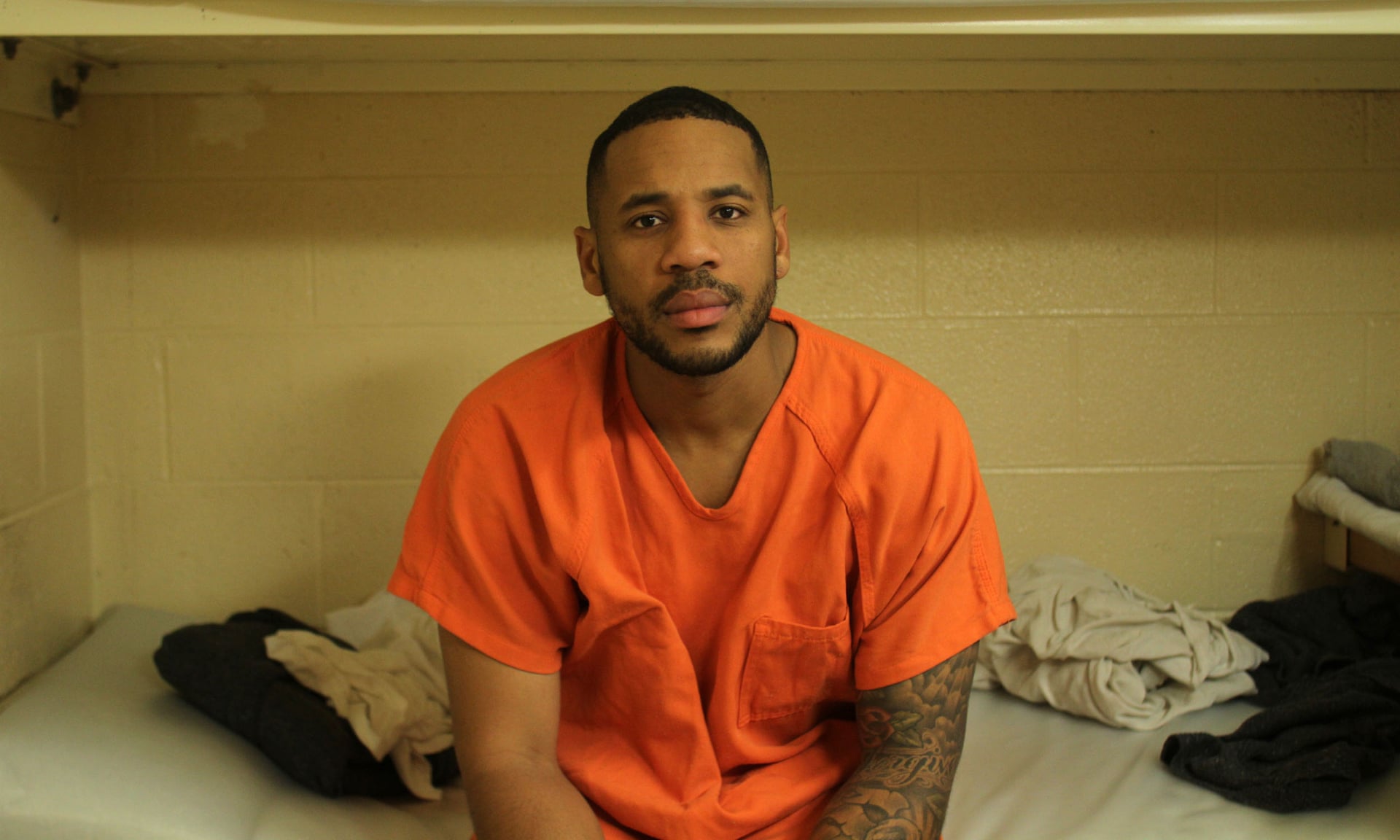
  • How Reggie Yates went from kids’ TV to confronting neo-Nazis

    2016-07-10

    How Reggie Yates went from kids’ TV to confronting neo-Nazis

    The Guardian
    2016-06-28

    Hannah J. Davies


    Louis Theroux 2.0: Reggie Yates in a cell at Bexar County Detention Center.

    He braves Russian far-right rallies and Texas prison cells for his job. Meet the man helping to reinvent the documentary for Generation Y

    While filming in South Africa in 2013, Reggie Yates experienced the two scariest moments of his TV career to date. “The director, sound man and I got caught up in a fight between two gangs,” he explains. “One of the guys pulled out a gun and I thought: ‘All bets are off.’ We got out of there, but we met up with one of the gangs again later on in this little hut and they all had their machetes out. I thought: ‘This could go wrong at any minute,’ but it didn’t. I think a lot of that came down to the respect we showed them; I don’t wear a bulletproof [vest] in these places, because [that would be] saying that I don’t trust someone or I think I’m better.” He laughs before adding: “It could’ve been worse!”…

    …Starting out as a child actor in 90s barbershop sitcom Desmond’s, he went on to work as a kids’ TV presenter alongside pal Fearne Cotton on shows including CBBC’s Smile. Then came a move into radio DJing on 1Xtra, before a gig as the anchor of Radio 1’s Official Chart Show. Somehow he’s also found time to voice cartoon rodent Rastamouse and appear in Doctor Who, as well as writing and directing his own short films (his latest, Shelter, stars W1A’s Jessica Hynes). It even transpires during our conversation that he’s a “massive interiors nerd”, who teases that he might one day open a furniture store…

    Read the entire article here.

  • Two-hundred forty years after the first Independence Day, Americans still live by the same color codes established before the nation’s birth.

    2016-07-10

    Two-hundred forty years after the first Independence Day, Americans still live by the same color codes established before the nation’s birth. We mark each other by complexion. We assign meaningless stereotypes to people according to skin color. We adore and fear and hate people on the basis of how light or dark they are.

    Race, as many scientists will tell you, is not real, but racism is.

    Darryl Fears, “Racism twists and distorts everything,” The Washington Post, July 8, 2016. https://www.washingtonpost.com/national/health-science/racism-twists-and-distorts-everything/2016/07/08/d0f03364-4542-11e6-bc99-7d269f8719b1_story.html.

Previous Page
1 … 397 398 399 400 401 … 1,428
Next Page

Designed with WordPress