• “I think the media does a great job of wanting to silo who we are as Americans… They’re like, ‘Oh, that’s the immigrant issue, that’s the African-American issue, that’s the Asian issue.’ No, it’s us. And until we understand that we have a vested interest in all these different topics we can’t actually come together with an American agenda.” —Maria Teresa Kumar

    Carolina Moreno, “Voto Latino CEO On Why Police Violence Against Latinos Isn’t In The News,” The Huffington Post, July 8, 2016. http://www.huffingtonpost.com/entry/voto-latino-ceo-on-why-police-violence-against-latinos-isnt-in-the-news_us_577f9fa5e4b0c590f7e8df88.

  • Racism twists and distorts everything

    The Washington Post
    2016-07-08

    Darryl Fears, National Enviromental Reporter

    For three straight mornings, I’ve eaten breakfast sprinkled with madness. Throughout this week that started with July 4, I’ve woken to horrible news that was tough to swallow.

    Like everyone else, I watched videos that captured the nation’s racial angst — two black men shot by police officers for no apparent reason, and a peaceful demonstration to protest those slayings that dissolved into the revenge murder of five police officers.

    The details of what happened this week are still being pieced together by investigations in three cities, but what is clear nearly eight years after the election of the first black president is that the idea of a post-racial America was a fantasy.

    I covered racial trends and demographics for The Washington Post for eight years ending in 2009, crisscrossing the country to write about segregated schools, crowded prisons and huge immigration marches, and I left the beat thinking that President Obama’s election in 2008 might bring at least a margin of the hope and change he embraced.

    But America hasn’t changed…

    Read the entire article here.

  • NYC AfroLatino Fest Comes at an Important Time

    Sounds and Colours
    2016-07-05

    Gina Vergel

    It seems the fourth edition of AfroLatinoFest in New York City comes at a crucial time.

    A survey by the Pew Research Center, released in March, points to a disconnect in how some Afro-Latinos living in the United States report their race. It found that while 24 percent of U.S.-based Latinos identify as Afro-Latino, just 18 percent of that group reports its race as “Black.”

    According to an article in Colorlines, “when asked directly about their race, only 18% of Afro-Latinos identified their race or one of their races as black. In fact, higher shares of Afro-Latinos identified as white alone or white in combination with another race (39%) or volunteered that their race or one of their races was Hispanic (24%). Only 9% identified as mixed race.”

    And so Afro-Latino Fest, taking place from the 8th to the 10th of July, is offering a series of intellectually engaging panels, documentary screenings, and keynote speakers about AfroLatinidad, along with music and food, of course…

    Read the entire article here.

  • Colorblindness is not Progressive: a Review of “The Color of Water”

    The Tempest
    2016-06-11

    Maya Williams

    We should make it clear that the concept of colorblindness isn’t just a white perspective to have or to talk about.

    The Color of Water: a Black Man’s Tribute to his White Mother (1995) tells the story of a mixed race man named James McBride and his Jewish mother coming of age in a time when mixed race visibility was relatively taboo. This nonfiction novel’s format is such a unique one because while you read it, you can see how fluid time is and how history is capable of repeating itself for generations.

    This is such a good book, you guys. After re-reading it, I was struck once more by the intricacies of McBride’s storytelling, the parallels between McBride and his mother, and their human strength. Hands down, one of the most interesting people to read about in this book is Ruth McBride Jordan, the author’s mom…

    Read the entire review here.

  • 5 Steps Latinos Can Take to Combat Anti-Blackness

    Remezcla
    2016-07-09

    Andrew S. Vargas

    We are all reeling from the events of this past week. The deaths of unarmed black men at the hands of police have become an all-too-familiar narrative in our public life, but each time we are confronted with these images it dredges up centuries of pain weighing on our collective conscience. Latinos of color acutely relate to the struggle African Americans face against their constant dehumanization by our country’s law enforcement institutions. It is a struggle that we often share on the streets, in the courtroom, and in our mainstream media. But we would be mistaken to assume that our experience of injustice is comparable.

    The culture of the United States has been built on a racial binary designed to exclude and oppress the descendants of Africans brought into this country against their will. Anti-blackness is not the occupation of hateful individuals, rather it is embedded within the very notion of race in the US, and reflected in all of its institutions. As Latinos – which is, itself a designation of ethnicity, not race – we often find ourselves struggling to stake out a place within this rigid racial landscape, while dealing with our own internalized biases and societal pressures to assimilate into whiteness…

    Read the entire article here.

  • “Yes We Can” Barack Obama’s Proverbial Rhetoric

    Peter Lang Publishing
    2009
    352 pages
    Hardcover ISBN: 978-1-4331-0668-2
    Softcover ISBN: 978-1-4331-0667

    Wolfgang Mieder, Professor of German and Folklore
    University of Vermont

    As President Barack Obama outlined his promise for change during the presidential campaign, he made effective use of proverbs and proverbial phrases, and invented many quotable epithets that have all the makings of future proverbs. This book examines how Obama’s natural and authentic reliance on traditional metaphors enhances his impressive rhetoric, rather than reducing it to mere sound bites. Proverbs, with their often colorful metaphors, add expressiveness and emotion to his communications, giving people the opportunity to follow his pragmatic or philosophical arguments through common language. No matter the subject, Obama’s prose contains metaphorical language that makes his rhetoric and oratory universally accessible.

    This book contains detailed analyses of the proverbial rhetoric in Obama’s books Dreams from My Father (1995) and The Audacity of Hope (2006). A section looks at his proverbial language in 229 speeches, news conferences, interviews, and radio addresses, and the final section presents in-depth studies of his seven most significant addresses. It includes a comprehensive contextualized index of 1714 proverbial texts found within the writings and speeches from Obama’s political beginnings to his memorable inaugural address.

  • Blackness cannot be taken away from us. Biraciality cannot be taken away from us. They exist as tangibly as our skin, made from Europe and Africa. We are the colonizer and the colonized. We are the oppressor and the oppressed. We bleed for our brothers and sisters. We carry on our backs the weight of what one half of us did to the other. We slip easily into white spheres, taking notes and taking names while nodding our European heads.

    Shannon Luders-Manuel, “Can Biracial Activists Speak To Black Issues?,” The Establishment, July 6, 2016. http://www.theestablishment.co/2016/07/06/can-biracial-activists-speak-to-black-issues-jesse-williams-bet/.

  • Obama’s Delicate Balance on Issue of Race and Policing

    The New York Times
    2017-07-08

    Mark Landler, White House Correspondent

    Michael D. Shear, White House Correspondent

    WARSAW — As Air Force One headed for Europe on Thursday afternoon, President Obama holed up in the plane’s office editing a Facebook post meant to express his anguish at two deadly shootings by police officers. Given what had happened, he told his aides, he didn’t think it was enough.

    Wrestling with what the appropriate thing to do instead was the start of a wrenching 10 hours in which Mr. Obama would find himself whipsawed by grim events back home, forcing him to once again search for the right tone in a moment of national shock and mourning.

    In that time, Mr. Obama delivered a trans-Atlantic call for racial justice after the gruesome deaths of two black men at the hands of the police, only to face the same television cameras hours later to denounce the killings of five officers by a black sniper.

    For Mr. Obama, the killing of Alton Sterling in Baton Rouge, La., and Philando Castile in suburban St. Paul and the bloody reprisal in Dallas encapsulated the challenge he has faced throughout his presidency: how to confront a justice system that he views as tilted against the very people whom he, as the nation’s first black president, seemed singularly equipped to help…

    Read the entire article here.

  • Can Biracial Activists Speak To Black Issues?

    The Establishment
    2016-07-06

    Shannon Luders-Manuel

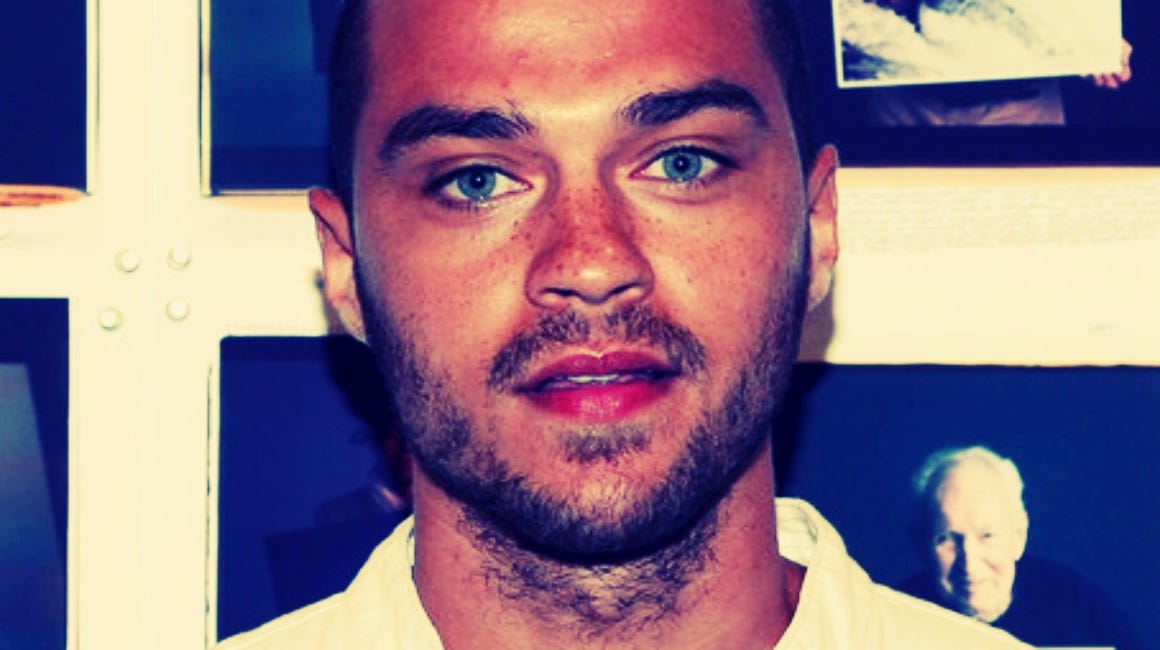
    While my first instinct was to celebrate Jesse Williams’ recent Humanitarian Award from BET, my second instinct, which came just seconds later, was to brace myself for the backlash.

    The Grey’s Anatomy actor and former teacher has been a highly visible activist within the Black Lives Matter movement, recently executive producing the documentary Stay Woke: The Black Lives Matter Movement. Yet those born of racial admixture are often viewed as half-as, half-ass appropriators of blackness. We’re often seen as deceitful, dangerous, and damaging to black solidarity.

    In his BET acceptance speech, Williams called out police brutality and the racial injustices black people have faced throughout history: “There has been no war that we have not fought and died on the front lines of. There has been no job we haven’t done. There is no tax they haven’t levied against us.” He added that, “We want [freedom] now.”

    While fallout from his speech continues to reverberate—dueling petitions are now raging, calling for him to be fired from/kept on Grey’s Anatomy, respectivelyhis words were largely well-received in both black and white spheres. But, like anyone of mixed parentage who publicly rails against racial injustice, some questioned his right to speak at all…

    Read the entire article here.

  • Paul Gilroy: Race and ‘Useful Violence’

    Public Seminar
    2016-07-08

    McKenzie Wark, Professor of Culture and Media in Liberal Studies
    The New School for Social Research


    #BLM passes The New School.

    Aimé Césaire called it: the so-called west is a decaying civilization. In both the United States and Europe, where institutions are receding, a base level of race-talk and racial solidarity is revealed as metastasizing beneath them. In such dim times, I turn to the writings of Paul Gilroy as offering an anti-racist vision that is transnational and cosmopolitan, but which draws on popular and vernacular forms of hybridity rather than elite ones.

    In Darker than Blue: On the Moral Economies of Black Atlantic Culture (Harvard 2010), Gilroy offers a series of essays on the culture of what he has famously called the Black Atlantic (Verso 1993) as an alternative to race-talk but which is also outside of the various alternative nationalisms that flourish as a response. It is not reducible to liberalism, and it also attempts to fend off incorporation into the culture industry. That might be an urgent project for this “age of rendition.” (87) One in which in Judith Butler’s terms that which is grievable, or in Donna Haraway’s that which is killable, are respectively diminishing and expanding categories.

    Gilroy is wary of responses to racism that borrow from it. He would probably strongly reject Chantal Mouffe’s understanding of all politics as necessarily based on a tangible equality of participation in a shared substance, which the necessarily excludes the other as unequal to us. Hence he is not any more inclined towards Black nationalism than towards any other. Instead, he builds upon the moral economies of the Black Atlantic, in which the struggle against slavery and racism pose the question of a trans-national belonging, or what I would call he problem of species-being. Just as EP Thompson saw the English working class as self-making, Gilroy is interested in the coming in to being of a people in struggle, but beyond Thompson’s rather provincial national frame. Along with others influenced by the cultural studies tradition such as Andrew Ross and Angela McRobbie, he is interested more in vernacular than elite cultural forms…

    …Gilroy: “What answers does the mixed-race person give to the apostles of purity, who can be found in all communities?” (103) Marley borrowed from Jamaican rude boys, from Curtis Mayfield, but also from Black Power: ‘I Shot the Sheriff’ as a famous Marley song has it – but not the deputy. For Gilroy, Marley is a version of Blackness that can include, but is not reducible to, African-American culture. It borrows from the diasporic cult of Ethiopia but makes it more a symbolic than an actual homeland. From the Rastafarians it also takes a view of wage-work not as self-mastery but as an extension of slavery. From the discovery of swinging London it evolves into the ‘Kinky Reggae’ of the ‘Midnight Ravers’.

    Where Marley had been an itinerant worker, Hendrix was a former soldier, who swapped the ‘Machine gun’ for the electric guitar, itself also bound up in curious ways with military technology. He produced an Afro-futurist sound that was, as Caetano Veloso put it, “half blues, half Stockhausen” (130) Gilroy: “Hendrix’s career tells us that by this point, black music could produce its own public world: a social corona that could nourish or host an alternative sensibility, a structure of feeling that might function to make wrongs and injustices more bearable in the short term but could also promote a sense of different possibilities, providing healing glimpses of an alternative moral, artistic, and political order.” (147)…

    Read the entire article here.