• Fanny Eaton: The Black Pre-Raphaelite Muse that Time Forgot

    AnOther
    2016-03-07

    Shola von Reynolds


    Walter Fryer Stocks, British, 1842–1915: Mrs. Fanny Eaton, ca. 1859 / Black, red, and white chalk on cream wove paper / 43.2 × 34.9 cm (17 × 13 3/4 in.) / Museum purchase, Surdna Fund / 2016-1 / Princeton University Art Museum

    The enigmatic model made her way to London from Jamaica in the early 19th century to sit for the Pre-Raphaelites, and her legacy lives on in their impactful work

    Who? Lizzie Siddal has long reigned supreme in the minds of historians, artists and writers as the embodiment of the artist’s muse. Her fellow Pre-Raphaelite models, such as Marie Spartali, Jane Morris or Maria Zambaco are less well known, but renewed attention has given many of these women a rightful place in art history beyond the typically limited conception of “the muse”. If you haven’t heard of Fanny Eaton, however, there would be meagre cause for surprise, though surprise there should be: little exists in the way of information about her, and until recent years all that remained was the series of paintings and drawings she sat for.

    Fanny Eaton was a black Victorian Londoner and, for some time, painter’s model. Born in Jamaica in 1835, Eaton was the daughter of an ex-slave and, it is suspected, a white slave owner. She came to London in the 1840s and began modelling in her twenties. It has been discovered that she was working as a regular portrait model at the Royal Academy, which is potentially where she caught the attention of the many renowned painters of the era she sat for…

    Read the etnire article here.

  • Florence Nightingale supporters in row over black rival’s new statue, claiming she is venerated based on ‘false achievements’

    The Daily Mail
    2016-06-20

    Martin Robinson, UK Chief Reporter

    Plans to give Britain’s most famous black nurse a statue have today been blasted by Florence Nightingale fans, who say it is a ‘history hoax’ because all she did was ‘sell wine and sandwiches’ in Crimea.

    Mary Seacole is set to have a £500,000 bronze unveiled in her honour at St Thomas’ Hospital in London this month – the first public memorial to celebrate the ‘black pioneer nurse’.

    It will be taller than Florence Nightingale’s statue in Pall Mall and Edith Cavell’s off Trafalgar Square.

    And it will be unveiled this month at St Thomas Hospital where Nightingale founded her nursing school, and Seacole has no connection to whatsoever, critics say…

    …Mary Seacole is regarded as our greatest black Briton, a woman who did more to advance the cause of nursing – and race relations – than almost any other individual.

    On the bloody battlefields of the Crimea, she is said to have saved the lives of countless wounded soldiers, and nursed them back to health in a clinic she paid for out of her own pocket.

    But some historians have long complained that she has become almost as famous as that other nursing heroine, Florence Nightingale…

    …Born in Jamaica in 1805, she was the daughter of a white Scottish officer called Grant, and a Creole woman, from whom Mary learned her ‘nursing skills’. In her early 20s, Seacole married a Jamaican merchant called Edwin Seacole and travelled with him around the Caribbean, Central America and England until his death in 1844.

    Seacole then set up a ‘hotel’ in the town of Cruces in Panama, where she is reputed to have treated cholera victims.

    With the outbreak of the Crimean War later that year, Seacole was determined to offer her nursing services to the British, and, when she was turned down by the authorities, she paid her way to the peninsula out of her own pocket…

    Read the entire article here.

  • Interview: Shawna Yang Ryan

    New Bloom: Radical perspectives on Taiwan and the Asia Pacific
    2016-06-20

    Brian Hioe, Editor


    Photo credit: Anna Wu Photography

    On May 6th, New Bloom editor Brian Hioe interviewed Shawna Yang Ryan through Skype. Ryan is most recently the author of Green Island, which depicts Taiwan’s White Terror and authoritarian era. Ryan currently teaches in the Creative Writing program at the University of Hawaii at Manoa.

    Brian Hioe: The first question I wanted to ask was, for people who might not know you, can you briefly introduce yourself and your background?

    Shawna Yang Ryan: Sure. I grew up in California to parents who had met in Taiwan. My mother is from Taiwan and my father is American but his mother is German, and he was actually born in Germany. I grew up in Northern California. I went to UC Berkeley for my undergraduate degree and then to UC Davis for my MA in Creative Writing. I also wrote a book about a Chinese community set in the Sacramento Delta. That was my first book, Water Ghosts. Now I have my second book, which is about Taiwan…

    Read the entire interview here.

  • Go Off!: Amandla Stenberg on Intersectionality and the Impact of White Supremacy

    Colorlines
    2016-06-02

    Kenrya Rankin, News Editor

    “I cannot separate my gender from my race from my sexual orientation. If in that moment I’m speaking out about gender, then I’m also in some way speaking out about race and about feminism.”

    In the latest example of “Amandla Stenberg is so woke,” the teenage actress and activist held an online “Ask Amandla” Q&A session with Rookie magazine’s young readers. In it, the teen—who identifies as non-binary and prefers the pronoun “they”—discussed gender identity, how White beauty standards impact the lives of Black people and the importance of intersectionality in advocacy. Watch the May 31 video and soak in Amandla’s preternaturally mature wisdom.

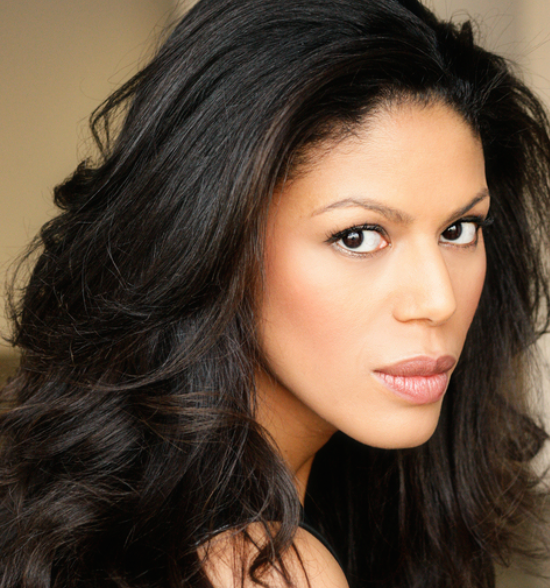
  • Merle Dandridge on “Blasian” Identity and Oprah Winfrey Network’s new summer original series “Greenleaf”

    CAAM: Center of Asian American Media
    2016-06-20

    Mitzi Uehara Carter

    Merle Dandridge started her career on Broadway with leading roles in Spamalot, Aida, Rent, Tarzan, and Jesus Christ Superstar. Not only does she have singing chops, she shines on screen. Dandridge has been cast in recurring roles on television shows including The Night Shift, CSI: Miami and Stalker.

    Dandridge has also broken into a field that is gaining more serious attention from actors — video games. Female actors can often find well developed, complex characters in narrative-led gaming roles. This year, she won BAFTA’ best performer for her role in the popular post-apocalyptic Playstation game, “Everybody’s Gone to the Rapture.”

    I spoke with Dandridge about her starring role in the upcoming original drama series, Greenleaf, on the Oprah Winfrey Network (OWN), which debuts June 21, 2016. This is her first lead role on a television series. Dandridge talked to me via phone from Los Angeles about this new summer drama that is chock-full of award-winning actors and writers. We also squealed about being Black and Asian and she hinted at a possible “Kimchi and Collards” project…

    Ok, Merle. I’m Black and Asian and I have to tell you I did a little happy dance when I learned your mother is Asian and your dad is Black American right? And you were born in Okinawa where my mom is from. Seriously now. I’m so psyched you’re Black Asian. Can you tell me a little about growing up with this very particular mixed background?

    Your kidding me? I don’t know others of that mix. How interesting! My mother is half Japanese and Korean. And I have older siblings who are mostly Korean, 1/4 Japanese, because of my mom’s first marriage to a Korean man. I was born in Okinawa but most of my time in Asia was in Seoul. My mother belongs to two cultures that didn’t really accept her 100 percent. So she had this understanding of rejection based on her own experiences. She would look at me and say, “You are of different ethnicities and you might not always be accepted so go into the world knowing that and know that you are more than that. You are beautiful.” And in many ways she instilled a sense of who I was and gave me ways to encounter fears of not being fully accepted. And in Nebraska as one of the only ones [mixed Asians], I think it was a good exercise in becoming a good person because I think I had to be above the confusion, the potential rejections…

    Read the entire interview here.

  • On The Free State Of Jones

    The Huffington Post
    2016-06-20

    Steven Hahn, Roy F. and Jeannette P. Nichols Professor of History
    University of Pennsylvania

    Three quarters of a century ago, “Gone with the Wind,” a film that mythologized an Old South of wealthy planters and obedient slaves, premiered in Atlanta amidst great fanfare and public interest. This week, a very different sort of film about the South of the Civil War and Reconstruction era – “Free State of Jones” — will have its premiere, and as we commemorate the 150th anniversary of the War and Reconstruction and struggle through our own time of social and racial divisiveness, the public would do very well to take the film’s measure.

    That is because “Free State of Jones,” challenges our many misconceptions of the Civil War and Reconstruction and can promote a dialogue about what may have been possible more than a century ago – and what is very much possible in our own day. “Free State of Jones” is based on a true story of interracial resistance to the Confederacy in Civil War Mississippi. It is the story of how a white farmer from humble origins named Newton Knight came to see how the Confederacy favored the rich planters at the expense of men and women like himself and chose to organize a rebellion aimed at establishing a terrain of freedom, a “free state,” in the county of Jones

    …But Newton Knight eventually went further still. The strongest resistance to the Confederacy came, not from poor white folk, but from those who were destined to be its main victims: the slaves. In Mississippi and elsewhere in the Confederate South, they took the opportunity of the War to flee their plantations and farms, head to Union lines, or form maroons in swamps and remote woodlands, denying slaveholders the labor and submission that had been expected. During his own battles with the Confederacy in rural Jones County, Knight forged alliances with African Americans, most specifically a slave named Rachel with whom he developed an intimate relationship and eventually raised a family…

    Read the entire article here.

  • Given these many contradictions, scholars have argued that rather than build racially egalitarian societies, Latin American elites simply created a more hegemonic and durable form of racial domination than their counterparts had in the United States or South Africa (Hanchard 1994; Marx 1998; Winddance Twine 1998; Winant 2001; Goldberg 2002; Sawyer 2006). According to these accounts, nationalist discourses of race mixture—insomuch as they relied on the logic of colorblindness and the silencing of racial critique—have often served to mask the reality of continued racism and structural inequality. It comes as something of a surprise then that nearly every Latin American country would change course so dramatically with respect to ethno- racial questions beginning in the late 1980s. In some cases, this shift also meant that state officials would recognize the persistence of racism within their societies for the first time in their histories.

    Tianna S. Paschel, Becoming Black Political Subjects: Movements and Ethno-Racial Rights in Colombia and Brazil, (Princeton: Princeton University Press, 2016). 7.

  • Beauty and the Bleach: This Issue is More than Skin Deep

    Ebony
    2016-06-20

    Yaba Blay, Dan Blue Endowed Chair in Political Science
    North Carolina Central University

    Skin bleaching is a billion-dollar industry. Considering its global reach, Dr. Yaba Blay says we have to stop treating bleaching as just a matter of self-hate.

    Over the past few years, social media has been abuzz with discussions of skin bleaching. In recent weeks, we’ve lamented Lil Kim’s ghostly shadow of her former self, ridiculed Ghanaian boxer Bukom Banku for denouncing his black skin, and dragged Azaelia Banks for becoming a virtual spokesmodel for Whitenicious by Dencia. While we talk amongst ourselves, a segment of a 2012 video investigating “unusual beauty trends” in Jamaica has resurfaced on Facebook. Viewed over two million times in less than one week, in that segment we see a soft-spoken blonde-haired European reporter “in the trenches” as she talks to a number of Jamaicans about their bleaching and offers requisite warnings about the dangers of the practice.

    Whether from the perspectives of Black folks or from those of Whites, our communal voyeurism into skin bleaching tends to focus almost solely on the individuals who bleach their skin, and not the global institutions that make skin bleaching a viable option. And it’s a problem…

    Read the entire article here.

  • Michelle Cliff, Who Wrote of Colonialism and Racism, Dies at 69

    The New York Times
    2016-06-18

    William Grimes


    Michelle Cliff sometime in the 1980s. In 1975, she met the poet Adrienne Rich, who became her partner and died in 2012.

    Michelle Cliff, a Jamaican-American writer whose novels, stories and nonfiction essays drew on her multicultural identity to probe the psychic disruptions and historical distortions wrought by colonialism and racism, died on June 12 at her home in Santa Cruz, Calif. She was 69.

    The cause was liver failure, according to the Adrienne Rich Literary Trust. Ms. Cliff and Ms. Rich, the poet, were longtime partners.

    Ms. Cliff’s entire creative life was a quest to give voice to suppressed histories, starting with her own. Her first essay, “Notes on Speechlessness,” written for a women’s writing group in 1978, can be read as the keynote for her subsequent work, which navigated the complexities of her life situation — she was a light-skinned black lesbian raised partly in Jamaica and partly in New York, and educated in Britain — against the broader background of the Caribbean experience…

    …In her first novel, “Abeng” (1984), she introduced Clare Savage, a light-skinned 12-year-old Jamaican girl who befriends the dark-skinned Zoe, whose family squats on Clare’s grandmother’s farm. It is an idyllic relationship that cannot survive the harsh realities of race and class.

    “Emotionally, the book is an autobiography,” Ms. Cliff told the reference work Contemporary Authors in 1986. “I was a girl similar to Clare and have spent most of my life and most of my work exploring my identity as a light-skinned Jamaican, the privilege and the damage that comes from that identity.”

    Clare returns to Jamaica as an adult in the novel “No Telephone to Heaven” (1987), which, in a series of flashbacks, tells of her life in New York and London and her struggles to come to terms with who she is…

    Read the entire obituary here.

  • New Yale award to honor high school juniors for community engagement

    Yale News
    New Haven, Connecticut
    2016-06-15


    This photograph of Ebenezer Bassett is part of the collection in the Yale Library’s Department of Manuscripts and Archives.

    Select high school juniors across the nation will be honored for their public service through the Yale Bassett Award for Community Engagement, established by Yale’s Center for the Study of Race, Indigeneity, and Transnational Migration (RITM). The first awards will be presented in the spring of 2017 to high school students in the Class of 2018.

    The new award honors the legacy of influential educator, abolitionist, and public servant Ebenezer Bassett (1833-1908), the United States’ first African American diplomat.

    “Ebenezer Bassett is an exemplar of so many qualities we seek to foster in all Yale students,” said Yale President Peter Salovey. “He was a superb intellectual who used the fruits of his education to serve his fellow global citizens and contribute to a more unified world. We are proud to bring heightened awareness of his name and legacy to those who follow in his footsteps today — and particularly to do so by recognizing outstanding young people who are tomorrow’s college students.”.

    Professor Stephen Pitti, director of the RITM Center, added: “The faculty in the Center for the Study of Race, Indigeneity, and Transnational Migration established this award to honor emerging leaders who, like Ebenezer Bassett in the 19th century, bring under-recognized perspectives to the public sphere, think hard about our collective futures, work on behalf of others, and exemplify intelligence and courage.”

    Born into a Native American (Schaghticoke) and African American family nearly 200 years ago, Bassett was the first black student admitted to the Connecticut Normal School (now Central Connecticut State University). He excelled there and at Yale, where he pursued courses in mathematics and classics in the 1850s. Bassett was a friend and supporter of abolitionist Frederick Douglass and served as principal of the Philadelphia Institute for Colored Youth (now Cheney University). He was named consul general to Haiti (becoming the first African American ambassador) and as chargé d’affaires to the Dominican Republic, gaining a hemispheric understanding of racial politics. He also served as Haiti’s consul in New York City

    Read the entire article here.