• How white parents talk with their black and biracial kids about race

    The Brood
    89.3 KPCC, Southern California Public Radio
    Pasadena, California
    2016-07-19

    How does “the talk” about race and policing play out when a parent is white and their children are black or biracial?

    Listen to the episode here. Download the episode here.

  • PSA: Mixed Black Babies Will Never Put An End to Antiblack Racism

    Wear Your Voice: Intersectional Feminist Media
    2016-07-21

    Ashleigh Shackelford, Contributing Writer

    Recently, there’s been numerous viral photos of white parents posting pictures of their mixed Black children with #AllLivesMatter political statements.

    For example:

    The picture to the left is of a Black, brown skin child holding a paper that reads, “Black lives only? I’M MIXED. So what about my white side? My mommy is white. My daddy is Black. They both matter to me. #AllLivesMatter.” This kind of manipulation of using your mixed Black child to denounce antiblack racism as a means to recenter your whiteness is violent. Any focus on trying to make #WhiteLivesMatter through the silencing of Black people — and manipulating your Black child to perpetuate that silence — is actually the same antiblack violence we’re fighting against. Also, mixed babies will never cure racism. EVER.

    Slavery & white supremacist sexual violence already taught us that mixed children didn’t change shit.

    This rhetoric that having mixed children is a step towards ending antiblackness is disgusting. The fact that hundreds of years of slavery, sexual violence, rape and forced reproduction against Black women and femmes did not prove to folks that mixed children didn’t change anything is disturbing. If anything, mixed Black children who are being read as “mixed” added numerous layers of violence into the context of white supremacist patriarchy. The physical and sexual violence against mixed children, or “mulattos,” only reaffirmed that Blackness will always separate you and therefore put you in a position to be harmed. Also, the one-drop rule as a sociopolitical principle of racial classification acknowledged any person with 1/32nd of Black blood is considered Black. This reminds us that Blackness is demonized even in the slightest because that’s how vile Blackness is in the construct of white supremacist patriarchy…

    Read the entire article here.

  • Obama Faces Growing Expectations on Race and Policing

    The New York Times
    2016-07-21

    Julie Hirschfeld Davis

    WASHINGTON — At the White House last week, DeRay Mckesson, a Black Lives Matter activist who was arrested only days before in Baton Rouge, La., for protesting police violence against African-Americans, had a lengthy list of demands for President Obama.

    The president should visit Baton Rouge and other cities where black men have been killed by police officers, appoint special prosecutors to investigate the deaths and use his executive power to force changes in police departments across the country, Mr. Mckesson said.

    The next day, a distraught Erica Garner, whose father, Eric Garner, was killed in 2014 by a New York City police officer who placed him in a chokehold, accosted Mr. Obama after a televised town-hall-style meeting with demands of her own. Why have no police officers been convicted or sent to jail for killing black men, and what was he doing to rid police departments of the tactical military equipment that made community protest routes resemble war zones, she asked.

    As Mr. Obama responds to the latest in fatal confrontations between police officers and black men — this time followed by lethal attacks in Dallas and Baton Rouge on law enforcement officers by black gunmen — he has also confronted a growing list of expectations that young black activists have placed on him…

    Read the entire article here.

  • How parents oppress their mixed race children

    The F-Word Blog: Contemporary UK Feminism
    2016-07-20

    Nicola Codner
    Leeds, Yorkshire, United Kingdom

    As a mixed race woman, whenever I come across articles by monoracial parents about their mixed race children, I tend to get a cold feeling of dread of inside. These articles seem to be in abundance these days in mixed race online communities. It’s very rare that I read one that doesn’t bring up numerous red flags, regardless of the race of the parent who is writing. I do seem to come across more articles written by white mothers, interestingly; however, this only increases my discomfort because as white people don’t experience racial oppression the scope for mistakes automatically broadens in these articles.

    Parents of mixed race children tend to write as though they are authorities on mixed race identity, when in most cases it’s obvious they haven’t done any research outside of their own personal (often biased) observations of their children…

    Read the entire article here.

  • An Interview with Danzy Senna

    Callaloo
    Volume 25, Number 2 (Spring, 2002)
    pages 447-452
    DOI: 10.1353/cal.2002.0092

    Claudia M. Milian Arias

    More than a coming of age story, Danzy Senna’s first novel, Caucasia (Riverhead Books, 1998) addresses themes of coming into consciousness within the U.S. ethnoracial landscape. Clearly in dialogue with Nella Larsen’s Passing as well as Ralph Ellison’s Invisible Man, Caucasia is a first person narrative where anything that happens to the protagonist, Birdie Lee, relates to the rest of the nation. Caucasia interrogates, displaces, and transforms the normative meanings of whiteness, and by extension, Americanness. The multiracial protagonist disappears into America “without a name, without a record. With only the body I traveled in. And a memory of something lost.” As Birdie becomes a transient subject, she undoubtedly echoes a critical question posed by Meena Alexander in The Shock of Arrival. That is: “Does passing mean being granted free passage?”

    Birdie’s painful, but transformative, realities thus shift our focus into her reconceptualization of the multiple Americas within America. The larger function of the narrative is to recover and remap America as racially mixed, where multiple memories, or an inventory of memories, are used to identify, catalogue, access, and interrelate thematic histories of displacement. Birdie’s multiraciality critiques the black and white binary not so much by going “beyond” it. Rather, she investigates these polar oppositions from within that binary—incisively demonstrating new identities and discourses that emerge from the continuous examination of not only being racially marked and ranked, but also of being positioned to live as a racialized subject.

    Senna was born in Boston in 1970. She holds a B. A. from Stanford University and a M.F.A. from the University of California, Irvine. In addition, Senna is the author of the anthologized essays, “The Color of Love,” in The Beacon Best of 2001: Great Writing by Women and Men of All Colors and Cultures (Beacon Press, 2001), and “The Mulatto Millennium,” in Half and Half: Writers on Growing Up Biracial and Bicultural (Pantheon, 1998).

    MILIAN ARIAS: At the beginning of Caucasia, there is a scene where Deck tells Ronnie: “Welcome to the land of miscegenation.” Caucasia follows up on this theme, since the novel functions, to a certain extent, as both a testimony of the lived experiences of being multiracial and a critique of the rigidity of racial categories in the United States. At a time when race relations are constructed, if not understood, in binary and bipolar extremes of black and white, how do you see multiraciality fitting within these strict categories? What is your take on the proposed multiracial category for the U.S. Census?

    SENNA: America has always been “the land of miscegenation.” The history of our country is one of disparate groups clashing and commingling. We’ve only recently begun to acknowledge this fact, and lately to celebrate rather than deny mixture. Of course, in many ways I think this recognition is a good thing, but I’m also wary of the way multiraciality has become fetishized in the media and in the popular discussion on race. In particular, I worry when multiracial pride is used to uphold an ahistorical and depoliticized vision of race in America. I’m suspicious of adding a new category to the Census for a lot of reasons. I think the idea of a separate multiracial category in many ways upholds a simplistic, scientific vision of race: If you mix a white and a black, you get a biracial. If you mix a Chicano and an Asian, you get a Chic-Asian, as if race were simply like mixing colors in a paint box. I’m not so much interested in categorizing further, or adding new groups, so much as I am interested in deconstructing the premise of race itself. My hope is that the addition of this new category will spur a debate on the idea of race. But I also wonder if we’re becoming more like Brazil, where complexion rather than race is the predominant system of identification. In Brazil, racism is able to function within a “land of miscegenation”—so we should see that as a warning, perhaps.

    As an aside, I recently saw a poster on a wall in New York. It may have been an ad for Benetton—I can’t remember. It showed a very pretty light-skinned girl with brown curly hair who looked to be part black and part white. She held a sign that read: “I’m a mulatto. I can’t be racist.” The sign was bizarre for many reasons, not the least of which was the use of the word “mulatto.” (I thought I was the only one still using that outdated term!) But also, the idea that someone mixed cannot be racist due to their mixed heritage revealed an illusion people seem to have: The idea that race mixture somehow neutralizes the problem of racism. Furthermore, the sign implied that black and white were the only two races in existence. Isn’t it possible that this mulatto could be racist against groups outside of those she is a part of: for instance, Latinos or Asians? Couldn’t she be xenophobic? And isn’t it possible to be racist against your own group(s)?

    The poster revealed to me the invisibility of groups who don’t fit into the black-white paradigm. Based on appearance, the girl in the poster could have easily been Puerto Rican, or Dominican, two racially mixed groups, but these identities aren’t as palatable in the American imagination, since they tend to signify “outsider, poverty, non-white, un-American” whereas the mulatto represents assimilation, the end of blackness, and the end of the discussion on racism. These other “mixed” groups, Latino, in particular, threaten the idea of American hegemony in a way that the blissful black-white mulatto in the picture doesn’t.

    Mulatto pride can fit in neatly with the black-white paradigm. And mulattos can be racist. And race mixing can exist and has existed happily within a racist and racialized structure. I’m wary of sanctifying any group based on race, or romanticizing the so-called mulatto…

    Read or purchase the interview here.

  • A Tale of Racial Passing and the U.S.-Mexico Border

    The New Yorker
    2016-07-20

    Jonathan Blitzer


    The African-American businessman William Ellis, pictured here around the year 1900, frequently passed as Mexican.
    COURTESY FANNY JOHNSON-GRIFFIN

    Some people knew him as William Ellis, and others as Guillermo Eliseo. He could be Mexican, Cuban, or even Hawaiian, depending on whom you asked. Everyone seemed to agree that he was spectacularly wealthy and successful. In the dime-store Who’s Who books that were popular at the turn of the twentieth century, his name, in one form or another, appeared regularly. He was a “Banker, Broker, and Miner,” who came to New York from the “Mexican frontier,” an exemplar of the self-made man.

    It was one of his life’s many ironies that the pedigreed gatekeepers of American high commerce celebrated his origin story without knowing a thing about his actual origins. William Ellis was born a slave, in Texas, in the eighteen-sixties. Like at least some of his siblings, he was light-skinned, but with a key difference: on the city census that recorded blackness with a “c” (for “colored”), Ellis was somehow spared the label. In his early twenties, he got into the cotton trade after a brief apprenticeship with a white local businessman, shuttling back and forth to the cities in northern Mexico. He started telling people that he was Mexican, and that he had anglicized his name for their convenience, as Karl Jacoby recounts in his fascinating new book, “The Strange Career of William Ellis.” Having grown up just south of San Antonio, along the border, Ellis came to speak fluent Spanish. He quickly grasped the possibilities of bilingualism in the race-riven landscape of the Reconstruction-era South…

    Read the entire article here.

  • What Scientists Mean When They Say ‘Race’ Is Not Genetic

    The Huffington Post
    2016-02-09

    Jacqueline Howard, Senior Science Editor

    A new paper explains why it can be dangerous to think otherwise.

    If a team of scientists in Philadelphia and New York have their way, using race to categorize groups of people in biological and genetic research will be forever discontinued.

    The concept of race in such research is “problematic at best and harmful at worst,” the researchers argued in a new paper published in the journal Science on Friday.

    However, they also said that social scientists should continue to study race as a social construct to better understand the impact of racism on health.

    So what does all this mean? HuffPost Science recently posed that question and others to the paper’s co-author, Michael Yudell, who is associate professor and chair of community health and prevention at the Dornsife School of Public Health at Drexel University in Philadelphia…

    Read the entire article here.

  • The Complexities of Skin Color

    Black Issues Forum
    UNC-TV
    Raleigh, North Carolina
    2016-05-01
    Running Time: 00:26:46

    Deborah Holt Noel, Host

    Inspired by the casting of Latina actress Zoe Saldana to play Nina Simone, the performer and activist known for her pride in her dark skin, Deborah chats with professor Dr. Yaba Blay, filmmaker Eric Barstow, and undergraduate student Ayana Thompson to delve into why so many people still knowingly and unknowingly participate in colorism – the assertion that light is better.

  • Akala: Dynamite by any other name…

    The Guardian
    2013-06-01

    Kate Mossman, Editor and Pop critic
    New Statesman


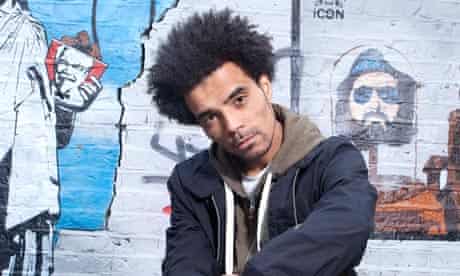
    Akala in Notting Hill last month: ‘In Brixton and Tottenham my sister was worshipped because she was representing a side of intellectual black culture that is never usually acknowledged.’ Photograph: Karen Robinson for the Observer

    Rapper, adapter of Shakespeare and brother of Ms Dynamite, Akala is on a mission to correct a few misconceptions

    A few weeks ago in these pages, Birmingham rapper Lady Leshurr asked why there had been no high-profile female rappers in the UK since Ms Dynamite. Akala seems a good person to consult – one, because he’s her brother, and two, because you can ask Akala just about anything and you’ll get a pretty comprehensive answer. In the course of 68 minutes in a London community centre under the Westway, he talks about 16th-century explorers, Biggie Smalls, the universities of 13th-century Timbuktu, tai chi, the Black Wall Street of Oklahoma, the African city portraits of Olfert Dapper, Eminem, peanuts, Napoleon’s generals, traffic lights and golf. But back to Ms Dynamite.

    “I remember the Daily Mail wrote an article about my sister at the time,” he says, “and essentially their argument was, ‘Well, she’s not really black, is she – she’s quite clever and she’s got a white mum!’ It was so funny the way they tried to co-opt us. Remember that big story about Bob Marley and his ‘white dad’ last year? He was unequivocally black power, but he’s rewritten as this fun-loving Rasta. Mark Duggan [the Tottenham man shot by police in August 2011] was also mixed race, but no one’s ever going to co-opt Mark Duggan!”…

    Read the entire article here.

  • My Soul Has Found Its Home

    Jews of Colour Canada: Building community through identity and faith
    2016-07-11

    Shirley Gindler-Price
    Philadelphia, Pennsylvania, USA

    Out of the 95,000 US Occupation babies born in Germany shortly after WWII, there were approximately 5000 of us, post WWII Afro-German children, so-called Negro mulatto babies, better known as German ‘Brown Babies.’ Born to German women and African-American soldiers, the SPD (Social Democratic Party of Germany) deemed that we formed a special group, presenting a human and racial problem of a special nature. Our national and cultural heritage [and perhaps even our religious birthright] were seen to be in direct contrast to our skin color.

    Born in Nuremberg, Germany, my mutti and I eventually moved to Ansbach, where at the age of two, I would be given up for adoption. As it was with so many other post WWII German ‘Brown Babies,’ I was adopted by an African American military couple stationed in Germany…

    Read the entire article here or here.