• Racialization and its paradigms: From Ireland to North America

    Current Sociology
    Volume 64, Number 2 (March 2016)
    pages 213-227
    DOI: 10.1177/0011392115614782

    Vilna Bashi Treitler, Professor of Black and Latino Studies; Professor of Sociology
    City University of New York

    This article offers a template for understanding and analyzing racialization as a paradigm. Further, this template is applied to the North American case – an important one because it has endured and spread across the globe despite the enormous weight of scientific evidence against it. The fallacy of race (and in particular the North American Anglo-origin variant) endures for two reasons. First, social agents seeking to gain or maintain power and control over paradigm-relevant resources benefit from reinvesting in pseudoscientific racial paradigms. Second, new science proving the fallacy of race is ignored because ignoring new paradigmatic science is in fact the way normal science operates. Thus, a paradigmatic analysis of race may help to explain why current social science approaches to the demise of racial thought may be ineffective.

    Read or purchase the article here. Read the working paper “Racialization – Paradigmatic Frames from British Colonization to Today, and Beyond” here.

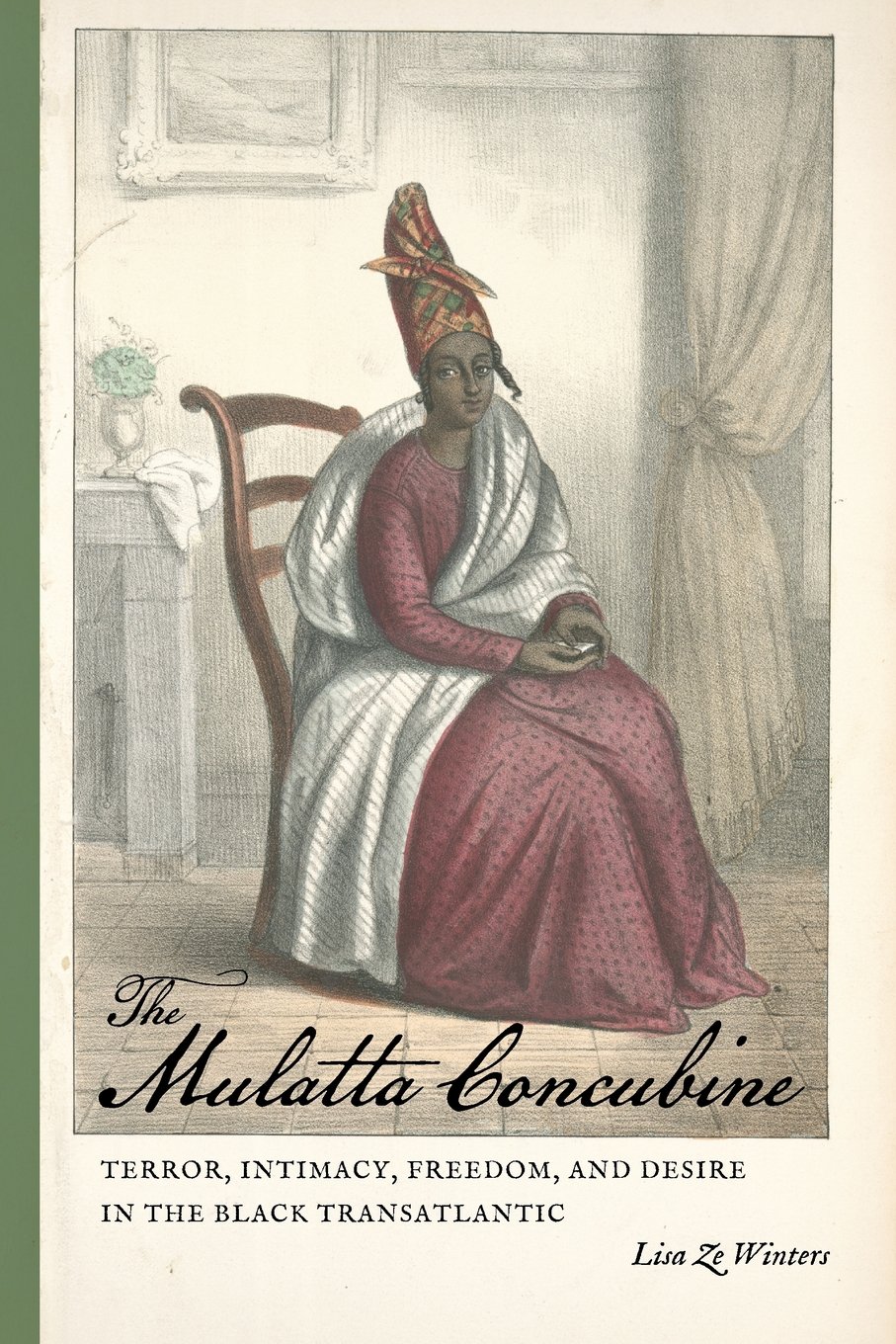
  • The Mulatta Concubine: Terror, Intimacy, Freedom, and Desire in the Black Transatlantic

    University of Georgia Press
    2016-01-15
    248 pages
    8 b&w photos
    Trim size: 6 x 9
    Hardcover ISBN: 978-0-8203-4896-4
    Ebook ISBN: 978-0-8203-4897-1
    Paper ISBN: 978-0-8203-5384-5

    Lisa Ze Winters, Associate Professor of English and Africana Studies
    Wayne State University, Detroit, Michigan

    Exploring the geographies, genealogies, and concepts of race and gender of the African diaspora produced by the Atlantic slave trade

    Popular and academic representations of the free mulatta concubine repeatedly depict women of mixed black African and white racial descent as defined by their sexual attachment to white men, and thus they offer evidence of the means to and dimensions of their freedom within Atlantic slave societies. In The Mulatta Concubine, Lisa Ze Winters contends that the uniformity of these representations conceals the figure’s centrality to the practices and production of diaspora.

    Beginning with a meditation on what captive black subjects may have seen and remembered when encountering free women of color living in slave ports, the book traces the echo of the free mulatta concubine across the physical and imaginative landscapes of three Atlantic sites: Gorée Island, New Orleans, and Saint Domingue (Haiti). Ze Winters mines an archive that includes a 1789 political petition by free men of color, a 1737 letter by a free black mother on behalf of her daughter, antebellum newspaper reports, travelers’ narratives, ethnographies, and Haitian Vodou iconography. Attentive to the tenuousness of freedom, Ze Winters argues that the concubine figure’s manifestation as both historical subject and African diasporic goddess indicates her centrality to understanding how free and enslaved black subjects performed gender, theorized race and freedom, and produced their own diasporic identities.

  • Trauma and Race: A Lacanian Study of African American Racial Identity

    Baylor University Press
    February 2016
    190 pages
    9in x 6in
    Hardback ISBN: 9781602587342

    Sheldon George, Professor of English
    Simmons College, Boston, Massachusetts

    African American identity is racialized. And this racialized identity has animated and shaped political resistance to racism. Hidden, though, are the psychological implications of rooting identity in race, especially because American history is inseparable from the trauma of slavery.

    In Trauma and Race author Sheldon George begins with the fact that African American racial identity is shaped by factors both historical and psychical. Employing the work of Jacques Lacan, George demonstrates how slavery is a psychic event repeated through the agencies of racism and inscribed in racial identity itself. The trauma of this past confronts the psychic lack that African American racial identity both conceals and traumatically unveils for the African American subject.

    Trauma and Race investigates the vexed, ambivalent attachment of African Americans to their racial identity, exploring the ways in which such attachment is driven by traumatic, psychical urgencies that often compound or even exceed the political exigencies called forth by racism.

    Table of Contents

    • Introduction: Race Today, or Alterity and Jouissance
    • 1. Race and Slavery: Theorizing Agencies beyond the Symbolic
    • 2. Conserving Race, Conserving Trauma: The Legacy of W. E. B. Du Bois
    • 3. Approaching the Thing of Slavery: Toni Morrison’s Beloved
    • 4. The Oedipal Complex and the Mythic Structure of Race: Ellison’s Juneteenth and Invisible Man
    • Conclusion: Beyond Race, or The Exaltation of Personality
  • Bridging the Divide: My Life

    Rutgers University Press
    2006-11-09
    352 pages
    16, 5.75 x 8.75
    Cloth ISBN: 978-0-8135-3905-8

    Senator Edward W. Brooke (1919-2015)
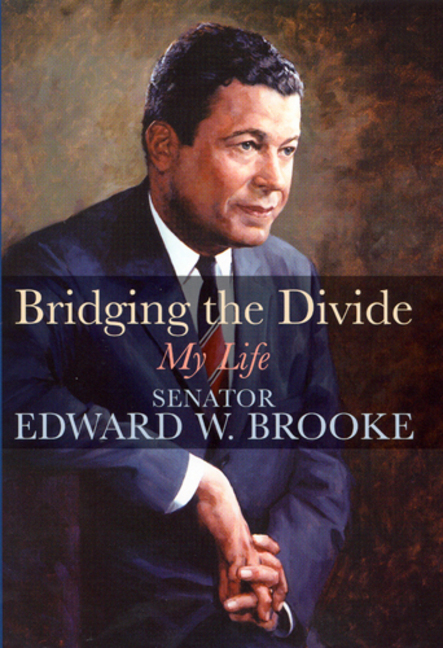
    President Lyndon Johnson never understood it. Neither did President Richard Nixon. How could a black man, a Republican no less, be elected to the United States Senate from liberal, Democratic Massachusetts-a state with an African American population of only 2 percent?

    The mystery of Senator Edward Brooke’s meteoric rise from Boston lawyer to Massachusetts attorney general to the first popularly elected African American U.S. senator with some of the highest favorable ratings of any Massachusetts politician confounded many of the best political minds of the day. After winning a name for himself as the first black man to be elected a state’s attorney general, as a crime fighter, and as the organizer of the Boston Strangler Task Force, this articulate and charismatic man burst on the national scene in 1966 when he ran for the Senate.

    In two terms in the Senate during some of the most racially tormented years of the twentieth century, Brooke, through tact, personality, charm, and determination, became a highly regarded member of “the most exclusive club in the world.” The only African American senator ever to be elected to a second term, Brooke established a reputation for independent thinking and challenged the powerbrokers and presidents of the day in defense of the poor and disenfranchised.

    In this autobiography, Brooke details the challenges that confronted African American men of his generation and reveals his desire to be measured not as a black man in a white society but as an individual in a multiracial society. Chided by some in the white community as being “too black to be white” and in the black community as “too white to be black,” Brooke sought only to represent the people of Massachusetts and the national interest.

    His story encompasses the turbulent post-World War II years, from the gains of the civil rights movement, through the riotous 1960s, to the dark days of Watergate, with stories of his relationships with the Kennedys, Martin Luther King Jr., Lyndon Johnson, Richard Nixon, Henry Kissinger, Colin Powell, and future senator Hillary Clinton. Brooke also speaks candidly of his personal struggles, including his bitter divorce from his first wife and, most recently, his fight against cancer.

    A dramatic, compelling, and inspirational account, Brooke’s life story demonstrates the triumph of the human spirit, offering lessons about politics, life, reconciliation, and love.
  • As a brown-skinned Dominican, the idea that I was somehow Black never crossed my mind. But what does it mean to be Black? Who is considered Black, and who is not? Am I Black? If I’m Dominican, can I be Black too? Am I Black enough? These are questions I struggled to answer as I embarked on a journey to come to terms with my European, Indigenous, and African ancestry and define my racial and cultural identity. Eventually, after deep study and reflection, I had discovered a racial and cultural fusion and finally admitted that I am the following: an Afro-Latino, or a Latino of African-descent, who identifies with their African roots; and an Afro-Dominican, which is simply a nationalized Afro-Latin@ identity. An Afro-Latin@ embraces four elements of African identity: their racial African features, like my thick, Black, curly afro; their cultural traits, which descend from African traditions such as music, food, language, and dance; their political identity, which is molded by their shared experience within a racist, anti-Black, system of white supremacy; and their social characteristics and personalities, which are African in nature. A Latin@ is simply someone mixed with African, European, and Indigenous blood.

    Jonathan Bolívar Espinosa (Jay Espy), “Dominican, Black, and Afro-Latino: A Confession/Dominicano, Negro, y Afro-Latino: Una Confesión,” La Galería Magazine: Voices of the Dominican Diaspora, April 10, 2015. http://www.lagaleriamag.com/dominican-black-and-afro-latino-a-confessiondominicano-negro-y-afro-latino-una-confesion/.

  • What happened to black Germans under the Nazis?

    The Conversation (US Pilot): Academic rigor, journalistic flair
    2016-01-26

    Eve Rosenhaft, Professor of German Historical Studies
    University of Liverpool

    The fact that we officially commemorate the Holocaust on January 27, the date of the liberation of Auschwitz, means that remembrance of Nazi crimes focuses on the systematic mass murder of Europe’s Jews.

    The other victims of Nazi racism, including Europe’s Sinti and Roma are now routinely named in commemoration, but not all survivors have had equal opportunities to have their story heard. One group of victims who have yet to be publicly memorialised is black Germans.

    All those voices need to be heard, not only for the sake of the survivors, but because we need to see how varied the expressions of Nazi racism were if we are to understand the lessons of the Holocaust for today.

    When Hitler came to power in 1933, there were understood to have been some thousands of black people living in Germany – they were never counted and estimates vary widely. At the heart of an emerging black community was a group of men from Germany’s own African colonies (which were lost under the peace treaty that ended World War I) and their German wives…

    Read the entire article here.

  • 3 Ways to Boost Your Self Esteem About Multiracial Hair

    Just Analise: Exploring and Embracing Authenticity in Life, Culture + Business
    2016-01-31

    Analise Kandasammy

    My multiracial hair.

    Sometimes it’s admired. Sometimes it’s a source of contention.

    Loved or hated, my hair undeniably me…

    Read the entire article here.

  • Daniel Lind Ramos and the Visual Politics of Race in Puerto Rican Art

    Theory and Critique of Art in the Caribbean
    2015-11-11

    Fabienne Viala, Associate Professor; Director of the Year Abroad; Director of the Yesu Persaud Centre for Caribbean Studies
    School of Modern Languages and Cultures
    University of Warwick, Coventry, United Kingdom

    This article discusses the work of the painter and installation artist Daniel Lind-Ramos. The Puerto Rican artist explores the complex relationships that exist between historical memory, national identity and racial identities in Puerto Rico; more specifically, he shows the taboos that weigh on African cultural heritage in the Estado Asociado Libre, through a style of painting that is always symbolic, sometimes allegorical and containing “keys” that bring the political and the metaphysical into a dialogue on canvas and in space. For Lind-Ramos, art is the expression of an Afro-Puerto Rican hyper-consciousness that claims the right to redefine the codes of representation and visual perception of a Caribbean socio-political reality that addresses its colonial status.

    Read the entire article here.

  • “Perhaps not since Ashley Montagu’s revolutionary, Man’s Most Dangerous Myth: The Fallacy of Race (1942), has a more important work on the pernicious aspects of race and racialization been written. The Arc of a Bad Idea, Understanding and Transcending Race, upends and debunks our conventional thinking about race and ending racism.

    Carlos Hoyt has written a timely and necessary balm for the wounds caused by centuries of the false notion of race—an idea with no empirical or scientific basis—but yet embraced worldwide. While Hoyt is by no means the first to engage in the noble crusade to convince mankind to destroy this harmful mythology, he is perhaps one of the few authors to lay out a concise and constructive vision on how we can actually become a society free of racial taxonomies.

    With the United States as his main focus, Hoyt examines racialization—America’s original sin—and builds upon—with his own research on individuals who eschew racialized identities—the work of racial identity theorists like Kerry Anne Rockquemore and others to formulate a pathway to a future that can be free of race and the insidious racism that necessarily accompanies it.

    Hoyt is never afraid to critique the well-intentioned yet racialist discourses of landmark court cases; census enumerations; esteemed historical scholars like W.E.B. DuBois; mid-20th century visionaries like Martin Luther King, Jr.; and contemporary scholars like Eduardo Bonilla-Silva, Amy Gutmann, and others.

    Hoyt, as evolutionary biologist Joseph L. Graves and racial meta—theorist Rainier Spencer before him, adds to the literature what is destined to become an invaluable resource for scholar and layman alike.” —Steven F. Riley, Creator and Founder of MixedRaceStudies.org

    Carlos Hoyt, Jr., “The Arc of a Bad Idea: Understanding and Transcendng Race,” (New York: Oxford University Press, 2016), ii.

  • Dominican, Black, and Afro-Latino: A Confession/Dominicano, Negro, y Afro-Latino: Una Confesión

    La Galería Magazine: Voices of the Dominican Diaspora
    2015-04-10

    Jonathan Bolívar Espinosa (Jay Espy)
    Bronx, New York

    “What? Black people in the Dominican Republic?” Yes amig@*, there are Black Dominican people whose ancestors descend from the African motherland. However, the question is not so much, “Are there Black people in the Dominican Republic?” as it is “Are Dominican people Black?” Ask that to a Dominican person and you might get cursed out. Contrary to popular belief, most Dominican people are in fact Black or African-descended, but Blackness tends to be defined in socially different ways depending on where you are in the world. For example, anyone from the United States who visits the Dominican Republic will find that most people there would qualify as Black if they lived in the states. Yet Dominican people see Blackness in a different way, and some of the most melanated Dominicans do not even claim their Blackness and instead default to “indio.” In reality, many Dominican people are as black as café, while others are as mixed as sancocho, as layered as cebollas, and a few as white as azúcar

    …As a brown-skinned Dominican, the idea that I was somehow Black never crossed my mind. But what does it mean to be Black? Who is considered Black, and who is not? Am I Black? If I’m Dominican, can I be Black too? Am I Black enough? These are questions I struggled to answer as I embarked on a journey to come to terms with my European, Indigenous, and African ancestry and define my racial and cultural identity. Eventually, after deep study and reflection, I had discovered a racial and cultural fusion and finally admitted that I am the following: an Afro-Latino, or a Latino of African-descent, who identifies with their African roots; and an Afro-Dominican, which is simply a nationalized Afro-Latin@ identity. An Afro-Latin@ embraces four elements of African identity: their racial African features, like my thick, Black, curly afro; their cultural traits, which descend from African traditions such as music, food, language, and dance; their political identity, which is molded by their shared experience within a racist, anti-Black, system of white supremacy; and their social characteristics and personalities, which are African in nature. A Latin@ is simply someone mixed with African, European, and Indigenous blood…

    Read the entire article here.