• Author and Professor Devyn Benson Speaks on Her Book “Antiracism in Cuba”

    Block Report Radio
    2016-07-14

    Antiracism in Cuba: The Unfinished Revolution” by author and professor Devyn Benson is an impressive study on the history of racism and Black organizing in Cuba prior to the 1959 revolution and right after it. This book is very important because there are very few that I have come across in the U.S. that document Black history on the island as well as exchanges between the Afro-Cuban and U.S. Black communities.

    The historical narrative and the current day government of Cuba propagates an image of the island as a mixed race nation. That’s different from the U.S. historical narrative, which propagates that if you have a drop of Black blood, you are Black. I talked with author Devyn Benson about these racial nuances as we discussed Black Cuban history. Check her out in her own words in this exclusive interview.
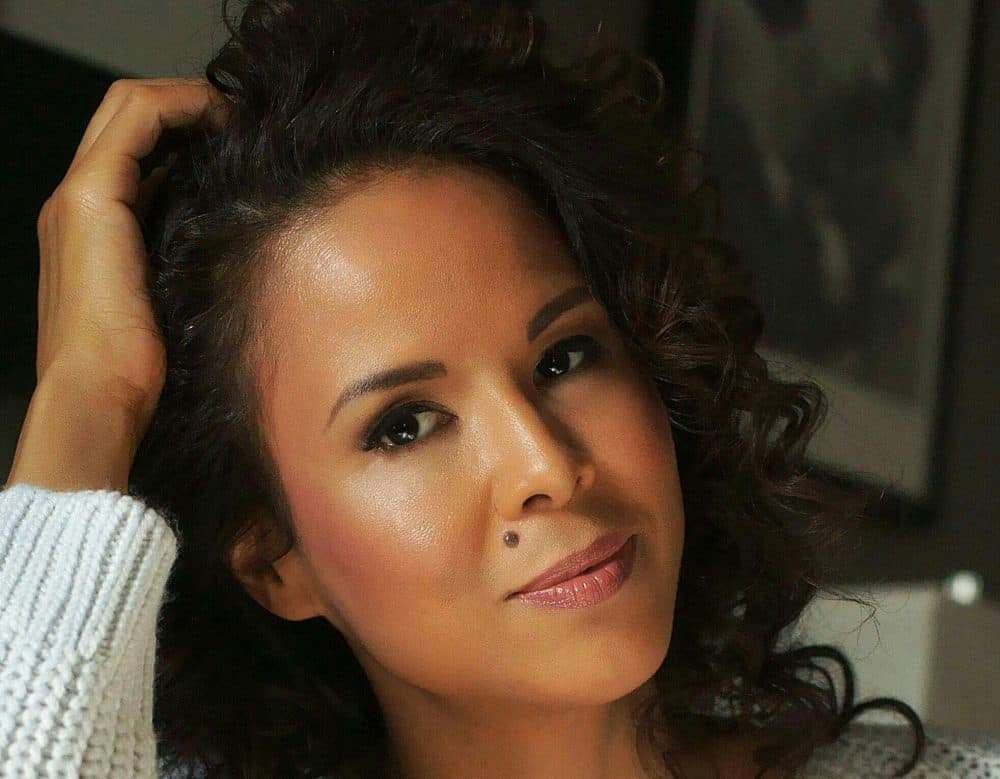
    Listen to the interview here. Read a transcript here.

  • In ‘Black Lotus,’ Author Sil Lai Abrams Explores Search For Racial Identity

    Here & Now
    WBUR 90.9 FM, Boston, Massachusetts
    2016-08-03


    Sil Lai Abrams, author of “Black Lotus: A Woman’s Search for Racial Identity.” (Courtesy of Che Williams)

    When Sil Lai Abrams was a child, her white father and her Chinese mother explained her dark skin and curly hair were a result of her Hawaiian birthplace. But when she was 14, her father told her that her biological father was a black man.

    Abrams struggled for years to figure out just who she was, and tells her story in the new memoir “Black Lotus: A Woman’s Search for Racial Identity.” Abrams joins Here & Now’s Eric Westervelt to talk about the book…

    Listen to the interview here. Read an excerpt from the book here.

  • Multiracialism and Its Discontents: A Comparative Analysis of Asian-White and Black-White Multiracials

    Lexington Books (an imprint of Rowman & Littlefield)
    July 2016
    178 pages
    6 1/2 x 9 1/4
    Hardback ISBN: 978-1-4985-0975-6
    eBook ISBN: 978-1-4985-0976-3

    Hephzibah V. Strmic-Pawl, Assistant Professor of Sociology and Anthropology
    Manhattanville College, Purchase, New York

    This book addresses the contemporary complexities of race, racial identity, and the persistence of racism. Multiracialism is often heralded as a breakthrough in racial reconciliation; some even go so far as to posit that the U.S. will become so racially mixed that racism will diminish. However, this comparative analysis of multiracials who identify as part-Asian and part-White and those who identify as part-Black and part-White indicates vastly different experiences of what it means to be multiracial. The book also attends to a nuanced understanding of how racism and inequality operate when an intersectional approach of race, class, gender, and sexual orientation is taken into account. It takes a focused look at how multiracialism is shaped by racism, but ultimately reveals a broader statement about race in the U.S. today: that there is no post-racial state and any identity or movement that attempts to address racial inequality must contend with that reality.

    Contents

    • Chapter 1: Multiracialism: A New Era
    • Chapter 2: A Historical Primer: Asians and Blacks in the United States
    • Chapter 3: The Synthesis of a Multiracial Identity
    • Chapter 4: Seeing Racism, Responding to Racism
    • Chapter 5: White Enough and Salient Blackness
    • Chapter 6: The Matrix: Complicating the Color Line
    • Conclusion: Multiracialism and Its Discontents
    • Epilogue: Multiracials Give Advice
    • Appendix: Participants in the Study
  • In Cuba since the 1960s, revolutionary ideology has emphasized a national unity that transcends race and discouraged racial identification. The average Afro-Cuban on the street today will often name being Cuban first, and black, mulatto, or white second. Cuba’s national racial identity is confounded by the fact that there is no accurate way to measure its demographics, especially when using the blurring mixed-race category of “mulatto,” which in Cuba is interchangeable with the term “mestizo,” a self-selected label easily applicable to more than half the island. While the National Office of Statistics stated in 2012 that Cuba is 36 percent nonwhite, Morales claims a more accurate figure is between 60 and 70 percent, largely because many Cubans suffer an internalized racism that makes them publicly deny blackness. I observed this subtle negation one night along the seaside Malecón when a roving guitarista approached the dark-skinned Afro-Cuban poet, hip-hop writer, and activist Carmen Gonzalez Chacon, and tried to flatter his way into 5 pesos by serenading the “beautiful mulatta.” She quickly corrected his misidentification.

    Erik Gleibermann, “Where Hip Hop Fits in Cuba’s Anti-Racist Curriculum,” The Atlantic, August 1, 2016. http://www.theatlantic.com/education/archive/2016/08/where-hip-hop-fits-in-cubas-anti-racist-curriculum.

  • Where Hip Hop Fits in Cuba’s Anti-Racist Curriculum

    The Atlantic
    2016-08-01

    Erik Gleibermann

    The country’s education leaders confront deep-seated discrimination in the classroom through rap.

    I was sitting with the Afrocentric rapstress Magia López Cabrera in her modest Havana walk-up in June when Cuba’s prominent black-history scholar Tomás Fernández Robaina showed up for a café con leche. Her tiny living room was filled with African folk art and images of women with 1970s-style Afros. It felt like the Cuban equivalent of Cornel West dropping in on Queen Latifah. Two nights later at an anniversary celebration for López’s rap-duo Obsesión, Fernández Robaina sat discussing racial profiling in the U.S. with Roberto Zurbano Torres, widely known in the U.S. for his writing on Cuban racial issues.

    Since arriving in Havana several weeks before to investigate Cuba’s work to eliminate racism, I had discovered a collaborative, tight-knit movement that’s gone largely unpublicized in the U.S., including in its six-time-zone, decentralized academic world. In Havana, community artists like Lopez, academics like Fernández, and members of the National Ministry of Education are collectively exploring how to integrate Afro-Cuban history and related gender concerns into the primary-through-university school system. It’s hard to imagine a U.S. parallel, such as Secretary of Education John King officially asking teachers to teach students a song like “Le Llaman Puta” (They Call Her Whore)—López’s critique of how Afro-Cuban women are driven into prostitution—to fulfill the Common Core standards.

    Efforts to combat racism in Cuba—which is widely believed to be majority nonwhite—through education have emerged quietly over the last several years. The National Ministry of Education officially leads the way through the Aponte Commission, where Fernández has served, exploring how to remove traces of racially denigrating language and imagery from, and include more Afro-Cuban history in, school textbooks. But the bold efforts are coming from below. A few semi-independent universities in Havana, and regional centers like Matanzas, Santiago de Cuba, and Camagüey, are taking the initiative, along with grassroots educators and activists involved in a hip-hop movement spearheaded by Obsesión…

    Read the entire article here.

  • Beyond Blackness and Whiteness: Activists of Mixed Race Speak Out

    The Los Angeles Review of Books
    2016-08-02

    Janice Rhoshalle Littlejohn

    SHORTLY BEFORE Alton Sterling’s and Philando Castile’s names became viral hashtags on social media, the latest flare-up in the ongoing conversation about race and racial justice in the United States had been sparked by actor Jesse Williams’s speech at the BET Awards. Some went so far as to call his speech “racist,” with more than 26,000 signatories petitioning to have the Grey’s Anatomy star ousted from the show; a choicely worded tweet from Shonda Rhimes promptly shut down that noise. Others asserted that, as a man of mixed race, Williams should refrain from speaking on issues of blackness, to which author Shannon Luders-Manuel responded in her essay “Can Biracial Activists Speak to Black Issues?” for The Establishment:

    Blackness cannot be taken away from us. Biraciality cannot be taken away from us. They exist as tangibly as our skin, made from Europe and Africa. We are the colonizer and the colonized. We are the oppressor and the oppressed. We bleed for our brothers and sisters. We carry on our backs the weight of what one half of us did to the other. We slip easily into white spheres, taking notes and taking names while nodding our European heads.

    As one of the fastest growing demographics in the country, mixed Americans are broadening the discourse on race, identity, and the American experience. Can having a biracial or mixed identity provide a vantage of both privilege and oppression? I posed this question to Heidi Durrow, author and founder of the Mixed Remixed Festival in Los Angeles; comedian, writer, and activist Tehran Von Ghasri; and Aaron Samuels, co-founder and COO of Blavity. Their perspectives were as varied as their personal stories, and, for some, fraught with mixed emotions.

    Read the entire article here.

  • Obama, America, and the Legacy of James Alan McPherson

    Literary Hub
    2016-08-01

    Whitney Terrell

    Whitney Terrell Remembers His Friend and Mentor

    The title story of James Alan McPherson’s Pulitzer Prize-winning short story collection Elbow Room opens with an italicized passage:

    Narrator is unmanageable. Demonstrates a disregard for form bordering on the paranoid . . . When pressed for reasons, narrator became shrill in insistence that “borders,” “structures,” “frames,” “order,” and even “form” itself are regarded by him with the highest suspicion. Insists on unevenness as a virtue.

    I thought of this last week when I heard that McPherson had died. I was also listening to President Obama’s speech at the Democratic National Convention. “My grandparents knew these values weren’t reserved for one race,” Obama said. “They could be passed down to a half-Kenyan grandson, or a half-Asian granddaughter. In fact, they were the same values Michelle’s parents, the descendants of slaves, taught their own kids, living in a bungalow on the South Side of Chicago.”

    It sounded like an innocuous statement: “These values weren’t reserved for one race.” But Obama was talking about his mother’s family. Scotch Irish whites in Kansas. I live a few blocks from Kansas. It’s not the most hospitable place for, say, half-Kenyans. Or Mexican-Americans. Or Democrats generally.

    Then he asserted that the values of these white Kansans were the same as the values of the descendants of slaves.

    A turn like that engages what McPherson referred to as the “function at the junction.” It’s an unexpected operation that causes fixed categories and settled identities to change. Borders and frames disappear.

    Obama’s move was ok. But McPherson’s were better…

    Read the entire article here.

  • Favourite for Ukip leader Steven Woolfe misses application deadline

    The Guardian
    2016-08-01

    Rowena Mason, Deputy political editor

    MEP and migration spokesman could be out of leadership race but insists he is still a candidate

    Steven Woolfe, the favourite to succeed Nigel Farage as Ukip leader, could be out of the race after he missed the deadline for submitting his application by 17 minutes because of technical problems.

    A spokesman for the MEP and migration spokesman said he was still a candidate. The party has not yet confirmed whether the delay will make him ineligible. A party spokesman said a final decision would be made on Tuesday after final vetting procedures were completed…

    Read the entire article here.

  • Personal Essay: Yo Soy Boricua

    Latina
    2010-01-18

    La La Vazquez

    A lot of people don’t realize that I’m Latina, which is fine. One thing about being Latina is that there isn’t one look that comes with the territory. I don’t expect people to know my cultural background just by glancing at me. I do, however, expect that when I tell people my family is from Puerto Rico, that I will be believed and not accused of trying to be something that I’m not. It usually goes something like this: a person having a conversation with me discovers one way or another that I’m Puerto Rican and fluent in Spanish. That person then expresses their shock over these realizations for any number of reasons—common responses are, “You don’t look Latina” and “I thought you were black!” I never said I wasn’t black. And since when does being black and being Latina have to be mutually exclusive?…

    Read the entire article here.

  • American Negroes were explicitly defined as hybrids of European, African, and in some cases Native American (then known as “Indian”) ancestry. As a result, among other things, skeletal and living Negro populations served as a historical record of social and sexual liaisons between blacks and whites in the United States. This particular biocultural interface was an integral part of framing studies that examined differences in skeletal morphology and phenotype between racial groups. At the same time, Negroes were also considered to be a biologically discrete racial group unto themselves. This “fact” justified the population being situated as an anatomical landmark of sorts for mapping and identifying distinct racial characters. This simultaneous construction of the American Negro as both a hybrid and racially distinct suggests that multiple definitions of race and understandings of racial difference were at work in constructing the American Negro as a research subject. This is not surprising when we consider that scholars involved in this work represented a variety of perspectives on human biological diversity. As such, this research can be considered a matter of “boundary work” in the midst of methodologies and subjects that cannot be easily or distinctly categorized (Lipphardt 2010). This also suggests that these studies must be considered within the larger context of bioanthropological interest in studying mixed-race populations to identify the source of biological change in humans. Scientists inside and outside of the United States engaged in research to determine whether or not this change occurred within populations by way of selection or solely by interbreeding with different groups.

    Rachel J. Watkins, “Biohistorical Narratives of Racial Difference in the American Negro: Notes toward a Nuanced History of American Physical Anthropology,” Current Anthropology, Volume 53, Number S5, April 1, 2012. S197. http://dx.doi.org/10.1086/662416.