• Jade bracelets are meant to protect Chinese toddlers when they’re learning to walk, like talismans – if the baby falls down, the idea is that the circle of stone will smash rather than the child be hurt. For me, it represents the broken bloodline of my Chinese inheritance – disrupted by the fact that my mother was adopted as an orphan – but also my efforts to reintegrate the Chinese half of my identity,” [Sarah] Howe says.

    Clare Tyrrell-Morin, “Prize-winning Hong Kong-born poet Sarah Howe makes verse of city’s Basic Law,” South China Morning Post, July 7, 2016. http://www.scmp.com/culture/arts-entertainment/article/1986620/prize-winning-hong-kong-born-poet-sarah-howe-makes-verse.

  • Three Takeaways from Interviewing 110 “JewAsian” Couples and Kids

    The ProsenPeople: Exploring the world of Jewish Literature
    Jewish Book Council
    2016-07-18

    Helen Kiyong Kim, Associate Professor of Sociology
    Whitman College, Walla Walla, Washington

    Noah Samuel Leavitt, Associate Dean of Students
    Whitman College, Walla Walla, Washington

    Helen Kiyong Kim and Noah Samuel Leavitt are the coauthors of JewAsian: Race, Religion, and Identity for America’s Newest Jews. With the release of their book earlier this month, the couple is guest blogging for Jewish Book Council all week as part of the Visiting Scribe series here on The ProsenPeople.

    We have always acknowledged that what drew us to the research that would become the foundation of our book, JewAsian: Race, Religion, and Identity for America’s Newest Jews, started from personal questions based on our own experiences and relationship. When we began our project in 2008, Helen was pregnant with our first child. We were in the throes of trying to figure out not only diapering, sleeping, and feeding a newborn but also how we would raise our child to navigate and contribute to a very complex world. We were curious how other couples— JewAsian because of racial, ethnic, and sometimes religious difference—were figuring out, in light of these types of differences, how to sustain and nurture a marriage and family.

    Fast forward to the present: our son Ari (almost 8) and daughter Talia (almost 5) challenge us every day with their endless curiosity and argumentative demeanor. We often find ourselves at a loss for words in their midst, particularly when it comes to in-the-moment questions and statements about identity, whether racial, ethnic, religious, or all three. But then we remember that we talked to roughly one hundred and ten individuals whose own experiences have taught us a great deal about how to think about the challenges we experience every day in our own family.

    What have we learned about our own family by writing a book about families like ours? Here are a few takeaways:…

    Read the entire article here.

  • The American Negro: A Study in Racial Crossing

    Praeger (Originally published by Alfred A. Knopf (New York) in 1928)
    July 1985
    112 pages
    5 1/2 x 8 1/2
    Hardcover ISBN: 978-0-313-24795-8

    Melville J. Herskovits (1895-1963), Professor Emeritus of Anthropology
    Northwestern University, Evanston, Illinois

    An anthropomorphic study of the black population in the United States, based on a study conducted in 1920.

  • Biohistorical Narratives of Racial Difference in the American Negro: Notes toward a Nuanced History of American Physical Anthropology

    Current Anthropology
    Volume 53, Number S5 (April 1, 2012) (Volume Supplement)
    pages S196-S209
    DOI: 10.1086/662416

    Rachel J. Watkins, Associate Professor of Anthropology
    American University, Washington, D.C.

    This paper examines the scientific construction of racial differences through the lens of early twentieth-century bioanthropological studies of American Negro skeletal and living population samples. These studies, as well as the scientists who conducted them, are generally distinguished from one another based on their adherence to quantitative and/or qualitative measures of racial difference. However, these binary distinctions tend to obscure the rather complex processes of racial formation in which scientists and research subjects were engaged. Both racialist and nonracialist scholarship positioned American Negroes as products of white, African, and, sometimes, Indian admixture. As the singular label used in these studies connotes, “the American Negro” was also classified as a distinct racial type based on elements of skeletal and physical morphology. Studies reveal that multiple definitions and meanings of race were operating and being generated in the process of situating American Negroes in these seemingly opposed positions. Finally, I consider the implications of this discussion for developing critical histories of American physical anthropology and engaging contemporary public and academic discourse around race, health, and biological diversity.

    Read the entire article in HTML or PDF format.

  • Biracial Current and Former Military Dependents Needed

    New Mexico State University
    2016-07-30

    Charlotte Williams, M.A.
    Approved IRB Number #13184

    My name is Charlotte Williams and I am a doctoral student in the Counseling Psychology program at New Mexico State University. I would like to invite you participate in a study that aims to explore growing up biracial in a military community. Participants will report their experiences and their perspectives regarding their experience growing up biracial in a community without many others like themselves and explore how their racial identity developed. If selected to interview, interviews will consist of 60-120 minute sessions via phone. If interested in participation please follow the link listed below to complete the pre-interview screening. The online screening should take approximately 20 minutes of your time. There are no major risks involved in the participation of this study; however, participants may experience possible discomfort when discussing experiences of growing up, their racial identity, or their community. As a result of your participation, you will help in gaining a better understanding of biracial identity development in a military community.

    To participate in the study, please visit the survey and provide your contact information and demographics here.

    If you have any questions or concerns please contact Charlotte Williams, M.A. at wilcha08@nmsu.edu or Dr. Luis Vazquez, Associate Vice President of Research Integrity at (575) 646-2481 or at mailto:lvazquez@nmsu.edu.

  • Mathematician Katherine Johnson at Work

    NASA History
    National Aeronautics and Space Administration (NASA)
    2016-02-25

    Sarah Loff, Editor


    Image Credit: NASA

    NASA research mathematician Katherine Johnson is photographed at her desk at Langley Research Center in 1966. Johnson began her career in 1953 at the National Advisory Committee for Aeronautics (NACA), the agency that preceded NASA, one of a number of African-American women hired to work as “computers” in what was then their Guidance and Navigation Department, just as the NACA was beginning its work on space. Johnson became known for her training in geometry, her leadership, and her inquisitive nature; she was the only woman at the time to be pulled from the computing pool to work with engineers on other programs.

    Johnson worked at Langley from 1953 until her retirement in 1986, making critical technical contributions which included calculating the trajectory of the 1961 flight of Alan Shepard, the first American in space…

    Read the entire article here.

  • Planning for German Children of Mixed Racial Background1

    Social Service Review
    Volume 30, Number 1 (March 1956)
    pages 33-37
    DOI: 10.1086/639959

    Hans Pfaffenberger (1922-2012), Professor of Psychology
    University of Trier, Trier, Germany

    Translated by Susanne Schulze

    On January 1, 1955, there were approximately four thousand mischlingskinder2 in the West German Republic. This number is still increasing by 250 to 350 a year. More than 70 per cent of the children are living with their mothers, and about 5 per cent with other relatives—grandparents, aunts, etc. About 12 per cent are in institutions, about 10 per cent in foster homes. The remaining children have been adopted, either by American families or, in a few cases, by German families, or they have emigrated to the United States with their mothers, who have married. According to the social agencies responsible for them, 90 per cent of the children remaining in Germany are well cared for. In 10 per cent of the cases, special services have been found necessary, but these have been general services—better housing, convalescent care, etc.—unrelated to the special situation of these children as children of mixed racial background.

    The approximately four thousand children of mixed racial background pose many problems for child welfare agencies, and it is good to know that many attempts are being made to find solutions and to suggest remedies. Not all of these suggestions, of course, are equally acceptable, and it seems that the time is ripe to examine some of them in relation to the situation of these children, as it is known through reliable reports, and in the light of some basic considerations.

    EMIGRATION OR ADOPTION?

    Many people are suggesting general solutions that would supposedly “clean up” with one stroke all of the emerging problems or at least would cover them up; for example, it has been suggested that the problem be solved through adoption abroad, through emigration of the mothers with their children, through emigration of the mischlingskinder, or through segregation of all these children in order to rear them together. Many strong objections to these general solutions may be raised. Recently several welfare organizations, as well as individuals with long years of experience, have warned against adoption abroad, including in the United States, especially when children of mixed racial background are concerned. A most careful investigation of the potential adoptive family seems definitely indicated.3 When we consider the social and economic circumstances of these children, as well as the attitudes of the community toward them, transplanting them to America through adoption or through marriage of the mother…

    Read or purchase the article here.


    1 From Newes Beginnen (New Beginning [periodical of the Workers’ Welfare Association, published by National Headquarters of the Organization, Bonn]), VIII (August, 1955).

    2 Mishlingskinder refers to children of mixed racial background. The children considered in this article are those born to German women and nonwhite soldiers stationed in Germany.

    3 See U. Mende, “Adoption deutscher Kinder durch amerikanische Staatsangehörige,” Unsere Jugend, May, 1955, S. 207; E. Hochfeld and M. A. Valk, “Experience in Intercountry Adoptions” (New York: International Social Service, American Branch, 1953).

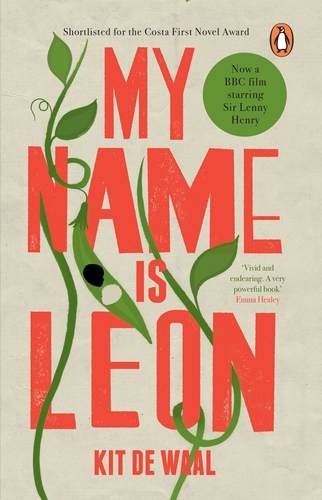
  • My Name Is Leon by Kit de Waal review – a touching, thought-provoking debut

    The Guardian
    2016-06-03

    Bernardine Evaristo


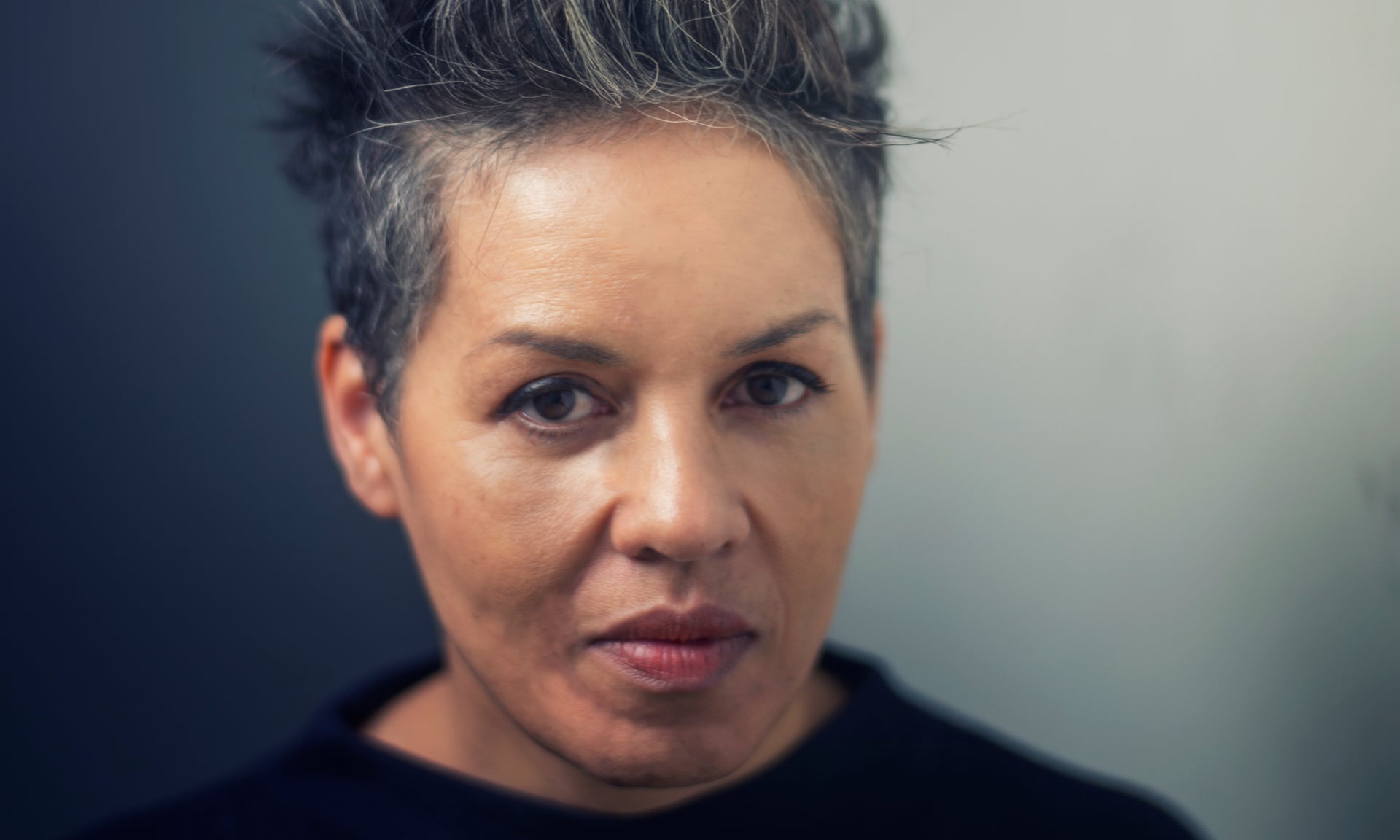
    Insight and authenticity … Kit de Waal. Photograph: Sarah Lee for the Guardian

    A young vulnerable boy is taken into care after his mother is no longer able to cope

    Kit de Waal has already garnered praise and attention for her short fiction. She worked in family and criminal law for many years, and wrote training manuals on fostering and adoption; she also grew up with a mother who fostered children. This helps explain the level of insight and authenticity evident in My Name Is Leon, her moving and thought-provoking debut novel.

    It is set in the early 1980s and, like What Maisie Knew and The Curious Incident of the Dog in the Night-Time, is told through the perspective of a child who is keenly observant, although we understand more of what is happening around him than he does. In this case, the narrator is eight-year-old Leon, who becomes a foster child. The novel begins with the birth of his baby brother, Jake. Immediately we realise that there is something wrong with their mother, Carol. Rather than cradle the child she has just given birth to, she leaves the hospital room to have a cigarette. The nurse leaves too and tells Leon, “If he starts crying, you come and fetch me. OK?” Leon is left on his own with Jake. The novel is full of quietly shocking moments like this, which reveal how much child protection has moved on from 30 years ago.

    The brothers have different, and absent, fathers. While Carol and Jake are white, Leon is mixed race. His father, Byron, is in prison, while Jake’s father, Tony, has rejected Carol and their child. Home is on an estate near a dual carriageway. Carol often leaves her boys alone in the flat when she goes out…

    Read the entire review here.

  • My Name is Leon

    Viking (an imprint of Penguin Press)
    2016-05-31
    272 pages
    153mm x 234mm x 19mm
    359g
    Hardback ISBN: 9780241207086
    Paperback ISBN: 9780241207093
    eBook ISBN: 9780241973394
    Audio ISBN: 9780241976203 (Read by Lenny Henry / 07:51:00)

    Kit de Waal

    A brother chosen. A brother left behind. And a family where you’d least expect to find one.

    Leon is nine, and has a perfect baby brother called Jake. They have gone to live with Maureen, who has fuzzy red hair like a halo, and a belly like Father Christmas. But the adults are speaking in low voices, and wearing Pretend faces. They are threatening to give Jake to strangers. Since Jake is white and Leon is not.

    As Leon struggles to cope with his anger, certain things can still make him smile – like Curly Wurlys, riding his bike fast downhill, burying his hands deep in the soil, hanging out with Tufty (who reminds him of his dad), and stealing enough coins so that one day he can rescue Jake and his mum.

    Evoking a Britain of the early eighties, My Name is Leon is a heart-breaking story of love, identity and learning to overcome unbearable loss. Of the fierce bond between siblings. And how – just when we least expect it – we manage to find our way home.

  • ‘We Are All the Same, We All Are Mestizos’: Imagined Populations and Nations in Genetics Research in Colombia

    Science as Culture
    Volume 23, Issue 2, 2014
    pages 226-252
    DOI: 10.1080/09505431.2013.838214

    María Fernanda Olarte Sierra, Assistant Professor
    Department of Design
    University of the Andes, Bogotá, Colombia

    Adriana Díaz Del Castillo Hernández, Independent Researcher
    Consultoría en Estudios Sociales Sobre Educación, Salud, Ciencia y Tecnología, Bogotá, Colombia

    In Colombia, as in other Latin American countries, current population genetics research is based on the understanding that Colombians constitute a mestizo nation, given the admixture process that took place between Africans, Amerindians, and Europeans during colonial times. The mestizo is a pervasive category used by geneticists to conduct, organise, and publish research studies that deal with the continent’s peopling process and the genetic makeup of its contemporary population(s). It is also the dominant imaginary for the Colombian population and a key nation-building ideology. By tracing how this category moves and is used across four Colombian genetics laboratories, it is possible to discern that despite its apparently clear-cut boundaries, the mestizo is contingent, contested, and flexible, allowing for multiple understandings and usages. This flexibility and multiplicity are visible in the quantification of genetic ancestry, the divisions of geographical location, and the understanding of gender. Such understandings allow one to think about a homogeneous nation (inclusive) that is simultaneously heterogeneous (exclusive); they provide multiple but not necessarily contradictory possibilities of being mestizo, allowing the coexistence of images of the nation that could otherwise seem contradictory; and they permit navigation around contested terms such as race, while simultaneously thinking of mixed races or racialised individuals. Finally, these flexible and multiple constructions of the mestizo (re)produce various subjects as ‘other’, whether they are women, the Indigenous, the black/dark, or the poor.

    Read or purchase the article here.