• Searching for Mr. Chin: Constructions of Nation and the Chinese in West Indian Literature

    Temple University Press
    May 2010
    192 pages
    5.5×8.25
    Cloth EAN: 978-1-43990-130-4; ISBN: 1-4399-0130-9
    Electronic Book: EAN: 978-1-43990-132-8

    Anne-Marie Lee-Loy, Assistant Professor of English
    Ryerson University, Toronto, Canada
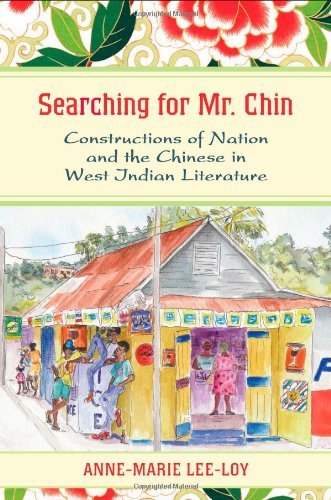
    West Indian literary representations of local Chinese populations illuminate concepts of national belonging

    What do twentieth-century fictional images of the Chinese reveal about the construction of nationhood in the former West Indian colonies? In her groundbreaking interdisciplinary work, Searching for Mr. Chin, Anne-Marie Lee-Loy seeks to map and understand a cultural process of identity formation: “Chineseness” in the West Indies. Reading behind the stereotypical image of the Chinese in the West Indies, she compares fictional representations of Chinese characters in Jamaica, Trinidad, and Guyana to reveal the social and racial hierarchies present in literature by popular authors such as V.S. Naipaul and Samuel Selvon, as well as lesser known writers and hard to access literary texts.

    Using historical, discursive, and theoretical frameworks for her literary analysis, Lee-Loy shows how the unstable and ambiguous “belonging” afforded to this “middleman minority” speaks to the ways in which narrative boundaries of the nation are established. In addition to looking at how Chinese have been viewed as “others,” Lee-Loy examines self-representations of “Chineseness” and how they complicate national narratives of belonging.

  • Doing Race: 21 Essays for the 21st Century

    W. W. Norton and Company
    April 2010
    590 pages
    6.2 × 9.3 in
    Paperback ISBN: 978-0-393-93070-2

    Hazel Rose Markus (Editor)
    Stanford University

    Paula M. L. Moya (Editor)
    Stanford University

    A collection of new essays, written by a team of interdisciplinary authors, that gives a comprehensive introduction to race and ethnicity.

    In Doing Race, scholars from across the disciplines have written original essays on race and ethnicity aimed at an undergraduate audience. The book provides a practical response to the view, common in American debates, that race and ethnicity no longer matter, or that race and ethnicity should not be taken into account when deciding how to structure society and formulate public policy. It also answers the question of why race and ethnicity play such a large role in fueling violence around the globe.

    Doing Race shows that race and ethnicity matter because they are important resources in answering the fundamental, even universal “Who am I?” and “Who are we?” questions. It demonstrates how understanding how identities are shaped by race and ethnicity is central to understanding individual and collective behavior in the United States and throughout the world.

    Drawing on the latest science and scholarship, these original essays provide undergraduates with an effective framework for understanding the persistence of racial inequalities and problems in the 21st century.

    Table of Contents:

    Introduction: Doing Race

    Hazel Rose Markus

        and

    Paula M. L. Moya

    Part I: Inventing Race and Ethnicity

    • Defining Race and Ethnicity: The Constitution, the Court, and the Census, C. Matthew Snipp, Sociology
    • Models of American Ethnic Relations: Hierarchy, Assimilation, and Pluralism, George Fredrickson, History
    • The Biology of Ancestry: DNA, Genomic Variation, and Race, Marcus W. Feldman, Biology
    • Which Differences Make a Difference? Race, Health, and DNA, Barbara Koenig, Medical Anthropology

    Part II: Racing Difference

    • The Jew as the Original ‘Other’: Difference, Antisemitism, and Race, Aron Rodrigue, History
    • Knowing the ‘Other’: Arabs, Islam, and the West, Joel Beinin, History
    • Eternally Foreign: Asian Americans, History, and Race, Gordon H. Chang, History
    • A Thoroughly Modern Concept: Ethnic Cleansing, Genocide, and the State, Norman M. Naimark, History

    Part III: Institutionalizing Difference

    • Race in the News: Stereotypes, Political Campaigns, and Market-Based Journalism, Shanto Iyengar, Communication and Political Science
    • Going Back to Compton: Real Estate, Racial Politics, and Black-Brown Relations, Albert M. Camarillo, History
    • Structured for Failure: Race, Resources, and Student Achievement, Linda Darling-Hammond, Education
    • Racialized Mass Incarceration: Poverty, Prejudice, and Punishment, Lawrence D. Bobo and Victor Thompson, Sociology

    Part IV: Racing Identity

    • Who Am I? Race, Ethnicity, and Identity, Hazel Rose Markus, Psychology
    • In the Air Between Us: Stereotypes, Identity, and Achievement, Claude M. Steele, Psychology
    • Ways of Being White: Privilege, Stigma, and Transcendence, Monica McDermott, Sociology
    • Blacks as Criminal, Blacks as Apes: Race, Representation, and Social Justice, Jennifer L. Eberhardt, Psychology
    • We’re Honoring You Dude: Myths, Mascots, and American Indians, Stephanie Fryberg and Alisha Watts, Psychology

    Part V: Re-presenting Reality

    • Another Way to Be: Women of Color, Literature, and Myth, Paula M. L. Moya, English
    • Hiphop and Race: Blackness, Language, and Creativity, Marcyliena Morgan and Dawn-Elissa Fischer, African and African American Studies and Africana Studies
    • The ‘Ethno-Ambiguo Hostility Syndrome’: Mixed-Race, Identity, and Popular Culture, Michele Elam, English
    • ‘We wear the mask’: Performance, Social Dramas, and Race, Harry Elam, Drama
  • Multifaceted Identity of Interethnic Young People: Chameleon Identities

    Ashgate Publishing
    May 2010
    Illustrations: Includes 24 (including 5 tables) line drawings
    234 x 156 mm
    224 pages
    Hardback
    ISBN: 978-0-7546-7860-1
    eBook ISBN: 978-0-7546-9691-9
    BL Reference: 305.8’0083-dc22
     
    Sultana Choudhry, Principal Lecturer in Psychology and Director of Child, Adolescent and Family Mental Health
    London Metropolitan University, UK

    The number of interethnic individuals is one of the most striking demographic changes in Britain over the last decade. Demonstrating both that identity is fluid and multifaceted rather than fixed, and that people of an interethnic background do not necessarily experience identity conflict as proposed by some social scientists, Multifaceted Identity of Inter-ethnic Young People explores the manner in which interethnic young people define their identities. In doing so, it also looks at their parents and their experiences as interethnic couples in society. Presenting rich new empirical information relating to young people of Black, White, Asian and Chinese interethnic backgrounds, this book also examines the impact that inter-religious relationships have upon young people’s sense of identity, whilst also discussing the implications of the election of America’s first interethnic president. As such, it will be of interest to social scientists working in the fields of race, ethnicity and identity.

    Read the introduction here.

    Table of Contents

    Part 1: Placing Identity Theory and Research in Context
    Introduction
    Social science theories and research on identity
    The science of ethnic and inter-ethnic identity

    Part 2: The Research
    How the research was carried out

    Part 3: Voices – Non Inter-Ethnic and Inter-Ethnic
    Non-inter ethnic parents and children
    Inter-ethnic couples

    Part 4: The Coming of the Chameleons
    Who am I? Identities adopted
    A chameleon identity
    The fine art of choosing an identity
    The impact of being inter-ethnic
    Conclusions: the future is inter-ethnic

    Appendices
    References
    Index

  • Uncommon Common Ground: Race and America’s Future (Revised and Updated)

    W. W. Norton & Company
    June 2010
    288 pages
    5.5 × 8.25 in
    Paperback ISBN 978-0-393-33685-6

    by

    Angela Glover Blackwell

    Stewart Kwoh

    Manuel Pastor, Professor of American Studies and Ethnicity
    University of California, Santa Cruz

    With a mixed-race president, a Latino population that is now the largest minority, and steadily growing Asian and Native American populations, race is both the most dynamic facet of American identity and the defining point of American disunity.

    By broadening the racial dialogue, Blackwell, founder of PolicyLink; Kwoh, president of the Asian Pacific American Legal Center; and Pastor, professor of American Studies and Ethnicity at USC, bring new perspective to this essential American issue.

  • Black Female Agency and Sexual Exploitation: Quadroon Balls and Plaçage Relationships

    Ohio State University
    May 2008
    81 Pages

    Noël Voltz
    The Ohio State University

    A Senior Honors Thesis Presented in Partial Fulfillment of the Requirements for graduation with research distinction in the undergraduate colleges of The Ohio State University

    In 1805, a New Orleans newspaper advertisement formally defined a new social institution, the infamous Quadroon Ball, in which prostitution and plaçage–a system of concubinage–converged. These elegant balls, limited to upper-class white men and free “quadroon” women, became interracial rendezvous that provided evening entertainment and the possibility of forming sexual liaisons in exchange for financial “sponsorship.” It is the contention of this thesis such “sponsored” relationships between white men and free women of color in New Orleans enabled these women to use sex as a means of gaining social standing, protection, and money. In addition, although these arrangements reflected a form of sexual exploitation, quadroon women were able to become active agents in their quest for upward social mobility.

    Until recently, historians have overlooked the lives of Louisiana’s free women of color during the colonial and antebellum eras. My research, therefore, expands historical knowledge about the unique social institution of Quadroon Balls and plaçage relationships in order to give greater breadth to scholarly understandings of quadroon women’s sexual and economic choices. This research formally began in summer 2006, during my participation in the Summer Research Opportunities Program (SROP) at the Ohio State University. Through this experience, I was able to begin analyzing the institution of Quadroon Balls and I have discovered the immense possibilities of this topic. While there are many directions that this research can take, I have decided to focus my undergraduate research and honors thesis on the history of the balls and quadroon women’s agency in antebellum New Orleans. In order to research these concepts, I have utilized a combination of primary sources and secondary sources written about women of color. In winter 2006, I was awarded an Undergraduate Research Scholarship and, with this money, I visited New Orleans and Baton Rouge to conduct archival research. My most recent trip to New Orleans and Baton Rouge has augmented my understanding of the topic by providing a large quantity of primary source materials, including court cases and other legal documents, as well as affording me an opportunity to experience archival research first hand in the actual historical environment in which the balls took place. Ultimately, I plan to continue my current research as my dissertation topic.

    Table of Contents

    Acknowledgments
    Abstract
    “The Quadroon Ballroom” Poem by Rixford J. Lincoln
    Introduction and Historiographic Review
    Chapter 1. A Historical Background of New Orleans’ Free Women of Color
    Chapter 2. Plaçage Relationships
    Chapter 3. Quadroon Balls
    Chapter 4. Case Study: Five Generations of Women
    Conclusion
    Appendix
    Bibliography

    Read the entire paper here.

  • What’s the Use of Race? Modern Governance and the Biology of Difference

    The MIT Press
    May 2010
    7 x 9, 296 pp., 7 illus.
    ISBN-10: 0-262-51424-9
    ISBN-13: 978-0-262-51424-8

    Edited by

    Ian Whitmarsh, Assistant Professor
    Department of Anthropology, History, and Social Medicine
    University of California, San Francisco

    David S. Jones, Associate Professor of History and Culture of Science and Technology
    Massachusetts Institute of Technology

    The post–civil rights era perspective of many scientists and scholars was that race was nothing more than a social construction. Recently, however, the relevance of race as a social, legal, and medical category has been reinvigorated by science, especially by discoveries in genetics. Although in 2000 the Human Genome Project reported that humans shared 99.9 percent of their genetic code, scientists soon began to argue that the degree of variation was actually greater than this, and that this variation maps naturally onto conventional categories of race. In the context of this rejuvenated biology of race, the contributors to What’s the Use of Race? investigate whether race can be a category of analysis without reinforcing it as a basis for discrimination. Can policies that aim to alleviate inequality inadvertently increase it by reifying race differences?

    The essays focus on contemporary questions at the cutting edge of genetics and governance, examining them from the perspectives of law, science, and medicine. The book follows the use of race in three domains of governance: ruling, knowing, and caring. Contributors first examine the use of race and genetics in the courtroom, law enforcement, and scientific oversight; then explore the ways that race becomes, implicitly or explicitly, part of the genomic science that attempts to address human diversity; and finally investigate how race is used to understand and act on inequities in health and disease. Answering these questions is essential for setting policies for biology and citizenship in the twenty-first century.

    Contributors: Richard Ashcroft, Richard S. Cooper, Kjell A. Doksum, George T. H. Ellison, Steven Epstein, Joan H. Fujimura, Amy Hinterberger, Angela C. Jenks, David S. Jones, Jonathan Kahn, Jay S. Kaufman, Nancy Krieger, Paul Martin, Pilar N. Ossorio, Simon Outram, Ramya Rajagopalan, Dorothy Roberts, Pamela Sankar, Andrew Smart, Richard Tutton, Ian Whitmarsh

  • plaçage was a recognized extralegal system in which white French and Spanish and later Creole men entered into the equivalent of common-law marriages with women of African, Indian and white (European) Creole descent. The term comes from the French placer meaning “to place with”. The women were not legally recognized as wives, but were known as placées; their relationships were recognized among the free people of color as mariages de la main gauche or left-handed marriages. Many were often quarteronnes or quadroons, the offspring of a European and a mulatto, but plaçage did occur between whites and mulattoes and blacks. The system flourished throughout the French and Spanish colonial periods, and apparently reached its zenith during the latter, between 1769 and 1803. It was not limited to Louisiana, but also flourished in the cities of Natchez and Biloxi, Mississippi; Mobile, Alabama; St. Augustine and Pensacola, Florida; as well as Saint-Domingue (present-day Haiti). Plaçage, however, drew most of its fame—and notoriety—from its open application in New Orleans. Despite the prevalence of interracial encounters in the colony, not all Creole women of color were or became placées…

    Wikipedia

  • Mixed Chicks Chat (Second) Interview with Steve Riley, Creator of Mixed Race Studies

    Mixed Chicks Chat (The only live weekly show about being racially and culturally mixed. Also, founders of the Mixed Roots Film & Literary Festival) Hosted by Fanshen Cox and Heidi W. Durrow
    Website: TalkShoe™ (Keywords: Mixed Chicks)
    Episode: #159 – Steven F. Riley
    When: Wednesday, 2010-06-23 21:00Z (17:00 EDT, 14:00 PDT)

    Steven F. Riley

    I’ll be the featured guest again on the chat.  I believe I am the first repeat guest too! I will be discussing my favorite posts on the site… and why you should read them.

    Listen to the episode here or download it to your computer here.

  • Telling “Forgotten” Métis Histories through Family, Community, and Individuals [Book Review]

    H-Net Reviews
    October 2009

    Camie Augustus
    University of Saskatchewan

    David McNab, Ute Lischke, eds. The Long Journey of a Forgotten People: Métis Identities and Family Histories. Waterloo: Wilfrid Laurier University Press, 2007. viii + 386 pp. (paper), ISBN 978-0-88920-523-9.

    “We are still here.” This opening line from The Long Journey of a Forgotten People is fitting for a collection of essays on Métis identity. Although they are, as the editors tell us, “no longer Canada’s forgotten people,” a pre-1980s historiographical tradition in Canada had, indeed, forgotten them by confining them to a secondary role in Canada’s national story. If we were to take our cue from this historiography, the Métis did not survive very long into the twentieth century, and had no history outside the political and economic contributions they made to Canada’s founding—particularly through their involvement in the fur trade and in the creation of Manitoba. The Riel-centrism which subsequently dominated in the literature, at least up to the 1980s, only confirmed the illusion that Métis history was one-dimensional and event-based. Consequently, so many of the stories, histories, and cultural practices of the Métis remained (and still remain) relatively unknown in academic literature. However, more recent changes in both focus and methodology have resulted in a new approach to Métis history. The Long Journey of a Forgotten People, edited by Ute Lischke and David T. McNab, contributes to this growing field with a volume of essays that shifts the perspective from the national and political to the local and cultural by creating history through kinship, genealogy, and biography…

    Read the entire review here.

  • The Long Journey of a Forgotten People: Métis Identities and Family Histories

    Wilfrid Laurier University Press
    May 2007
    370 pages
    ISBN13: 978-0-88920-523-9

    Editors:

    Ute Lischke, Associate Professor of English and Film Studies
    Wilfrid Laurier University

    David T. McNab, Associate Professor of Indigenous Studies
    York University, Toronto

    Known as “Canada’s forgotten people,” the Métis have long been here, but until 1982 they lacked the legal status of Native people. At that point, however, the Métis were recognized in the constitution as one of Canada’s Aboriginal peoples. A significant addition to Métis historiography, The Long Journey of a Forgotten People includes Métis voices and personal narratives that address the thorny and complicated issue of Métis identity from historical and contemporary perspectives. Topics include eastern Canadian Métis communities; British military personnel and their mixed-blood descendants; life as a Métis woman; and the Métis peoples ongoing struggle for recognition of their rights, including discussion of recent Supreme Court rulings.

    Table of Contents

    Preface, The Years of Achievement Ute Lischke and David T.McNab
    Introduction: We Are Still Here Ute Lischke and David T.McNab

    Part I: Reflections on Métis Identities

      1. Out of the Bush: A Journey to a Dream Olive Patricia Dickason
      2. A Long Journey: Reflections on Spirit Memory and Métis Identities David T. McNab
      3. Reflections on Métis Connections in the Life and Writings of Louise Erdrich Ute Lischke
      4. The Winds of Change: Métis Rights after Powley, Taku and Haida Jean Teillet

    Part II: Historical Perspectives

      1. “I Shall Settle, Marry, and Trade Here”: British Military Personnel and Their Mixed-Blood Descendants Sandy Campbell
      2. Early Forefathers to the Athabasca Métis: Long-Term North West Company Employees Nicole St. Onge
      3. Manipulating Identity: The Sault Borderlands Métis and Colmiac Intervention Karl S. Hele
      4. New Light on the Plains Métis: The Buffalo Hunters of Pembinah, 1870- 71 Heather Devine
      5. The Drummond Island Voyageurs and the Search for Great Lakes Métis Identity Karen J. Travers

    Part III: Métis Families and Communities

    1. Searching for the Silver Fox: A fur-Trade Family History Virginia (Parker) Barter
    2. The Kokum Puzzle: Finding and Fitting the Pieces Donna G. Sutherland
    3. “Where the White Dove Flew Up”: The Saguingue Métis Community and the Fur Trade at Southampton on Lake Huron Patsy Lou Wilson McArthur
    4. My Story: Reflections on Growing Up in Lac la Biche Jaime Koebel