• Jackie Kay’s Representation of ‘The Broons’: Scotland’s Happy Family

    eSharp
    Special Issue: Spinning Scotland: Exploring Literary and Cultural Perspectives (2009)
    pages 109-143
    ISSN: 1742-4542

    Mª del Coral Calvo Maturana
    Universidad de Granada

    This paper focuses on the contemporary Scottish poet Jackie Kay and the comic strip ‘The Broons’ by studying Jackie Kay’s representation of this family in contrast to its characterisation in the comic strip. This study presents a brief introduction to Jackie Kay and ‘The Broons’ and pays attention to Kay’s referential portrayal of this Scottish family in five of her poems: ‘Maw Broon Visits a Therapist’ (2006a, p.46-47), ‘Paw Broon on the Starr Report’ (2006a, p.57), ‘The Broon’s Bairn’s Black’ (2006a, p.61), ‘There’s Trouble for Maw Broon’ (2005, p.13-14) and ‘Maw Broon goes for colonic irrigation’ (unpublished). Each of the poems will be approached stylistically by using the advantages offered by corpus linguistics methodology; in particular, the program Wordsmith Tools 3.0. (Scott 1999) will help to show the collocation of certain words through concordances…

    Read the entire article here.
  • The Poet as Cultural Dentist: Ethnicity in the Poetry of Jackie Kay

    Theory and Practice in English Studies 4 (2005)
    Proceedings from the Eighth Conference of British, American and Canadian Studies.
    Brno: Masarykova Univerzita
    pages 63-67

    Pavlína Hácová, Philosophical Faculty
    Palacky University, Olomouc

    The acclaimed British poet Jackie Kay (born 1961) belongs to the colourful mainstream of recent British poetry. The paper aims to survey the ethnic imagery and consciousness Kay explores in her poems, predominantly with the images of dentistry. Special attention will be paid to the images of cultural significance. A few sample poems will be discussed to demostrate the constant search for identity (inclusion vs. exclusion, assimilation vs. marginalization) and cultural heritage.

    …Kay keeps clear-cut the distinction between white and black. In the poem “Pride”, the exploration of identity that is based on the imagery of teeth, leads to concern with nationality. Kay is proud of her mixed Scottish and Nigerian background. She links her African descent to her Scottish nationality as she compares Scottish clans to African tribes – both sharing the pride of their respective cultures:

    His [the stranger’s] face had a look
    I’ve seen on a MacLachlan, a MacDonnell, a MacLeod,
    the most startling thing, pride. (Kay 1998: “Pride”, lines 51-53)

    However, Kay does not see the identity of the characters as either black or white. She has stated in an interview: “I consider myself a Scottish writer, in the sense that I am, and I consider myself a black writer, in the sense that I am, and a woman writer, in the sense that I am” (Severin 2002)…

    Read the entire paper here.

  • Jackie Kay (Review of Darling)

    Aesthetica Magazine
    Issue 19 (2007-10-01)
    page 10

    Rachel Hazelwood

    Jackie Kay is one of the most prolific and insightful poets currently writing in the UK today. At a time when too many people frequently describe the form as being “in decline” and thought of as an “exclusive club”, Kay writes poems that are accessible, yet deeply involved and involving. Her poetry embraces the reader, and at the same time it challenges them to really think about what she is saying. Her work covers weighty themes such as gender, ethnicity, racism and cultural difference, and presents them in ways that leave you marvelling at her command of language, and at the same time feeling as though you have gained valuable insight into subjects fraught with social and emotional complexities. As far as Kay is concerned: “All you need is a way of reading poetry so while you’re listening, you are also reading; and that you listen to poetry like you might listen to a piece of music. You actually don’t need to understand it in the first instance; you’re listening to enjoy and experience language, not to worry about it.  Once you’re past worrying you can actually return again and again to the same poem, and that’s what I think is wonderful about poetry.”

    Kay’s latest work, Darling, published in October 2007, brings together into a vibrant new book many favourite poems from her four Bloodaxe collections, The
    Adoption Papers, Other Lovers, Off Colour and Life Mask, as well as featuring new work, some previously uncollected poems, and some lively poetry for younger readers…

    Read the entire review here.

  • Hollins University Commencement

    2010-05-22 through 2010-05-23
    Hollins University, Roanoke, Virginia

    Natasha Trethewey, winner of the 2007 Pulitzer Prize in poetry and a graduate of Hollins University’s master of arts program in English and creative writing, will be the guest speaker at Hollins’ 168th Commencement Exercises, which will be held on Sunday, May 23, 2010, at 10 a.m. on the university’s historic Front Quadrangle.

    Trethewey, a native of Gulfport, Mississippi, studied at Hollins in 1990 and 1991 and is now professor of English and the Phillis Wheatley Distinguished Chair in Poetry at Emory University at Atlanta. She received the Pulitzer for her most recent collection of poetry, Native Guard (Houghton Mifflin 2006), which blends her reflections on growing up as the daughter of a biracial couple in the Deep South with largely forgotten Southern history dating back to the Civil War…

    For more information, click here.

  • Biracial Asian Americans and Mental Health

    University of California, Davis
    News and Information
    2008-08-10

    A new study of Chinese-Caucasian, Filipino-Caucasian, Japanese-Caucasian and Vietnamese-Caucasian individuals concludes that biracial Asian Americans are twice as likely as monoracial Asian Americans to be diagnosed with a psychological disorder.

    The study by researchers at the Asian American Center on Disparities Research at the University of California, Davis, was reported Sunday at the annual meeting of the American Psychological Association in Boston.

    “Up to 2.4 percent of the U.S. population self-identifies as mixed race, and most of these individuals describe themselves as biracial,” said Nolan Zane, a professor of psychology and Asian American studies at UC Davis. “We cannot underestimate the importance of understanding the social, psychological and experiential differences that may increase the likelihood of psychological disorders among this fast-growing segment of the population.”…

    Read the entire article here.

  • ENGL S-88 Study Abroad in Venice, Italy: Interracial Literature (32137)

    Harvard Summer Program in Venice, Italy: Liberal arts studies in Italy’s city of canals
    2010-06-03 through 2010-07-30
    Mondays, Wednesdays, 10:00-12:30 CEST (Local Time)
    (4 credits: UN, GR) Limited enrollment

    Werner Sollors, Henry B. and Anne M. Cabot Professor of English and African-American Studies
    Harvard University

    This course examines a wide variety of literary texts on black-white couples, interracial families, and biracial identity, from classical antiquity to the present. Works studied include romances, novellas, plays, novels, short stories, poems, and nonfiction, as well as some films and examples from the visual arts. Topics for discussion range from interracial genealogies to racial “passing,” from representations of racial difference to alternative plot resolutions, and from religious and political to legal and scientific contexts for the changing understanding of race. Focus is on the European tradition and the Harlem Renaissance.

    Prerequisites: none.

    For more information, click here.

  • The President, the Professor, and the Wide Receiver

    When the biracial U.S. President Barack Obama visits South Korea tomorrow, he will be visiting a country grappling with its prejudices about race.

    Foreign Policy
    2009-11-17

    James Card

    This week, U.S. President Barack Obama, the son of a black father and white mother, is making his landmark visit to Asia, including a Wednesday stop in Seoul, where South Korea is in the midst of a racial reckoning. His visit could have positive repercussions for years to come. Race is a thorny issue in the country, and biracial persons especially so. Both North and South Koreans embrace pure bloodlines, untainted by non-Korean DNA. Biracial children are broadly considered unadoptable, and children and adults of mixed race endure ostracism and bullying. But in the past few years, a number of events and people have made South Koreans reconsider racism and persons of mixed race…

    Read the entire article here.

  • Mixed-race theory for everyone

    Mixedness & mixing: New perspectives on mixed-race Britons
    A Commission for Racial Equality eConference
    2007-09-04 through 2007-09-06

    Jin Haritaworn, Assistant Professor in Gender, Race and Environment at the Faculty of Environmental Studies
    York University, Canada

    What insights does mixed-race theory bear for mixed-race people, our allies, and the professionals who work with us? This paper introduces three lessons which are especially relevant in this time and place.

    Table of Contents

    Lesson 1: Scandalising the ‘What are you?’ encounter
    Lesson 2: The good mix and the bad
    Lesson 3: A Mongrel Nation?

    Mixed-race theory helps us challenge the voyeuristic entitlement which some people feel to find out intimate things about us. Many of us are used to giving unreciprocated information about our identities, origins and families. We endure this treatment as we know from experience that the person asking ‘Where are you from?’ will not be satisfied with ‘Northampton’. We rarely risk challenging this inappropriate ‘smalltalk’, for fear of being labelled irritating.

    Read the entire paper here.

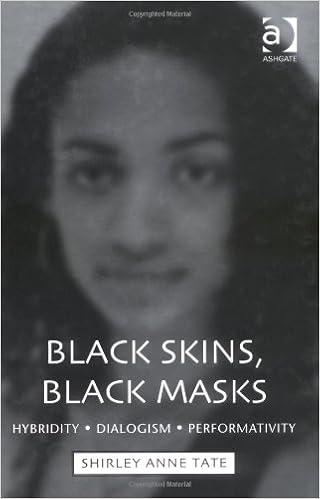
  • Black Skins, Black Masks: Hybridity, Dialogism, Performativity

    Ashgate Publishing
    February 2005
    188 pages
    234 x 156 mm
    Hardback ISBN: 978-0-7546-3641-0

    Shirley Anne Tate, Professor of Sociology
    Leeds Beckett University, Leeds, United Kingdom

    Black Skin, Black Masks: Hybridity, Dialogism, Performativity offers a timely exploration of Black identity and its negotiation. The book draws on empirical work recording everyday conversations between Black women: friends, peers and family members. These conversations are discussed in the light of the work of Homi Bhabha, Stuart Hall, Gerd Baumann, Claire Alexander and others on questions of hybridity, identity, otherness and the development of ‘new ethnicities’. Tate aims to address what she sees as significant omissions in contemporary Black Cultural Studies. She argues that theorists have rarely looked at the process of identity construction in terms of lived-experience; and that they have tended to concentrate on the demise of the essential Black subject, paying little attention to gender.

    The book points to a continuation of a ‘politics of the skin’ in Black identities. As such it argues against Bhabha’s claim that essence is not central to hybrid identities. The conversations recorded in the book reveal the ways in which women negotiate the category of Blackness, in what Tate calls a ‘hybridity-of- the-everyday’.

    The book introduces a new interpretative vocabulary to look at the ways in which hybridity is orchestrated and fashioned, showing it to be performative, dialogical and dependent on essentialism.

    Table of Contents

    • Introduction
    • Foucault, Bakhtin, ethnomethodology
    • Critical ontologies and racialized gender
    • Storied hybridity and gendered readings of ‘Race’
    • Beyond hybridity: bodily schema and the ‘Third Space’
    • Resisting Black skin
    • Hybridity, dialogism, performativity
    • Fetishizing community: a politics of skin, homes and belonging
    • Conclusion; Bibliography
    • Index
  • Multiracial Identity [Movie], World Premiere Screening

    Politics on Film 2010 Festival
    Saturday, 2010-05-08, 13:30 EDT (Local Time)
    E Street Cinema (Purchase tickets on-line here.)
    555 11th Street, NW
    Washington, DC

    Year: 2010
    Director: Brian Chinhema
    Writer: Brian Chinhema
    Producer: Brian Chinhema (Abacus Production)
    Running Time: 01:22:00

    Multiracial Identity, Movie

    Multiracial people are the fastest growing demographic in America, yet there is no officially political recognition for mixed-race people. Multiracial Identity examines what it means to be multiracial in America and explores the social, political, and religious impact of the multiracial movement.

    The film is produced and directed by Brian Chinhema and features commentary from noted scholars, Rainier Spencer, Naomi Zack, Aliya Saperstein, Aaron Gullickson, Susan J. Hayflick and Pastor Randall Sanford

    For more information, click here.  Purchase tickets on-line here.