• Mestizaje and the Mexican Mestizo Self: No hay Sangre Negra, so there is no Blackness

    Southern California Interdisciplinary Law Journal
    Volume 15, Number 2 (Spring 2006)
    Pages 199-234

    Taunya Lovell Banks, Jacob A. France Professor of Equality Jurisprudence and Francis & Harriet Iglehart Research Professor of Law
    University of Maryland School of Law

    Many legal scholars who write about Mexican mestizaje omit references to Afromexicans, Mexico’s African roots, and contemporary anti-black sentiments in the Mexican and Mexican American communities. The reasons for the erasure or invisibility of Mexico’s African roots are complex. It argues that post-colonial officials and theorists in shaping Mexico’s national image were influenced two factors: the Spanish colonial legacy and the complex set of rules creating a race-like caste system with a distinct anti-black bias reinforced through art; and the negative images of Mexico and Mexicans articulated in the United States during the early nineteenth century. The post-colonial Mexican becomes mestiza/o, defined as European and Indian, with an emphasis on the European roots. Thus contemporary anti-black bias in Mexico is a vestige of Spanish colonialism and nationalism that must be acknowledged, but is often lost in the uncritical celebration of Latina/o mestizaje when advanced as a unifying principle that moves beyond the conventional binary (black-white) discussions of race. This uncritical and ahistorical invocation of mestizaje has serious implications for race relations in the United States given the growing presence and political power of Mexican Americans because substituting mestizaje for racial binarism when discussing race in the United States reinforces rather than diminishes notions of white racial superiority and dominance. Therefore legal scholars who write about Latina/o issues should replace their uncritical celebration of mestizaje with a focus on colonialism and capitalism, the twin isms that influenced ideological theories and racial formation from the late fifteenth through the twentieth century in the Americas.

    Read the entire article here.

  • The African Presence in Mexico

    A Symposium Presented by
    Callaloo – A Journal of African Diapora Arts and Letters and
    The Center for Africana Studies, Johns Hopkins University
    2008-10-22 through 2008-10-23
    Texas A&M University, College Station, Texas

    Sessions

    For more details, click here.

  • Blood Will Tell: Scientific Racism and the Legal Prohibition Against Miscegenation

    Michigan Journal of Race & Law
    University of Michigan Law School
    Volume 5, Issue 2 (Spring 2000)
    pages 560-609

    Keith Edward Sealing, Dean of Students
    Widener Law School, Widener University

    Laws banning miscegenation endured in the colonies and the United States for more than 300 years. When the Supreme Court declared all such laws unconstitutional in Loving v. Virginia in 1967, sixteen such statutes and constitutional provisions were still in effect. Scientific racism determined a hierarchy within the White race that placed the Teutonic at the top, the Anglo-Saxon as the heir to the Teuton, and the American as the current leading branch of that line. Prior to the Darwinian revolution, two competing scientific theories, monogenism and polygenism, were applied to justify miscegenation statutes. The “monogenists” believed that all men descended from a single ancestor and were of the same species. This theory comported with the Bible and the story of Ham, as interpreted literally by the fundamentalists. The “polygenists” saw Blacks as a separate and inferior species descended from a different “Adam,” and, thus, saw slavery as qualitatively no different from the ownership of a horse, and miscegenation as approaching bestiality. These beliefs and attitudes endured well into the Twentieth Century, supported after 1900 by the eugenics movement. This article focuses on anti-miscegenation statutes as applied to former slaves and others of African descent, particularly in the South. This article first examines the miscegenation paradigm in terms of a seven-point conceptual framework that not merely allowed but practically demanded anti-miscegenation laws, then looks at the legal arguments state courts used to justify the constitutionality of such laws through 1967. Next, it analyzes the Biblical argument, which in its own right justified miscegenation, but also had a major influence on the development of the three major strands of scientific racism: monogenism, polygenism and Darwinian theory. It then probes the concept upon which the entire edifice is constructed—race—and discusses the continuing vitality of this construct. Next, this article turns to the major strands of scientific racism and briefly develops more modern theories that continued the racist tradition well into the Twentieth Century. The article then looks at the effects of scientific racism on the thoughts and actions of the founding fathers and the Reconstruction-era Congress before turning to the long line of state cases upholding miscegenation statutes, in part by relying on scientific racism. Finally, it discusses the cases that questioned the constitutionality of anti-miscegenation statutes, Perez v. Lippold and Loving v. Virginia.

    Read the entire article here.

  • Exploring the Experiences of First-Generation, Multiethnic Undergraduate College Students

    The Journal of Student Affairs
    Student Affairs in Higher Education
    Colorado State University
    Volume 14, 2004-2005

    Jody Donovan and Lehala Johnson

    This qualitative research paper investigates the experiences of first-generation, multiethnic undergraduate students at two public, four-year universities in the Rocky Mountain region. The existing research paints a negative picture in regard to multiethnic students and first-generation students deciding to go to college, enrolling, and then rarely persisting to earn a degree. This study found that, converse to noted literature, the multiethnic, first-generation students are proud of their multiple heritages and did not encounter exceptional difficulty entering or studying at college. This article presents specific issues faced by multiethnic, first-generation students, discusses emergent themes from individual interviews and focus groups, and provides recommendations for higher education leaders.

    By the year 2010, it is estimated that students of color at institutions of higher education will rise to 24% of total enrollment (Ortiz, 2002). Many of the incoming multiethnic, first-year students will be the first of their family to pursue higher education (Ortiz). Colleges and universities must acknowledge and prepare for the integration and adaptation of these firstgeneration, multiethnic students to help them adjust to an academic lifestyle and to improve “the retention rates of an increasingly diverse student body” (Gonzales, 1999, p. 5). The purpose of this paper is to discuss exploratory constructivist research on first-generation, multiethnic students enrolled at two public, four-year universities in the Rocky Mountain region.

    Read the entire article here.

  • Mixed Race in the Age of Obama

    University of Chicago
    Center for the Study of Race, Politics and Culture (CSRPC)
    International House, Home Room
    1414 East 59th Street, Chicago, IL
    2010-03-05, 09:00 to 18:00 CST (Local Time)

    The Center for the Study of Race, Politics and Culture at the University of  Chicago presents a daylong conference, “Mixed-Race in the Age of Obama,” which seeks to intervene in the discursive, material, and ideological debates involving mixed-race people nationally and internationally, examining historical, sociological, literary, legal, and other (inter)disciplinary representations of the lived experience of mixed race people. Organized by Dr. Matthews Briones, Department of History at U of C. Co-sponsored by International House Global Voices Program. Free & open to the public.

    For more information, click here.

  • Natasha Trethewey Reads at ECU

    The Common Reader
    Newsletter of the ECU Department of English
    Eastern Carolina University
    Volume 26, Number 6: May 2008

    Lisa DeVries

    On April 2, Natasha Trethewey visited East Carolina University for a public reading and book signing organized by fellow poet and friend John Hoppenthaler.  She won the Pulitizer Prize for her 2006 book of poetry, Native Guard (Houghton Mifflin), the third African American woman to win the award, following in the tradition of Gwendolyn Brooks and Rita Dove.  Trethewey is also a professor of poetry at Emory University and holds the Phyllis Wheatley Distinguished Chair.  She Has received fellowships from the Guggenheim Foundation, the Rockefeller Foundation, the Bunting Fellowship Program of the Radcliffe Institute for Advanced Study at Harvard University, and the National Endowment for the Arts.  Her previous works include Domestic Work (Graywolf Press, 2000) and Bellocq’s Ophelia (Graywolf Press, 2002).  Her most recent work deals with telling the untold stories of history, identity politics, racism, and miscegenation. She claims that she writes only what she is given, “a violent history and the terrible beauty of my South, my Mississippi.”  [Interview and photos by Lisa DeVries.]

    Read the entire interview here.

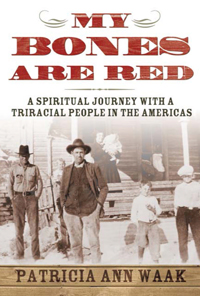
  • My Bones Are Red: A Spiritual Journey With A Triracial People In The Americas

    Mercer University Press
    2005
    192 pages
    8.9 x 6 x 0.7 inches
    ISBN-10: 0865549176; ISBN-13: 978-0865549173

    Patricia Ann Waak

    In the late 1700s the roots of cowboy culture arose out of the Carolinas. These men and women were not the typical white ranchers that would be depicted in later stories and films. Instead they were a group of “tri-racial isolates.” While much is now being published about Melungeons, little has been written about the cowboy Redbones. The Redbones followed Reverend Joseph Willis to Louisiana in the early 1800s. He was the patriarch of the group and con-tributed his Baptist ministry to the spiritual composite that would make up their religious heritage.

    My Bones Are Red primarily tells the stories of the Perkins family. They would stay in Louisiana for at least four decades before crossing the border into Texas. For the first time this book tracks family members who would be sequentially classified by the U.S. census as black, “free people of color,” mulatto, Indian, and white over a period of one hundred years. Historical evidence suggests the Perkins family and the families they married into were a combination of Native American, African, and British.

    What started out as a quest to find the mother of her beloved grandfather, became for Patricia Waak a revelation about the diversity of her family. It became, in fact, a spiritual journey as she visited cemeteries, courthouses, and archives from Accomack County, Virginia, to Goliad, Texas. Filled with translations of old court cases, accounts from oral history, and the results of countless hours of research, she also invites us to participate in her own discovery through original poetry which introduces each chapter. Included are photographs, genealogical charts, maps, and copies of old documents.

    The journey to discover the story of one line of her family, becomes for the author a farewell to her mother and an honoring of the people who contributed to who she is today. Patricia Waak’s career in the United States and overseas has dealt with population dynamics and their effect on human and environmental health. Most recently she has been the director of human population and environment programs and a senior advisor for the National Audubon Society. She is the author of numerous books and articles, including Planet Awakening. She lives in Colorado with her husband and two dogs.

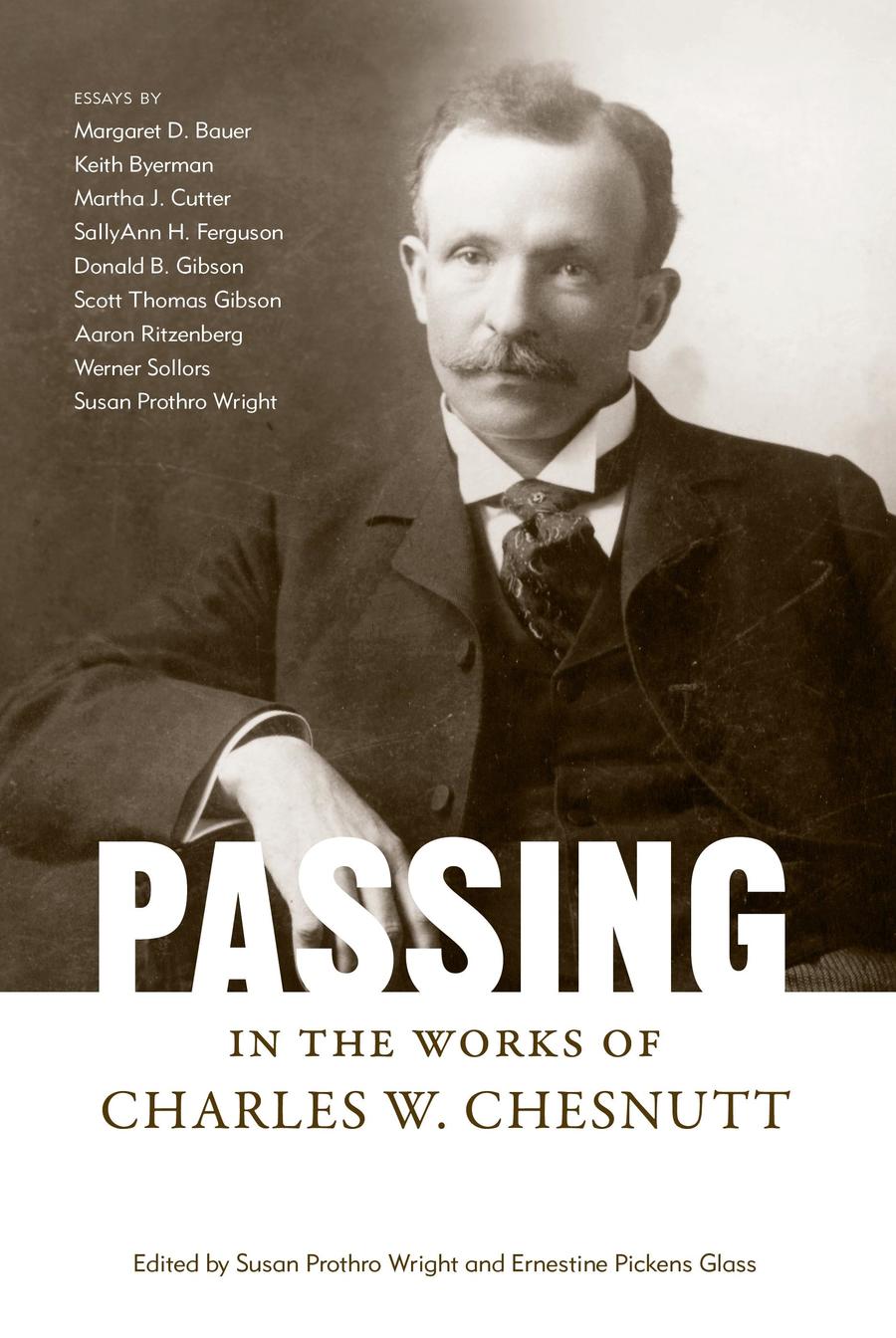
  • Passing in the Works of Charles W. Chesnutt

    University Press of Mississippi
    March 2010
    160 pages (approx.)
    6 x 9 inches, introduction, index
    Printed casebinding: 978-1-60473-416-4
    Ebook: 978-1-60473-418-8

    Edited by:

    Susan Prothro Wright, Associate Professor of American and British Literature
    Clark Atlanta University, Atlanta, Georgia

    Ernestine Pickens Glass, Professor Emerita of English
    Clark Atlanta University, Atlanta, Georgia

    An exploration of a great American writer’s abiding concern with the color line

    Essays by Margaret D. Bauer, Keith Byerman, Martha J. Cutter, SallyAnn H. Ferguson, Donald B. Gibson, Scott Thomas Gibson, Aaron Ritzenberg,Werner Sollors, and Susan Prothro Wright.

    Passing in the Works of Charles W. Chesnutt is a collection that reevaluates Chesnutt‘s deft manipulation of the “passing” theme to expand understanding of the author’s fiction and nonfiction. Nine contributors apply a variety of theories–including intertextual, signifying/discourse analysis, narratological, formal, psychoanalytical, new historical, reader response, and performative frameworks–to add richness to readings of Chesnutt’s works. Together the essays provide convincing evidence that “passing” is an intricate, essential part of Chesnutt’s writing, and that it appears in all the genres he wielded: journal entries, speeches, essays, and short and long fiction.

    The essays engage with each other to display the continuum in Chesnutt’s thinking as he began his writing career and established his sense of social activism, as evidenced in his early journal entries. Collectively, the essays follow Chesnutt’s works as he proceeded through the Jim Crow era, honing his ability to manipulate his mostly white audience through the astute, though apparently self-effacing, narrator, Uncle Julius, of his popular conjure tales. Chesnutt’s ability to subvert audience expectations is equally noticeable in the subtle irony of his short stories. Several of the collection’s essays address Chesnutt’s novels, including Paul Marchand, F.M.C., Mandy Oxendine, The House Behind the Cedars, and Evelyn’s Husband. The volume opens up new paths of inquiry into a major African American writer’s oeuvre.

  • Representing gods in a mixed-race society: Images, rituals and politics in María Lionza’s cult (Venezuela)

    University of St. Andrews, Scotland, United Kingdom
    Centre for Amerindian, Latin American and Caribbean Studies (CAS)
    Social Anthropology Seminar Room (Room 50, St Salvator’s Building)
    2010-03-17, 15:00Z to 17:00Z

    Roger Canals
    University of Barcelona

    Roger Canals, University of Barcelona, will speak on ‘Representing gods in a mixed-race society. Images, rituals and politics in María Lionza‘s cult (Venezuela)’.

  • Written Out of History

    Pomona College Magazine
    Pomona College, Claremont, California
    Fall 2002
    Volume 39, Number 1

    Michael Balchunas

    Spurred by a glimpse of family history, Professor Sid Lemelle is bringing to light a little-known aspect of the African Diaspora.

    When the new people moved in, all eyes were upon them. There were comments about the way they looked, how much money they might have, what kind of work they did, their morals, their customs and their character. At first, it was all good. The newcomers, who were farmers, engineers, mechanics and other workers, wrote to friends left behind and extolled the virtues of their new home. That stirred pangs of fear among some residents, and a newspaper ran an editorial. More of these people might come, it said, and “since the Negro is a creature of imitation and not invention…they will degenerate…and [become] vicious…a nuisance and pest to society.”

    The year was 1857, and the newcomers, from Louisiana, had settled near Coatzacoalcos, Mexico, about 50 miles inland from the Caribbean port of Veracruz. Their history, like much of the history of the African Diaspora, is virtually unknown.

    Sidney Lemelle is working to change that…

    …Another misperception is that the U.S. South was a strictly bipolar society of white masters and black slaves, he says. In antebellum Louisiana, a significant number of white planters, businessmen and government officials fathered mixed-race offspring, who became part of a stratum more privileged than slaves, other free blacks or poorer white residents, according to Lemelle. He is particularly intrigued by how race and racial identity issues were connected to property rights and ownership in Louisiana and Mexico in the 19th century. Building on the theories of UCLA legal scholar Cheryl Harris, he believes that “whiteness” was constructed by mixed-blood people and became the basis of racialized privilege; that “whiteness” was legitimized as a form of status property, which gave some individuals rights over others, even though both possessed African blood…

    Read the entire article here.