• The Color of Testamentary Freedom

    Southern Methodist University Law Review
    Volume 62
    p. 1783
    2009

    Kevin Noble Maillard, Associate Professor of Law
    Syracuse University

    Wills that prioritize the interests of nontraditional families over collateral heirs test courts’ dedication to observing the posthumous wishes of testators. Collateral heirs who object to will provisions that redraw the contours of “family” are likely to profit from the incompatibility of testamentary freedom and social deviance. Thus, the interests of married, white adults may claim priority over nonwhite, unmarried others. Wills that acknowledge the existence of moral or social transgressions—namely, interracial sex and reproduction—incite will contests by collateral heirs who leverage their status as white and legitimate in order to defeat testamentary intent.

    This Article turns to antebellum and postwar will contests between disinherited white heirs and mixed-race devisees to question the role of courts in defining “family” and the expectancy of collaterals to uphold this limitation. While other studies have separately examined the myth of testamentary freedom and argued for the legitimacy of diverse families, scholars have paid less attention to the color of inheritance. Drawing on Cheryl Harris’s groundbreaking work on property and racial expectation interests, this Article illustrates the centrality of whiteness in the validation of testamentary transfers. At the same time, it questions the legal resistance to nontraditional families, which substantially weakens the aspirational theory of donative freedom—the cornerstone of Trusts & Estates. Through the intersection of wills law and family law, this Article initiates a critical inquiry of the influence of race in testamentary transfers.

    Read the entire article here.

  • Slaves in the Family: Testamentary Freedom and Interracial Deviance

    2008
    50 pages

    Kevin Noble Maillard, Associate Professor of Law
    Syracuse University

    This Article addresses the deviance of interracial sexuality acknowledged in testamentary documents. The language of wills calls into question the authority of probate and family law by forcing issues of deviance into the public realm. Will dramas, settled in or out of court, publicly unearth insecurities about family. Many objections to the stated intent of the testator generate from social prejudices toward certain kinds of interpersonal relationships: nonmarital, homosexual, and/or interracial. When pitted against an issue of a moral or social transgression, testamentary intent often fails. In order for these attacks on testamentary validity to succeed, they must be situated within an existing juridical framework that supports and adheres to the hegemony of denial that refuses to legitimate the wishes of the testator. Disinherited white relatives of white testators regularly challenged wills disposing a majority of an estate to paramours and children of African descent. In the nineteenth century, testators who eschewed traditional devises to spouses, relatives, and institutions in favor of mistresses, slaves, or both often incited will contests of testamentary incapacity, undue influence, or fraud. This Article is a case study of In Re Remley, an antebellum will contest between disinherited white collateral heirs and the intended black and mulatto devisees. It retains timeless value in its demonstration of the incompatibility of testamentary freedom and social deviance. I conclude that subjective conceptions of kinship, in particular those unpopular relationships that defy social norms, prevent the idea of testamentary freedom from reaching diverse articulations of family.

    Read the entire article here.

  • Africans in Colonial Mexico: Absolutism, Christianity, and Afro-Creole Consciousness, 1570-1640

    Indiana University Press
    2005-02-02
    288 pages
    1 bibliog., 1 index, 6.125 x 9.25
    Paper ISBN-13: 978-0-253-21775-2; ISBN: 0-253-21775-X

    Herman L. Bennett, Professor of Latin American History
    City Univerisity of New York

    The African community in colonial Mexico under Spanish and Catholic rule.

    In this study of the largest population of free and slave Africans in the New World, Herman L. Bennett has uncovered much new information about the lives of slave and free blacks, the ways that their lives were regulated by the government and the Church, the impact upon them of the Inquisition, their legal status in marriage, and their rights and obligations as Christian subjects.

    Table of Contents

    Acknowledgments
    Introduction: Africans, Absolutism, and Archives
    1. Soiled Gods and the Formation of a Slave Society
    2. “The Grand Remedy”: Africans and Christian Conjugality
    3. Policing Christians: Persons of African Descent before the Inquisition and Ecclesiastical Courts
    4. Christian matrimony and the Boundaries of African Self-Fashioning
    5. Between Property and Person: Jurisdictional Conflicts over Marriage
    6. Creoles and Christian Narratives
    Postscript
    Glossary
    Notes
    Selected Bibliography
    Index

  • Multiracial Identity and Affirmative Action

    Asian Pacific American Law Journal
    University of California, Los Angeles
    Volume 12, Fall 2006 – Spring 2007
    32 pages

    Nancy Leong, Assistant Professor of Law
    Sturm College of Law, Denver University

    The classification of multiracial individuals has long posed a challenge in a number of legal contexts, and the affirmative action debate highlights the difficulty of such classification. Should multiracial individuals be categorized according to how they view themselves, how society tends to view them, by some ostensibly objective formula based on their parents’ ancestry, or in some other fashion?

    My article draws on sociological research to demonstrate that there are no easy answers to this question. The way multiracial individuals view themselves varies among individuals and, moreover, may vary at different times for the same individual. Society often lacks consensus on an individual’s racial status, and examining a person’s ancestry simply removes the question of categorization to prior generations. Although my article does not attempt to propose a better way to take race into account in the affirmative action context, I strive to raise the issues that must be confronted in developing a coherent system that furthers the goal of affirmative action.

    Read the entire article here.

  • Multi-Hued America: The Case for the Civil Rights Movement’s Embrace of Multiethnic Identity

    The Modern American
    American University
    Volume 4, Issue 1 (Spring 2008)
    8 pages

    Kamaria A. Kruckenberg
    Harvard Law School

    My little girl in her multi-hued skin
    When asked what she is, replies with a grin
    I am a sweet cuddlebums,
    A honey and a snugglebums:
    Far truer labels than those which are in.

    The above poem resonates deeply with me, and it should: my mother wrote it about me. She recited its lines to me during my childhood more times than I can count. It was a reminder that I, daughter of a woman whom the world saw as white and a man whom the world called black, could not be summed up into any neat ethnic category. The poem told me that, though my skin reflected the tones of a variety of cultures, I was more than the sum of my multiple ethnic identities. Over my lifetime, I have recalled this message each time someone asked, “What are you?” and every time I checked “other” in response to the familiar form demand that I mark one box to describe my race.

    The classification of multiethnic individuals like myself recently has been the focus of many heated debates. The Office of Management and Budget (“OMB”) sets the racial categories used on numerous forms, including the census. In 1997, the OMB revised Statistical Policy Directive 15, its rule for racial data classification, requiring all federal agencies to allow individuals to mark multiple races on all federal forms.  Because the implications of the classification of multiethnic individuals in federal racial data collection are potentially far reaching, this change has been surrounded by controversy. The census tracks the numbers and races of Americans for legislative and administrative purposes.  This information is particularly important for this country’s enforcement of civil rights laws.

    Numerous authors argue that the recognition of multiethnic identity will hamper traditional civil rights efforts. They claim that policies that maintain civil rights must win out over the individual caprice of those who advocate for multiethnic recognition.  On the other hand, many argue that the recognition of the personal meaning of multiethnic identity is important and does not hamper the traditional goals of civil rights groups.

    In this article I explore the context of this debate by examining both the history of race and the census. I then examine both sides of the multiethnic characterization argument. Finally, I end the article with a proffered solution to the controversy…

    Read the entire article here.

  • Mike Peden, a graduate of the University of Minnesota with a degree in journalism and minor in communication studies and an employee of the St. Paul Neighborhood Network is currently working on a second documentary about multiracial identity that will air on the station and online.  This is the second part in a series of shows about mixed race.  The original documentary was featured in the 2009 Mixed Roots Film & Literary Festival in Los Angeles.

    You can watch the original documentary, What Are You? A Dialogue on Mixed Race, by following the link here.

    Mike is looking for men and women in the Twin Cities [Minneapolis/St. Paul] area of any age who are of multiracial heritage.  If you or someone you know has researched or participated in scholarly studies on multiracial identity, feel free to share those stories.  He believes the best way to educate others on the facets of multiracial identity is having his subjects guide the storytelling, so the show will be presented from a journalistic perspective with minimal input from him during the program.  His goal is to share professional and anecdotal stories with scientific research to provide a well-rounded forum.

    If you would like to share your story, Mike can be reached by phone at 651-468-5451, or by e-mail at sportsbrain2005@aol.com.

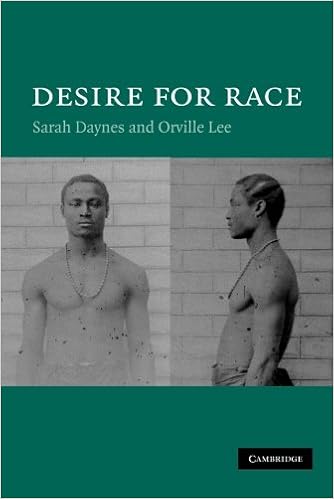
  • Desire for Race

    Cambridge University Press
    November 2008
    256 pages
    Hardback ISBN-13: 9780521862103
    Paperback ISBN-13: 9780521680479
    Adobe eBook Reader ISBN-13: 9780511434174

    Sarah Daynes, Professor of Sociology
    New School for Social Research, New York

    Orville Lee, Assistant Professor of Sociology
    New School for Social Research, New York

    What do people mean when they talk about race? Are they acknowledging a biological fact, a social reality, or a cultural identity? Is race real, or is it merely an illusion? This book brings analytical clarity to one of the most vexed topics in the social sciences today, arguing that race is no more than a social construction, unsupported in biological terms and upheld for the simple reason that we continue to believe in its reality. Deploying concepts from the sociology of knowledge, religion, social memory, and psychoanalysis, the authors consider the conditions that contribute to this persistence of belief and suggest ways in which the idea of race can free itself from outdated nineteenth-century notions of biological essentialism. By conceiving of race as something that is simultaneously real and unreal, this study generates a new conceptualization that will be required reading for scholars in this field.

    Table of Contents

    Introduction
    1. American sociology
    2. Marxism
    3. British social anthropology
    4. British cultural studies
    5. Intermediate reflections on essentialism
    6. Belief and social action
    7. Theorizing the racial ensemble
    8. The politics of memory and race
    9. Desire
    Conclusion

  • Life on the Color Line: Exploring the Struggle to Conceptualize and Measure Racial Identity in the Mixed-Raced Population

    Race & Ethnic Studies Institute
    Texas A&M University
    2010-01-29
    14:30-16:00 CST (Local Time) 
    ACAD 326

    Kerry Ann Rockquemore, Associate Professor of Sociology
    University of Illinois at Chicago

    Empirical research on the growing multiracial population in the U.S. has focused largely on documenting new forms of racial identification, analyzing psychological adjustment, and understanding the broader political consequences of mixed-race identification. Efforts toward conceptualizing multiracial identity, however, have been largely disconnected from empirical data, mired in disciplinary debates, and bound by historically specific assumptions about race and racial group membership. This talk will provide a critical overview of multiracial identity theories, examine the links between theory and research, explores the challenges in conceptualizing multiracial identity, and propose considerations for future directions in measuring the racial identity of the mixed-race population. Kerry Ann Rockquemore’s scholarship focuses on racial identity development among multiracial individuals, interracial family dynamics, and the politics of racial categorization. She is the author of Beyond Black: Biracial Identity in America (2001, 2007), Raising Biracial Children (2005), and over two-dozen articles and book chapters on multiracial youth. Her research has been featured in numerous media outlets such as the New York Times and ABC’s 20/20. In addition to her research, Dr. Rockquemore provides mentoring workshops for faculty of color at colleges across the U.S. She facilitates the popular online discussion forums at www.BlackAcademic.com, and is co-author of The Black Academic’s Guide to Winning Tenure Without Losing Your Soul (2008).

  • Counseling Multiple Heritage Individuals, Couples and Families

    American Counseling Association
    2009
    235 pages
    Order Number: 72883
    ISBN: 978-1-55620-279-7

    Written and edited by:

    Richard C. Henriksen Jr., Associate Professor of Education
    Department of Educational Leadership and Counseling
    Sam Houston State University, Huntsville, Texas

    Derrick A. Paladino, Assistant Professor of Counseling
    Department of Graduate Studies
    Rollins College, Winter Park, Florida

    This book examines the strengths of and the challenges facing multiple heritage individuals, couples, and families and offers a framework for best practice counseling services and interventions specifically designed to meet their needs. Topics covered include historical and current racial classification systems and their effects; identity development; transracial adoptions; and counseling strategies for children, adolescents, college students, adults, couples and families, and GLBT individuals. Poignant case studies illustrate important concepts and techniques throughout the book, and chapter review questions provide a starting point for lively classroom discussion.

    Table of Contents

    • Foreword. Patricia Arredondo
    • Prologue. Richard C. Henriksen Jr. and Derrick A. Paladino
    • Preface xiii
    • About the Authors
    • About the Contributors
    • Chapter 1: History of Racial Classification. Richard C. Henriksen Jr. and Derrick A. Paladino
    • Chapter 2: History of Antimiscegenation. Richard C. Henriksen Jr. and Derrick A. Paladino
    • Chapter 3: Identity Development in a Multiple Heritage World. Richard C. Henriksen Jr. and Derrick A. Paladino
    • Chapter 4: Counseling Multiple Heritage Children. Henry L. Harris
    • Chapter 5: Counseling Multiple Heritage Adolescents. Michael Maxwell and Richard C. Henriksen Jr.
    • Chapter 6: Counseling Multiple Heritage College Students. Derrick A. Paladino
    • Chapter 7: Counseling Multiple Heritage Adults. Derrick A. Paladino and Richard C. Henriksen Jr.
    • Chapter 8: Counseling Multiple Heritage Couples and Families. Kelley R. Kenney and Mark E. Kenney
    • Chapter 9: Navigating Heritage, Culture, Identity, and Adoption: Counseling Transracially Adopted Individuals and Their Family. Amanda L. Baden, Laura A. Thomas, and Cheri Smith
    • Chapter 10: Intersecting Socially Constructed Identities With Multiple Heritage Identity. Andrew C. Benesh and Richard C. Henriksen Jr.
    • Chapter 11: Bridging the Margins: Exploring Sexual Orientation and Multiple Heritage Identities. Tiffany Rice and Nadine Nakamura
    • Chapter 12: Multiple Heritage Case Studies, Analysis, and Discussion
      • What’s in a Name? An International Adoption Case Study. L. DiAnne Borders and Christine E. Murray
      • The Case of Michael: Searching for Self-Identity. Nancy J. Nishimura
      • Family Case Study: Identity Lost. Jose A. Villalba and Derrick A. Paladino
      • Working With a Multiple Heritage Couple: A Couple’s Case Study. Mary G. Mayorga
      • The Balancing Act of Multiple Heritage Family Counseling. Leigh H. de Armas and Amanda K. Bailey
      • Working With a Multiple Heritage Client With Indigenous Roots. Janet Windwalker Jones
    • Appendix
    • Resources
    • Index

    Read the front matter of the book here.

  • Mixed-Race Issues in the American and French Melodrama: An Analysis of the Imitation of Life Films (Stahl, USA, 1934; Sirk, USA, 1959) and Métisse (Kassovitz, France, 1993) In: Martin McLoone & Kevin Rockett, eds. Irish Films, Global Cinema, Studies in Irish Film 4.

    Four Courts Press
    2007
    176 pages
    Hardback ISBN: 978-1-84682-081-6

    Zélie Asava
    University College Dublin

    The chapter analyses the positionalities of the mixed-race female protagonists of each film and the visualisation of their mixed-race identity.  It considers aspects of their struggle for self-definition against the director’s visual clues about their ‘true’ racial space.  It also explores the possibility in these films for a representation of mixed identity that surpasses the stereotypes of the ‘tragic mulatto’ torn between black and white worlds (as represented by mothers in the American films and lovers/parents in the French film).  Finally the article – as with my thesis – considers the limitations of American cinema in transcending binaried representations of race and the alternatives which French cinema offers, in order to consider the possibility for a mixed-race representative model which would visualise the multiplicity and ‘Third Space’, as Homi K. Bhabha put it, of mixed-race identity.