• Writing in 2010 about the Idea of Racial Identity

    The 17th Annual Oxford Conference for the Book (2010-03-04 through 2010-03-06)
    2010-03-05, 13:30 – 15:00 EST (Local Time)
    Overby Center for Southern Journalism
    University of Mississippi
    Oxford, Mississippi

    Ted Ownby, Professor History and Southern Studies and Director of the Center for the Study of Southern Culture
    University of Mississippi

    Bliss Broyard

    W. Ralph Eubanks

    Danzy Senna

  • Multiracial Identity and the U.S. Census

    ProQuest Discovery Guides
    January 2010

    Tyrone Nagai, Supervising Editor of Social Sciences
    ProQuest

    Introduction: What is Multiracial Identity?
     
    Back on April 23, 1997, 21-year-old golfer Tiger Woods made headlines on the Oprah Winfrey Show when he described his racial background as “Cablinasian,” an abbreviation representing his “Caucasian,” “Black,” “American Indian,” and “Asian” heritage. Woods explained that he felt uncomfortable being labeled “African American,” and he was reluctant to check only one box for his racial background on school forms.  His father is half African American, a quarter Chinese, and a quarter Native American while his mother is half Thai, a quarter Chinese, and a quarter Dutch…

    Read the entire report in HTML format or in PDF format.

  • Images of Latin American mestizaje and the politics of comparison

    Bulletin of Latin American Research
    Volume 23, Number 3 (2004)
    pp. 355–366
    DOI: 10.1111/j.0261-3050.2004.00113.x

    Peter Wade, Professor of Social Anthropology
    University of Manchester

    In a presidential address to the Organization of American Historians, Gary Nash (1995) reveals ‘the hidden history of mestizo America’ (by which he in fact means North America). The emergence of what might have been ‘a mixed-race American republic’ was blocked by ‘prejudice and violence’ (1995: 945), but in particular situations, racial and cultural mixture existed, was recognised and even valued. Nash bemoans ‘today’s multicultural wars’ in which multiculturalism is often construed simply as ‘multiracialism’ leading towards ‘a definitional absolutism that has unwittingly defeated egalitarian and humanitarian goals by smothering inequalities of class and fuelling interethnic and interracial tensions that give more powerful groups opportunities to manipulate these divisions’ (1995: 961). He concludes that what is needed is a ‘pan-ethnic, pan-racial, antiracist sensibility’; he thinks that ‘only through hybridity—not only in physical race crossing but in our minds as a shared pride in and identity with hybridity—can our nation break the ‘‘stranglehold that racialist hermeneutics has over cultural identity’’’ (1995: 962, citing Klor de Alva).

    Nash uses Latin America as an explicit counterpoint in his argument, stating that in Spanish America there were ‘no prohibitions against interracial contact and interracial marriage’ (1995: 951)—which is in fact quite wrong (Martinez-Alier, 1974; Morner, 1967). Still, he cautions it would be ‘foolish to overromanticize this mixing of blood’ (1995: 952) and recognises the existence of racism in the casta paintings of eighteenth century Mexico that depicted mixed-race types. Yet he also sees mestizaje (he uses the Spanish word for racial and cultural mixture) as the enemy of ‘racial absolutism’ (1995: 961) and states that ‘racial blending is undermining the master idea that race is an irreducible marker among diverse peoples’ (1995: 960).

    Others have also recently invoked Latin American mestizaje (or mesticagem in Portuguese) as an antidote to US-style logics of racial categorisation. Some of this comes from the literature (much of it US-based) on mixed-race people, which shares with Nash a desire to reassess and relocate mixture in US society (Root, 1992, 1996; Spickard, 1989, 2001; Zack, 1995). Fernandez, for example, while acknowledging that racism exists in some form in Mexico and Brazil, nevertheless contends that ‘customary forms of discrimination based on actual ancestry have been rendered impotent’ by centuries of mixture (Fernandez, 1992: 132). As a result, Mexicans in the USA may be able to disrupt and even ‘neutralize’ the US racial system by affirming their own mixed racial identities. Indeed, ‘mestizaje. . .as a social norm. . .can free us all from the limits of ethnocentrism’ (Fernandez, 1992: 139, 140). Alcoff does not go so far as to claim that mestizo identity might neutralise racial categories, but she does invoke Latin American history and experience as an example of the development of identities not based on concepts of purity (Alcoff, 1995). Anzaldua’s well-known work is also part of this trend, with an even more explicit valorisation of mestizaje as a positive force for the future in terms reminiscent of José Vasconcelos’s invocation of the raza cosmica (Anzaldu´a, 1987; Vasconcelos, 1997 [1925]).

    Latin America has often served as a counterpoint in comparative ponderings about race, especially in the Americas. The hoary notion of a Latin American ‘racial democracy’ has been subject to devastating critique, yet we see that Latin American mestizaje is still, amazingly, being held up by some as an example from which the rest of the world (particularly the USA) could learn. This trend is linked to a broader postcolonialist interest in processes of mixture and hybridity, which casts Latin American processes of mestizaje in a positive light. It should be clear that over-optimistic assessments of hybridity need to learn from the Latin American experience, and overoptimistic assessments of Latin American mestizaje need reminding of some home truths about racism in Latin America.

    More fundamentally, I argue that there is an essential element to ideas about mixture which means that it can never simply be put in a relation of opposition to racial absolutes, or portrayed as necessarily destabilising them. Mestizaje, while it appears to erase origins and primordial categories of race and culture, actually continually reconstructs them. It depends on the idea of original or parent races and cultures to constitute the very possibility of mixture. All identities are constituted relationally and depend on others to exist, and mestizo identities are no exception.  They may be deployed to different effects in different contexts, but to exist at all, they must invoke origins. The reconstitution of racial origins is an inherent part of mestizaje. Blackness, whiteness and indigenousness are constantly being recreated as, in a real sense, racial absolutes with primordial origins. Mixture can not be simply set against original and essential identities. Instead, it recreates them and redeploys them and, in doing so, re-establishes the basis for racism. The recreation of blackness does not automatically mean that anti-black racism will be directed against that category, but the former is a necessary condition for the latter, if not a sufficient one.  In short, to see mixture and hybridisation as inherently opposed to racial absolutism and essentialism is quite wrong…

    Read or purchase the article here.
  • Rethinking Mestizaje: Ideology and Lived Experience

    Journal of Latin American Studies
    2005
    Number 37, Issue 2
    Pages 239–257
    DOI: 10.1017/S0022216X05008990

    Peter Wade, Professor of Social Anthropology
    University of Manchester

    The ideology of mestizaje (mixture) in Latin America has frequently been seen as involving a process of national homogenisation and of hiding a reality of racist exclusion behind a mask of inclusiveness. This view is challenged here through the argument that mestizaje inherently implies a permanent dimension of national differentiation and that, while exclusion undoubtedly exists in practice, inclusion is more than simply a mask. Case studies drawn from Colombian popular music, Venezuelan popular religion and Brazilian popular Christianity are used to illustrate these arguments, wherein inclusion is understood as a process linked to embodied identities and kinship relations. In a coda, approaches to hybridity that highlight its potential for destabilising essentialisms are analysed.

    Rethinking mestizaje as embodied experience

    This article explores a key concept in the complex of ideas around race, nation and multiculturalism in Latin America, that of mestizaje – essentially the notion of racial and cultural mixture. I address mestizaje not just as a nation-building ideology – which has been the principal focus of scholarship on the issue, but also as a lived process that operates within the embodied person and within networks of family and kinship relationships. I consider how people live the process of racial-cultural mixture through musical change, as racially identified styles of popular music enter into their performing bodies, awakening or engendering potentialities in them; through religious practice, as racialised deities possess them and energise a dynamic and productive embodied diversity ; and through family relationships, as people enter into sexual and procreative relations with others identified as racially-culturally different, to produce ‘mixed’ children.

    This approach emphasises the ways in which mestizaje as a lived process, which encompasses, but is not limited to, ideology, involves the maintenance of enduring spaces for racial-cultural difference alongside spaces of sameness and homogeneity. Scholars have recognised that mestizaje does not have a single meaning within the Latin American context, and contains within it tensions between sameness and difference, and between inclusion and exclusion.  Yet a scholarly concern with mestizaje as ideology has tended to privilege two assumptions: first, that nationalist ideologies of mestizaje are essentially about the creation of a homogeneous mestizo (mixed) future, which are then opposed to subaltern constructions of the nation as racially culturally diverse ; and second, that mestizaje as a nationalist ideology appears to be an inclusive process, in that everyone is eligible to become a mestizo, but in reality it is exclusive because it marginalises blackness and indigenousness, while valuing whiteness…

    Read the entire article here.

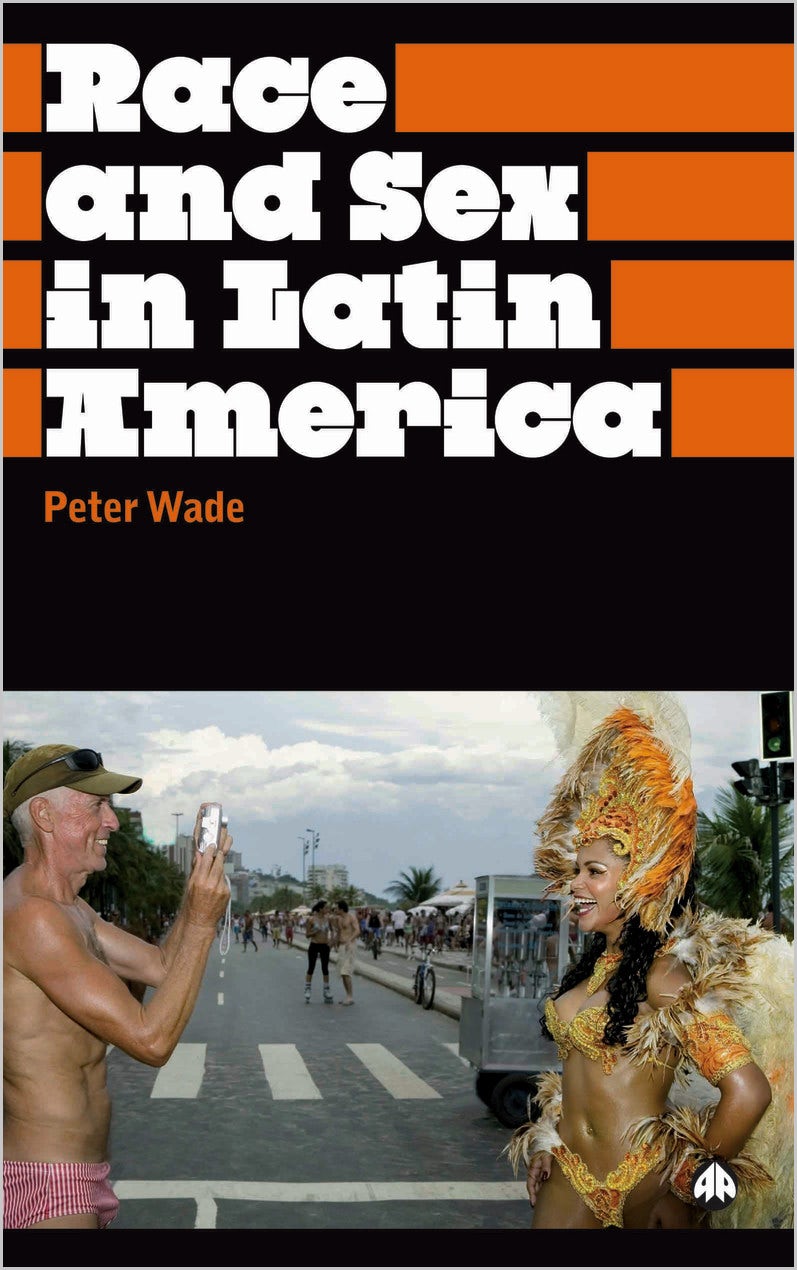
  • Race and Sex in Latin America

    Pluto Press
    2009-09-07
    320 pages
    Size: 215mm x 135mm
    Illustrations: 1 map, 3 figures
    ISBN: 9780745329499

    Peter Wade, Professor of Social Anthropology
    University of Manchester

    Race and Sex in Latin America

    The intersection of race and sex in Latin America is a subject touched upon by many disciplines but this is the first book to deal solely with these issues.

    Interracial sexual relations are often a key mythic basis for Latin American national identities, but the importance of this has been underexplored. Peter Wade provides a pioneering overview of the growing literature on race and sex in the region, covering historical aspects and contemporary debates. He includes both black and indigenous people in the frame, as well as mixed and white people, avoiding the implication that “race” means “black-white” relations.

    Challenging but accessible, this book will appeal across the humanities and social sciences, particularly to students of anthropology, gender studies, history and Latin American studies.

    Table of Contents

    • 1. Introduction: defining race and sex
    • 2. Explaining the articulation of race and sex
    • 3. Race and sex in colonial Latin America
    • 4. Making nations through race and sex
    • 5. The political economy of race and sex in contemporary Latin America
    • 6. Race, sex and the politics of identity and citizenship
    • 7. Conclusion
    • References
    • Index
  • White Identities: A Critical Sociological Approach

    Pluto Press
    2009-11-06
    240 pages
    Size: 215mm x 135mm
    ISBN: 9780745327488

    Steve Garner, Lecturer in Sociology
    Aston University

    Simon Clarke, Director
    Centre for Psycho-Social Studies
    University of the West of England

    The study of white ethnicities is becoming increasingly important in the social sciences. This book provides a critical introduction to the topic.

    Whiteness has traditionally been seen as “ethnically transparent” – the marker against which other ethnicities are measured. This analysis is clearly incorrect, but only recently have many race and ethnicity scholars moved away from focusing on ethnic minorities and instead oriented their studies around the construction of white identities. Simon Clarke and Steve Garner’s book is designed to guide students as they explore how white identities are forged using both sociological and psycho-social ideas.

    Including an excellent survey of the existing literature and original research from the UK, this book will be an invaluable guide for sociology students taking modules in race and ethnicity.

    Contents

    • 1. Researching ‘Whiteness’: An Introduction
    • 2. Whiteness Studies in the Context of the USA
    • 3. Empirical research into white racialised identities in Britain
    • 4. Britishness
    • 5. Whiteness and Post-Imperial Britain
    • 6. Psycho-Social Interpretations of Cultural Identity: constructing the white ‘we’
    • 7. Media Representations: constructing the ‘not white’ Other
    • 8. Whiteness, Home and Community
    • 9. Researching Whiteness: Psycho-Social Methodologies
    • 10. Conclusions
    • Notes
    • Bibliography
    • Index
  • Black Through a Distortion Pedal

    San Fransisco Bay Press
    2010-01-01

    Eric Wilkinson

    Black Through a Distortion Pedal is a poetry compilation about indulgence in and resistance to a racialized world from the perspective of a white youth who found his voice in hip-hop.

    Wilkinson explores the genesis of multiple selves in an era of increasingly fluid and unstable identity, concerned not so much with issues of art’s authenticity, as with how words and music heal, break down boundaries and re-imagine the world in terms of summer nights spent freestyle rapping, philosophizing, and reveling in strange experiences of love, loss, and becoming. Wilkinson offers stories of personal intimacy and everyday resistance in the context of reconnecting with people that history has alienated him from.

    He draws inspiration from black and white artists, musicians, and critical social theorists as he confronts the race divide in his personal life and the corporate divide that acts to homogenize the world and silence voices of dissent. Wilkinson’s poetry sees resistance in all walks of life, from eating WTO banned Roquefort cheese, to inter-racial dating, to writing hip-hop songs that resist the trappings of mainstream music.

  • The Virginia Racial Integrity Act Revisited: The Plecker-Laughlin correspondence: 1928-1930

    American Journal of Medical Genetics
    Volume 16, Issue 4
    Pages 483 – 492
    December 1983
    DOI: 10.1002/ajmg.1320160407

    Philip Reilly
    University of Houston Law Center, Houston, Texas
     
    Margery Shaw
    University of Houston Law Center, Houston, Texas

    Correspondence between Walter Ashby Plecker, Virginia State Registrar of Vital Statistics between 1912 and 1938, and Harry Hamilton Laughlin, Superintendent of the Eugenics Record Office at Cold Spring Harbor between 1910 and 1939, provides evidence of efforts to enforce the Virginia Racial Integrity Act of 1924. After antimiscegenation policy is placed in a historical context, excerpts from the letters are offered to demonstrate the zeal with which one state official pursued this eugenic policy.

    Read or purchase the article here.

  • Transforming Mulatto Identity in Colonial Guatemala and El Salvador; 1670-1720

    Transforming Anthropology
    Volume 12, Issue 1-2 (January 2004)
    Pages 9 – 20
    DOI: 10.1525/tran.2004.12.1-2.9

    Paul Lokken, Assistant Professor of Latin American History
    Bryant University, Smithfield Rhode Island

    This article examines an important moment in the history of people of African origins in the region now encompassed by the republics of Guatemala and El Salvador. That moment has received relatively little attention in modern scholarship because the entire subject of the colonial African presence in the region was largely ignored until recently. The lingering effects of nineteenth-century scientific racism contributed to the “forgetting” of African origins, but developments during the colonial era initiated the process. During that era, the dependence of Spaniards primarily on the labor of the region’s indigenous majority allowed members of an African-defined minority—both free and enslaved—to rework the contours of the identity assigned to them, via marriage, militia service, and other avenues. This transformation in identity was marked by shifts away from association with the “inferiority” of tributary status and toward incorporation into a broader category—gente ladina (hispanized people)—that carried connotations unrelated to African identity.

    …Increased fluidity in classification was perhaps inevitable, at least where identification of “mixed” origins was concerned. For instance, while marriage records demonstrate clearly that in seventeenth-century Guatemala the term “mulato” was generally applied to people who actually possessed some African origins, examples of labeling “mistakes” were beginning to crop up as well, notably in San Salvador and San Miguel. In 1671, the son of an “espafiol” and an “india” from San Miguel was identified as “mulato libre” in a marriage record produced in Olocuilta, just outside San Salvador, and in 1691, a record filed in Amapala listed the parents of a “mulato libre” as “indios vecinos” (Indian residents) of San Miguel.” The vulnerability of Spanish efforts to enforce boundaries between “types” of individuals with plural origins as a means of divide-and-rule (Cope 1994:3-26, Lutz 1994:79-112, 140) is also underscored in court cases in which people whom others defined as mulatto claimed mestizo status in order to avoid tribute or otherwise dissociate themselves from the “taint” of African ancestry (Few 1997:120).”…

    Read or purchase the article here.