• Maya Ethnolinguistic Identity: Violence, Cultural Rights, and Modernity in Highland Guatemala

    University of Arizona Press
    2010
    192 pages
    6.0 x 9.0
    Cloth ISBN: 978-0-8165-2767-0

    Brigittine M. French, Assistant Professor of Anthropology
    Grinnell College

    In this valuable book, ethnographer and anthropologist Brigittine French mobilizes new critical-theoretical perspectives in linguistic anthropology, applying them to the politically charged context of contemporary Guatemala. Beginning with an examination of the “nationalist project” that has been ongoing since the end of the colonial period, French interrogates the “Guatemalan/indigenous binary.” In Guatemala, “Ladino” refers to the Spanish-speaking minority of the population, who are of mixed European, usually Spanish, and indigenous ancestry; “Indian” is understood to mean the majority of Guatemala’s population, who speak one of the twenty-one languages in the Maya linguistic groups of the country, although levels of bilingualism are very high among most Maya communities. As French shows, the Guatemalan state has actively promoted a racialized, essentialized notion of “Indians” as an undifferentiated, inherently inferior group that has stood stubbornly in the way of national progress, unity, and development—which are, implicitly, the goals of “true Guatemalans” (that is, Ladinos).

    French shows, with useful examples, how constructions of language and collective identity are in fact strategies undertaken to serve the goals of institutions (including the government, the military, the educational system, and the church) and social actors (including linguists, scholars, and activists). But by incorporating in-depth fieldwork with groups that speak Kaqchikel and K’iche’ along with analyses of Spanish-language discourses, Maya Ethnolinguistic Identity also shows how some individuals in urban, bilingual Indian communities have disrupted the essentializing projects of multiculturalism. And by focusing on ideologies of language, the author is able to explicitly link linguistic forms and functions with larger issues of consciousness, gender politics, social positions, and the forging of hegemonic power relations.

    Read an excerpt here.

  • In-between Places

    University of Arizona Press
    2005
    119 pages
    6.0 x 9.0
    2005
    Cloth ISBN: 978-0-8165-2385-6
    Paper ISBN: 978-0-8165-2387-0

    Diane Glancy, Professor of Native American Literature and Creative Writing
    Macalester College in St. Paul, Minnesota

    There is a map you decide to call a book. A book of the territories you’ve traveled. A map is a meaning you hold against the unknowing. The places you speak in many directions.In-Between Places would be enjoyed by anyone interested in thoughtful, careful prose that investigates complex issues of the self and the world. Energetic and beautifully constructed prose.  For Diane Glancy, there are books that you open like a map. In-between Places is such a book: a collection of eleven essays unified by a common concern with landscape and its relation both to our spiritual life and to the craft of writing. Taking readers on a trip to New Mexico, a voyage across the sea of middle America, even a journey to China, Glancy has crafted a sustained meditation on the nature and workings of language, stories, and poems; on travel and motion as metaphors for life and literature; and on the relationships between Native American and Judeo-Christian ways of thinking and being in the world. Reflecting on strip mines in Missouri (“as long as there is anything left to take, human industry will take it”) and hog barns in Iowa (writing about them from the hogs’ perspective), Glancy speaks in the margins of cross-cultural issues and from the places in-between as she explores the middle ground between places that we handle with the potholder of language. She leaves in her wake a dance of words and the structures left after the collision of cultures. A writer who has often examined her native heritage, Glancy also asks here what it means to be part white. “What does whiteness look like viewed from the other, especially when that other is also within oneself?” And in considering the legacy of Christianity, she ponders “how it is when the Holy Ghost enters your life like a brother-in-law you know is going to be there a while.” Insightful and provocative, In-between Places is a book for anyone interested in a sense of place and in the relationship between religion and our stance toward nature. It is also a book for anyone who loves thoughtful writing and wishes to learn from a modern master of language.

  • Collecting and tabulating race/ethnicity data with diverse and mixed heritage populations: A case-study with US high school students

    Ethnic and Racial Studies
    September 2003
    Vol. 26 No. 5
    pp. 931–961

    Alejandra M. Lopez-Torkos, Social Scientist
    SRI International

    The increasing diversity of the US coupled with the continuing need for information gathered about race/ethnicity require us to reexamine our practices of collecting and tabulating such data, particularly from individuals of mixed heritage. In the context of Census 2000, which allowed people for the first time to identify with multiple race groups, this article focuses on the context of education and looks at high school students’ selfidentification practices on forms. Survey data gathered from 638 freshmen during 1999–2000 at a diverse, public high school in California indicate: there can be high levels of inconsistency in students’ individual identifications depending on question format and response options provided; and, overall demographic counts can greatly vary depending on how multipleresponse data are tabulated. Students’ responses raise questions about whether it is possible to attain a high level of measurement reliability when working with a diverse population that includes individuals of mixed heritage.

    Read the entire article here.

  • Mixed-Race School-Age Children: A Summary of Census 2000 Data

    Educational Researcher
    Volume 32, Number 6 (2003)
    pages 25-37
    DOI: 10.3102/0013189X032006025

    Alejandra M. Lopez-Torkos, Social Scientist
    SRI International

    On the 2000 Census, people were allowed to identify themselves and their children by more than one race. This article examines these data to document the mixed-race population of children in the United States. Using data from California as an example, I consider various methods for tabulating or “counting” multiple-response race data, noting the impact of each strategy on demographic conclusions. I also discuss how federal guidelines on race classification will influence the collection and organization of race data in the field of education. Given the increasing prevalence of mixed-race youth, it is critical that we examine our ways of talking about and studying race and ethnicity in schools, allowing for fluidity and multiplicity in racial-ethnic identification.

    Read or purchase the article here.

  • Living Proof: Is Hawaii the Answer?

    The Annals of the American Academy of Political and Social Science
    Volume 530, Number 1 (November 1993)
    pages 137-154
    DOI: 10.1177/0002716293530001010

    Glen Grant

    Dennis M. Ogawa, Professor and Department Chair of American Studies
    University of Hawaii

    Hawaii has often been heralded for its relatively harmonious race relations, which encompass a great diversity of Asian and Pacific cultures. As the national concern with respect to multi-culturalism escalates into a debate over the merits of ethnicity versus amalgamation into the American melting pot, an understanding of Hawaii’s social and racial systems may demand greater scrutiny. The living proof that the islands’ people offer is not racial bliss or perfect equality but an example of how the perpetuation of ethnic identities can actually enhance race relations within the limits of a social setting marked by (1) the historical development of diverse ethnic groups without the presence of a racial or cultural majority; (2) the adherence to the values of tolerance represented in the Polynesian concept of aloha kanaka, an open love for human beings; and (3) the integration of Pacific, Asian, European, and Anglo-American groups into a new local culture.

    Read or purchase the article here.

  • Dislocating the Color Line: Identity, Hybridity, and Singularity in African-American Narrative

    Stanford University Press
    1997
    280 pages
    Cloth ISBN-10: 0804727740; ISBN-13: 9780804727747
    Paper ISBN-10: 0804727759; ISBN-13: 9780804727754

    Samira Kawash, Associate Professor Women’s and Gender Studies
    Rutgers, The State University of New Jersey

    Inquiries into the meaning and force of race in American culture have largely focused on questions of identity and difference—What does it mean to have a racial identity? What constitutes racial difference? Such questions assume the basic principle of racial division, which todays seems to be becoming an increasingly bitter and seemingly irreparable chasm between black and white.

    This book confronts this contemporary problem by shifting the focus of analysis from understanding differences to analyzing division. It provides a historical context for the recent resurgence of racial division by tracing the path of the color line as it appears in the narrative writings of African-Americans in the nineteenth and twentieth centuries. In readings of slave narratives, “passing novels,” and the writings of Charles Chesnutt and Zora Neale Hurston, the author asks: What is the work of division? How does division work?

    The history of the color line in the United States is coeval with that of the nation. The author suggests that throughout this history, the color line has not functioned simply to name biological or cultural difference, but more important, it has served as a principle of division, classification, and order. In this way, the color line marks the inseparability of knowledge and power in a racially demarcated society. The author shows how, from the time of slavery to today, the color line has figured as the locus of such central tenets of American political life as citizenship, subjectivity, community, law, freedom, and justice.

    This book seeks not only to understand, but also to bring critical pressure on the interpretations, practices, and assumptions that correspond to and buttress representations of racial difference. The work of dislocating the color line lies in uncovering the uncertainty, the incoherency, and the discontinuity that the common sense of the color line masks, while at the same time elucidating the pressures that transform the contingent relations of the color line into common sense.

  • Are Mestizos Hybrids? The Conceptual Politics of Andean Identities

    Journal of Latin American Studies
    Volume 37, Issue 02
    May 2005
    pp 259-284
    DOI: 10.1017/S0022216X05009004

    Marisol de la Cadena, Associate Professor of Anthropology
    University of California, Davis

    Through a genealogical analysis of the terms mestizo and mestizaje, this article reveals that these voices are doubly hybrid. On the one hand they house an empirical hybridity, built upon eighteenth and nineteenth century racial taxonomies and according to which ‘mestizos’ are non-indigenous individuals, the result of biological or cultural mixtures. Yet, mestizos’ genealogy starts earlier, when ‘mixture’ denoted transgression of the rule of faith, and its statutes of purity. Within this taxonomic regime mestizos could be, at the same time, indigenous. Apparently dominant, racial theories sustained by scientific knowledge mixed with, (rather than cancel) previous faith based racial taxonomies. ‘Mestizo’ thus houses a conceptual hybridity – the mixture of two classificatory regimes – which reveals subordinate alternatives for mestizo subject positions, including forms of indigeneity.

    Read the entire article here.

  • Individuals versus Group? The Moral Conundrum of Blurred Racial Boundaries

    Chapter for publication in Social Science and Ethics, ed. Kristen Monroe. Book manuscript being prepared for review.
    2008-08-26

    Jennifer L. Hochschild, Henry LaBarre Jayne Professor of Government and Professor of African and African American Studies
    Harvard University

    A classic moral conundrum, especially though not uniquely in liberal polities, is whether a person should choose what is best for him or herself, or whether a person should choose what best advances the interests of the group to which he or she belongs. I explore this conundrum in three related cases – skin color hierarchy among African Americans, multiracialism, and genomics. Each case offers possibilities for blurring, crossing, or even dissolving racial boundaries as they have been understood in the United States for most of the past century. Any such change in a racial boundary might benefit the individual who makes it, and might also diminish the strength or cohesiveness of that person’s group, especially if he or she identifies as African American.

    The paper provides evidence showing how and why the conundrum could occur in each of the three cases. It concludes by identifying political situations and policy choices that can exacerbate, or soften, the potential dilemma of having to choose between individual or group benefits.

    Read the entire paper here.

  • Race and Ethnicity: Culture, Identity and Representation

    Routledge
    2006-03-02
    296 pages
    Hardback ISBN: 978-0-415-35124-9
    Paperback ISBN: 978-0-415-35125-6
    Trim Size: 234X156

    Stephen Spencer, Senior Lecturer in Sociology
    Sheffield Hallam University

    Broad-ranging and comprehensive, this incisive new textbook examines the shifting meanings of ‘race’ and ethnicity and collates the essential concepts in one indispensable companion volume. From Marxist views to post-colonialism, this book investigates the attendant debates, issues and analyses within the context of global change.

    Using international case studies from Australia, Malaysia, the Caribbean, Mexico and the UK and examples of popular imagery that help to explain the more difficult elements of theory, this key text focuses on everyday life issues such as:

    • ethnic conflicts and polarized states
    • racism(s) and policies of multiculturalism
    • diasporas, asylum seekers and refugees
    • mixed race and hybrid identity

    Incorporating summaries, questions, illustrations, exercises and a glossary of terms, this student-friendly text also puts forward suggestions for further project work. Broad in scope, interactive and accessible, this book is a key resource for undergraduate and postgraduate level students of ‘race’ and ethnicity across the social sciences.

    Table of Contents

    1. ‘Race’/Ethnicity and Representation
    2. The Politics of Naming
    3. Colonialism: Invisible Histories
    4. Theories
    5. Identity: Marginal Voices and the Politics of Difference
    6. Major Case Study: Indigenous Australians
    7. Conflict
    8. Living the Contradiction
    9. Futures
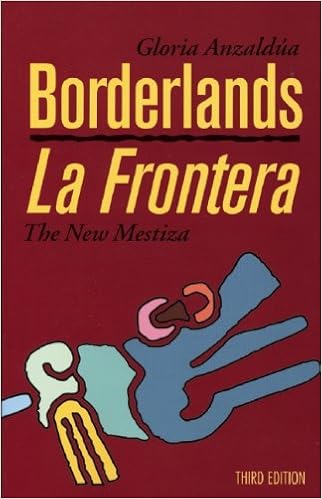
  • Borderlands/La Frontera: The New Mestiza (Third Edition)

    Aunt Lute Books
    1987
    ISBN: 1879960125

    Gloria Anzaldúa

    • Chosen one of the “Best Books of 1987” by Library Journal.
    • Selected by Utne Reader as part of its “Alternative Canon” in 1998.
    • One of Hungry Mind Review’s “Best 100 Books of the 20th Century”

    Rooted in Gloria Anzaldúa’s experience as a Chicana, a lesbian, an activist, and a writer, the groundbreaking essays and poems in this volume profoundly challenge how we think about identity. Borderlands/La Frontera remaps understandings of what a “border” is, seeing it not as a simple divide between here and there, us and them, but as a psychic, social, and cultural terrain that we inhabit, and that inhabits all of us.

    New to this edition:

    Includes an Introduction by Sonia Saldívar-Hull; an interview with Gloria Anzaldúa; and contributions by Norma Alarcón, Julia Alvarez, Paola Bacchetta, Rusty Barcelo, Norma Elia Cantú, Sandra Cisneros, T. Jackie Cuevas, Claire Joysmith, and AnaLouise Keating.