• Brown Babies in Britain

    Radcliffe Quarterly
    Winter 2007
    Dean’s Lecture Series

    Julia Hanna

    When white British women met black servicemen during World War II, mixed-race children sometimes resulted from their relationships. In her November 2 [2007] Dean’s Lecture, Hazel V. Carby addressed issues of race and class by drawing on scholarship and personal experience as one of the “brown babies” who caused social consternation and marked, according to Carby, the beginnings of Britain as a racialized state. Her lecture was titled “Brown Babies: The Birth of Britain as a Racialized State, 1943–1948.”

    Yet her research into memos sent between various branches of the British government shows an acute awareness of West Indian servicemen as well as black American troops stationed in Britain. Concern was expressed that a “social problem” might arise if nonwhites mixed with the local white population during the war or stayed in Britain after the war, and a program of covert racial segregation was put in place to monitor and manage black troops. When relationships and pregnancies resulted between white women and black men despite such interventions, the women were often counseled to give up their children and avoid marriage. Although her own parents ignored this advice, Carby has continued to search for the depersonalized meaning of her “half-caste” presence in the public sphere by studying memory, history, and citizenship, all of which she hopes to address in a forthcoming work, “Child of Empire: Racializing Subjects in Post WWII Britain.”

    The Charles C. and Dorathea S. Dilley Professor of African American Studies, a professor of American studies, and director of the Initiative on Race, Gender, and Globalization at Yale University, Carby is the author of Cultures in Babylon: Black Britain and African America (Verso, 1999).

    To watch Carby’s lecture, click here.

  • Forced to Choose: Some Determinants of Racial Identification

    Child Development
    May/June 2004
    Volume 75, Number 3
    Pages 730-748

    Melissa Herman, Assistant Professor of Sociology
    Dartmouth University

    This paper categorizes multiracial youth (N=1,496) ages 14 to 19 and compares them with other and with monoracial youth on identity development measures.  The multiracial categories used here are derived from youths’ reports of their own and their parents’ race(s).  Comparisons are made within groups of multiracial respondents who make different choices among single-race categories.  Results show differences between sub-groups in strength and importance of ethnic identity, self-esteem, and perceptions of ethnic discrimination.  Multinomial logistic regression show further that physiognomy, ethnic identity, and race of coresident parent(s) are significantly associated with reported race.  Also related to racial identification among part-Hispanic youth are racial distribution and socioeconomic status of their neighborhoods and the racial distribution of their schools.

    Read the entire article here.

  • Hybrid: Bisexuals, Multiracials, and Other Misfits Under American Law

    New York University Press
    1996-05-01
    176 pages
    16 illustrations
    ISBN: 9780814715383

    Ruth Colker, Distinguished University Professor and Heck Faust Memorial Chair in Constitutional Law
    Michael E. Moritz College of Law, Ohio State University

    The United States, and the West in general, has always organized society along bipolar lines. We are either gay or straight, male or female, white or not, disabled or not.

    In recent years, however, America seems increasingly aware of those who defy such easy categorization. Yet, rather than being welcomed for the challenges that they offer, people living the gap are often ostracized by all the communities to which they might belong. Bisexuals, for instance, are often blamed for spreading AIDS to the heterosexual community and are regarded with suspicion by gays and lesbians. Interracial couples are rendered invisible through monoracial recordkeeping that confronts them at school, at work, and on official documents. In Hybrid, Ruth Colker argues that our bipolar classification system obscures a genuine understanding of the very nature of subordination. Acknowledging that categorization is crucial and unavoidable in a world of practical problems and day-to-day conflicts, Ruth Colker shows how categories can and must be improved for the good of all.

  • Choosing Ethnic Identity

    Polity Books
    February 2003
    192 pages
    229 x 152 mm, 6 x 9 in
    Hardback ISBN: 9780745622767; ISBN10: 0745622763
    Paperback ISBN: 9780745622774; ISBN10: 0745622771

    Miri Song, Professor of Sociology
    University of Kent

    Choosing Ethnic Identity explores the ways in which people are able to choose their ethnic identities in contemporary multiethnic societies such as the USA and Britain. Notions such as adopting an identity, or self-designated terms, such as Black British and Asian American, suggest the importance of agency and choice for individuals. However, the actual range of ethnic identities available to individuals and the groups to which they belong are not wholly under their control. These identities must be negotiated in relation to both the wider society and coethnics. The ability of minority individuals and groups to assert or recreate their own self-images and ethnic identities, against the backdrop of ethnic and racial labelling by the wider society, is important for their self-esteem and social status.

    This book examines the ways in which ethnic minority groups and individuals are able to assert and negotiate ethnic identities of their choosing, and the constraints structuring such choices. By drawing on studies from both the USA and Britain, Miri Song concludes that while significant constraints surround the exercising of ethnic options, there are numerous ways in which ethnic minority individuals and groups contest and assert particular meanings and representations associated with their ethnic identities.

    Table of Contents

    Preface.
    Chapter 1 Ethnic identities: choices and constraints.
    Chapter 2 Comparing minorities’ ethnic options.
    Chapter 3 Negotiating individual and group identities.
    Chapter 4 The growth of `mixed race’ people.
    Chapter 5 The diversification of ethnic groups.
    Chapter 6 The second generation in a global context.
    Chapter 7 Debates about racial hierarchy.
    Chapter 8 The future of `race’ and ethnic identity.
    Notes.
    References.
    Index

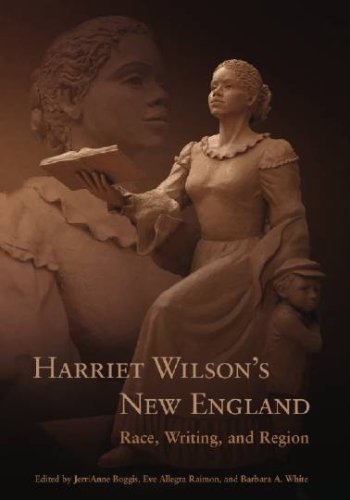
  • Harriet Wilson’s New England: Race, Writing, and Region

    University of New Hampshire Press
    University Press of New England
    2007
    272 pp. 18 B&W illus., 4 appendixes 6 x 9″
    Paper ISBN: 978-1-58465-642-5
    Cloth ISBN: 978-1-58465-641-8

    Edited by

    JerriAnne Boggis, Director
    Harriet Wilson Project

    Eve Allegra Raimon, Associate Professor of Arts and Humanities
    University of Southern Maine

    Barbara A. White, Professor Emerita of Women’s Studies
    University of New Hampshire

    Forward by

    Henry Louis Gates, Jr., W. E. B. Dubois Professor of the Humanities
    Harvard University

    This volume, with a foreword by Henry Louis Gates, Jr., advances efforts to correct the historical record about the racial complexity and richness characteristic of rural New England’s past.

    In the mid-nineteenth century, Harriet E. Wilson, an enterprising woman of mixed racial heritage, wrote an autobiographical novel describing the abuse and servitude endured by a young black girl in the supposedly free North. Originally published in Boston in 1859 and “lost” until its 1983 republication by noted scholar Henry Louis Gates, Jr., Our Nig; or Sketches from the Life of a Free Black, is generally considered the first work of fiction written by an African American woman published in the United States.

    With this collection, the first devoted entirely to Wilson and her novel, the editors have compiled essays that seek to understand Wilson within New England and New England as it might have appeared to Wilson and her contemporaries. The contributors include prominent historians, literary critics, psychologists, librarians, and diversity activists. Harriet Wilson’s New England joins other critical works in the emerging field known as the New Regionalism in resurrecting historically hidden ethnic communities in rural New England and exploring their erasure from public memory. It offers new literary and historical interpretations of Our Nig and responds to renewed interest in Wilson’s dramatic account of servitude and racial discrimination in the North.

    Table of Contents

    • Foreword – Henry Louis Gates, Jr.
    • Acknowledgments
    • Introduction: Making Space for Harriet E. Wilson
    • NEW HAMPSHIRE’S “SHADOWS”: CONTEXT AND HISTORY
      • Of Bottles and Books: Reconsidering the Readers of Harriet Wilson’s “Our Nig” – Eric Gardner
      • Harriet Wilson’s Mentors: The Walkers of Worcester – Barbara A. White
      • George and Timothy Blanchard: Surviving and Thriving in Nineteenth-Century Milford – Reginald H. Pitts
      • As Soon as I Saw My Sable Brother, I Felt More at Home”: Sampson Battis, Harriet Wilson, and New Hampshire Town History – David H. Watters
      • New Hampshire Forgot: African Americans in a Community by the Sea – Valerie Cunningham
    • READING “SKETCHES FROM THE LIFE OF A FREE BLACK”: GENRE AND GENDER
      • Slavery’s Shadows: Narrative Chiaroscuro and “Our Nig” – Mary Louise Kete
      • Recovered Autobiographies and the Marketplace: “Our Nig’s” Generic Genealogies and Harriet Wilson’s Entrepreneurial Enterprise – P. Gabrielle Foreman
      • The Disorderly Girl in Harriet E. Wilson’s “Our Nig” – Lisa E. Green
      • Beyond the Page: Rape and the Failure of Genre – Cassandra Jackson
      • Miss Marsh’s Uncommon School ReformEve Allegra Raimon
      • Fairy Tales and “Our Nig”: Feminist Approaches to Teaching Harriet Wilson’s Novel – Helen Frink
    • “A FAITHFUL BAND OF SUPPORTERS AND DEFENDERS”: PERSONAL REFLECTIONS
      • Losing Equilibrium: Harriet E. Wilson, Frado, and Me – John Ernest
      • Discovering Harriet Wilson in My Own Backyard – William Allen
      • A Conversation with Tami Sanders – Gloria Henry
      • Not Somewhere Else, But Here – JerriAnne Boggis
    • Contributors
    • Index
  • Tripping on the Color Line: Black-White Multiracial Families in a Racially Divided World

    Rutgers University Press
    October 2000
    192 pages
    Cloth ISBN: 0-8135-2843-7
    Paper ISBN: 0-8135-2844-5

    Heather M. Dalmage, Professor of Sociology and Director
    Mansfield Institute for Social Justice
    Roosevelt University

    A sociological analysis of the experiences and challenges faced by black-white multiracial families

    At the beginning of the twentieth century, W. E. B. Du Bois predicted that the central problem facing the United States in the new century would be that of the “color line.” Now, with another century upon us, many people are found straddling the color line. They come from the growing number of multiracial families in America, families seeking their places in a racially polarized society.

    In interviews with individuals from black/white multiracial families, Heather M. Dalmage examines the challenges they face and explores how their experiences demonstrate the need for rethinking race in America. She examines the lived reality of race in the ways multiracial families construct their identities and sense of community and politics. The lack of language to describe multiracial experiences, along with the methods of negotiating racial ambiguity in a racially divided, racist society are central themes of Tripping on the Color Line. By connecting her interviewees stories to specific issues, such as census categories, transracial adoption, and intermarriage, Dalmage raises the debate to a broad discussion of the idea of race and its impact on social justice.

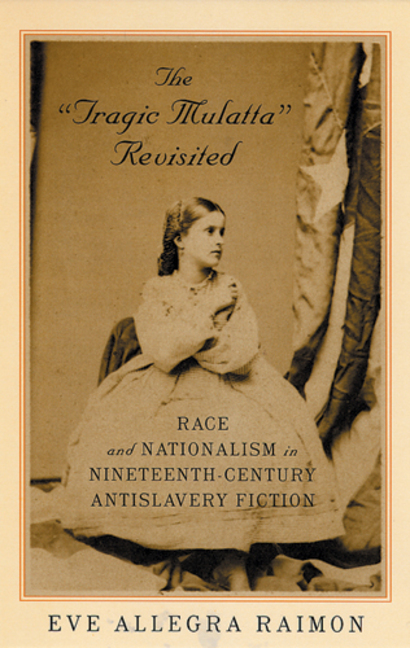
  • The “Tragic Mulatta” Revisited: Race and Nationalism in Nineteenth-Century Antislavery Fiction

    Rutgers University Press
    2004-09-29
    202 pages
    Cloth ISBN: 978-0-8135-3481-7
    Paper ISBN: 978-0-8135-3482-4

    Eve Allegra Raimon, Professor, Arts & Humanities
    University of Southern Maine

    Since its inception, the United States has been intensely preoccupied with interracialism. The concept is embedded everywhere in our social and political fabric, including our sense of national identity. And yet, in both its quantitative and symbolic forms, interracialism remains an extremely elusive phenomenon, causing policy makers and census boards to wrangle over how to delineate it and, on an emblematic level, stirring intense emotions from fear to fascination. In The “Tragic Mulatta” Revisited, Eve Allegra Raimon focuses on the mixed-race female slave in literature, arguing that this figure became a symbolic vehicle for explorations of race and nation-both of which were in crisis in the mid-nineteenth century. At this time, judicial, statutory, social, and scientific debates about the meaning of racial difference (and intermixture) coincided with disputes over frontier expansion, which were never merely about land acquisition but also literally about the “complexion” of that frontier. Embodying both northern and southern ideologies, the “amalgamated” mulatta, the author argues, can be viewed as quintessentially American, a precursor to contemporary motifs of “hybrid” and “mestizo” identities. Where others have focused on the gendered and racially abject position of the “tragic mulatta,” Raimon reconsiders texts by such central antislavery writers as Lydia Maria Child, William Wells Brown, Harriet Beecher Stowe, and Harriet Wilson to suggest that the figure is more usefully examined as a way of understanding the volatile and shifting interface of race and national identity in the antebellum period.

    Read an excerpt here.

  • Will “Multiracial”: Survive to the Next Generation?: The Racial Classification of Children of Multiracial Parents

    Social Forces
    Volume 86, Number 2 (December 2007)
    pages 821-849
    DOI: 10.1353/sof.2008.0007

    Jenifer L. Bratter, Assistant Professor of Sociology and Associate Director of the Institute for Urban Research
    Rice University

    Will multiracial identification resonate with future generations? Using the 2000 U.S. Census, I analyze the impact of a multiracial parent on the classification of children in four types of multiracial families (e.g., white/non-white, black/non-black). Compared to families where parents are of two different single-race backgrounds, parental multiracial identity decreased the likelihood of multiracial classification due to the use of labels reflecting a shared single-race category (e.g. white-Asian mother and white father). When parents’ races did not overlap, multiracial classification was more common in households if the other parent was white or American Indian. These results suggest that intergenerational transmission of a multiracial identity is more common in contexts of racial diversity.

  • “The Ineffaceable Curse of Cain”: Racial Marking and Embodiment in Pinky

    Camera Obscura
    43 (Volume 15, Number 1),
    2000
    pp. 94-121

    Elspeth Kydd

    Look at my fingers, are not the nails of a bluish tinge . . . that is the ineffaceable curse of Cain . . .
    Dion Boucicault, The Octoroon, or Life in Louisiana

    The 1949 film Pinky presents a central mulatto character as a method for focusing attention on issues of race and racism.  As one of a series of liberal films released shortly after the Second World War, Pinky approaches issues of race and racism as “social problems.” Yet this film, as do others of this movement, demonstrates more ambiguities around racial categorizations than it offers solutions for dealing with postwar racial tensions.  Made during the Hays Code‘s ban on the representation of miscegenation, Pinky confronts the issue of interracial relations more overtly than many other films of its time by focusing its narrative on the difficulties experienced by a mixed-race woman. The character of Pinky faces crises over passing, as she is torn between her “birthright” and the “mess of pottage”  that she would gain by identifying as white.

    Pinky uses the mulatto character to gain audience sympathies, exploring the effects of Southern racism by subjecting the almost-white main character to racially motivated degradations.  Significantly, the film embodies the mulatto through a white actress, producing an ambiguous interplay of audience identifications.  The film engages multiple deployments of the mulatto character: Through the actress, through the social context of the Hays Code, through the visual conventions it deploys, and through its narrative, which draws on…

    Read or purchase the entire article here.

  • Mixed Race: Understanding Difference in the Genome Era

    Social Forces
    Volume 86, Issue 2, December 2007
    pages 795-820
    E-ISSN: 1534-7605, Print ISSN: 0037-7732
    DOI: 10.1353/sof.2008.0011

    Elizabeth M. Phillips
    National Human Genome Research Institute, National Institutes of Health

    Adebola O. Odunlami
    National Human Genome Research Institute, National Institutes of Health

    Vence L. Bonham
    National Human Genome Research Institute, National Institutes of Health

    This article presents the findings of a qualitative study of multiracial individuals’ understanding of identity, race and human genetic variation. The debate regarding the correlation between race, genetics and disease has expanded, but limited empirical data has been collected regarding the lay public’s perspective. Participants in this study explore their identity and its relationships to their health care interactions. Participants also share their views on race-based therapeutics, health disparities and the connections between race, ancestry and genetics. Their voices highlight the limitations of racial categories in describing differences within our increasingly diverse communities. The genomic era will be a pivotal period in challenging current understandings and uses of racial categories in health.

    Read or purchase the article here.