• Race mixing: Jones’ research has ties to political, sports figures

    Richmond Now
    The Faculty, Staff and Student Newspaper
    University of Richmond

    By Joan Tupponce
    April 2007

    No one is more intrigued with news about presidential hopeful Sen. Barack Obama or professional golfer Tiger Woods than Dr. Suzanne W. Jones, professor of English and women, gender and sexuality studies. But it’s not Obama’s bid for the presidency or Woods’ latest handicap that has Jones’ attention—it’s their racial identity, or more specifically, how they and others view their mixed ancestry.

    For more than 20 years, Jones has been writing about and teaching classes about literature that explores U.S. race relations, especially black-white relationships. The idea for her latest book project stems from one of the chapters in her 2004 book Race Mixing: Southern Fiction since the Sixties. In her new work, Jones will be looking at the reappearance of the racially mixed character in the contemporary American imagination through the study of fiction, memoirs and family histories.

    Jones first became personally interested in the topic about 15 years ago. “I taught a student in my African-American literature class whose mother was white and whose father was black,” she recalls.

    Jones was unaware of the student’s heritage until she read a paper the student had written about her racial identity. Jones, like others, had assumed the student was white…

    …The mulatto character figured prominently in American literature in the 19th century. “The so-called ‘tragic mulatto’ was used to point out the tragedy of defining race the way we did in the United States,” she explains. According to Jones’ research, the character disappeared by the 1960s—the time of the Black Power movement—only to resurface in the 1990s.

    “This reappearance of the mixed character is happening in part because the children of 1960s mixed marriages have grown up and are writing both fiction and nonfiction,” Jones says. “Also an intense debate about racial classification began in the early 1990s, spurred both by racially mixed people and some parents of mixed children, particularly white parents, who didn’t want their children to be defined by the old ‘one-drop’ rule. This debate eventually led to a change on the 2000 U.S. census form, which allowed people to check more than one racial or ethnic category.”…

    Read the entire article here.

  • Race Mixing: Southern Fiction since the Sixties

    Johns Hopkins University Press
    2004
    360 pages
    Hardback ISBN: 9780801873935
    Paperback ISBN: 9780801883934

    Suzanne W. Jones, Professor of English; Tucker-Boatwright Professor of the Humanities
    University of Richmond

    In the southern United States, there remains a deep need among both black and white writers to examine the topic of race relations, whether they grew up during segregation or belong to the younger generation that graduated from integrated schools. In Race Mixing, Suzanne Jones offers insightful and provocative readings of contemporary novels, the work of a wide range of writers—black and white, established and emerging. Their stories explore the possibilities of cross-racial friendships, examine the repressed history of interracial love, reimagine the Civil Rights era through children’s eyes, herald the reemergence of the racially mixed character, investigate acts of racial violence, and interrogate both rural and urban racial dynamics.

    Employing a dynamic model of the relationship between text and context, Jones shows how more than thirty relevant writers — including Madison Smartt Bell, Larry Brown, Bebe Moore Campbell, Thulani Davis, Ellen Douglas, Ernest Gaines, Josephine Humphreys, Randall Kenan, Reynolds Price, Alice Walker, and Tom Wolfe — illuminate the complexities of the color line and the problems in defining racial identity today. While an earlier generation of black and white southern writers challenged the mythic unity of southern communities in order to lay bare racial divisions, Jones finds in the novels of contemporary writers a challenge to the mythic sameness within racial communities—and a broader definition of community and identity.

    Closely reading these stories about race in America, Race Mixing ultimately points to new ways of thinking about race relations. “We need these fictions,” Jones writes, “to help us imagine our way out of the social structures and mind-sets that mythologize the past, fragment individuals, prejudge people, and divide communities.”

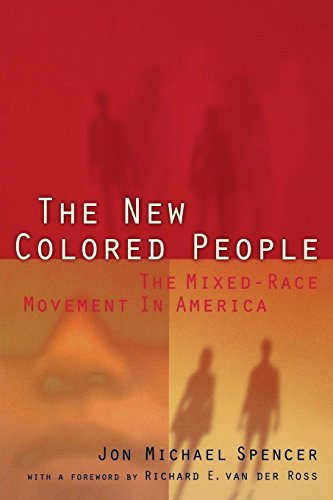
  • The New Colored People: The Mixed-Race Movement in America

    New York University Press
    1997-03-01
    224 pages
    ISBN: 9780814780725

    Jon Michael Spencer (Yahya Jongintaba), Tyler and Alice Haynes Professor of American Studies and Professor of Music
    University of Richmond

    foreword by Richard E. Vander Ross

    In recent years, dramatic increases in racial intermarriage have given birth to a generation who refuse to be shoehorned into neat, pre-existing racial categories. Energized by a refusal to allow mixed-race people to be rendered invisible, this movement lobbies aggressively to have the category multiracial added to official racial classifications.

    While applauding the self-awareness and activism at the root of this movement, Jon Michael Spencer questions its ultimate usefulness, deeply concerned that it will unintentionally weaken minority power. Focusing specifically on mixed-race blacks, Spencer argues that the mixed-race movement in the United States would benefit from consideration of how multiracial categories have evolved in South Africa. Americans, he shows us, are deeply uninformed about the tragic consequences of the former white South African government’s classification of mixed-race people as Coloured. Spencer maintains that a multiracial category in the U.S. could be equally tragic, not only for blacks but formultiracials themselves.

    Further, splintering people of color into such classifications of race and mixed race aggravates race relations among society’s oppressed. A group that can attain some privilege through a multiracial identity is unlikely to identify with the lesser status group, blacks. It may be that the undoing of racial classification will come not by initiating a new classification, but by our increased recognition that there are millions of people who simply defy easy classification.

    TABLE OF CONTENTS

    • Foreword by Richard E. van der Ross
    • Preface
    • Introduction
    • ONE: The Rainbow People of God
    • TWO: The Blessings of the One-Drop Rule
    • THREE: The Curses of the Amorphous Middle Status
    • FOUR: Thou Shalt Not Racially Classify
    • Postscript
    • Notes
    • Bibliography
    • Index
  • Race in another America: the significance of skin color in Brazil

    Princeton University Press
    2004
    336 pages
    27 line illus. 5 halftones
    6 x 9 1/4
    Hardcover ISBN: 9780691127927
    Ebook ISBN: 9781400837434

    Edward E. Telles, Professor of Sociology
    University of California, Santa Barbara

    • Winner of the 2006 Oliver Cromwell Cox Award, Section on Race and Ethnic Minorities, American Sociological Association
    • Winner of the 2006 Distinguished Book Award, American Sociological Association
    • Winner of the 2005 Otis Dudley Duncan Award, Section on Sociology of Population, American Sociological Association
    • Winner of the 2005 Hubert Herring Award, Pacific Coast Council of Latin American Studies
    • Winner of the 2005 Best Book on Brazil in English, Brazil Section of the Latin American Studies Association

    This is the most comprehensive and up-to-date book on the increasingly important and controversial subject of race relations in Brazil. North American scholars of race relations frequently turn to Brazil for comparisons, since its history has many key similarities to that of the United States. Brazilians have commonly compared themselves with North Americans, and have traditionally argued that race relations in Brazil are far more harmonious because the country encourages race mixture rather than formal or informal segregation.

    More recently, however, scholars have challenged this national myth, seeking to show that race relations are characterized by exclusion, not inclusion, and that fair-skinned Brazilians continue to be privileged and hold a disproportionate share of wealth and power.

    In this sociological and demographic study, Edward Telles seeks to understand the reality of race in Brazil and how well it squares with these traditional and revisionist views of race relations. He shows that both schools have it partly right–that there is far more miscegenation in Brazil than in the United States–but that exclusion remains a serious problem. He blends his demographic analysis with ethnographic fieldwork, history, and political theory to try to “understand” the enigma of Brazilian race relations–how inclusiveness can coexist with exclusiveness.

    The book also seeks to understand some of the political pathologies of buying too readily into unexamined ideas about race relations. In the end, Telles contends, the traditional myth that Brazil had harmonious race relations compared with the United States encouraged the government to do almost nothing to address its shortcomings.

    Read the entire first chapter in HTML or PDF format.

    Read a book review here.

  • The New Race Question: How the Census Counts Multiracial Individuals

    Russell Sage Foundation
    October 2002
    391 pages
    Hardcover: ISBN-13: 978-0-87154-657-9, ISBN-10: 0-87154-657-4
    Paperback: ISBN-13: 978-0-87154-658-6, ISBN-10: 0-87154-658-2

    Edited by

    Joel Perlmann, Senior Scholar and Program Director
    Levy Economics Institute of Bard College

    Mary C. Waters, M.E. Zukerman Professor of Sociology
    Harvard University

    The change in the way the federal government asked for information about race in the 2000 census marked an important turning point in the way Americans measure race. By allowing respondents to choose more than one racial category for the first time, the Census Bureau challenged strongly held beliefs about the nature and definition of race in our society. The New Race Question is a wide-ranging examination of what we know about racial enumeration, the likely effects of the census change, and possible policy implications for the future.

    The growing incidence of interracial marriage and childrearing led to the change in the census race question. Yet this reality conflicts with the need for clear racial categories required by anti-discrimination and voting rights laws and affirmative action policies. How will racial combinations be aggregated under the Census’s new race question? Who will decide how a respondent who lists more than one race will be counted? How will the change affect established policies for documenting and redressing discrimination? The New Race Question opens with an exploration of what the attempt to count multiracials has shown in previous censuses and other large surveys. Contributor Reynolds Farley reviews the way in which the census has traditionally measured race, and shows that although the numbers of people choosing more than one race are not high at the national level, they can make a real difference in population totals at the county level. The book then takes up the debate over how the change in measurement will affect national policy in areas that rely on race counts, especially in civil rights law, but also in health, education, and income reporting. How do we relate data on poverty, graduation rates, and disease collected in 2000 to the rates calculated under the old race question? A technical appendix provides a useful manual for bridging old census data to new.

    The book concludes with a discussion of the politics of racial enumeration. Hugh Davis Graham examines recent history to ask why some groups were determined to be worthy of special government protections and programs, while others were not. Posing the volume’s ultimate question, Jennifer Hochschild asks whether the official recognition of multiracials marks the beginning of the end of federal use of race data, and whether that is a good or a bad thing for society?

    The New Race Question brings to light the many ways in which a seemingly small change in surveying and categorizing race can have far reaching effects and expose deep fissures in our society.

    Copublished with the Levy Economics Institute of Bard College.

    Read the entire first chapter here.

    Table of Contents

    Contributors
    Acknowledgment
    Introduction
    PART I WHAT DO WE KNOW FROM COUNTING MULTIRACIALS?

      1. RACIAL IDENTITIES IN 2000: THE RESPONSE TO THE MULTIPLE-RACE RESPONSE OPTION — Reynolds Farley
      2. DOES IT MATTER HOW WE MEASURE? RACIAL CLASSIFICATION AND THE CHARACTERISTICS OF MULTIRACIAL YOUTH — David R. Harris
      3. MIXED RACE AND ETHNICITY IN CALIFORNIA — Sonya M. Tafoya

    PART II HOW MUCH WILL IT MATTER?

      1. BACK IN THE BOX: THE DILEMMA OF USING MULTIPLE-RACE DATA FOR SINGLE-RACE LAWS — Joshua R. Goldstein and Ann J. Morning
      2. INADEQUACIES OF MULTIPLE-RESPONSE RACE DATA IN THE FEDERAL STATISTICAL SYSTEM — Roderick J. Harrison
      3. THE LEGAL IMPLICATIONS OF A MULTIRACIAL CENSUS — Nathaniel Persily

    PART III A MULTIRACIAL FUTURE?

      1. AMERICAN INDIANS: CLUES TO THE FUTURE OF OTHER RACIAL GROUPS — C. Matthew Snipp
      2. CENSUS BUREAU LONG-TERM RACIAL PROJECTIONS: INTERPRETING THEIR RESULTS AND SEEKING THEIR RATIONALE — Joel Perlmann
      3. RECENT TRENDS IN INTERMARRIAGE AND IMMIGRATION AND THEIR EFFECTS ON THE FUTURE RACIAL COMPOSITION OF THE U.S. POPULATION — Barry Edmonston, Sharon M. Lee, and Jeffrey S. Passel

    PART IV THE POLITICS OF RACE NUMBERS

      1. HISTORY, HISTORICITY, AND THE CENSUS COUNT BY RACE — Matthew Frye Jacobson
      2. WHAT RACE ARE YOU? — Werner Sollors
      3. COUNTING BY RACE: THE ANTEBELLUM LEGACY — Margo J. Anderson
      4. THE ORIGINS OF OFFICIAL MINORITY DESIGNATION — Hugh Davis Graham
      5. LESSONS FROM BRAZIL: THE IDEATIONAL AND POLITICAL DIMENSIONS OF MULTIRACIALITY — Melissa Nobles
      6. REFLECTIONS ON RACE, HISPANICITY, AND ANCESTRY IN THE U.S. CENSUS — Nathan Glazer
      7. MULTIRACIALISM AND THE ADMINISTRATIVE STATE — Peter Skerry
      8. MULTIPLE RACIAL IDENTIFIERS IN THE 2000 CENSUS, AND THEN WHAT? — Jennifer L. Hochschild
      9. RACE IN THE 2000 CENSUS: A TURNING POINT — Kenneth Prewitt

    Appendix BRIDGING FROM OLD TO NEW

    1. Chapter 19 COMPARING CENSUS RACE DATA UNDER THE OLD AND THE NEW STANDARDS — Clyde Tucker, Steve Miller, and Jennifer Parker

    Index

  • Thinking Outside the White Box

    University of Southern California
    USC News

    Cristy Lytal
    On: 2009-10-12 18:31

    “I am not part this or part that but whole. I am me.” That’s how one of USC’s multiracial students described herself at the Face It!: Project ReMiX Kickoff event at El Centro Chicano on Sept. 22.

    More than 50 students posted Polaroids of themselves on a wall and scribbled self-descriptions that ranged from humorous to heady…

    …Hosted by Asian Pacific American Student Services, the Center for Black Cultural and Student Affairs and El Centro Chicano, Project ReMiX — now in its second year — provides a space for USC students to discuss and explore the mixed-race generation.

    “Multiracial communities are the fastest-growing communities in this country,” said Sumun Pendakur, director of Asian Pacific American Student Services. “And here at USC, about 17 percent of the incoming Asian Americans are mixed, about 24 percent of the incoming African Americans and about 29 percent of the incoming Latino/Chicano students are mixed. So that’s a huge number of students we’re talking about.”…

    Read the entire article here.

  • From Jamestown 1607 to 2007, the American Mosaic: A Multicultural Society

    National Association of Independent Schools (NAIS)
    People of Color Conference 2006

    Christine Madsen
    Rocky Mount Academy (North Carolina)

    Some of the original settlers in colonial Virginia formed self-sustaining mixed race communities. The history of these communities will be used as an entrance point to discuss the invention of racial identities as social constructs.

    View the Powerpoint presentation here.

  • What Are You? The Changing Face of America with Kip Fulbeck

    National Association of Independent Schools (NAIS)
    2010 Annual Conference
    Dates: 2010-02-24 through 2010-02-26
    Moscone Convention Center West
    San Francisco, California, USA
    Adapt, Survive, Thrive: Unleashing the Superpowers Within

    Kip Fulbeck, Professor of Performative Studies, Video
    University of California, Santa Barbara

    Friday, 2010-02-26
    13:30 – 14:30 PDT (Local Time)

    A seminal artist exploring multiracial identity, Kip Fulbeck captivates audiences with his videos, performances, and writings. His words and artwork have received a landslide of attention from media as diverse as MTV and CNN. On stage his uniquely personal monologues and multimedia shows combine stand-up comedy with a powerful and politically charged edge, leading audiences to honestly consider Who Am I? Using his own Cantonese, English, Irish, and Welsh background as a springboard, Fulbeck confronts media imagery of Asian men, interracial dating patterns, and icons of race and sex in the U.S., constantly questioning where Hapas “fit in” in a country that ignores multiracial identity. His work invites and inspires viewers to explore how ethnic stereotypes and opinions on interracial dating, gender roles, and personal identity are formed. A professor at the University of California, Santa Barbara, Fulbeck has performed and exhibited across the U.S. and in more than 20 countries. He has twice keynoted the National Conference on Race in Higher Education to standing ovations; directed 13 independent videos; and authored the critically acclaimed books Paper Bullets: A Fictional Autobiography and Part Asian, 100% Hapa, featuring portraits of multiracials of Asian/Pacific Islander descent, with an introduction by Sean Lennon.

  • Parenting ‘mixed’ children: difference and belonging in mixed race and faith families

    Joseph Rowntree Foundaton
    2008-06-20

    Chamion Caballero, Senior Research Fellow
    Families & Social Capital Research Group
    London South Bank University 

    Rosalind Edwards, Professor in Social Policy
    Families and Social Capital Research Group
    London South Bank University

    Shuby Puthussery, Senior Research Fellow
    Family and Parenting Institute

    Insights into parenting ‘mixed’ children.

    More and more is known about the ‘mixed’ population of Britain – those brought up in families with different racial, ethnic and faith backgrounds. But less is known about their parents. Who are they and what are their experiences of bringing up their children?

    This report aims to provide insights about parenting mixed children to inform debates about family life and professional strategies for support. Focusing on mothers and fathers living together, it:

    • Investigates how parents from different racial, ethnic and/or faith backgrounds give their children a sense of belonging and identity.
    • Examines parents’ approaches to cultural difference and how they pass on aspects of belonging and heritage across generations.
    • Explores the opportunities, constraints, challenges and tensions in negotiating a sense of identity and heritage between parents.

    Click here for the 4 page summary.
    Click here for the 76 page full report.

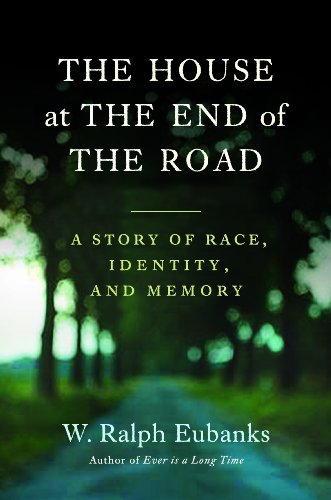
  • The House at the End of the Road: The Story of Three Generations of an Interracial Family in the American South

    HarperCollins
    Imprint: Smithsonian
    2009-05-19
    224 pages
    Hardcover ISBN: 9780061375736; ISBN10: 006137573X
    On Sale: 2009-05-19

    W. Ralph Eubanks, Bernard Schwartz Fellow
    New America Foundation

    In 1914, in defiance of his middle-class landowning family, a young white man named James Morgan Richardson married a light-skinned black woman named Edna Howell. Over more than twenty years of marriage, they formed a strong family and built a house at the end of a winding sandy road in South Alabama, a place where their safety from the hostile world around them was assured, and where they developed a unique racial and cultural identity. Jim and Edna Richardson were Ralph Eubanks’s grandparents.

    Part personal journey, part cultural biography, The House at the End of the Road examines a little-known piece of this country’s past: interracial families that survived and prevailed despite Jim Crow laws, including those prohibiting mixed-race marriage. As he did in his acclaimed 2003 memoir, Ever Is a Long Time, Eubanks uses interviews, oral history, and archival research to tell a story about race in American life that few readers have experienced. Using the Richardson family as a microcosm of American views on race and identity, The House at the End of the Road examines why ideas about racial identity rooted in the eighteenth century persist today. In lyrical, evocative prose, this extraordinary book pierces the heart of issues of race and racial identity, leaving us ultimately hopeful about the world as our children might see it.

    Browse the contents of the book here.