• Neither Black Nor White Yet Both: Thematic Explorations of Interracial Literature

    Oxford University Press
    March 1997
    592 pages
    Hardback ISBN13: 9780195052824; ISBN10: 019505282X

    Werner Sollors, Henry B. and Anne M. Cabot Professor of English Literature and Afro American Studies; Director of the History of American Civilization Program
    Harvard University

    Why can a “white” woman give birth to a “black” baby, while a “black” woman can never give birth to a “white” baby in the United States? What makes racial “passing” so different from social mobility? Why are interracial and incestuous relations often confused or conflated in literature, making “miscegenation” appear as if it were incest? When did the myth that one can tell a person’s race by the moon on their fingernails originate? How did blackness get associated with “the curse of Ham” when the Biblical text makes no reference to skin color at all?

    Werner Sollors examines these questions and others in Neither Black Nor White Yet Both, a new and exhaustively researched exploration of “interracial literature.” In the past, interracial texts have been read more for a black-white contrast of “either-or” than for an interracial realm of “neither, nor, both, and in-between.” Intermarriage prohibitions have been legislated throughout the modern period and were still in the law books in the 1980s. Stories of black-white sexual and family relations have thus run against powerful social taboos. Yet much interracial literature has been written, and this book suggests its pervasiveness and offers new comparative and historical contexts for understanding it.

    Looking at authors from Heliodorus, John Stedman, Buffon, Thomas Jefferson, Heinrich von Kleist, Victor Hugo, Aleksandr Sergeevic Puskin, and Hans Christian Andersen, to Lydia Maria Child, Harriet Beecher Stowe, William Wells Brown, Mark Twain, Charles Chesnutt, Kate Chopin, Cirilo Villaverde, Aluisio Azevedo, and Pauline Hopkins, and on to modern writers such as Langston Hughes, Jessie Fauset, Boris Vian, and William Faulkner, Sollors ranges across time, space, and cultures, analyzing scientific and legal works as well as poetry, fiction, and the visual arts, to explore the many themes and motifs interwoven throughout interracial literature. From the etymological origins of the term “race” to the cultural sources of the “Tragic Mulatto,” Sollors examines the recurrent images and ideas in this literature of love, family, and other relations between blacks, whites, and those of “mixed race.”

    Sollors’ interdisciplinary explorations of literary themes yield many insights into the history and politics of “race,” and illuminate a new understanding of the relations between cultures through the focus on interracial exchanges. Neither Black Nor White Yet Both is vital reading for anyone who seeks to understand what has been written and said about “race,” and where interracial relations can go from here.

    Table of Contents

    • List of Illustrations
    • Introduction:
    • Black—White—Both—Neither—In-Between xv
    • 1. Origins; or, Paradise Dawning 31
    • 2. Natus Æthiopus/Natus Albus 48
    • 3. The Curse of Ham; or, from “Generation” to “Race” 78
    • 4. The Calculus of Color 112
    • 5. The Bluish Tinge in the Halfmoon; or, Fingernails as a Racial Sign 142
    • 6. Code Noir and Literature 162
    • 7. Retellings: Mercenaries and Abolitionists 188
    • 8. Excursus on the “Tragic Mulatto”; or, the Fate of a Stereotype 220
    • 9. Passing; or, Sacrificing a Parvenu 246
    • 10. Incest and Miscegenation 285
    • Endings 336
    • Appendix A: A Chronology of Interracial Literature 361
    • Appendix B: Prohibitions of Interracial Marriage and Cohabitation 395
    • Notes 411
    • Selected Bibliography 523
    • Index 561
  • The Effects of Black Identity on Candidate Evaluations: An Exploratory Study

    Journal of Black Studies
    Volume 40, Number 2 (2009)
    pages 215-237
    DOI: 10.1177/0021934707309430

    Jas M. Sullivan, Assistant Professor of Political Science
    Louisiana State University

    Keena N. Arbuthnot, Associate Professor of Education
    Louisiana State University

    Although Barack Obama’s entrance into the 2008 presidential campaign has been warmly received by Whites, Blacks have been somewhat ambivalent. Some even have claimed that Obama is not “Black.” The case of Barack Obama brings to the forefront the prospect of intragroup identity differences that exist among Blacks and the potential importance of a candidate’s racial background in elections. Consequently, the authors ask the following questions: (a) Does the racial background of a political candidate affect Black voters’ support and evaluation of a candidate’s personal attributes (i.e., trust, concern, strength, and qualification)? and (b) Focusing purely on the treatment groups separately (White, biracial, and Black candidates), does Black identity affect Blacks’ support and evaluation of a candidate’s personal attributes?  The experimental results of this exploratory study find race does make a difference on candidate support, and Black identity influences the way in which Black respondents perceive White, biracial, and Black candidates. As a result, these findings suggest that differences in how Blacks feel about a candidate will depend on the candidate’s racial background, their own attitudes and beliefs about being Black, and where they fall on various demographic and political measures.

    Read or purchase the entire article here.

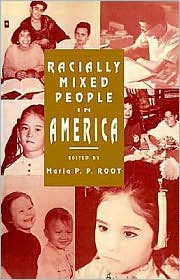
  • Racially Mixed People in America

    SAGE Publications, Inc.
    1992
    400 pages
    Paperback ISBN: 9780803941021

    Edited by Maria P. P. Root

    Recipient of the Gustavus Myers Center for the Study of Human Rights in the United States 1993 Outstanding Book Award.

    America has been the breeding ground of a “biracial baby boom” for the past 25 years. Unfortunately, there has been a dearth of information regarding how racially mixed people identify and view themselves and how they relate to one another. Racially Mixed People in America steadily bridges this gap and offers a comprehensive look at the social and psychological adjustment of mixed-race people, models for identity development, contemporary immigration and marriage patterns, and methodological issues involved in conducting research with mixed-race people, all in the context of America’s mixed race past and present. Including contributions by ethnohistorians, psychologists, and sociologists, this powerful volume will provide the reader a tool for examining ideologies surrounding race, race relations, and the role of social science in the deconstruction of race. Racially Mixed People in America is essential reading for researchers and practitioners in cross-cultural studies, psychology, family studies, sociology, and social work.

    Table of Contents

    • PART ONE: RACIAL ECOLOGY
      • Within, Between, and Beyond Race — Maria P. P. Root
      • The Illogic of American Racial CategoriesPaul R. Spickard
      • The Human Ecology of Multiracial Identity — Robin L. Miller
      • Developmental Pathways — Deborah J. Johnson
      • Toward an Ecological Theoretical Formulation of Race Identity in Black/White Biracial Children
      • Mixed Heritage Individuals — Cookie White Stephan
      • Ethnic Identity and Trait Characteristics
      • The Quiet Immigration — Michael C. Thornton
      • Foreign Spouses of US Citizens, 1945-1985
      • Beauty and the Beast — Carla K. Bradshaw
      • On Racial Ambiguity
    • PART TWO: RECOVERING THE MULTIRACIAL PAST
      • Passers and Pluralists G. Reginald Daniel
      • Subverting the Racial Divide
      • Blood Quantum — Terry P. Wilson
      • Native American Mixed Bloods
      • La Raza and the Melting Pot — Carlos A. Fernandez
      • A Comparative Look at Multiethnicity
      • From Dust to Gold Kieu — Linh Caroline Valverde
      • The Vietnamese Amerasian Experience
      • An Invisible Monster — Cynthia L. Nakashima
      • The Creation and Denial of Mixed Race People in America
    • PART THREE: WHAT OF THE CHILDREN
      • Back to the Drawing Board Maria P. P. Root
      • Methodological Issues in Research on Multiracial People
      • Identity Development in Biracial Children — James H. Jacobs
      • Between a Rock and a Hard Place — Ana Mari Cauce et al
      • Social Adjustment of Biracial Youth
      • Negotiating Ethnic Identity — Jewelle Taylor Gibbs and Alice M. Hines
      • Issues for Black/White Biracial Adolescents
      • Offspring of Cross-Race and Cross-Ethnic Marriages in Hawaii — Ronald C. Johnson
      • Please Choose One — Christine C. Iijima Hall
      • Ethnic Identity Choices for Biracial Individuals
      • Interracial Japanese Americans — Amy Iwasaki Mass
      • The Best of Both Worlds or the End of the Japanese American Community?
      • Prism Lives Teresa — Kay Williams
      • Identity of Binational Amerasians
      • The Developmental Process of Asserting a Biracial, Bicultural Identity — George Kitahara Kich
    • PART FOUR: CHALLENGING THE CENSUS
      • Is Multiracial Status Unique? The Personal and Social Experience — Michael C. Thornton
      • Coloring Outside the Lines — Christine C. Iijima Hall
      • Multicultural Identity and the Death of Stereotypes — Philip Tajitsu Nash
      • Beyond Black and White — G. Reginald Daniel
      • The New Multiracial Consciousness
      • From Shortcuts to Solutions — Maria P. P. Root
  • Raising Biracial Children

    AltaMira Press an Imprint of Rowman & Littlefield Publishing
    November 2005
    208pp
    Cloth: 0-7591-0900-1 / 978-0-7591-0900-1
    Paper 0-7591-0901-X / 978-0-7591-0901-8

    Kerry Ann Rockquemore
    University of Illinois

    Tracey A. Laszloffy  

    As the multiracial population in the United States continues to rise, new models for our understanding of mixed-race children and how their conception of racial identity must be developed.  A wide divide between academics who research biracial identity, and the everyday world of parents and practitioners who raise and deal with mixed-race children exists. This book aims to fill this gap by providing an extensive synthesis of the existing research in the field, as well as a model for better understanding the unique process of racial identity development for mixed-race children. Raising Biracial Children provides parents, educators, social workers, and anyone interested in multiracial issues with an accessible framework for understanding healthy mixed-race identity development and to translate those findings into practical care-giving strategies.

    About the Authors
    Kerry Ann Rockquemore
    is associate professor of African-American studies and sociology at the University of Illinois at Chicago. She is co-author of Beyond Black: Biracial Identity in America. Her research focuses on racial socialization in inter-racial families and racial identity development. Tracey A. Laszloffy is a marriage and family therapist in private practice in Connecticut. Prior to this she served on the faculty at Seton Hall University where she directed the masters level Marriage and Family Therapy Program. Dr. Laszloffy has published extensively in the area of race, oppression, and family therapy.

    Table of Contents

    • Preface and Acknowledgments
    • Chapter One: Moving Beyond Tragedy: A Multidimensional Model of Mixed-Race Identity (Read the chapter here).
    • Chapter Two: Acceptance and Denial: Shifting Our Gaze from Labels to Pathways
    • Chapter Three: Racism in America: What Parents Need to Know
    • Chapter Four: Starting at Home: Families and Racial Socialization
    • Chapter Five: Beyond the Family: Community Influences on Racial Identity Development
    • Chapter Six: More than Skin Deep: Appearances and Mixed-Race Identity
    • Chapter Seven: Just between Sisters: The Intersection of Race and Gender in the Lives of Mixed-Race Girls
    • Chapter Eight: Multiracialism in America: Reflections and New Directions
    • Appendix A: Multiracial Organizations
    • Appendix B: Online Resources
    • Appendix C: Research and Reading for Interracial Families
    • Appendix D: Movies and Documentaries
    • References
  • Shades of Difference: A History of Ethnicity in America: Perspectives on Multiracial America

    Rowman & Littlefield Publishers, Inc.
    June 2006
    208 pages
    Cloth: 0-7425-4316-1 / 978-0-7425-4316-4
    Paper 0-7425-4317-X / 978-0-7425-4317-1
     
    Richard Rees, Assistant professor of American Literature
    Antioch College

    From its prehistory in the biological theories of racial difference formulated in the 1800s to its current position in academic debate, Richard Rees investigates the diverse fields of scholarship from which the multifaceted understanding of the term ethnicity is derived. At the same time, Rees traces the broader historical forces that shaped the needs to which the concept of ethnicity responded and the social purposes to which it was applied. Centrally, he focuses upon the emergence of ethnicity in the early 1940s as a means of resolving contradictions and ambiguities in the racial status of European immigrants and its subsequent legacy and implications on race and caste. Shades of Difference introduces new perspectives on the definition of “whiteness” in America, and makes an original contribution to the larger discussion of race through a detailed account of ethnicity’s original meaning and its revaluation when later appropriated by the discourse of Black Nationalism in the 1960s and 70s. Rees has produced a powerful new analysis of the cultural and political history of ethnicity in America.

    Table of Contents

    • The Invention of (the Concept of) Ethnicity
    • Introduction: From the Invention of Race to the Rise of the Inbetween People, 1840 – 1924
    • Whiteness and the Limits of the New Environmentalism
    • Inventing Ethnicity in the Context of Race and Caste, 1930 – 45
    • Black Ethnicity and the Transformation of a Concept, 1962 – 72
    • Conclusion: Toward a Hybrid Discourse of Ethnicity
  • American Mixed Race: The Culture of Microdiversity

    Rowman & Littlefield Publishers, Inc.
    March 1995
    420 pages
    6 1/4 x 9 1/4
    Cloth ISBN: 0-8476-8012-6 / 978-0-8476-8012-2
    Paper ISBN: 0-8476-8013-4 / 978-0-8476-8013-9

    Edited by Naomi Zack, Professor of Philosophy
    University of Oregon

    This exciting multidisciplinary collection brings together twenty-two original essays by scholars on the cutting edge of racial theory, who address both the American concept of race and the specific problems experienced by those who do not fit neatly into the boxes society requires them to check.

    List of Contributors
    Linda Alcoff, Debra A. Barrath, Jennifer Clancy, Susan Clements, F. James Davis, Abby L. Ferber, Carlos A. Fernandez, Freda Scott Giles, David Theo Goldberg, Susan R. Graham, Helena Jia Hershel. M. Annette Jaimes, Cecile Ann Lawrence, Zena Moore, Maria P.P. Root, Laurie Shrage, Stephen Satris, Carol Roh Spaulding, Mariella Squire-Hakey, Teresa Kay Williams, Bruentta R. Wolfman, and Naomi Zack.

    Table of Contents

    • Introduction – Naomi Zack
    • Autobiography
      • Five Arrows – Susan Clements
      • Color Fades Over Time – Brunetta R. Wolfman
      • Racelessness – Cecile Ann Lawrence
      • Check the Box That Best Describes You – Zena Moore
      • What Are They? – Stephen Satris
    • Art
      • From Melodrama to the Movies – Freda Scott Giles
      • The Theater of Identity – Teresa Kay Williams
      • The Go-Between People – Carol Roh Spaulding
    • Social Science
      • The Hawaiian Alternative to the One-Drop Rule – F. James Davis
      • Some Kind of Indian – M. Annette Jaimes
      • Exploring the Social Construction of Race – Abby L. Ferber
      • Therapeutic Perspectives on Biracial Identity Formation and Internalized Oppression – Helena Jia Hershel
    • Public Policy
      • Grassroots Advocacy – Susan R. Graham
      • Testimony of the Association of Multi Ethnic Americans – Carlos A. Fernàndez
      • Multiracial Identity Assertion in the Sociopolitical Context of Primary Education – Jennifer Clancy
      • Yankee Imperialism and Imperialist Nostalgia – Mariella Squire-Hakey
    • Identity Theory
      • The Multiracial Contribution to the Psychological Browning of America – Maria P. P. Root
      • Made in the USA – David Theo Goldberg
      • Mestizo Identity – Linda Alcoff
      • Race and Racism – Debra A. Barrath
      • Ethnic Transgressions: Confessions of an Assimilated Jew – Laurie Shrage
      • Life After Race – Naomi Zack
  • Lecture by Professor Jennifer DeVere Brody

    Theater Dance & Performance Studies
    University of California at Berkeley
    Durham Studio Theater (Dwinelle Hall)
    Thursday, 2010-02-18 16:00 PST (Local Time)

    Sponsor: Department of Theater, Dance & Performance Studies

    Jennifer DeVere Brody is a Professor of African and African American Studies at Duke University where she teaches cultural and performance studies, gender and sexuality as well as film and literary studies. She is the author of Impossible Purities: Blackness, Femininity and Victorian Culture (Duke University Press, 1998) and Punctuation: Art, Politics and Play (Duke University Press, 2008). Her work has been supported by a Postdoctoral Fellowship from the Ford Foundation, a grant from the British Society for Theatre Research and was recognized by the Monette/Horwitz Trust for Independent Research to combat homophobia. Her research on race, visual culture and African American Literature has appeared in journals such as Genders, Signs, Callaloo, Theatre Journal, Text and Performance Quarterly and numerous edited volumes. Before joining the faculty at Duke, Professor Brody was the Weinberg College Board of Visitors Research and Teaching Professor at Northwestern University. She was also the President of the Women and Theatre Program, a division of the Association for Theatre in Higher Education. She serves on several boards and works with MLA, ASA, and ATHE.

    Attendance restrictions: Free admission. Seating is limited. No advance reservations available.
    Event Contact: tdps@berkeley.edu, 510-642-8268

  • Louisiana Creoles: Cultural Recovery and Mixed-Race Native American Identity

    Lexington Books an imprint of Rowman & Littlefield Publishers
    December 2006
    Cloth: 0-7391-1896-X / 978-0-7391-1896-2
    Paper: 0-7391-1897-8 / 978-0-7391-1897-9

    Andrew J. Jolivétte, Associate Professor of American Indian Studies
    San Francisco State University

    Foreword by Paula Gunn Allen

    Louisiana Creoles examines the recent efforts of the Louisiana Creole Heritage Center to document and preserve the distinct ethnic heritage of this unique American population. Dr. Andrew Jolivétte uses sociological inquiry to analyze the factors that influence ethnic and racial identity formation and community construction among Creoles of Color living in and out of the state of Louisiana. By including the voices of contemporary Creole organizations, preservationists, and grassroots organizers, Jolivétte offers a comprehensive and insightful exploration of the ways in which history has impacted the ability of Creoles to self-define their own community in political, social, and legal contexts. This book raises important questions concerning the process of cultural formation and the politics of ethnic categories for multiracial communities in the United States. In the aftermath of Hurricane Katrina the themes found throughout Louisiana Creoles are especially relevant for students of sociology and those interested in identity issues.

    Table of Contents

    • Foreword: Paula Gunn Allen
    • Introduction: Who Is White?
    • The Reconfiguring of Creole-Indian Identity in Louisiana: Situating the Other in Social Discourse
    • Including Native Identity in the Creole of Color Movement: Ethnic Renewal and Cultural Revival within a Black-Indian Population
    • Migratory Movement: The Politics of Ethnic Community (Re)Construction Among Creoles of Color, 1920-1940
    • Examining the Regional and Multi-Generational Context of Creole and American Indian Identity
    • Conclusion: (Re)Imagining and (Re)Writing Racial Categories
  • Beyond Black: Biracial Identity in America (Second Edition)

    Rowman & Littlefield Publishers, Inc.
    December 2007
    220 pages
    Cloth ISBN: 0-7425-6054-6 / 978-0-7425-6054-3
    Paper ISBN: 0-7425-6055-4 / 978-0-7425-6055-0

    By Kerry Ann Rockquemore and David L. Brunsma
    Foreword by Joe Feagin

    Beyond Black is a groundbreaking study of the dynamic meaning of racial identity for multiracial people in post-Civil Rights America. Kerry Ann Rockquemore and David Brunsma document the wide range of racial identities that individuals with one Black and one White parent develop, and they provide a incisive sociological explanation of the choices facing those who are multiracial.

    Stemming from the controversy of the 2000 Census and whether an additional “multiracial” category should be added to the survey, this second edition of Beyond Black uses both survey data and interviews of multiracial young adults to explore the contemporary dynamics of racial identity formation. The authors raise even larger social and political questions posed by expanding racial categorization on the U.S. Census.

    About the Authors
    Kerry Ann Rockquemore
    is associate professor of African American Studies at the University of Illinois at Chicago, and coauthor of Raising Biracial Children.

    David L. Brunsma is associate professor of sociology at the University of Missouri-Columbia and coeditor of The Sociology of Katrina: Perspectives on a Modern Catastrophe.

    Table of Contents

    • List of Tables and Figures
    • Preface
    • Acknowledgements
    • Foreword: Joe Feagin
    • Chapter 1: Who is Black? Flux and Change in American Racial Identity
    • Chapter 2: Biracial Identity Research: Past and Present
    • Chapter 3: What it Means to be Mixed-Race in Post-Civil Rights America
    • Chapter 4 : Sociological Factors Influencing Biracial Identity
    • Chapter 5: The Color Complex: Appearances and Multiracial Identity
    • Chapter 6: Who is Black Today and Who Will be Black Tomorrow?
    • Endnotes
    • Appendices
    • References
    • Index
  • Is That Your Child? Mothers Talk about Rearing Biracial Children

    Lexington Books (an imprint of Rowman & Littlefield)
    October 2008
    146 pages
    Hardback ISBN: 978-0-7391-2763-6
    Paperback ISBN: 978-0-7391-2764-3
    eBook ISBN: 978-0-7391-3208-1

    By Marion Kilson and Florence Ladd

    “Is That Your Child?” is a question that countless mothers of biracial children encounter whether they are African American or European American, rearing children today or a generation ago, living in the city or in the suburbs, are upper middle class or lower middle class. Social scientists Marion Kilson and Florence Ladd probe mothers’ responses to this query and other challenges that mothers of biracial children encounter.

    Organized into four chapters, the book begins with Kilson and Ladd’s initial interview of one another, continues with an overview of the challenges and rewards of raising biracial children gleaned from their interviews with other mothers, presents profiles of mothers highlighting distinctive individual experiences of biracial parenting, and concludes with suggestions of positive biracial parenting strategies.

    This book makes a unique contribution to the growing body of literature by and about biracial Americans. Although in the past twenty years biracial Americans like Rebecca Walker, June Cross, and James McBride have written of their person experiences and scholars like Kathleen Korgen, Maria Root, and Ruth Frankenberg have explored aspects of the biracial experience, none has focused on the experiences of a heterogeneous set of black and white mothers of different generations and socioeconomic circumstances as Kilson and Ladd do.

    About the Authors
    Marion Kilson is an anthropologist and the author of Claiming Place: Biracial Young Adults of the Post-Civil Rights Era (Bergin & Garvey 2000). Florence Ladd is a psychologist and won the Black Caucus of the American Library Association award for her novel, Sarah’s Psalm (Scribner 1997).

    Table of Contents

    • Foreword
    • Chapter 1: The Back Story of Is That Your Child?
    • Chapter 2: Challenges and Rewards for Mothers of Biracial Children
    • Chapter 3: Profiles of Mothers of Biracial Children
    • Chapter 4: Nurturing Biracial Children: Some Lessons Learned
    • Appendix I: Interracial Marriages in the United States
    • Appendix II: Some Sociological Attributes of Mothers
    • Appendix III: Selected Multiracial Resources