Mixed Race Studies

Scholarly perspectives on the mixed race experience.

    • About This Site
    • Bibliography
    • Contact Information
    • Date and Time Formats
    • Forthcoming… (Updated 2021-09-01)
    • Likely Asked Questions
    • List of Book Publishers
    • List of Definitions and Terms
    • My Favorite Articles and Papers
    • My Favorite Posts
    • My Recent Activities
    • Praise for Mixed Race Studies
    • Tag Listing
      • Tag Listing (Ordered by Count)
    • US Census Race Categories, 1790-2010
    • 1661: The First ‘Mixed-Race’ Milestone
    • 2010 U.S. Census – Some Thoughts

recent posts

  • The Routledge International Handbook of Interracial and Intercultural Relationships and Mental Health
  • Loving Across Racial and Cultural Boundaries: Interracial and Intercultural Relationships and Mental Health Conference
  • Call for Proposals: 2026 Critical Mixed Race Studies Conference at UCLA
  • Participants Needed for a Paid Research Study: Up to $100
  • You were either Black or white. To claim whiteness as a mixed child was to deny and hide Blackness. Our families understood that the world we were growing into would seek to denigrate this part of us and we would need a community that was made up, always and already, of all shades of Blackness.

about

  • Twitter
  • Facebook
  • Instagram
  • Lani Guinier drew on her Black and Jewish roots in a life of outspoken activism

    2022-01-11

    Lani Guinier drew on her Black and Jewish roots in a life of outspoken activism

    Forward
    2022-01-07

    TaRessa Stovall

    This undated file photo shows Lani Guinier(C), President Clinton’s nominee to head the U.S. Civil Rights office of the U.S.
    LUKE FRAZZA/AFP via Getty Images

    Lani Guinier, the daughter of a white Jewish mother and Black Panamanian father whose nomination by President Clinton to head the Civil Rights Division of the Department of Justice was opposed by mainstream Jewish organizations, died on Friday.

    Guinier, who went on to become the first Black woman on the Harvard Law School faculty as well as its first woman of color given a tenured post, succumbed to complications from Alzheimer’s disease, according to The Boston Globe.

    Carrie Johnson, who covers the Justice Department for National Public Radio, tweeted a message from Harvard Law School Dean John Manning confirming Guinier’s death and praising her.

    “Her scholarship changed our understanding of democracy – of why and how the voices of the historically underrepresented must be heard and what it takes to have a meaningful right to vote,” Manning’s message said. The dean’s letter to the school community said she died surrounded by friends and family…

    Read the entire article here.
  • Who’s Afraid of Lani Guinier?

    2022-01-11

    Who’s Afraid of Lani Guinier?

    The New York Times Magazine
    1994-02-27

    Lani Guinier

    For a late April day in Washington, the air was remarkably soft. The sun-splashed courtyard of the Department of Justice seemed a reflection of the glow surrounding Attorney General Janet Reno. She had just returned from a successful venture to Capitol Hill, where she faced down a committee upset about the recent confrontation with the Branch Davidians. I stood with six other Justice Department nominees to be presented to the public. In what we were told was a last-minute decision, the President himself was to make the presentations. We gathered in the hallway next to the courtyard stage and were lined up in the order we would be introduced. We were given our instructions, and then the President arrived.

    The President had a regal bearing. I remember he was wearing a beautifully tailored blue suit. As he strode down the row of nervous nominees he greeted each of us in his typically physical style. He grasped my hand, congratulated me and kissed me lightly on the cheek. As he moved to the others I remember overhearing one of the nominees pass on a greeting from an old friend from Arkansas. The President stepped back and said, with a wistful look in his eye: “I remember Steve. That was when I had a real life.” And I remember the nominee’s response: “Mr. President, this is real life.”

    As we were introduced there were cheers and signs saying “Atta girl, Janet!” and the like. I saw many old friends from the Civil Rights Division, where I had worked during the Carter Administration, giving the thumbs-up and smiling. I had not been back in the courtyard in 12 years, and now here I was accepting the nomination to head the Civil Rights Division…

    Read the entire article here.

  • Maria Ewing, opera singer and ex-wife of Sir Peter Hall, dies aged 71

    2022-01-11

    Maria Ewing, opera singer and ex-wife of Sir Peter Hall, dies aged 71

    The Guardian
    Associated Press

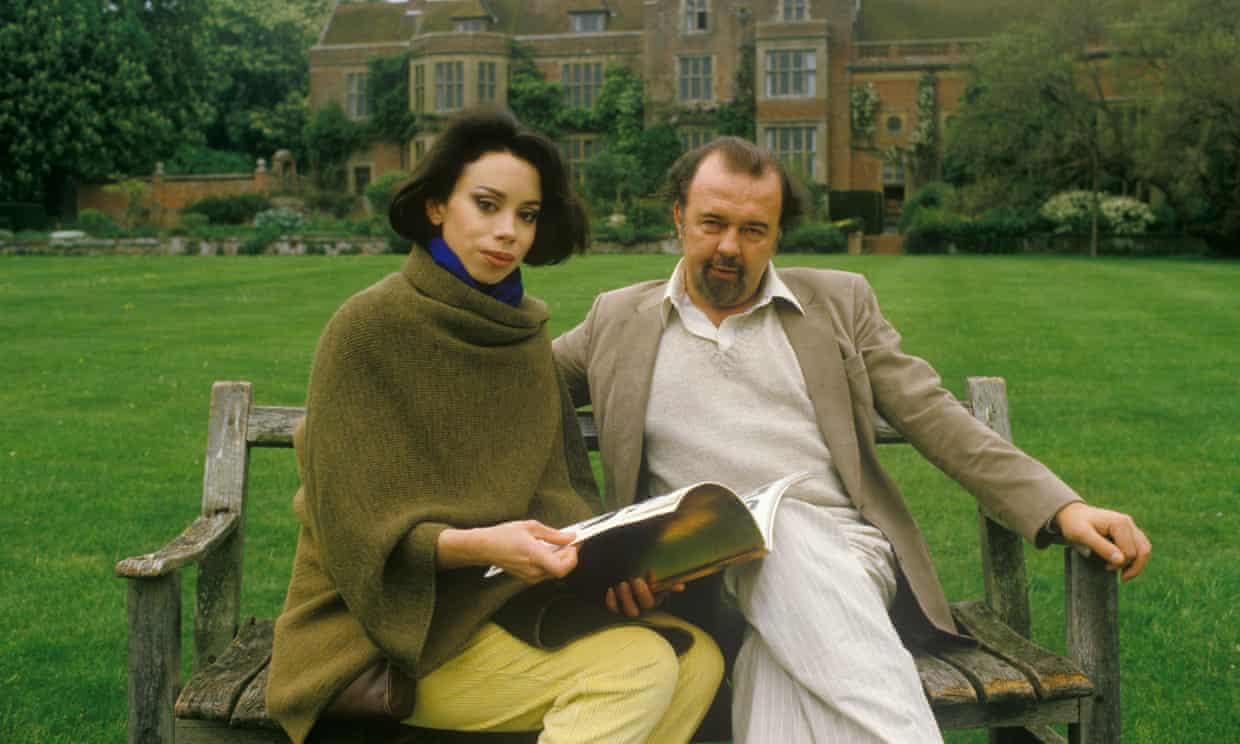
    Maria Ewing and Sir Peter Hall in 1984. Photograph: Homer Sykes/Alamy

    Ewing, also the mother of actor-director Rebecca Hall, died Sunday at her home in Detroit

    Maria Ewing, a soprano and mezzo-soprano noted for intense performances who became the wife of director Sir Peter Hall and the mother of actor-director Rebecca Hall, has died at age 71.

    Ewing died Sunday at her home in Detroit, spokeswoman Bryna Rifkin said Monday.

    Born in Detroit to a Dutch mother and an African American father, Ewing was the youngest of four daughters.

    “She was an extraordinarily gifted artist who by the sheer force of her talent and will catapulted herself to the most rarefied heights of the international opera world,” her family said in a statement…

    Read the entire article here.

  • Gender, Generation, and Multiracial Identification in the United States

    2022-01-07

    Gender, Generation, and Multiracial Identification in the United States

    Demography
    Volume 58, Number 5 (October 2021)
    pages 603–1630
    DOI: 10.1215/00703370-9334366

    Janet Xu, Postdoctoral Fellow
    Department of Sociology
    Princeton University, Princeton, New Jersey

    Aliya Saperstein, Associate Professor of Sociology; Benjamin Scott Crocker Professor in Human Biology
    Stanford University, Stanford, California

    Ann Morning, Associate Professor of Sociology
    New York University, New York, New York

    Sarah Iverson, Ph.D. Candidate
    Department of Sociology
    New York University, New York, New York

    Multiracial self-identification is frequently portrayed as a disproportionately female tendency, but previous research has not probed the conditions under which this relationship might occur. Using the 2015 Pew Survey of Multiracial Adults, we offer a more comprehensive analysis that considers gender differences at two distinct stages: reporting multiple races in one’s ancestry and selecting multiple races to describe oneself. We also examine self-identification patterns by the generational locus of multiracial ancestry. We find that females are more likely to be aware of multiracial ancestry overall, but only first-generation females are more likely than their male counterparts to self-identify as multiracial. Finally, we explore the role of racial ancestry combination, finding that multiracial awareness and self-identification are likely gendered differently for different segments of the mixed-race population. This offers a more nuanced picture of how gender interacts with other social processes to shape racial identification in the United States.

    Read the entire article in HTML or PDF format.

  • Pardon for Plessy v. Ferguson’s Homer Plessy is an overdue admission of his heroism

    2022-01-07

    Pardon for Plessy v. Ferguson’s Homer Plessy is an overdue admission of his heroism

    MSNBC
    2022-01-05

    Keisha N. Blain, Associate Professor of History
    University of Pittsburgh, Pittsburgh, Pennsylvania

    In ruling against Homer Plessy in 1896, the U.S. Supreme Court effectively legalized Jim Crow segregation for the next 60 years.
    Universal History Archive / Universal Images Group via Getty Images

    In rejecting Plessy’s argument that the Jim Crow law implied Black people were inferior, the Supreme Court upheld the notion of “separate but equal.”

    Homer Plessy, a Creole shoemaker from New Orleans and the plaintiff in the landmark Supreme Court case Plessy v. Ferguson, was pardoned by Louisiana Gov. John Bel Edwards on Wednesday, 130 years after Plessy challenged a Louisiana law that required Black passengers and white passengers to use separate train cars. The case sanctioned the “separate but equal” doctrine and validated state laws that segregated public facilities along the lines of race. The decision effectively legalized Jim Crow segregation for the next 60 years.

    As historian Blair L.M. Kelley explains in “Four Hundred Souls: A Community History of African America, 1619-2019“: “Plessy v. Ferguson was the manifestation of the African American opposition to segregationist attempts to shame and degrade Black train passengers.”

    The decision to pardon Homer Plessy is a welcome one, an effort to clear his name and raise national awareness to his story. It is also a symbolic gesture to acknowledge a wrong that took place so long ago. In the proclamation Edwards signed Wednesday, he praised “the heroism and patriotism” of Plessy’s “unselfish sacrifice to advocate for and to demand equality and human dignity for all of Louisiana’s citizens.”…

    Read the entire article here.

  • We’re reporting Census data all wrong

    2022-01-07

    We’re reporting Census data all wrong

    Boston Indicators
    Cambridge, Massachusetts
    2021-12-13

    Luc Schuster, Director
    Boston Indicators, Cambridge, Massachusetts

    Traditional reporting of census data may be contributing to misleading findings about actual demographic change.

    Census data on race and ethnicity are invaluable for understanding who we are as a region and how we’re changing over time. Invaluable, yes. But also imperfect. Headlines during the census count last year focused on challenges facing Census Bureau workers during a pandemic and on the Trump administration’s efforts to depress the count in certain areas. But the physical count isn’t the only problem. While back-end reporting changes for the 2020 Census in some ways help us see more clearly who we are as a multiracial, multiethnic nation, other changes have led to misleading findings about actual demographic change. These challenges are compounded by traditional reporting approaches used by researchers like us that have tended to not include all people who select a given race on their census form.

    Fortunately, alternatives exist for painting a more accurate picture. These judgment calls make an especially large difference for Boston’s White, Black, and Native American populations, as shown in the graph below, but the traditional reporting approach skews other race totals as well. Traditional reporting of 2020 census data understates Boston’s Black population by almost 43,000 residents…

    Read the entire article here.

  • Hidden in the Genes

    2022-01-07

    Hidden in the Genes

    Finding Your Roots
    Season 8, Episode 1
    Aired: 2022-01-04

    Henry Louis Gates Jr., Host and Alfonse Fletcher Jr. University Professor; Director of the Hutchins Center for African and African American Research
    Harvard University, Cambridge, Massachusetts

    Henry Louis Gates, Jr. helps Rebecca Hall and Lee Daniels solve family mysteries through DNA detective work, illuminating both history and their own identities.

    Watch the episode (00:52:11) here.

  • ‘I didn’t know how much he loved me’: Portland woman searches for college sweetheart 42 years after breakup

    2022-01-07

    ‘I didn’t know how much he loved me’: Portland woman searches for college sweetheart 42 years after breakup

    KGW News
    Portland, Oregon
    2021-09-15

    Katherine Cook, Reporter

    Jeannie Gustavson almost gave up on finding her lost love. Then one small break revealed something she never expected.

    Most people never forget the one that got away. Maybe they met in college. Perhaps they were a friend of a friend, a neighbor or someone from work. At 68 years old, Jeannie Gustavson has spent most of her lifetime remembering the one who got away, or more accurately, the one she let go.

    “He was my first true love. That doesn’t go away,” Jeannie said from her Northwest Portland home.

    Fifty years ago, Jeannie and Steve Watts were college sweethearts at Loyola University Chicago.

    “He was very handsome,” Jeannie said. “He was 6-foot-4. I like tall guys! He was extremely intelligent, well spoken. He was very caring, he always treated me like a lady. He was a gentleman.”

    Even so, Jeannie said none of that would have mattered to her mother, who did not approve of interracial dating. That included Steve, who was Black.

    “I was very hurt and very baffled by what my family did and said,” Jeannie said. “We had to keep our relationship a secret.”

    Read the entire story here.

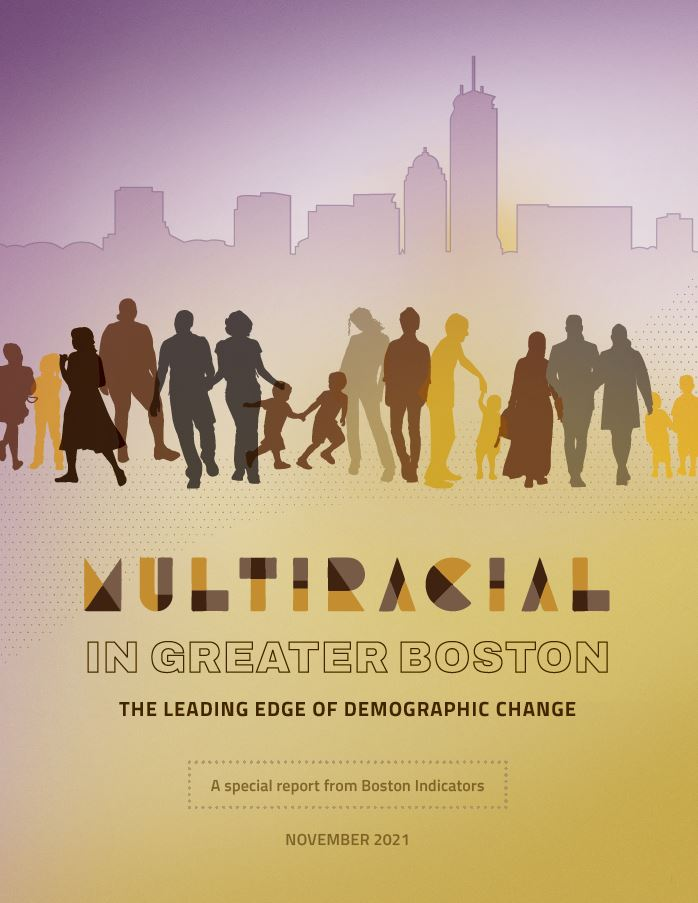
  • Multiracial in Greater Boston: The Leading Edge of Demographic Change

    2022-01-06

    Multiracial in Greater Boston: The Leading Edge of Demographic Change

    Boston Indicators, Cambridge, Massachusetts
    2021-11-17
    30 pages

    Trevor Mattos, Senior Research Manager

    Luc Schuster, Senior Director

    Peter Ciurczak, Research Associate

    The United States is a nation of immigrants. And so is the region of Greater Boston. We’ve gone through waves of being more and less open to immigration, but the effect across recent generations has been a steadily diversifying population. Not only is racial diversity increasing in the aggregate, but a growing number of families are forming across racial and ethnic lines. Today, for instance, one in five babies born in Massachusetts is of mixed race or Latino ethnicity. The report provides detail on these shifting demographic patterns and engages with what they mean for our communities more broadly.

    Read the entire report here.

  • Opinion: Hollywood is putting mixed couples on screen. If only they would talk about it.

    2022-01-06

    Opinion: Hollywood is putting mixed couples on screen. If only they would talk about it.

    The Washington Post
    2021-12-29

    Tracy Moore, Contributing Writer at Vanity Fair
    Los Angeles, California


    (Jason Lyon/For The Washington Post)

    In Netflix’s holiday rom-com “Love Hard,” comedian Jimmy O. Yang plays Josh Lin, a Chinese American everyman who uses the photo of his much-hotter, mixed-race Asian friend Tag (Darren Barnet) to get dating app matches. The ploy works. He links with and falls for Natalie (Nina Dobrev), a White woman so smitten she flies cross-country to surprise him.

    But — shocker — Josh isn’t the beefcake in the photos, but a regular guy. Natalie is incensed, though not about his race. Guilty about his catfishing, Josh helps Natalie woo handsome Tag instead.

    Natalie also meets real Josh’s Chinese family, where his father is married to a White woman and his brother dates one. These arrangements surprised me — Asian male/White female relationships, called AMWF online, are rarely shown on-screen. That has finally begun to change, but I’m still waiting for the couples to talk about it…

    Read the entire article here.

Previous Page
1 … 42 43 44 45 46 … 1,428
Next Page

Designed with WordPress