• “Little White Lie: A Film about Dual Identity and Family Secrets” with Lacey Schwartz

    Taube Center for Jewish Studies
    Stanford University
    Center For Educational Research (Room 101)
    520 Galvez Mall
    Stanford, California
    2015-10-28, 19:00 PDT (Local Time)

    “Between Race and Religion: Contemporary American Jewish Life” series with the Center for Comparative Studies in Race and Ethnicity.

    Lacey Schwartz, an American filmmaker, in conversation with Allyson Hobbs, Assistant Professor of American History at Stanford University

    Little White Lie tells Lacey Schwartz’s story of growing up in a typical middle-class Jewish household in Woodstock, NY, with loving parents and a strong sense of her Jewish identity — that is until she discovers that her biological father is actually a black man with whom her mother had an affair. What defines our identity, our family of origin or the family that raises us? Lacey discovers that answering those questions means understanding her parents’ stories as well as her own.

    What defines our identity, our family of origin or the family that raises us? How do we come to terms with the sins and mistakes of our parents? Lacey discovers that answering those questions means understanding her parents’ own stories as well as her own. She pieces together her family history and the story of her dual identity using home videos, archival footage, interviews, and episodes from her own life. Little White Lie is a personal documentary about the legacy of family secrets, denial, and redemption.

    For more information, click here or here.

  • Designing Afro-Latino Curriculum for Self-Determination

    Zambombazo
    2015-10-23

    Zachary & Betsy Jones

    Introduction

    During the 2015 Afrolatino Festival of New York in a panel discussion on the contextualization of blackness, William Garcia briefly mentioned working to implement Afro-Latino curriculum in schools, which greatly intrigued us. Thus, we reached out to him to learn more. His amazingly detailed and extensive response, published below, recommends “looking for solidarity between oppressed people in the United States but also involves questioning African American and Latino nomenclature”. Prior to beginning, it is noteworthy that William Garcia describes these topics as “difficult conversations”. Thus, we encourage critical analysis, respect, and “productive dialogues with parents, students, communities, family members, and friends”, perhaps along with cultural resources from our Afrodescendent Population in Latin America unit.

    Designing Afro-Latino Pedagogy for Self-Determination (by William Garcia)

    “American Negro must remake his past in order to make his future.” —Arturo Alfonso Schomburg (1874-1938)

    With an increased media attention to police violence there is an emergence of educators utilizing Black Lives Matter as a movement to create and develop curriculums of social justice (Rethinking Schools 2015). The recent article “Black Students’ Lives Matter: Building the school-to-justice pipeline” (2015) posits:

    For the past decade, social justice educators have decried the school-to-prison pipeline: a series of interlocking policies—whitewashed, often scripted curriculum that neglects the contributions and struggles of people of color; zero tolerance and racist suspension and expulsion policies; and high-stakes tests—that funnel kids from the classroom to the cellblock. But, with the recent high-profile deaths of young African Americans, a “school-to-grave pipeline” is coming into focus.

    But yet what does it mean to be black in the United States? Am I as an Afro-Latino allowed to call myself Black? Who gets to be African American?…

    …Fixed categories of blackness do not allow Afro-Latinos to identify and explore their identities, which creates an invisibility of how policy, especially in the realm of education, has not been developed to attend to their academic needs. There is a need to redefine what it means to be black in this country [Editor’s Note: See Soulville Census: Learning about the Nuances of Blackness]. Essentialist forms of blackness in the U.S. make it difficult for students to relate to the way that we can understand race critically and politically as well as teaching in ways that are culturally relevant for them….

    Read the entire article here.

  • Panel talks multiracial identity in academics

    The Michigan Daily
    2015-10-27

    Alexa St John, Daily Staff Reporter

    According to a 2015 Pew Research Center report, 6.9 percent of all Americans 18 and older identify as multiracial. According to the University’s Office of the Registrar, last year, just over 3 percent of students identified as two or more races.

    A panel of University faculty met Monday night to discuss how multiracialism influences academic work for the first of their yearlong series dedicated to discussing the multiracial experience.

    “We were really hoping to create a sense of community,” said Karen Downing, the University Library’s head of social sciences and the education liaison librarian. “This is a population that is often hidden because we don’t walk around with signs on us saying we’re multiracial. It’s hard to connect sometimes with other multiracial people.”…

    Read the entire article here.

  • Global Families: A History of Asian International Adoption in America

    New York University Press
    October 2013
    244 pages
    17 halftones
    Cloth ISBN: 9780814717226
    Paper ISBN: 9781479892174

    Catherine Ceniza Choy, Professor of Ethnic Studies
    University of California, Berkeley

    In the last fifty years, transnational adoption—specifically, the adoption of Asian children—has exploded in popularity as an alternative path to family making. Despite the cultural acceptance of this practice, surprisingly little attention has been paid to the factors that allowed Asian international adoption to flourish. In Global Families, Catherine Ceniza Choy unearths the little-known historical origins of Asian international adoption in the United States. Beginning with the post-World War II presence of the U.S. military in Asia, she reveals how mixed-race children born of Japanese, Korean, and Vietnamese women and U.S. servicemen comprised one of the earliest groups of adoptive children.

    Based on extensive archival research, Global Families moves beyond one-dimensional portrayals of Asian international adoption as either a progressive form of U.S. multiculturalism or as an exploitative form of cultural and economic imperialism. Rather, Choy acknowledges the complexity of the phenomenon, illuminating both its radical possibilities of a world united across national, cultural, and racial divides through family formation and its strong potential for reinforcing the very racial and cultural hierarchies it sought to challenge.

    Contents

    • List of Illustrations
    • Acknowledgments
    • Introduction: International Adoption Nation
    • 1 Race and Rescue in Early Asian International Adoption History
    • 2 The Hong Kong Project: Chinese International Adoption in the United States in the 1950s and 1960s
    • 3 A World Vision: The Labor of Asian International Adoption
    • 4 Global Family Making: Narratives by and about Adoptive Families
    • 5 To Make Historical Their Own Stories: Adoptee Narratives as Asian American History
    • Conclusion: New Geographies, Historical Legacies
    • Notes
    • Bibliography
    • Index
    • About the Author
  • Black Mexico: The African Roots in Mexico

    Western Connecticut State University
    Student Center Theater
    181 White Street
    Danbury, Connecticut
    Wednesday, 2015-10-28, 10:50 EDT (Local Time)

    Gloria Arjona, Lecturer in Spanish
    California Institute of Technology, Pasadena

    In Celebration of Hispanic Heritage Month

    Dr. Gloria Arjona, a lecturer at CalTech Pasadena and University of Southern California, will present a live music and multimedia lecture about “Black Mexico: The African Roots in Mexico” at 10:50 a.m. in the Student Center Theater on the WCSU Midtown campus, 181 White St. in Danbury. This Hispanic Heritage Month event will be free and the public is invited.

  • B. Iden Payne Awards 2015 Winners and Nominees

    B. Iden Payne Awards
    Austin, Texas
    2015-10-26

    Below are the nominees for the 2014-2015 theatrical season.

    THEATER FOR YOUTH: 2014 – 2015  Season

    Outstanding Production

    Winner: Am I White / Salvage Vanguard Theater

    Outstanding Direction

    Winner: Jenny Larson / Am I White, Salvage Vanguard Theater

    Outstanding Lead Actor

    Winner: J. Ben Wolfe (Wesley Connor) / Am I White, Salvage Vanguard Theater

    Outstanding Featured Actor

    Winner: Michael Joplin (Ryan) / Am I White, Salvage Vanguard Theater

    Outstanding Original Script

    Winner: Adrienne Dawes / Am I White, Salvage Vanguard Theater

    Read the entire Winners and Nominees list here.

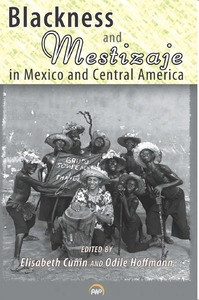
  • Blackness and Mestizaje in Mexico and Central America

    Africa World Press
    2013
    176 pages
    ISBN: 978-1592219339

    Edited by:

    Elisabeth Cunin, Sociologist
    Institut de Recherche pour le Développement, France

    Odile Hoffmann, Geographer
    Institut de Recherche pour le Développement, France

    American configurations, because of their originality, force us to adopt plural visions, toward the margins, with particular emphasis on situations of mixtures and ambiguous categories (Afro-indigenous, creoles, mestizos), multiple belongings (national and transnational), or seemingly contradictory practices (black culture without black people, mobilization without ethnic claims).

    Beyond the ideal of a homogenized citizenship produced by mestizaje, there are complex social dynamics based on difference and indifference, stigmatization and fascination, homogenization and othering. We believe that mestizaje is not only a “myth” and multiculturalism a “challenge” to it. The essays in this book investigate the different processes of racialization, ethnicization, and negotiation of the belongings that characterize mestizaje as multiculturalism.

  • Multiracial Teens Talk About Their Identity Rip Tides

    Women’s eNews
    2015-10-27

    Stephanie Geier, Teen Voices for Women’s eNews

    The pressures and rejections come from within, from peers, from different sides of their families. “No matter how hard I tried I was always too white for the black kids and too black for the white kids,” says one girl. The second in a three-part series on multiracial teens.

    WOODSIDE, N.Y. (WOMENSENEWS)–In middle school, Allyson Gonzalez thought befriending white girls would stop the other Brooklyn public school students from teasing her about her thick eyebrows and hairy arms.

    However, her new friends acted outright, “horribly” racist to certain students. Gonzalez went along with them, but would be nice to the other students in private. After witnessing this behavior, she then decided “if anything was bad, it was being white.”

    Now a college freshman at Hunter College, Gonzalez, who is German, Irish and Puerto Rican, identifies as a “multiracial white-Hispanic woman.” She blames “social pressure” for the delayed acceptance of her mixed background, she said in an email interview.

    Young people who are multiracial are four times more likely to switch their racial identity than to consistently report one identity, sociologists Steven Hitlin, J.Scott Brown and Glen H. Elder found in their 2006 research, cited by sociologists Kerry Ann Rockquemore, David Brunsma and Daniel J. Delgado in their 2009 piece published in the Journal of Social Issues.

    This is part of the multiracial “journey,” according to freelance writer Hannah Gomez, who also works with the advocacy organization We Need Diverse Books. In her 2013 paper “This, That, Both, Neither: The Badging Of Biracial Identity In Young Adult Realism,” she combined evidence from modern fiction and scientific research to identify a three-step process in multiracial identity development. First, individuals are confronted with a situation causing them to reject one side of their race. They then seek a community that does not pressure them to disconnect with one of their sides. Finally, they achieve a sense of empowerment that successfully leads to identifying with a mixed label.

    “Structural, systemic racism says that people must be easily defined and sorted into groups, and race is an easy way to do that,” said Gomez in an email interview.

    While she added that no one needs to embrace all of her background, individuals are often told to embrace just one, resulting in “a lot of undue stress.”…

    Read the entire article here.

  • Brilliant Ideas: Artist Ellen Gallagher

    Bloomberg Business
    2015-09-14

    “Brilliant Ideas” looks at the most exciting and acclaimed artists at work in the world today. On this episode, Ellen Gallagher talks to Bloomberg. (Source: Bloomberg)

  • Alumna and author Danzy Senna visits high school

    The Sagamore: Brookline High School’s student newspaper
    Brookline High School, Brookline, Massachusetts
    2015-09-29

    Sam Klein, Valentina Rojas-Posada and Sofia Tong

    Danzy Senna, alumna and author of junior and senior summer reading book Caucasia, came to the high school today for a day of discussions with students and faculty.

    Senna, who went to Stanford University and has published two novels, a memoir and a short-story collection said she was very fond of her experiences at the high school.

    “I had a very wonderful time here, I was just saying that a lot of the identity that led me that to write this book was formed here,” Senna said.

    She had a discussion with the students in A-block classes African American Studies and African American and Latino scholars. She also spoke at an assembly with juniors and seniors during T-block, held a writing workshop and discussion for seniors in Craft of Writing classes during C-block and had a discussion with English teachers during first lunch.

    Exclusive Q&A with Senna


    What was it like coming back to the school?…

    …A-block:

    The A-block meeting was held in the MLK room. Senna created an informal environment, joking back and forth with Associate Dean Melanee Alexander and social studies teacher Malcolm Cawthorne while students laughed. Both Alexander and Cawthorne went to the high school with her, and they talked about how their experiences differed from current students. Senna also talked about how inclusive her group of friends at the high school was.

    “I had a group where I did not have to choose, where my blackness and mixedness was welcomed and I thrived,” she said.

    Senna asked questions about the community at the high school, and whether there were cliques, gangs, or fights. She told a story about a fight she was in while at the high school, going into detail about a black fraternity that had started and how she was involved…

    Read the entire article and interview here.