• What I am learning from my white grandchildren — truths about race

    TEDxAntioch
    2014-11-04

    Anthony Peterson

    This talk was given at a local TEDx event, produced independently of the TED Conferences. Are we in a post-racial society? Do we want to be? Anthony Peterson, an African American, draws from current research and from conversations with his Anglo American grandchildren to address truths about race in 21st century America.

    Anthony Peterson is an African American Army brat who calls Hawaii home. He has lived, studied, written about, and taught about cultural and racial realities. He has developed and facilitated diversity training for corporate and church leaders. His degrees in psychology and religious education add to his perspective. Anthony continues work as an educator, writer and editor in Nashville, Tennessee, where he lives with his wife, Laura. They count six children and nine grandchildren.

  • Identity as Proxy

    Columbia Law Review
    Volume 115, Number 6 (October 2015)
    pages 1605-1674

    Lauren Sudeall Lucas, Assistant Professor of Law
    Georgia State University

    As presently constructed, equal protection doctrine is an identity-based jurisprudence, meaning that the level of scrutiny applied to an alleged act of discrimination turns on the identity category at issue. In that sense, equal protection relies on identity as a proxy, standing in to signify the types of discrimination we find most troubling.

    Equal protection’s current use of identity as proxy leads to a number of problems, including difficulties in defining identity categories; the tendency to privilege a dominant-identity narrative; failure to distinguish among the experiences of subgroups within larger identity categories; and psychological and emotional harm that can result from being forced to identify in a particular way to lay claim to legal protection. Moreover, because the Court’s identity-as-proxy jurisprudence relies on superficial notions of identity to fulfill a substantive commitment to equality, it is susceptible to co-option by majority groups.

    This Essay aims to engage readers in a thought experiment, to envision what equal protection doctrine might look like if it were structured to reflect the values identity is intended to serve without explicitly invoking identity categories as a way to delineate permissible and impermissible forms of discrimination. In doing so, it aims to incorporate directly into equal protection jurisprudence the notion that identities like race and gender are not merely a collection of individual traits, but the product of structural forces that create and maintain subordination. Under the “value-based” approach proposed herein, the primary concern of equal protection is not to eliminate differential treatment, but instead to deconstruct status hierarchies. Therefore, rather than applying heightened scrutiny to government actions based on race or gender, it applies heightened scrutiny to government actions that have the effect of perpetuating or exacerbating a history of discrimination or that frustrate access to the political process.

    The clearest impact of such a model would be in the context of affirmative action, where a majority plaintiff could no longer simply claim discrimination on the basis of race. Yet, the potential of a value-based model extends to other contexts as well—for example, challenges to voter identification laws, in which political exclusion would displace discriminatory intent and disparate impact as the relevant measure for analysis; and the treatment of pregnant women, in which discrimination on the basis of pregnancy would no longer have to align with gender to receive heightened scrutiny.

    This shift has several advantages: It allows the law to make important distinctions between groups and within groups; it alleviates the need for comparative treatment and solutions that favor taking from all over giving to some; it is less likely to generate identity-based harms; it is fact-driven rather than identity-driven and thus better suited to the judicial function; and it serves an important rhetorical function by changing the nature of rights discourse.

    Read the entire essay here.

  • Do You Have a Cherokee in Your Family Tree?

    History News Network
    George Mason University
    2015-10-18

    Gregory D. Smithers, Associate Professor of History
    Virginia Commonwealth University

    Gregory D. Smithers is an Associate Professor of History at Virginia Commonwealth University and the author of The Cherokee Diaspora: An Indigenous History of Migration, Resettlement, and Identity (Yale University Press, 2015).

    Each fall I teach an undergraduate course titled “Native Americans in the South.” The class is designed for juniors and combines historical narrative with analysis of specific events and/or Native American people in the Southeast. On the first day of class I begin by asking students why they’re taking the course and inquire if any have Native American ancestors. This year proved typical: five of forty students claimed they are descended from a great-great Cherokee grandmother.

    I’ve become so use to these declarations that I’ve long ceased questioning students about the specifics of their claims. Their imagined genealogies may simply be a product of family lore, or, as is occasionally the case, a genuine connection to a Cherokee family and community. All of these students – whether their claims are flights of fancy or grounded in written and oral evidence – are part of a growing number of Americans who insist they are descended from one or more Cherokee ancestor(s)…

    According to the United States Census Bureau, the number of Americans who self-identify as Cherokee or mixed-race Cherokee has grown substantially over the past two decades. In 2000, the federal Census reported that 729,533 Americans self-identified as Cherokee. By 2010, that number increased, with the Census Bureau reporting that 819,105 Americans claiming at least one Cherokee ancestor. The Census Bureau’s decision to allow Americans to self-identify as belonging to one or more racial/ethnic group(s) has meant that “Cherokee” has become by far the most popular self-ascribed Native American identity. “Navajo” is a distant second…

    Read the entire article here.

  • Korean TV networks move to oust discrimination against gender, race

    The Korean Herald
    2015-10-18

    Claire Lee


    A much-criticized scene from MBC’s “Three Wheels,” where two female comedians appeared in blackface in 2012. Photo: MBC Screengrab

    In 2012, South Korea’s public broadcaster MBC sparked outrage among international viewers when it aired a segment of two Korean female comedians in blackface on its comedy show “Three Wheels.”

    The show received mounting criticism, mostly from overseas viewers, who claimed the particular scene was blatantly racist. The producer of the show eventually offered a public apology, explaining the two women were simply parodying Michol — a black male character featured in Korea’s hugely popular 1987 TV animated series “Dooly the Little Dinosaur.”

    Regardless of the intention, many critics argued the scene was undoubtedly insensitive and discriminatory against blacks. While appearing in blackface, the two comedians sang “Shintoburi,” a 1999 Korean pop song that praises Korean heritage and culture, specifically mentioning kimchi and soybean paste.”I did not think it was funny. What were they thinking?” an international viewer said in a YouTube video she posted to criticise the show…

    …Korea’s concept of “multicultural families” in particular was often used in the local media to convey negative connotations of foreign workers and migrant wives from Southeast Asia, said UN expert Mutuma Ruteere, who also urged Korea to enact a wide-ranging antidiscrimination law.

    In a report submitted to Ruteere last year, local activist Jung Hye-sil pointed out the term “mixed-blood” was still being used frequently by the Korean media when referring to multiracial individuals, in spite of the UN committee on the Elimination of Racial Discrimination’s 2007 recommendation that Korea end the use of the particular expression. The committee also urged the Korean public to overcome the notion that the country is “ethnically homogeneous” back in 2007.

    According to Jung’s report, however, a total of 1,287 Korean news reports — from both print and broadcast outlets — used the term “mixed-blood” when referring to multiracial individuals from 2012-2014. Jung also addressed that a number of these reports were favourable toward those with a Caucasian parent, notably by praising their physical attractiveness.

    The report also pointed out that the Korean media unnecessarily differentiates between multiracial children and children of foreign-born immigrants who are not ethnically Korean.

    For example, a news segment aired by MBC in 2012 used the term “mixed-blood multicultural children” when delivering information that Korean-born children of migrant wives are more likely to receive education in Korea than children immigrants who were born overseas.

    “The discourse of ethnic homogeneity based on the notion of ‘pure blood’ has been causing discrimination in the form of social exclusion by placing restrictions on the lives of the multiracial population in Korea, as they are seen as a threat to Korea’s ‘pure bloodline,’” Jung wrote in her report, noting that the very first children who were sent overseas for foreign adoption in 1954 from Korea were mixed-race children born to African-American soldiers and Korean women…

    Read the entire article here.

  • The Poetry Society of America Presents: A Tribute to the Poet Ai

    Proshansky Auditorium
    CUNY Graduate Center
    365 5th Avenue (at 34th Street)
    New York, New York 10016
    Monday, 2015-10-19 19:00 EDT (Local Time)


    Ai

    In light of the poet’s unexpected passing in 2010 and in celebration of her Collected Poems (Norton, 2012), the PSA has teamed up with the Academy of American Poets, Cave Canem Foundation, Graduate Center for the Humanities, CUNY, Kundiman, and Poets House to present this memorial tribute. Nine distinguished contemporary poets—Timothy Donnelly, Rigoberto González, Tyehimba Jess, Patricia Spears Jones, Yusef Komunyakaa, Timothy Liu, Sapphire, and Susan Wheeler—will read from Ai’s work, and House of Cards actor Eisa Davis will perform a selection of Ai’s well-known dramatic monologues.

    Admission is free.

    For more information, click here.

  • The Cherokee Diaspora: An Indigenous History of Migration, Resettlement, and Identity

    Yale University Press
    2015-09-29
    368 pages
    17 b/w illustrations
    6 1/8 x 9 1/4
    Cloth ISBN: 9780300169607

    Gregory D. Smithers, Associate Professor of History
    Virginia Commonwealth University

    The Cherokee are one of the largest Native American tribes in the United States, with more than three hundred thousand people across the country claiming tribal membership and nearly one million people internationally professing to have at least one Cherokee Indian ancestor. In this revealing history of Cherokee migration and resettlement, Gregory Smithers uncovers the origins of the Cherokee diaspora and explores how communities and individuals have negotiated their Cherokee identities, even when geographically removed from the Cherokee Nation headquartered in Tahlequah, Oklahoma. Beginning in the eighteenth century, the author transports the reader back in time to tell the poignant story of the Cherokee people migrating throughout North America, including their forced exile along the infamous Trail of Tears (1838–39). Smithers tells a remarkable story of courage, cultural innovation, and resilience, exploring the importance of migration and removal, land and tradition, culture and language in defining what it has meant to be Cherokee for a widely scattered people.

  • Tired of Tradition, Honey Maid’s Marketing Chief Chose to Put the Spotlight on Modern Families

    Adweek
    2015-10-18

    T.L. Stanley


    Gary Osifchin, Honey Maid portfolio lead, Mondelez Photo: Sasha Maslov

    Adweek’s 2015 Brand Genius winner for CPG/food

    It always seemed strange to Gary Osifchin that the characters in traditional advertising were so, well, traditional. “There was the Caucasian female lead, with the French manicure,” Osifchin says, “or the black guy in a secondary role only.”

    TV spots had been this way for years, but Osifchin recognized a problem with it. “How,” he asks, “can consumers connect with [your brand] if that’s all you’re showing?”

    That nagging question led Honey Maid and its agency Droga5 to break with decades of standard practice. In 2014, packaged foods giant Mondelēz sought to overhaul Honey Maid, a household name and a staple in American pantries. Getting consumers to take a fresh look at a 90-year-old brand of graham crackers would require a truly different approach.

    So, it went in search of 21st century families—gay, single-parent, mixed-race and immigrant, for example. There were no actors, just regular people shot in a documentary-style for TV spots, digital shorts and other content under the tagline “This is wholesome.”…

    Read the entire article here.

  • Race as Biology Is Fiction, Racism as a Social Problem Is Real: Anthropological and Historical Perspectives on the Social Construction of Race

    American Psychologist
    Volume 60, Number 1, January 2005
    pages 16–26
    DOI: 10.1037/0003-066X.60.1.16

    Audrey Smedley
    Virginia Commonwealth University Institute of Medicine

    Brian D. Smedley
    Virginia Commonwealth University Institute of Medicine

    Racialized science seeks to explain human population differences in health, intelligence, education, and wealth as the consequence of immutable, biologically based differences between “racial” groups. Recent advances in the sequencing of the human genome and in an understanding of biological correlates of behavior have fueled racialized science, despite evidence that racial groups are not genetically discrete, reliably measured, or scientifically meaningful. Yet even these counterarguments often fail to take into account the origin and history of the idea of race. This article reviews the origins of the concept of race, placing the contemporary discussion of racial differences in an anthropological and historical context.

    Read the entire article here.

  • “Being a writer was a counter-force to people saying I was a half-caste, a Paki, a mongrel. It was a real thing in the world, an identity. I needed to call myself a writer back then because they were calling me a fucking Paki… We are all mixed-race now – me, Obama, Tiger Woods, Lewis Hamilton.” —Hanif Kureishi

    James Kidd, “Hanif Kureishi: ‘We’re all mixed-race now,” The Independent, October 23, 2011. http://www.independent.co.uk/arts-entertainment/books/features/hanif-kureishi-were-all-mixed-race-now-1909507.html.

  • Black History Month Firsts: Lilian Bader

    Black History Month 2015
    2015-10-13

    Omar Alleyne Lawler, Editor


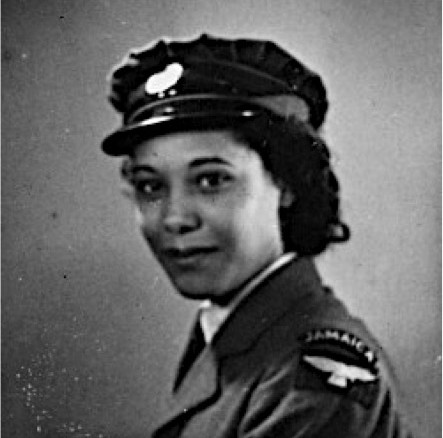
    Lilian Bader, Photo Credit courtesy of the Imperial War Museum

    The contributions and efforts of Lilian Bader to World War Two for the Caribbean community actually starts before her birth, with her Fathers contribution in World War One.

    Marrying in 1913, Marcus Bailey was a Barbadian born migrant who found himself in England, coupled with an English born, Irish raised woman* on the outbreak of war. The possibility of a happy family was postponed as war broke out in 1914 and Marcus would find himself serving in the Royal Navy as a Merchant Seaman until the war finished.

    However, upon the wars end, the Baileys would parent three children, one of which would be Lilian Bader. Born in 1918, she would go onto be quite possibly the first Black woman to join the British Armed Forces…

    …The reality of being a Mixed Raced Woman, in Britain in the early 1930’s, would be one her intelligence and popularity would never be able to escape and at the age of twenty, Lilian would still be at the Convent she joined as a nine year old, simply because nobody was willing to hire her for work…

    Read the entire article here.