• How To Resist White Supremacy In Your Love Life: A 5-Step Guide

    Black Girl Dangerous
    2015-09-25

    Cathy Chen, Co-Founder and Outreach Director
    Fab Lab El Paso, El Paso, Texas

    “We’re never gonna get anywhere as long as our economies of attraction continue to resemble more or less the economies of attraction of white supremacy.” –Junot Diaz, Keynote Speech at Facing Race 2012

    Over the years, I have had many friends, both hetero and LGBTQIA (lesbian, gay, trans, queer, intersex, and asexual) people of color, who practiced radical politics in their lifestyle and work but I’ve noticed a curious pattern—that they almost exclusively formed romantic relationships with socially privileged—in other words, mostly white—partners…

    Read the entire article here.

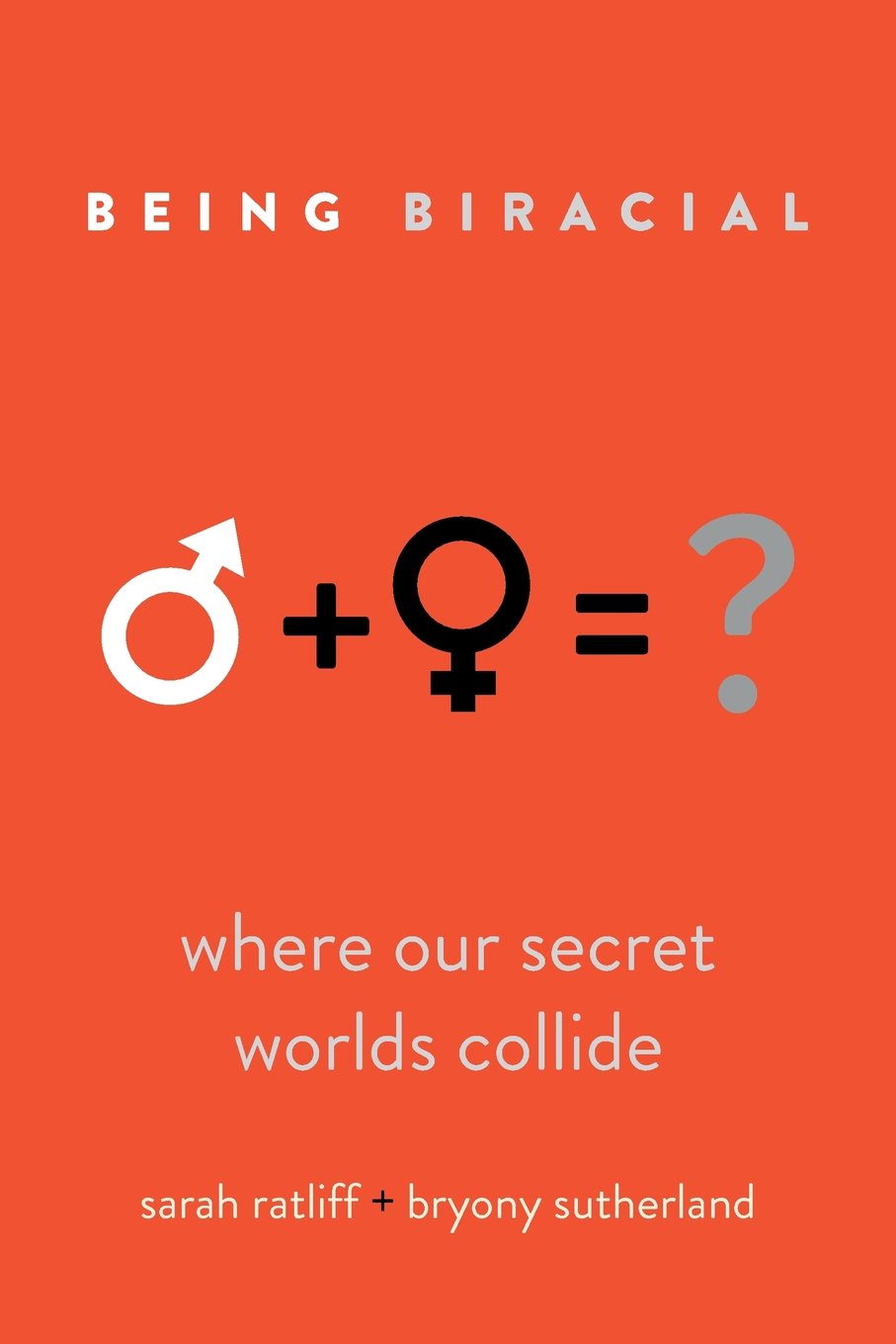
  • Being Biracial: Where Our Secret Worlds Collide

    Heritage Press Publications
    2015-09-06
    192 pages
    9 x 6 x 0.4 inches
    Paperback ISBN-13: 978-1937660666

    Sarah Ratliff

    Bryony Sutherland

    Good, bad, ugly and illuminating-everyone has an opinion on race. As biracial people continue trending, the discussion is no longer about a singular topic, but is more like playing a game of multi-level chess. The anthology, Being Biracial: Where Our Secret Worlds Collide, cites the experiences of twenty-four mixed-race authors and those in interracial partnerships of all ages and backgrounds, from all over the world. It blends positivity, negativity, humor, pathos and realism in an enlightening exploration of what it means to be more than one ethnicity.

  • Jews in America struggled for decades to become white. Now we must give up whiteness to fight racism.

    The Washington Post
    2015-09-22

    Gil Steinlauf, Senior Rabbi
    Adas Israel Congregation, Washington, D.C.

    Let’s teach our children that we are, in fact, not white, but simply Jewish.

    Adapted from a Rosh Hashanah sermon delivered at Adas Israel Congregation.

    This summer, I had a conversation with a young woman about her Jewish identity. She told me how she grew up in a family that was very involved in her synagogue. She went to Jewish day school. She had been to Israel multiple times. But she felt very far from her Jewishness. She simply couldn’t find the relevance of Judaism as she was making her way on her own in the world. I asked her what she did feel passionate about. She told me she has been reading and thinking a lot about racial justice. What moved her was the #BlackLivesMatter movement — how, in light of Ferguson, Charleston and seemingly endless incidents of injustice against black people in our society, she felt a need to grapple with the racism that is so pervasive in this country and how it affects her identity.

    “As a white woman,” she said, “as the product of so much white privilege, it makes me all the more angry to see how other white people so blindly and carelessly feed into the racial climate of our society.” “So the fact that you are white makes this issue all the more painful, all the more personal for you?” I asked. “Yes,” she said.

    I certainly identified with her angst. I find the reality of American racism unbearable: the legacy of slavery; the institutional discrimination that is so pervasive; the scourge of mass incarceration of black Americans, with its collateral damage on families; the ongoing blight of housing segregation; the role of law enforcement in furthering racist systems and hierarchies; all this, and so much more. My answer to her, and my answer for all American Jews during these Days of Awe, is that finding our true Jewish identity can begin by questioning our whiteness…

    Read the entire article here.

  • Identity and Acceptance in Danzy Senna’s Caucasia

    Uncovered Classics
    2015-09-16

    Melanie McFarland

    “Race is a complete illusion, make-believe,” observes a central character in Danzy Senna’s debut novel Caucasia. “It’s a costume. We all wear one.”

    Or, many. Over the course of our lives, those costumes change as we add and subtract details in reaction to other people’s gaze. To see the idea of race through sugar-coated Coke bottle glasses, racial and cultural differences are to be explored and celebrated. But one can just as accurately say that illusion of race creates unnecessary absurdity in our lives. It challenges our sense of acceptance.

    Senna’s Caucasia doesn’t quite blast apart the fallacy of race, but it does use our culture’s obsession with it to highlight the ways in which a person creates and morphs her identity…

    Read the entire review here.

  • Racism as a Determinant of Health: A Systematic Review and Meta-Analysis

    PLOS ONE
    2015-09-23
    48 pages
    DOI: 10.1371/journal.pone.0138511

    Yin Paradies, Professor
    Alfred Deakin Institute for Citizenship and Globalization, Faculty of Arts and Education
    Deakin University, Melbourne, Victoria, Australia

    Jehonathan Ben
    Alfred Deakin Institute for Citizenship and Globalization, Faculty of Arts and Education
    Deakin University, Melbourne, Victoria, Australia

    Amanuel Elias
    Alfred Deakin Institute for Citizenship and Globalization, Faculty of Arts and Education
    Deakin University, Melbourne, Victoria, Australia

    Nida Denson
    School of Social Sciences and Psychology
    University of Western Sydney, Sydney, New South Wales, Australia

    Naomi Priest, Senior Research Fellow in child public health and health inequalities
    Australian Centre for Applied Social Research Methods
    Australian National University, Canberra, Australian Capital Territory, Australia

    Alex Pieterse
    Division of Counseling Psychology
    University at Albany, State University of New York

    Arpana Gupta
    Oppenheimer Center for Neurobiology of Stress, David Geffen School of Medicine
    University of California, Los Angeles

    Margaret Kelaher
    Centre for Health Policy Programs and Economics, Melbourne School of Population and Global Health
    University of Melbourne, Melbourne, Victoria, Australia

    Gilbert Gee
    Department of Community Health Sciences
    University of California, Los Angeles, Fielding School of Public Health, Los Angeles, California

    Despite a growing body of epidemiological evidence in recent years documenting the health impacts of racism, the cumulative evidence base has yet to be synthesized in a comprehensive meta-analysis focused specifically on racism as a determinant of health. This meta-analysis reviewed the literature focusing on the relationship between reported racism and mental and physical health outcomes. Data from 293 studies reported in 333 articles published between 1983 and 2013, and conducted predominately in the U.S., were analysed using random effects models and mean weighted effect sizes. Racism was associated with poorer mental health (negative mental health: r = -.23, 95% CI [-.24,-.21], k = 227; positive mental health: r = -.13, 95% CI [-.16,-.10], k = 113), including depression, anxiety, psychological stress and various other outcomes. Racism was also associated with poorer general health (r = -.13 (95% CI [-.18,-.09], k = 30), and poorer physical health (r = -.09, 95% CI [-.12,-.06], k = 50). Moderation effects were found for some outcomes with regard to study and exposure characteristics. Effect sizes of racism on mental health were stronger in cross-sectional compared with longitudinal data and in non-representative samples compared with representative samples. Age, sex, birthplace and education level did not moderate the effects of racism on health. Ethnicity significantly moderated the effect of racism on negative mental health and physical health: the association between racism and negative mental health was significantly stronger for Asian American and Latino(a) American participants compared with African American participants, and the association between racism and physical health was significantly stronger for Latino(a) American participants compared with African American participants. Protocol PROSPERO registration number: CRD42013005464.

    Read the entire article here.
  • Too Latina To Be Black, Too Black To Be Latina

    The Huffington Post
    2015-09-15

    Aleichia Williams, Writer, Student, Advocate

    I can remember the first time I had a ‘race crisis.’

    I was probably twelve or thirteen and I had just moved to the quiet state of North Carolina from my home state and city of New York. North Carolina was a lot different than New York. For one, there wasn’t an enormous variety of culture and people. I didn’t have class with any Russians. My professors weren’t Puerto Rican and there wasn’t a whole lot of mixing between kids of one race with kids of another. In fact, at my middle school you had three groups you could classify as; black, “Mexican”, or white.

    Unaware of this fact I walked into my second class on my first day of school and decided to sit next to a group of friendly looking Hispanic girls. As soon as I sat down the table was quiet. Then one girl snickered to another in Spanish “Why is she sitting here? I don’t want her to sit here.” Her friend, who had been in my previous class and had heard my class introduction, blushed and replied to her friend in English “She speaks Spanish.”

    That was the first time I could remember being aware of my skin color and the overwhelming implications it held. This was also my first ‘race crisis’…

    Read the entire article here.

  • Trevor Noah Brings ‘A Different Perspective’ as Daily Show Host

    NBC News
    2015-09-23

    Amber Payne, Managing Editor of @NBCBLK

    Trevor Noah is poised to take The Daily Show throne next week and the South African comedian says his biracial and cultural background will impact and inform his perspective as host.

    “It just gives me a different perspective. I feel everyone has their perspective because of where they’ve come from,” Noah told NBCBLK. “I’ve never been ashamed to say, nor do I shy away from that fact that I am black. I’ve grown up black, black is the only existence I’ve ever known. But it’s strange when you live in a world where people go ‘OK but biracial—then which piece of this, which piece of that?’”

    Noah grew up under Apartheid in South Africa to a white Swiss father and a black South African mother. While his comedy is often unapologetically about race and racism, he is careful not to equate the racial tensions in the United States to the divisions and tensions in South Africa…

    Read the entire article here.

  • The few old schoolmates who ran into him had to pretend they’d never met. He was often seen around town with one of his best friends. the Indian-born actor Sabu, an alliance that brings to mind the “arranged” Hollywood marriage of a closeted gay actor.

    Black novelist Charles Chesnutt’s The House Behind the Cedars, about a man who passes for white, has a sentence that could apply to Korla: “Our customs grip us in bands of steel.  We become the creatures of our creations.”

    From slavery right down to this morning, countless African Americans have passed as white because they were evading the lynch mob or wishing for an equal opportunity. The subject has been taboo: Crossing over means denying who you are, means banishing friends and family from your life. You live in a gray zone, and it is the loneliest of places.

    Passing for Asian was a little different, because you did not blend into white society. The practice went on long before Korla Pandit first appeared. In the late 1930s, Harlem’s Amsterdam News reported that a Syracuse University football star named Wilmeth Sidat-Singh was, as a columnist put it, “about as much Hindu as flatfoot floogie.” In 1947, around the time that Juan Rolondo was turning into Korla Pandit, the Los Angeles Tribune, a lively black newspaper, heralded a stunt pulled by a brown-skinned New York minister. He prepared for a visit through the Deep South by donning a purple turban, affecting “a slightly Swedish accent,” and concocting a tale about being a visiting Eastern dignitary. He was doted on and able to eat at white-only restaurants. In Mobile, Alabama, he impishly asked a waiter what would happen if a Negro came to eat. The Negro wouldn’t be served, he was told. “I just stroked my chin and ordered my dessert.” said the pastor.

    When John Redd crossed over, he didn’t sever all ties with the world he had known. “It was not top secret,” says Ernest. “Among the family we knew what he was doing and very little was said about it. There was times when he would come by, and it was kind of like a sneak visit. He might come at night sometime and be gone before we got up. He had to separate himself from the family to a certain extent. They would go to see him play, but they wouldnt speak to him. They would go to his show and then they would leave, and the family would greet him at a later time.”

    The situation became even more complicated once Korla’s Father, Ernest Sr., moved to Los Angeles, by the early ’50s. Reverend Redd became the pastor of Trinity Baptist Church, a prominent institution in the community. Any night he wanted to, Reverend Redd could come home from the church, switch on the television, and watch his son play the organ, with that strange look in his eyes and that turban on his head. Korla kept in touch with his family, and on occasion he and Beryl scheduled a covert mission to the parents’ West Adams home. But even then, detection could not be discounted. Even then, Korla wore the turban. He didn’t bring Shari or Koram, his and Beryl’s sons.

    RJ Smith, “The Many Faces of Korla Pandit,” Los Angeles Magazine, June 2001, 148-149. https://books.google.com/books?id=aF8EAAAAMBAJ&pg=PA73#v=onepage&q&f=false.

  • Dating Partners Don’t Always Prefer “Their Own Kind”: Some Multiracial Daters Get Bonus Points in the Dating Game

    Council on Contemporary Families
    Austin, Texas
    2015-07-01

    Celeste Vaughan Curington
    Department of Sociology
    University of Massachusetts, Amherst

    Ken-Hou Lin, Assistant Professor of Sociology
    The University of Texas, Austin

    Jennifer Hickes Lundquist, Professor of Sociology
    University of Massachusetts, Amherst

    A briefing paper prepared for the Council on Contemporary Families by Celeste Curington, University of Massachusetts-Amherst, Ken-Hou Lin, University of Texas at Austin, and Jennifer Lundquist, University of Massachusetts Amherst

    Despite growing approval of interracial dating, researchers have long documented the existence of a racial hierarchy within the dating world, with white women and men the most preferred partners, blacks the least preferred, and Asians and Hispanics in between. But where do the growing numbers of biracial and multiracial individuals fit into this hierarchy? Do they too get ranked by descending shades of lightness?

    Between 2000 and 2010, the number of individuals who identified themselves to Census takers as being of two or more races increased by a third. These nine million individuals still represent less than three percent of the population. But studies predict that by the year 2050, nearly one in five Americans may claim a multiracial background. How will this affect dating and marriage patterns in the United States?

    We recently completed a study of how multiracial daters fare in a mainstream online dating website. Using 2003-2010 data from one of the largest dating websites in the United States, we examined nearly 6.7 million initial messages sent between heterosexual women and men. Specifically, we looked into how often Asian-white, black-white, and Hispanic-white daters received a response to their messages compared to their monoracial counterparts…

    Read the entire paper here.

  • The Awesome Unordinary: Meet Marawa, The Celebrity Hula-Hooper

    Chic Rebellion
    2015-09-22

    Jazzi Johnson

    As children, we’re told to go after our dreams and not to let anyone deter us from whatever it may be… Well, can you imagine being 18 years old and telling your parents that you dream of hula-hooping for a living? That’s precisely what Marawa Ibrahim did.

    Ibrahim, better known as Marawa the Amazing, is a record-breaking hula-hooper! She currently holds the Guinness world record for 160 hoops at once, and is known for roller-skating and hooping in high heels as part of her act. A natural born nomad, she was born to a Somalian father and an Australian mother. Inspired by the art of gymnasium, she took to Olga Korbut, Josephine Baker, and Delores Van Cartier to name a few.

    Destined to live a world of her own making, Marawa enrolled in NICA- the National Institute of Circus Arts Australia– and earned her Bachelor of Circus Arts. Although she specialized in swinging trapeze, she always knew that hula-hoops was where her future lie…

    Read the entire article here.