• Raising Mixed Kids: Family Workshop with Sharon Chang

    Hapa-palooza Festival 2015
    Heartwood Community Cafe
    317 E. Broadway
    Vancouver, British Columbia, Canada
    Saturday, 2015-09-19, 18:00-20:00 PDT (Local Time)

    Sharon H. Chang, author, scholar, sociologist and activist
    Multiracial Asian Families

    How do we have transformative race conversations with multi-racial children when most grownups aren’t even able to so with each other? Is it possible to create an environment for mixed children that leaves them liberated, informed, and empowered to make change? Research shows children as young as 6 months old are able to categorize people by race. By 4 and 5-years-old children have used racial reasoning to discriminate against their peers. Studies also shows children’s biased attitudes are not directly correlated to those of their parents and caregivers. That’s because our children see and hear everything and racism is woven into the very fabric of society. But what does all this mean for mixed race children growing up across racial boundaries? How can we raise multiracial kids to feel good about themselves in a raced world? Please join Hapa-palooza Festival and parent educator Sharon H. Chang for the North American launch of her new book, Raising Mixed Race, and to dialogue on ways we can healthily talk about race with our mixed children at a time in their lives when it’s most critical.

    For more information, click here.

  • Why some Muslims don’t want Ahmed Mohamed’s blackness to be ignored

    The Washington Post
    2015-09-17

    Abby Phillip, General Assignment Reporter

    Ahmed Mohamed is now a 14-year-old with a national following and a long list of powerful people on his calling card.

    After he was arrested for bringing a homemade clock to school to impress his teachers, the ninth-grader has become symbolic of the worst skeletons in America’s closet: growing hysteria and over-criminalization in American schools, Islamophobia and racism.

    As the news of Mohamed’s plight spread, some of the earliest accounts associated the teen, who is of Sudanese descent, with the word “brown,” a fuzzy bit of racial jargon that typically refers to non-black people of South Asian or sometimes Latin American descent.

    And others openly wondered how the world might have reacted to Mohamed’s story if he had been black.

    But Mohamed’s racial identity is as complex as the country of his descent. The African nation of Sudan is predominantly Muslim and is comprised of some 600 ethnicities. Arabs and indigenous Africans have intermarried and mixed there for centuries and most speak Arabic…

    Read the entire article here.

  • In Memoriam: Tony Gleaton

    The afrolatin@ forum
    2015-09-01

    Tony Gleaton, among the first photographers to document Latin Americans of African descent, passed away last week. He leaves behind an impressive body of work which undoubtedly contributed to the growing Black consciousness movement throughout the Americas.

    Tony began his Latin American photographic journey in the southern Pacific coast of Mexico in 1986; by the time his project was completed he had traveled through most of Central and South America in his search for “Black folk.” …

    Read the entire article here.

  • A Company of Authors: Allyson Hobbs

    Stanford University
    2015-09-18

    Stanford historian Allyson Hobbs discusses the inspiration for her award-winning book, “A Chosen Exile: A History of Racial Passing in American Life.” She spoke at the 12th Annual “A Company of Authors” event held at the Stanford Humanities Center on April 25, 2015.

  • Traveling Texts and the Work of Afro-Japanese Cultural Production: Two Haiku and a Microphone

    Lexington Books (an imprint of Rowman & Littlefield)
    June 2015
    302 pages
    6 1/2 x 9 1/4
    Hardback ISBN: 978-1-4985-0547-5
    eBook ISBN: 978-1-4985-0548-2

    Edited by:

    William H. Bridges IV, Assistant Professor of Japanese Studies
    University of California, Irvine

    Nina Cornyetz, Associate Professor
    Gallatin School of Individualized Study
    New York University

    Traveling Texts and the Work of Afro-Japanese Cultural Production analyzes the complex conversations taking place in texts of all sorts traveling between Africans, African Diasporas, and Japanese across disciplinary, geographic, racial, ethnic, linguistic, and cultural borders. Be it focused on the make-up of the blackface ganguro or the haiku of Richard Wright, Rastafari communities in Japan or the black enka singer Jero, the volume turns its attention away from questions of representation to ones concerning the generative aspects of transcultural production. The contributors are interested primarily in texts in motion—the contradictory motion within texts, the traveling of texts, and the action that such kinetic energy inspires in readers, viewers, listeners, and travelers. As our texts travel and travail, the originary nodal points that anchor them to set significations loosen and are transformed; the essays trace how, in the process of traveling, the bodies and subjectivities of those working to reimagine the text(s) in new sites moderate, accommodate, and transfigure both the texts and themselves.

  • Transpacific Antiracism: Afro-Asian Solidarity in 20th-Century Black America, Japan, and Okinawa

    New York University Press
    July 2013
    254 pages
    4 halftones
    Hardcover ISBN: 9780814762646
    Paper ISBN: 9781479897322

    Yuichiro Onishi, Assistant Professor of African American & African Studies and Asian American Studies
    University of Minnesota, Twin Cities

    Transpacific Antiracism introduces the dynamic process out of which social movements in Black America, Japan, and Okinawa formed Afro-Asian solidarities against the practice of white supremacy in the twentieth century. Yuichiro Onishi argues that in the context of forging Afro-Asian solidarities, race emerged as a political category of struggle with a distinct moral quality and vitality.

    This book explores the work of Black intellectual-activists of the first half of the twentieth century, including Hubert Harrison and W. E. B. Du Bois, that took a pro-Japan stance to articulate the connection between local and global dimensions of antiracism. Turning to two places rarely seen as a part of the Black experience, Japan and Okinawa, the book also presents the accounts of a group of Japanese scholars shaping the Black studies movement in post-surrender Japan and multiracial coalition-building in U.S.-occupied Okinawa during the height of the Vietnam War which brought together local activists, peace activists, and antiracist and antiwar GIs. Together these cases of Afro-Asian solidarity make known political discourses and projects that reworked the concept of race to become a wellspring of aspiration for a new society.

    Table of Contents

    • Acknowledgments
    • Notes on Japanese Sources and Names
    • Introduction: Du Bois’s Challenge
    • Part I: Discourses
      • 1. New Negro Radicalism and Pro-Japan Provocation
      • 2. W. E. B. Du Bois’s Afro-Asian Philosophy of World History
    • Part II: Collectives
      • 3. The Making of “Colored-Internationalism” in Postwar Japan
      • 4. The Presence of (Black) Liberation in Occupied Okinawa
    • Conclusion: We Who Become Together
    • Notes
    • Bibliography
    • Index
    • About the Author
  • Indian Enough for Dartmouth?

    Inside Higher Ed
    2015-09-17

    Scott Jaschik, Editor

    Dartmouth College this month appointed Susan Taffe Reed as director of its Native American Program. In a news release, the college noted Taffe Reed’s academic background (a Cornell University Ph.D. and postdocs at the University of North Carolina at Chapel Hill and Bowdoin College), her research interest (ethnomusicology) and something else: Taffe Reed, Dartmouth noted, is president of Eastern Delaware Nations Inc.

    If Dartmouth expected applause for hiring someone with a strong academic background and a personal background that would appeal to its Native American students, whom the program serves, it was mistaken…

    Read the entire article here.

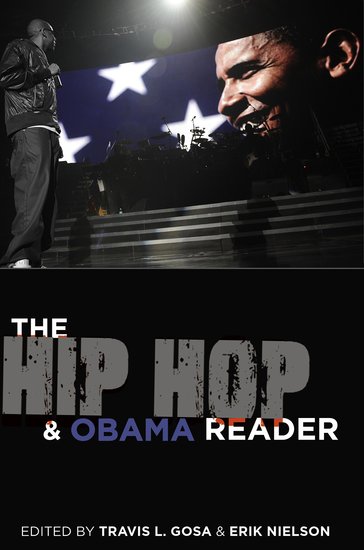
  • The Hip Hop & Obama Reader

    Oxford University Press
    2015-10-14
    336 Pages
    6-1/8 x 9-1/4 inches
    Hardcover ISBN: 9780199341801
    Paperback ISBN: 9780199341818

    Edited by:

    Travis L. Gosa, Assistant Professor of Africana Studies
    Cornell University, Ithaca, New York

    Erik Nielson, Assistant Professor of Liberal Arts
    University of Richmond
    • Offers a comprehensive, scholarly analysis of the relationship between hip hop and politics in the era of Obama.
    • The first hip hop anthology to center on contemporary politics, activism, and social change.
    • Features contributions from distinguished scholars, award-winning journalists, and public intellectuals.

    Barack Obama flipped the script on more than three decades of conventional wisdom when he openly embraced hip hop–often regarded as politically radioactive–in his presidential campaigns. Just as important was the extent to which hip hop artists and activists embraced him in return. This new relationship fundamentally altered the dynamics between popular culture, race, youth, and national politics. But what does this relationship look like now, and what will it look like in the decades to come?

    The Hip Hop & Obama Reader attempts to answer these questions by offering the first systematic analysis of hip hop and politics in the Obama era and beyond. Over the course of 14 chapters, leading scholars and activists offer new perspectives on hip hop’s role in political mobilization, grassroots organizing, campaign branding, and voter turnout, as well as the ever-changing linguistic, cultural, racial, and gendered dimensions of hip hop in the U.S. and abroad. Inviting readers to reassess how Obama’s presidency continues to be shaped by the voice of hip hop and, conversely, how hip hop music and politics have been shaped by Obama, The Hip Hop & Obama Reader critically examines hip hop’s potential to effect social change in the 21st century. This volume is essential reading for scholars and fans of hip hop, as well as those interested in the shifting relationship between democracy and popular culture.

    Table of Contents

    • Preface
    • About the Contributors
    • Foreword Tricia Rose, Brown University
    • Introduction: The State of Hip Hop in the Age of Obama / Erik Nielson, University of Richmond; Travis L. Gosa, Cornell University
    • PART I: MOVE THE CROWD: HIP HOP POLITICS IN THE U.S. AND ABROAD
      • 1. Message from the Grassroots: Hip Hop Activism, Millennials, and the Race for the White House / Jeffrey O. G. Ogbar, University of Connecticut
      • 2. It’s Bigger Than Barack: Hip Hop Political Organizing, 2004-2013 / Elizabeth Méndez Berry, New York University; Bakari Kitwana, Author and CEO, Rap Sessions
      • 3. “There Are No Saviors”: Hip Hop and Community Activism in the Obama Era / Kevin Powell, Author and Activist
      • 4. “Obama Nation”: Hip Hop and Global Protest / Sujatha Fernandes, Queens College and the Graduate Center of the City University of New York
      • 5. “Record! I am Arab”: Paranoid Arab Boys, Global Cyphers, and Hip Hop Nationalism / Torie Rose DeGhett, Columbia University
    • PART II: CHANGE WE CAN BELIEVE IN? THE CONTESTED DISCOURSE OF OBAMA & HIP HOP
      • 6. Obama, Hip Hop, African American History, and “Historical Revivalism” / Pero G. Dagbovie, Michigan State University
      • 7. “Change That Wouldn’t Fill a Homeless Man’s Cup Up”: Filipino-American Political Hip Hop and Community Organizing in the Age of Obama / Anthony Kwame Harrison, Virginia Tech
      • 8. Obama/Time: The President in the Hip-Hop Nation / Murray Forman, Northeastern University
      • 9. One Day It Will All Make Sense: Obama, Politics and Common Sense / Charlie Braxton, Author and Activist
      • 10. “New Slaves”: The Soul of Hip-Hop Sold to Da Massah in the Age of Obama / Raphael Heaggans, Niagara University
    • PART III: REPRESENT: GENDER AND LANGUAGE IN THE OBAMA ERA
      • 11. YouTube and Bad Bitches: Hip Hop’s Seduction Of Girls and The Distortion Of Participatory Culture / Kyra D. Gaunt, City University of New York
      • 12. A Performative Account of Black Girlhood / Ruth Nicole Brown, University of Illinois Urbana-Champaign
      • 13. The King’s English: Obama, Jay Z, and the Science of Code Switching / Michael P. Jeffries, Wellesley College
      • 14. My President is Black: Speech Act Theory and Presidential Allusions in the Lyrics of Rap Music / James Peterson and Cynthia Estremera, Lehigh University
      • Afterword: When Will Black Lives Matter? Neoliberalism, Democracy, and the Queering of American Activism in the Post-Obama Era / Cathy J. Cohen, University of Chicago
    • Subject Index
  • How a Black Man From Missouri Transformed Himself Into the Indian Liberace

    The New Republic
    2015-09-12

    Liesl Bradner


    Photo: John Turner

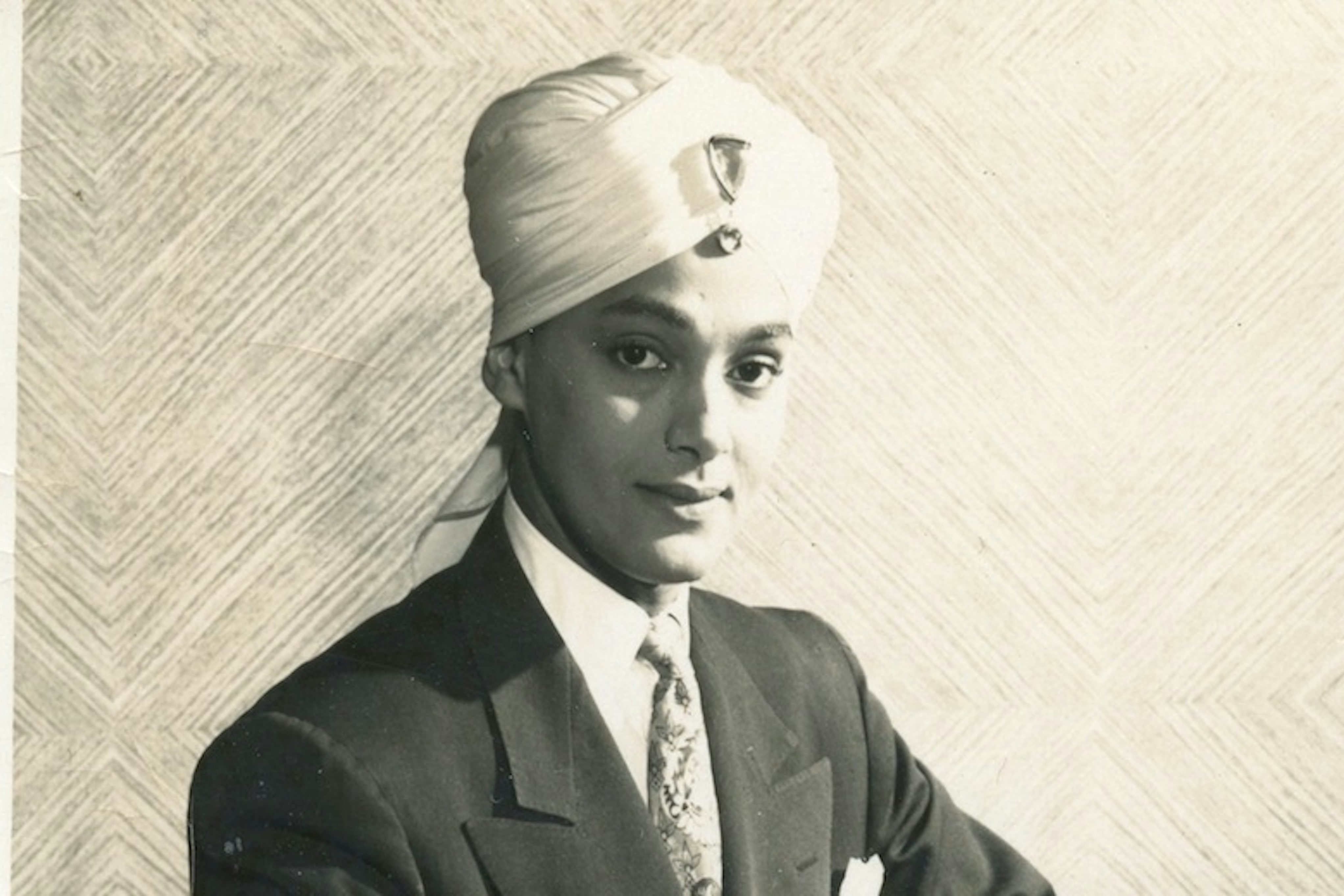
    Before Liberace, there was Korla Pandit. He was a pianist from New Delhi, India, and dazzled national audiences in the 1950s with his unique keyboard skills and exotic compositions on the Hammond B3 organ. He appeared on Los Angeles local television in 900 episodes of his show, “Korla Pandit’s Adventures in Music”, smartly dressed in a suit and tie or silk brocade Nehru jacket and cloaked in a turban adorned with a single shimmering jewel. The mysterious, spiritual Indian man with a hypnotic gaze and sly grin was transfixing.

    Offstage, Korla—known as the “Godfather of Exotica“— was living the American dream: he had a house in the Hollywood hills, a beautiful blonde wife, two kids, and a social circle that included Errol Flynn and Bob Hope. He even had his own floral-decorated organ float in the Rose Bowl parade in 1953.

    Like most everything in Hollywood, it was all smoke and mirrors. His charade wasn’t his stage name—it was his race. Korla Pandit, born John Roland Redd, was a light skinned black man from St. Louis, Missouri. It was a secret he kept until the day he died…

    Read the entire article here.

  • Mixed Emotions About My Mixed Heritage

    Just Analise
    2015-09-02

    Analise Kandasammy

    When you truly love yourself you are released from the chains of trying to be someone you are not.

    How many times have we heard – if you can’t love yourself, you can’t truly love anyone else? How many times have we heard we need to have self worth and be confident? How many of us feel true self love? Everyday? Well certainly not me.

    I am ashamed to admit I was ridden with self hatred for years. Hated the colour of my skin, hated my hair, hated my body, hated my personality – man I couldn’t say one good thing about myself. I was constantly in a place of not meeting expectations and having to constantly keep up appearances for people in my life.

    “For as long as I’ve known myself I’ve wrestled with identifying with a race. I am from 4 generations of inter racial unions and needless to say very mixed.”

    I have always identified with black women since I was a child. Hell, I even thought I was black, you know especially since one drop of black means you are black too

    Read the entire article here.