• Three Very Rare Generations

    The New York Times
    1992-12-13

    Eric Foner, DeWitt Clinton Professor of History
    Columbia University

    Soul To Soul: A Black Russian American Family 1865-1992. By Yelena Khanga with Susan Jacoby. Illustrated. 318 pp. New York: W. W. Norton & Company. $22.95.

    AMONG its other consequences, the demise of the Soviet Union has released an emigration of foreign-born leftists and their descendants. Along with Spanish Loyalists and exiled third-world socialists now returning to their countries of origin, this little-noticed diaspora includes Yelena Khanga, the granddaughter of a black American who had moved to the Soviet Union in 1931, along with his Polish-Jewish-American wife. “Soul to Soul: A Black Russian American Family 1865-1992” tells the remarkable story of Ms. Khanga’s family, shedding light into unfamiliar corners of both the Soviet and American pasts. Its title derives from a Russian expression for close friendship. In an American context, it also suggests encounters among blacks, and the book’s most interesting chapters recount the story of the black side of Ms. Khanga’s family tree.

    Her great-grandfather, Hilliard Golden, born a slave, served on the board of supervisors in Yazoo County, Miss., during Reconstruction, and managed to become one of the areas’s largest black landowners (Ms. Khanga is not sure how). The restoration of white supremacy abruptly ended his political career, but Golden clung tenaciously to his property until 1909, when, like many other farmers in the New South, he succumbed to debt and lost his land…

    …In 1931, with 15 other Americans — black agricultural specialists and their families — Ms. Khanga’s grandparents sailed for the Soviet Union to help develop cotton cultivation in Uzbekistan. The poverty and backwardness of the region, where polygamy still flourished, reinforced the Goldens’ sense of socialist mission. When their daughter, Lily, was born, they decided to remain in the Soviet Union “because they did not want to raise a racially mixed child in America.” The agricultural experiments succeeded, and Stalin then decreed that Uzbekistan should concentrate exclusively on cotton, transforming the area, ironically, into a one-crop economy bearing some resemblance to the South of Golden’s youth…

    Read the entire review here.
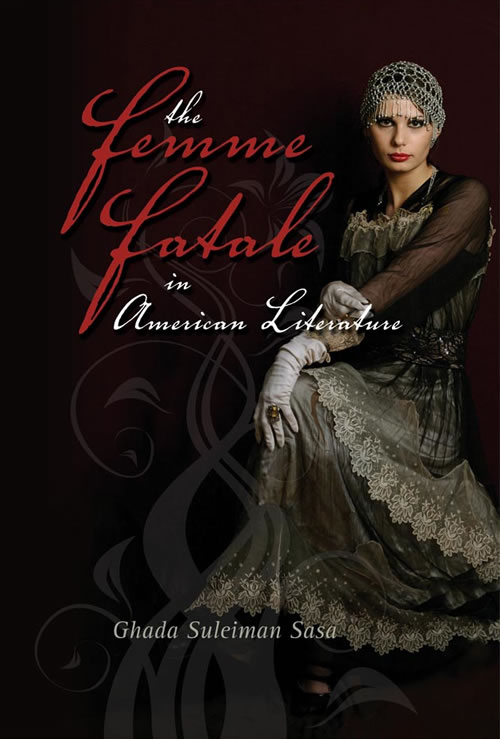
  • The Femme Fatale in American Literature

    Cambria Press
    2008-09-28
    192 pages
    5.5 x 8.5 in or 216 x 140 mm
    ISBN: 9781604975352

    Ghada Suleiman Sasa, Assistant Professor of English Literature
    Hashemite University, Zarqa, Jordan

    Characters in the literary tradition of American naturalism are usually perceived as passive, lacking in will, weak, and predetermined. They are constantly seen as the victims of heredity and environment, and their lives are shaped according to these strong forces that operate upon them.

    This interesting book examines the representation of female characters in American naturalism and argues that women in American naturalism are often represented as femmes fatales. Since heredity and environment are the determining factors in their lives, they are victims who have no control. However, with characters such as Trina Sieppe in Frank Norris’s McTeague, Caroline Meeber in Theodore Dreiser’s Sister Carrie, Edna Pontellier in Kate Chopin’s The Awakening, and Helga Crane in Nella Larsen’s Quicksand, these women victims gradually turn themselves into victimizers in order to conquer both heredity and environment. They consciously and deliberately use the only power they have that can help them overcome the naturalistic world in which they are entrapped––the power of the feminine.

    The book explains who exactly the femme fatale that has been born out of American naturalism is, and explores images of women in American realism who precede the femme fatale of American naturalism. This study examines characters like Trina Sieppe, Caroline Meeber, Edna Pontellier, and Helga Crane. It analyzes these women’s backgrounds, their demeanors, their temperaments, their experiences, and their settings, and explains how and when each woman decides to use her sexuality. There is also a brief discussion of other femmes fatales in American naturalism, such as Stephen Crane’s Maggie: A Girl of the Streets.

    Although the perception of women in nineteenth-century American literature has always had its place in discussions of literary texts, this book is unique in its argument that women in American naturalism are neither weak nor passive, but rather are strong and daring women who try diligently to find a means of fighting back.

    This book is an important addition to collections in literature and Women’s studies.

    Table of Contents

    • Foreword
    • Acknowledgements
    • Chapter One: The Femme Fatale in American Naturalism: An Introduction
      • Background and Definitions of the Femme Fatale
      • Background and Definitions of American Naturalism
      • The Femme Fatale and American Naturalism
    • Chapter Two: Trina “took her place in the operating chair”: Trina Sieppe as Femme Fatale in Frank Norris’s McTeague
      • The Emergence of the Femme Fatale
      • Trina Wins the Lottery
    • Chapter Three: “I am yours truly”: Caroline Meeber as Femme Fatale in Theodore Dreiser’s Sister Carrie
      • The Formulation of the Femme Fatale
      • The Femme Fatale in Full Action
      • The Fall of the Femme Fatale
      • Trina and Carrie
    • Chapter Four: “A language which nobody understood”: Edna Pontellier as Femme Fatale in Kate Chopin’s The Awakening
      • The Imprisonment of Edna
      • Edna Breaks Free
      • McTeague, Sister Carrie, The Awakening: Trina, Carrie, and Edna
      • Edna’s suicide
    • Chapter Five: “It had begun, a new life for Helga Crane”: Helga Crane as Femme Fatale in Nella Larsen’s Quicksand
      • Twentieth Century American Naturalism
      • The Plight of the Tragic Mulatto Figure
      • Helga Crane’s Liberation
    • Chapter Six: Examples of Other Femmes Fatales in American Naturalism
    • Primary Bibliography
    • Secondary Bibliography
    • Index
  • I’ve experienced a new level of racism since Donald Trump went after Latinos

    The Guardian
    2015-09-09

    Tina Vasquez

    I have never been asked the type of questions I’m now fielding from white people – and I’m not the only one

    Donald Trump’s hate speech against Latinos seems to be emboldening white Americans’ racism. For many, it may be hard to wrap their minds around the fact that that a reality TV star and failed businessman who characterized Mexican immigrants as the “most unwanted people,” calling them “criminals, drug dealers,” and “rapists”, was not only running for president, but is now polling well.

    I can’t say I’m surprised…

    Read the entire article here.

  • My Music Is My Soul, My Language Is My Armor

    Psychology Today
    2014-12-02

    Stephen Murphy-Shigematsu, Ed.D.
    Stanford University

    Byron’s story of identity, healing, and empowerment

    “One night at a pub I heard the sound of traditional Okinawan folk music, and it was like being hit in the head with a hammer. The impact was like a bolt of lightning! The song told the story of how in life there are things that each of us is born to do. I realized that I had been trying to erase the reality that I was born and raised here on this island. Suddenly listening to the music my hardened heart melted and I was freed.”

    Byron has captivated me with his story since we first met in 1999, two mixed race guys, one an elder researcher, the other a young searcher in the throes of an identity quest. Born and raised in Okinawa by a native woman and her family, his face is marked by the genes of his father, an American whom he never met and whose name remains a mystery. With looks that branded him as an American, associating him with an occupying army and military bases and making him a scapegoat for hostility, Byron’s youthful life was full of strife and he had to fight to stay alive and maintain his dignity. He struggled to find himself, even venturing to Los Angeles to become an American rock star.

    But when he had his great awakening he put away his electric guitar and devoted himself to the study of the sanshin, a 3-stringed snake skinned instrument. He set out on a road of discovery, immersing himself in the study of Okinawan traditional folk music of the islands. Music led him to language, as he wanted to understand the words of the songs he was singing. But years of neglect have taken their toll and it is a language no longer used in daily life, understood only by the middle aged, spoken only by the elderly. Byron felt anger at the society that did not value its own language, though he understood the history of incorporation into the Japanese nation, subsequent forced assimilation into Japanese language and culture, and self chosen accommodation, that had drastically reduced the use of the language. So he sought out elders and asked them to teach him…

    Read the entire article here.

  • Girl in need of bone marrow highlights shortage of mixed-race donors

    The Chicago Tribune
    2015-09-13

    Vikki Ortiz Healy

    When doctors told Michelle Trujillo in July that her 6-year-old daughter would need a bone marrow transplant to save her life, the Crystal Lake mother didn’t want to wait another minute before getting her only child back to health.

    But months later, Sophia — who has aplastic anemia, a rare disorder that impairs her immunity — is still waiting for a donor match. Meanwhile, Trujillo says she lies in bed at night making mental lists of places to try to find a donor with similar multiracial heritage to her daughter’s — a group with a strikingly low match rate.

    “I don’t sleep at night. I think of, ‘What can I do now? Who can I contact now?’ ” said Trujillo, whose daughter is half Filipino, as well as Irish, Spanish and Italian. “One match is all we need, but it’s like a needle in a haystack.”

    The Trujillos’ predicament highlights a nationwide paradox that has troubled medical experts and families awaiting transplants for years: despite the ever-growing diversity in the United States, there are not enough minority and multiracial donors registered and available for patients in need…

    Read the entire article here.

  • Library of Congress Prize for American Fiction Awarded to Louise Erdrich

    News from the Library of Congress
    Washington, D.C.
    2015-03-17

    Winner to Participate in This Year’s National Book Festival

    Librarian of Congress James H. Billington has announced that Louise Erdrich, author of such critically acclaimed novels as “Love Medicine,” “The Last Report on the Miracles at Little No Horse,” “The Plague of Doves” and her current novel, “The Round House,” will receive the Library of Congress Prize for American Fiction during the 2015 Library of Congress National Book Festival, Sept. 5.

    Billington said of Erdrich: “Throughout a remarkable string of virtuosic novels, Louise Erdrich has portrayed her fellow Native Americans as no contemporary American novelist ever has, exploring—in intimate and fearless ways—the myriad cultural challenges that indigenous and mixed-race Americans face. In this, her prose manages to be at once lyrical and gritty, magical yet unsentimental, connecting a dreamworld of Ojibwe legend to stark realities of the modern-day. And yet, for all the bracing originality of her work, her fiction is deeply rooted in the American literary tradition.”

    The National Book Festival and the prize ceremony will take place at the Walter E. Washington Convention Center in Washington, D.C.

    “My grandfather, Patrick Gourneau, was educated in an Indian boarding school, became chairman of his tribe and testified before Congress on behalf of the Turtle Mountain people,” said Erdrich. “My other grandfather, Ludwig Erdrich, came here penniless from Germany in 1920 and worked incessantly through many heartbreaks to raise his family, including my father. Of all their grandchildren, it would have surprised them most to think of me, skinny and tongue-tied, amounting to anything. But in addition to the Library of Congress, I have my parents Rita and Ralph, in whom my grandparents’ spirits are still vital, to thank for this recognition.”

    Erdrich is the third winner of the award. Previous winners are E.L. Doctorow (2014) and Don DeLillo (2013)…

    Read the entire press release here.

  • Color-Blindness Is Counterproductive

    The Atlantic
    2015-09-13

    Adia Harvey Wingfield, Professor of Sociology
    Washington University, St. Louis, Missouri

    Many sociologists argue that ideologies claiming not to see race risk ignoring discrimination.

    How many times have you heard someone say that they “don’t see color,” “are colorblind,” or “don’t have a racist bone in their body?” Maybe you’ve even said this yourself. After all, the dominant language around racial issues today is typically one of colorblindness, as it’s often meant to convey distaste for racial practices and attitudes common in an earlier era.

    Many sociologists, though, are extremely critical of colorblindness as an ideology. They argue that as the mechanisms that reproduce racial inequality have become more covert and obscure than they were during the era of open, legal segregation, the language of explicit racism has given way to a discourse of colorblindness. But they fear that the refusal to take public note of race actually allows people to ignore manifestations of persistent discrimination.

    For the first half of the 20th century, it was perfectly legal to deny blacks (and other racial minorities) access to housing, jobs, voting, and other rights based explicitly on race. Civil-rights reforms rendered these practices illegal. Laws now bar practices that previously maintained racial inequality, like redlining, segregation, or openly refusing to rent or sell real estate to black Americans. Yet discrimination still persists, operating through a combination of social, economic, and institutional practices…

    Read the entire article here.

  • First black and minority ethnic orchestra to make debut

    BBC News
    2015-09-11

    Lizo Mzimba

    Europe’s first professional orchestra consisting entirely of black and minority ethnic musicians will make its debut this weekend at the Southbank Centre in London.

    The Chineke orchestra has been created to promote diversity in a musical world that is predominantly white.

    Lizo Mzimba reports from one of its final rehearsals.

    Watch the story here.

  • James Blake doesn’t want NYPD cop who tackled him to ‘ever have a badge and gun again’

    The New York Daily News
    2015-09-12

    Wayne Coffey, Special Reporter

    Rich Schapiro, Staff Writer

    Retired tennis star James Blake said Saturday the NYPD cop who brutally wrestled him to the ground should be served his walking papers.

    “I want him to know what he did was wrong, and that in my opinion he doesn’t deserve to ever have a badge and a gun again, because he doesn’t know how to handle that responsibility effectively,” Blake, 35, told the Daily News. “He doesn’t deserve to have the same title as officers who are doing good work and are really helping keep the rest of the city safe.”

    Blake called on the NYPD to can Officer James Frascatore a day after the department released disturbing video showing the WWE-style takedown outside a Midtown hotel Wednesday…

    …Blake initially said he believed race was a factor in the rough arrest. But asked Saturday whether he thought white tennis stars such as Andy Roddick or Mardy Fish would have been treated the same way, he demurred.

    “I don’t want to say that at all because I think that muddies the issue at hand,” said Blake, who was born to a black father and a white mother. “In this incident it was the excessive force that’s really the issue, because it was a nonviolent crime.”…

    Read the entire article here.

  • They Pretend To Be Us While Pretending We Don’t Exist

    BuzzFeed
    2015-09-11

    Jenny Zhang, BuzzFeed Contributor


    Will Varner / BuzzFeed

    White poet Michael Derrick Hudson’s use of the Chinese pen name Yi-Fen Chou was an act of yellowface that is part of a long tradition of white voices drowning out those of color in the literary world.

    To be Other in America is to be coveted and hated at the same time. It’s never been enough to know that I feel it, but I know I am often asked to prove it before I am allowed to speak on it. When I was a graduate student at the Iowa Writers’ Workshop for fiction writing, I felt both coveted and hated. My white classmates never failed to remind me that I was more fortunate than they were at this particular juncture in American literature. “No one is going to pay attention to a name like mine,” a white dude who exclusively wrote stories about white dudes said to me one time when I was feeling particularly low about my writing. I couldn’t enjoy a scrap of validation or wallow in a sliver of self-doubt without someone interjecting some version of “You’re so lucky. You’re going to have an easier time than any of us getting published.” They were shameless about their envy, not shy or coy at all about their certainty that my race and gender were an undeniable asset, which, in turn, implied that I could be as mediocre and shitty as I wanted and still succeed. This was how some of my white classmates imagined the wild spoils of my literary trajectory. This was how they managed to turn themselves into the victims.

    …I won’t be scandalized because what Hudson is doing isn’t anything that white male writers haven’t already been doing since the first recorded instance of our culture embracing any kind of excellence that did not include them: scramble to come up with ways to keep the playing field uneven, to keep the odds stacked in their favor. The scandal of Hudson performing the laziest act of yellowface (co-opting a Chinese name) to get his poem published and accepted into the Best American Poetry anthology is lurid fodder for our cultural conversation because of its explicitness, but it should not be strange or unbelievable. White people have always slipped in and out of the experiences of people of color and been praised extravagantly for it. After all, 50 years ago, when black voices were fighting to be heard, when their stories of trauma and abuse were struggling for legitimacy, it took John Howard Griffin, a white man who dyed his skin black and wrote about his experiences as a “black” man in his book, Black Like Me, for white Americans to believe that yes, black people were telling the truth about their lived experiences in the Jim Crow South. He was hailed a singular hero. Studs Terkel once said, “Griffin was one of the most remarkable people I have ever encountered. He was just one of those guys that comes along once or twice in a century and lifts the hearts of the rest of us.” It may seem totally nuts now, but as far as who gets credit for simply being affected by black pain, it doesn’t seem very removed from our current world where we heap lavish praise on someone like Jon Stewart for announcing on the Daily Show that he was too heartbroken to make jokes after the Charleston church shooting, as if all throughout this country’s present and past, black people and people of color have not been so heartbroken and so violated that we were left humorless, or worse, dead. To praise Stewart as excessively as he was praised is to say to black people: Your pain is unexceptional and does not matter until a white man feels it too

    Read the entire article here.