• Notable Black and Mixed Race men in Renaissance Europe

    Bino & Fino: Embracing My Child’s Black African Identity
    2015-07-23

    Maria Tumolo

    We are thrilled to bring you our very first guest post from children’s author Maria Tumolo. She is also writes a blog called Tiger Tales which explores parenting as an expat mixed heritage family.

    During my time at university many moons ago, I was intrigued by the ‘cross-pollution’ of cultures between Europe and Africa during the Renaissance age. It seemed to me that Europe gained more from the encounter than some historians would readily admit. It’s known that scholars travelled to Egypt to study. (Yes, Egypt is on the African continent.) For example it recorded that the Greek Astronomer and Mathematician, Sosigenes of Alexandria, advised Julius Caesar to adopt ‘the modification of the 365-day Egyptian solar calendar but with an extra day every fourth year (leap year). This came into effect in 45 BC.’ Other notable Greek Scholars who travelled and studied in Egypt were Plato and Pythagoras. However, I was curious to know more about the African presence in Europe during the Renaissance. It’s known that not all the black people in Europe during this time were not slaves. While searching the internet, I came across a review of an art exhibition that was run back in 2012, at the Walters Art Museum in Baltimore. It was entitled Revealing the African Presence in Renaissance Europe. I was fascinated by lives and stories of the individuals it featured. I didn’t want too long a blog post. Therefore, I’ll focus on three male historical figures, Black and Mixed Race. I present to you: Alessandro de’ Medici, Antonio Nsaku Manuel Vunda, and St. Benedict of Palermo

    Read the entire article here.

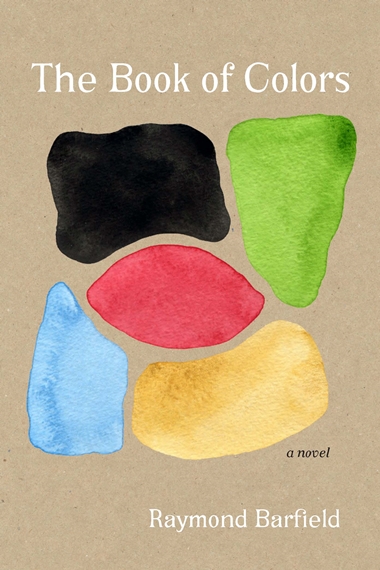
  • “The Book of Colors”

    Duke Divinity School News
    Durham, North Carolina
    Wednesday, 2015-05-13

    Ray Barfield, associate professor of pediatrics and Christian philosophy at Duke Divinity School, has written his first novel, “The Book of Colors,” about a 19-year-old mixed race pregnant girl who faces poverty and finds redemption in an unlikely community of skid row houses near Memphis, Tenn.

    Published by Unbridled Books in May, the book grew from Dr. Barfield’s experience of the importance of story-telling as a physician and teacher. He holds a joint appointment with the Divinity School and Duke University Medical School. At the Divinity School, he is one of the leaders of interdisciplinary initiatives that bring together students and faculty across the humanities, medicine, and theology. Barfield also practices pediatric oncology and leads the pediatric palliative care program at the medical school.

    The novel’s central character Yslea was raised in a crack-house and struggles to express her thoughts, but learns to overcome the pain and suffering she sees around her in her own quiet way. While reeling from the death of her mother, she wanders into a local clapboard community, presided over by an aging, generous woman named Rose and charming young Jimmy, for whom ethics are often an impediment to worldly advancement…

    Read the entire article here.

  • Here’s what I did when racists complained about an interracial family in my magazine

    The Washington Post
    2015-07-27

    Scott Vogel, Editor-in-Chief
    Houstonia, a city magazine based in Houston, Texas


    Offended by this image? Houstonia magazine doesn’t want your business. (Photo by Chris Skiles/Houstonia)

    Don’t compare me to business owners who refuse to serve LGBT customers

    As editor in chief of a lifestyle magazine, my job has been to balance two competing concerns of the journalism business: publishing stories that make a difference and selling ads that make money. This month, I discovered a third, hitherto unknown concern: ads that make a difference.

    The full-page ad on the first page of Houstonia magazine’s June issue seemed innocuous. It showed a family of five in cozy domesticity, enjoying the warmly capacious living room they ostensibly found through the upscale real estate agency that created the ad. Mom stood barefoot in the living room, an arm around her 5-year-old daughter. Dad sat on an overstuffed sofa, struggling to keep the couple’s squirmy 2-year-old from leaving his lap. And at their feet was an unbearably cute baby boy perched atop an embroidered pillow on the family’s rug. Carefully composed and brightly lit, the scene, it seemed, could be described with just one word: adorable. But as it turned out, there was another word for it: disgusting.

    That’s how a suburban Houston doctor described the image in an email to Ashton Martini Group, the real estate company responsible for the ad. “I will not put this magazine in my reception area!” he wrote. The source of his disgust? The mother in the ad was white; the father, black; and the couple’s three children, biracial. A second complaint reached me a week later, from a subscriber who confessed that, although he liked our magazine, “I just can’t go for racial mixing.” And so, lest his children “get it into their heads that this is okay,” he had taken our June issue straight from the mailbox to the trashcan.

    I followed the two men’s impulsive actions with one of my own…

    Read the entire article here.

  • The Book of Colors: A Novel

    Unbridled Books
    280 pages
    May 2015
    5 1/2 x 8 1/4
    ISBN: 978-1-60953-115-7
    EISBN: 978-1-60953-116-4

    Raymond Barfield, Associate Professor of Pediatrics and Christian Philosophy
    Duke Divinity School, Durham, North Carolina

    How can a 19-year-old, mixed-race girl who grew up in a crack house and is now pregnant be so innocent? Yslea is full of contradictions, though, seeming both young and old, innocent and wise. Her spirit is surprising, given all the pain she has endured, and that’s the counterpoint this story offers—while she sees pain and suffering all around her, Yslea overcomes in her own quiet way.

    What Yslea struggles with is expressing her thoughts. And she wonders if she will have something of substance to say to her baby. It’s the baby growing inside her that begins to wake her up, that causes her to start thinking about things in a different way.

    Yslea drifts into the lives of four people who occupy three dilapidated row houses along the train tracks outside of Memphis: “The way their three little row houses sort of leaned in toward each other and the way the paint peeled and some of the windows were covered with cardboard, the row might as easily have been empty.”

    She becomes an integral part of this little community, moving in with Rose who is old and dying. As her pregnancy progresses, everything changes within the three houses.

  • Q. What have you learned about race while working on this documentary?

    A. That the conversation has just started. And a lot of the time it’s framed as black and white. Well, where do Latinos and Asians fit in that conversation? Where do biracial people fit into that conversation? Where do multiracial people fit into that conversation? Where do the Rachel Dolezals of the world, of this country, fit into that conversation?

    Jonathan Wolfe, “Jose Antonio Vargas on Donald Trump, Rachel Dolezal and His MTV Documentary, ‘White People’,” The New York Times, July 22, 2015. http://artsbeat.blogs.nytimes.com/2015/07/22/jose-antonio-vargas-white-people-interview.

  • The colour black, Mixed-race people

    Thinking Allowed
    BBC Radio 4
    2015-07-22

    Laurie Taylor, Host

    Black: the cultural and historical meaning of the darkest colour. From the ‘little black dress’ which epitomises chic, to its links to death, depression and evil, ‘black’ embodies many contrasting values. White Europeans exploited the negative associations of ‘black’ in enslaving millions of Africans whilst artists & designers have endlessly deployed the colour in their creative work. Laurie Taylor talks to John Harvey, Life Fellow of Emmanuel College, Cambridge, about his new book which explores how ‘black’ came to have such ambiguous and varied meanings. They’re joined by Bidisha, the writer and broadcaster.

    Also, the last 20 years has seen a major growth in the number of people of mixed racial heritage. Miri Song, Professor of Sociology at the University of Kent, talks about her research into the ways that multiracial parents with white partners talk to their their children about race and identity.

    Producer: Jayne Egerton.

    Listen to the episode (00:27:58) here. Download the episode here.

  • As A White Mom, Helping My Multiracial Kids Feel At Home In Their Skin

    Code Switch: Frontiers of Race, Culture and Ethnicity
    National Public Radio
    2015-07-24

    Kristen Green

    Last year, after months of watching — and re-watching — the movie Frozen, my daughter Selma, who is 6, announced she didn’t want to be brown. “I wish my skin was white,” she told me one day in our living room, where we were hanging out after school.

    I knew she idolized the film’s alabaster-skinned heroines, and it made my heart ache. Our daughters started picking up on the differences in our family’s skin color at a very young age — I’m a white-skinned woman raised in the South, my husband, Jason, is part-white, part-American Indian, with medium-brown skin, and, depending on the season, both of our girls look more brown than white. There’s research showing that children can recognize differences in race as early as infancy, and can develop racial biases as early as 3.

    Knowing all this, we’ve tried to raise our daughters to be comfortable in their skin, making sure they’re in schools with other black and brown children, searching out books and movies with black and brown main characters. I had even tried, unsuccessfully, to steer her away from the snowy princesses.

    But our attempts clearly weren’t foolproof. “You’re beautiful the way you are,” I told Selma, stroking her long hair and trying to mask my sadness. “I love your brown skin.” She wasn’t convinced. “I wish it was like yours,” she told me…

    Read the entire article here.

  • Rachel Dolezal Has Hijacked what It Means To Be Mixed-Race In America

    ARMED
    2015-07-05

    Sophia Softky

    Since the Rachel Dolezal trainwreck began unfolding, each day has brought ever-weirder allegations to light. From her upbringing, days at Howard University, involvement in the NAACP, and position as an Africana Studies professor – along with the predictable flood of hot takes and twitter memes. This week’s interviews with Matt Lauer and Melissa Harris-Perry have only compounded the public outrage. Dolezal’s claims that she “identifies as black” and that presenting herself as a Black woman is a matter of “survival” are breathtakingly audacious, obtuse, and bizarre.

    I spent the last several years studying, thinking, and publishing opinions about race in America–even writing a thesis about racial performance and the history of “passing”. So, for me, this scandal should have been low-hanging fruit. Dolezal has been roundly condemned and ridiculed by progressives, and rightly so, but the more I learn, the more I have felt a deeply personal sense of discomfort and anxiety.

    Of course, whatever her self-justifications, a white woman deliberately misrepresenting her racial background for personal and professional gain is indefensible, and plenty of ink has already been spilled on dismantling the absurd notion of “transracial”. But I have not been able to avoid drawing uncomfortable parallels between Rachel’s situation and my own life. The Dolezal scandal erases experiences of those who actually experience not ‘feeling’ like the race people assume, and I worry that the public outcry threatens to drown out and delegitimize the voices of people like myself, who exist in complicated racial borderlands and who struggle with social scrutiny and suspicion of our identities…

    Read the entire article here.

  • Meet the black woman raised to believe she was white

    The Telegraph
    2015-07-12

    Jane Mulkerrins


    Schwartz believes that racial identity is “fluid and contextual” Photo: Nicholas Calcott

    Growing up, Lacey Schwartz always felt different. It wasn’t until her late teens that she discovered the truth about her parentage – and her race

    “Throughout my life, people have asked me why I look the way I do,” says Lacey Schwartz. “I would tell them that my parents were white, which was true. I wasn’t pretending to be something I wasn’t. I grew up being told, and believing, that I was the nice, white, Jewish daughter of two nice, white, Jewish parents.”

    But Schwartz, a 38-year-old film-maker, has brown skin, curly hair and full lips. It was only when she was 18 that her mother admitted the truth: that she had had an affair with a friend and former colleague who was black. And that, in all likelihood, he was Lacey’s biological father.

    The revelation not only shook her relationship with her mother to the core, but also led Schwartz to question everything she had believed about who she was, and eventually inspired her to make a documentary about the experience, called Little White Lie.

    “I started out wanting to make a film about being black and Jewish, because I was really struggling with my dual identity,” she says. “But I was living in a racial closet at the time that was all about my family secret. So I decided to use the film as a way to fully uncover the secret.”…

    Read the entire article here.

  • Breaking the silence on Afro-Cuban history

    Daily Kos
    2015-07-26

    Denise Oliver Velez

    The news of the re-opening of Cuba’s embassy in the U.S., and America’s embassy in Cuba, was covered worldwide this past week, garnering particular interest in the Caribbean and Latin America, and in Cuban-American communities in the U.S., in stories like this: Cuba opens Washington embassy, urges end to embargo:

    The Cuban flag was raised over Havana’s embassy in Washington on Monday for the first time in 54 years as the United States and Cuba formally restored relations, opening a new chapter of engagement between the former Cold War foes.

    Cuban Foreign Minister Bruno Rodriguez presided over the reinauguration of the embassy, a milestone in the diplomatic thaw that began with an announcement by U.S. President Barack Obama and Cuban President Raul Castro on Dec. 17.

    Underscoring differences that remain between the United States and Communist-ruled Cuba, Rodriguez seized the opportunity to urge Obama to use executive powers to do more to dismantle the economic embargo, the main stumbling block to full normalization of ties. For its part, the Obama administration pressed Havana for improvement on human rights.

    But even with continuing friction, the reopening of embassies in each others’ capitals provided the most concrete symbols yet of what has been achieved after more than two years of negotiations between governments that had long shunned each other.

    Watching the symbolic event, which has been a long time coming, I couldn’t help but notice the three young men chosen to raise the Cuban flag, and I feel sure that their selection was purposeful, making a Cuban statement about who Cubans are racially.

    Cubans are very aware of U.S. racial strife, historically and in the present day, and Fidel Castro has had a very particular relationship with the African-American community.

    Follow me below for more…

    Read the entire article here.