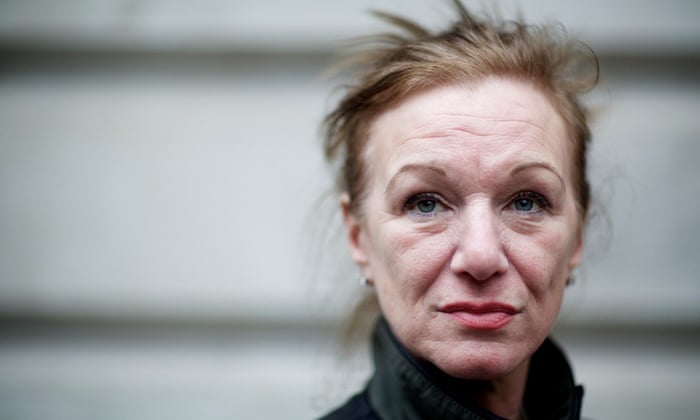
• I’m Middle Eastern And White, And Those Are Not The Same Thing

    xoJane
    2015-06-08

    Erica Pishdadian

    It’s time to stop the confusion and give Middle Eastern and North African people our own racial classification.

    I recently moved to New York City, and in between my two favorite hobbies (climbing up to my fifth floor apartment and sobbing over the state of my post-broker-fee bank account), I’ve been filling out a lot of job applications.

    Agonizing over my resume and writing endless cover letters is time-consuming, but the most annoying part of the application process for me has nothing to do with trying to fit why I’m useful into a few short paragraphs.

    I’m most aggravated by one of the simplest parts of the application: the “Please Select Your Race” portion.

    My father is Iranian, and my mother is a mix of Western European. According to the Census definitions, I’m white. And that’s true; I am. But I’m only half white, because Middle Eastern and white are not the same thing.

    The United States Census Bureau’s definition of white is “a person having origins in any of the original peoples of Europe, the Middle East, or North Africa.”

    The first time I remember filling in a bubble for this question, I was in elementary school. I had to ask my teacher which races I counted as, and when she told me, all I could think about was how much darker I was than the kids around me. I’m visibly Middle Eastern, and while I’m not particularly dark-skinned, I’m not really white either…

    Read the entire article here.

  • The Myth of a White Minority
    2015-06-11

    Richard Alba, Distinguished Professor of Sociology
    City University of New York Graduate Center

    IN 2012, the Census Bureau announced that nonwhite births exceeded white births for the first time. In 2013, it noted that more whites were dying than were being born. In March, it projected that non-Hispanic whites would be a minority by 2044.

    But the forecast of an imminent white minority, which some take as a given, is wrong. We will seem like a majority-white society for much longer than is believed.

    The predictions make sense only if you accept the outdated, illogical methods used by the census, which define as a “minority” anyone who belongs to “any group other than non-Hispanic White alone.” In the words “group” and “alone” lie a host of confusions.

    A report the Pew Research Center is releasing today on multiracial Americans demonstrates how problematic these definitions have become. Pew estimates that 8.9 percent of Americans now have family backgrounds that involve some combination of white, black, Latino, Asian and Native American.

    “Mixed” unions — intermarriages and long-lasting cohabitations — have become far more common. According to a 2012 Pew report, 15 percent of new marriages cross the major lines of race or Hispanic origin. Some 70 percent of these relationships involve a white partner and a minority spouse. The most common minority partners for whites are Latinos, followed by Asians, though the frequency of white-black marriage also continues to rise.

    But even as the on-the-ground understanding of race and ethnicity becomes more fluid, contingent and overlapping, our public conversation lags…

    Read the entire article here.

  • Multiracial in America

    Pew Research Center
    Washington, D.C.
    2015-06-11
    155 pages

    Principal Researchers

    Kim Parker, Director of Social Trends Research
    Rich Morin, Senior Editor
    Juliana Menasce Horowitz, Associate Director, Research
    Mark Hugo Lopez, Director of Hispanic Research

    Research Team

    Anna Brown, Research Assistant
    D’Vera Cohn, Senior Writer
    Richard Fry, Senior Researcher
    Ana Gonzalez-Barrera, Research Associate
    Sara Goo, Senior Digital Editor
    Scott Keeter, Director of Survey Research
    Jens Manuel Krogstad, Writer/Editor
    Gretchen Livingston, Senion Researcher
    Kyley McGeeney, Research Methodologist
    Andrew Mercer, Research Methodologist
    Eileen Patten, Research Analyst
    Renee Stepler, Research Assistant
    Wendy Wang, Senior Researcher

    Proud, Diverse and Growing in Numbers

    Multiracial Americans are at the cutting edge of social and demographic change in the U.S.—young, proud, tolerant and growing at a rate three times as fast as the population as a whole.

    As America becomes more racially diverse and social taboos against interracial marriage fade, a new Pew Research Center survey finds that majorities of multiracial adults are proud of their mixed-race background (60%) and feel their racial heritage has made them more open to other cultures (59%).

    At the same time, a majority (55%) say they have been subjected to racial slurs or jokes, and about one-in-four (24%) have felt annoyed because people have made assumptions about their racial background. Still, few see their multiracial background as a liability. In fact, only 4% say having a mixed racial background has been a disadvantage in their life. About one-in-five (19%) say it has been an advantage, and 76% say it has made no difference…

    Read the entire report here.

  • Allyson Hobbs

    Morris Educational Foundation
    Morristown, New Jersey
    2015-05-04

    Each issue, we are pleased to circle back with one of our Morristown High School esteemed alumni and catch up.

    This spring we caught up with Allyson Hobbs, MHS Class of ’93…

    Allyson Hobbs, MHS Class of 1993, Author & Assistant Professor at Stanford University

    After graduating Morristown High School in 1993, Allyson attended Harvard University and graduated magna cum laude in 1997. After that, she worked at an advertising agency in New York City for a few years. However, in search of finding her professional passion, she decided to apply to graduate school and attended University of Chicago where she received a Ph.D. with distinction. It was through her experience there that she determined she wanted to pursue her book and a teaching. She has received fellowships from the Ford Foundation, the Michelle R. Clayman Institute for Gender Research, and the Center for the Comparative Study of Race and Ethnicity at Stanford. At Stanford, Allyson teaches courses on American identity, African American history, African American women’s history, and twentieth century American history. She has won numerous teaching awards including the Phi Beta Kappa Teaching Prize and the St. Clair Drake Teaching Award. She gave a TEDx talk at Stanford, she has appeared on C-SPAN and National Public Radio, and her work has been featured on CNN.com and Slate.com.

    Allyson’s first book, A Chosen Exile: A History of Racial Passing in American Life, published by Harvard University Press in October 2014, examines the phenomenon of racial passing in the United States from the late eighteenth century to the present. A Chosen Exile has been featured on National Public Radio’s All Things Considered, the Tavis Smiley Show on Public Radio International, and the Madison Show on SiriusXM.

    On a visit back to the East Coast, we visited Allyson and caught up…

    MEF: “Tell us more about your book?”

    AH: “Writing the book has been an incredible experience. My book is about racial passing where light-skinned African Americans pass as white during the late 18th century to present. The inspiration for the book was a story about a relative of mine that my aunt had told me about. During the 1920’s and 30’s I had a female cousin who grew up in the Southside of Chicago. She attended a predominately black high school living in a historic African-American neighborhood. After graduating from high school, her mom decided she wanted her to move to California and live life as a white woman.   Since she was light-skinned, her mother believed this was the best thing she could do for her daughter giving her more opportunity and better life experiences. Her cousin did not want to go and pleaded with her mom not wanting to leave the life she known, her community, and her friends. However, her mom insisted so she moved to LA, married a white man, had children (who had no idea about her past).   Ten years later she receives a call from her mom to come back immediately because father is dying. She said she couldn’t come back as she is a white woman now, a life you forced me to have. That story inspired my book and really made me want to explore the history of passing.   We think of passing as a story about individualism and a way to get ahead. We don’t think about people who were so impacted, the story of all the people around them, families, friends, people who have to be accomplices, people who have to keep secret. I also felt that we often look at what is to gain by passing, I thought what would the story would look like with what is lost by passing.”…

    Read the entire interview here.

  • The election of Barack Obama sent ripples of hope throughout the United States and the international community and seeded the notion that the country had transformed itself into a postracial utopia. Meanwhile, race itself, and racism, permeated political and social arenas nationwide as the American public grappled with the question of why and how much the president’s, or anyone’s, racial and ethnic identity really mattered. This also led to pertinent discussions on the meaning and significance of race and ethnicity in 21st-century U.S. society. Though unified in our thirst for change, America was divided, not necessarily along racial lines but by where we stood on the position of the importance of race and ethnicity as a concept. Some saw racial and ethnic group divides as an important historic institution that formed the basis of a real social hierarchy; others saw these divides as a false notion and a shameful stain on the otherwise polished face of a great nation.

    Both the embracing and the backlash surrounding Barack Obama made evident what were still very salient categories in our daily national discourse and experience: color, race, ethnicity, and nationality. Obama’s political opponents weren’t the only ones who called into question the president’s identity; suspicion was evident on both sides of party lines as political figures and the public evaluated their new leader. Could the new president be trusted to represent mainstream America, or would he underhandedly advance black interests? Did he embody real “American” values despite being raised in a nontraditional family by a single mother? What did it mean that the president was also viewed as part of an educated black elite: Was the president black enough? What did it mean that he was rumored to worship amid an Afrocentric congregation: Was he, perhaps, too black? As a child of an interracial marriage, should he be considered black at all? And with ties to relatives in Africa, was he really even an American?

    The very public examination of the president’s identity, the dissection of his identity into distinct facets of his life experience, illustrates a critical connection between our individual and collective identities and the broader narrative on what it means to be a part of this nation, to be an American. It also made clear that while the shape and form of racial and ethnic identity today is ever changing, it plays as important and central a role in our lives today as it has in the past. It is not only the way many people in the United States define themselves, it is still very much the way in which we define one another.

    Elsie Achugbue, “Introduction” in Multicultural Perspectives on Race, Ethnicity, and Identity, eds. Elizabeth Pathy Salett and Diane R. Koslow (Washington, D.C., NASW Press, 2015). http://www.naswpress.org/publications/diversity/inside/multicultural-perspectives-intro.html.

  • Multicultural Perspectives on Race, Ethnicity, and Identity

    NASW Press
    2015
    224 pages
    ISBN: 978-0-87101-460-3

    Edited by:

    Elizabeth Pathy Salett, MSW

    Diane R. Koslow, PhD

    In the past 30 years, the United States has undergone an unprecedented and accelerated growth in the diversity of its population. These changes affect all elements of our society, underscoring the need for an informed and knowledgeable public that can understand, respect, and communicate with people of diverse backgrounds. Multicultural Perspectives on Race, Ethnicity, and Identity discusses the relationship between race, ethnicity, sense of self and the development of individual and group identity. It further explores the question of who we are and who we are becoming from the perspective of our multicultural, multilingual, and globally interconnected world. This book offers readers the opportunity to examine the importance of ecological and environmental factors in defining how we experience our lives and the world around us.

    The authors introduce and review numerous frameworks and models for understanding racial and ethnic identity development. Each chapter reviews the social, economic, and political processes related to building and preserving racial and ethnic identities and perceptions of self. Multicultural Perspectives on Race, Ethnicity, and Identity is a great resource for all social workers.

    Contents

    • Preface
    • Acknowledgments
    • Introduction: Elsie Achugbue
    • Chapter 1: Identity, Self, and Individualism in a Multicultural Perspective / Alan Roland
    • Chapter 2: African American Identity and Its Social Context / Lee Jenkins
    • Chapter 3: Children of Undocumented Immigrants: Imperiled Developmental Trajectories / Luis H. Zayas and Mollie Bradlee
    • Chapter 4: Racial and Ethnic Identities of Asian Americans: Understanding Unique and Common Experiences / Greg M. Kim-Ju and Phillip D. Akutsu
    • Chapter 5: Indigenous Peoples and Identity in the 21st Century: Remembering, Reclaiming, and Regenerating / Sandy Grande, Timothy San Pedro, and Sweeney Windchief
    • Chapter 6: White Racial Identity Development: Looking Back and Considering What Is Ahead / Lisa B. Spanierman
    • Chapter 7: Growing Up Multiracial in the United States / Robin Lin Miller and NiCole T. Buchanan
    • Chapter 8: What It Means to Be American / Jennie Park-Taylor, Joshua Henderson, and Michael Stoyer
    • About the Editors
    • About the Contributors
    • Index
  • Mark Duggan’s family lead call for a public inquiry into UK policing

    The Guardian
    2015-06-07

    Damien Gayle, Live Desk Reporter


    Carole Duggan, Duggan’s aunt, said her family had ‘ample evidence’ that police had misled an inquest into his death. Photograph: Christopher Thomond/the Guardian

    Campaigners say there are deep problems with Operation Trident, which investigates gun crime in London’s black communities

    Mark Duggan’s family, relatives of other black men killed in custody, and one of the UK’s most senior black lawyers have called for a public inquiry into policing in Britain.

    Duggan was shot twice on 4 August 2011 in Tottenham, north London, after 11 specialist firearms officers stopped the minicab he was in on suspicion that he had an illegal firearm. While no gun was found on him, a handgun in a sock was discovered on grassland about four metres (14ft) from his body.

    Campaigners are calling for an investigation after it was reported that the man who passed a gun to Duggan before he was killed by police in Tottenham was not arrested weeks earlier, despite evidence he was known to officers and had used the same weapon in another attack.

    Following a three-and-a-half-year investigation into the killing of Duggan, 29, the Independent Police Complaints Commission (IPCC) cleared armed officers of any wrongdoing, saying it was likely that he was in the process of throwing away a handgun when he was shot…

    Read the entire article here.

  • Why Media Representation Matters To Biracial And Multiracial People

    Blue Nation Review
    2015-06-04

    John Paul Brammer, Identity Editor

    “So, you’re sort of nothing then.”

    I’ve only heard this once. Someone asked me what my race was because they were curious. I explained to them that I was mixed, that I had both indigenous and European blood, and after mulling it over for a second, that was their response.

    They meant no malice by it. If anything, they were trying to be playful. But it still reminded me that when it comes to the dominant narratives on how we perceive race and culture in this country, I don’t quite fit the story.

    I am reminded of this again with the debate over Emma Stone’s multiracial character in Cameron Crowe’s certified stinker Aloha. Stone, a white woman, was cast to portray a half-white, quarter-Chinese, quarter-Native Hawaiian character by the name of Allison Ng.

    Crowe has come forward and apologized for his decision. But casting Stone in the first place has opened a very necessary dialogue on multiracial characters in the media.

    In the context of the media diversity debate, multiracial people exist in a precarious place. On the one hand, they seem to be left out for the sake of a more direct approach to criticism of media representation of minorities

    Read the entire article here.

  • 4th Annual “What Are You?” with Lacey Schwartz’s “Little White Lie”

    Brooklyn Historical Society
    128 Pierrepont Street
    Brooklyn, New York 11201
    Monday, 2015-06-08, 18:30-21:00 EDT (Local Time)

    A BHS “Crossing Borders, Bridging Generations” program.


    Top: Lacey Schwartz, photo by Michael Hill; Bottom: Lise Funderburg, photo by Tigist Tsegie

    On the week of Loving Day 2015, filmmaker Lacey Schwartz comes to BHS to presents her provocative documentary about being a biracial woman who grew up believing she was white, Little White Lie, as part of our 4th Annual What Are You? program looking at mixed heritage and identity.

    Lise Funderburg, the author of the ground-breaking book on multiracial identity, Black, White, Other leads Schwartz in a post-screening talkback.

    For more information and to reserve a free ticket, click here.

  • Competencies for Counseling the Multiracial Population

    Multi-Racial/Ethnic Counseling Concerns (MRECC) Interest Network of the American Counseling Association Taskforce
    American Counseling Association
    2015-02-02
    51 pages

    Co-Chairs/Authors:

    Kelley R. Kenney

    Mark E. Kenney

    Taskforce Members/Authors:

    Susan B. Alvarado

    Amanda L. Baden

    Leah Brew

    Stuart Chen-Hayes

    Cheryl L. Crippen,

    Hank L. Harris

    Richard C. Henriksen, Jr.

    Krista M. Malott

    Derrick A. Paladino

    Mark L. Pope

    Carmen F. Salazar

    Anneliese A. Singh

    In memory of Dr. Bea Wehrly for her tireless work and advocacy. The publication of her book, Counseling Interracial Individuals and Families, by the American Counseling Association in 1996 was a major part of this journey.

    Competencies for Counseling the Multiracial Population: Couples, Families, and Individuals; and Transracial Adoptees and Families (Endorsed and adopted by the ACA Governing Council, March 2015)

    The Multiracial/Ethnic Counseling Concerns (MRECC) Interest Network of the American Counseling Association has developed the following competencies in order to promote the development of sound professional counseling practices to competently and effectively attend to the diverse needs of the multiple heritage population.

    Section I: Overview

    This document is intended to provide counseling competencies for working with and advocating for members of the multiracial population including interracial couples, multiracial families, and multiracial individuals, and transracial adoptees and families. The document is intended for use by counselors and other helping professionals; individuals who educate, train, and/or supervise current and future counseling and other helping professionals; as well as individuals who may conduct research and/or other professional activities with members of the multiracial population. To this end, the goal is for these competencies to serve as a resource and provide a framework for how counseling and other helping professionals can competently and effectively work with and advocate for members of the multiracial population…

    Read the entire report here.