• Laura Kina

    Fused Society
    2015-04-16

    Laura Kina, Vincent de Paul professor of Art, Media, & Design
    DePaul University, Chicago, Illinois

    Meet today’s Fused Society contributor, the accomplished Laura Kina!

    “Laura Kina is a multiracial Asian American artist based in Chicago who identifies as “hapa, yonsei, and Unchinanchu” (mixed race, 4th generation Japanese American, and part of the Okinawan diaspora). Her father is Okinawan from Hawaiʻi and her mother is Anglo American (Spanish/Basque and French, English, Scottish, Irish, Dutch) from the Pacific Northwest. Kina’s artwork, scholarly research and activism center on themes of distance and belonging. She focuses on the fluidity of cultural difference and the slipperiness of identity. Asian American history and mixed race representations are subjects that run through her work.

    Kina is a Vincent de Paul professor of Art, Media, & Design at DePaul University. She is the coeditor, along with Wei Ming Dariotis, of War Baby/Love Child: Mixed Race Asian American Art (University of Washington Press, 2013); cofounder of the DePaul biennial Critical Mixed Race Studies conference; and cofounder and consulting editor of the Journal of Critical Mixed Race Studies and reviews editor for the Asian Diasporic Visual Cultures and the Americas

    Read the entire article here.

  • Wrightsville Beach alderman pressured to resign after insult against bartender

    StarNews
    Wilmington, North Carolina
    2015-04-17

    Julian March

    WRIGHTSVILLE BEACH | Alderman Darryl Mills is facing pressure to resign after he used derogatory language to a bartender last month.

    Mills made the comment to Mia Banks while she was working at King Neptune Restaurant on North Lumina Avenue.

    In an interview, Mills confirmed he called Banks a “mixed breed” and used an expletive. He said he and Banks have had a bantering and teasing relationship for years.

    “That night, as soon as it happened, I saw that it bothered her, hurt her, and I apologized immediately and left,” Mills said. He later apologized a second time in an email.

    He has no plans to resign. “I think this is a personal matter,” he said. “It has nothing to do with Wrightsville Beach.”

    Banks agreed she had a bantering relationship with Mills, but said that would be true with all of her customers, especially regulars.

    She said she had not discussed her race with Mills before his comment. Her mother is Polish and Italian and her father is African-American.

    “I was humiliated,” Banks said. “I was degraded.”…

    Read the entire article here.

  • Having Mixed-Race Kids Doesn’t Make You Non-White

    Mom.Me
    2015-04-20

    Grace Hwang Lynch, Blogger
    Hapa Mama


    Adel Vardell photography

    Do white parents become “less white” when they have non-white kids? That question is burning up my Facebook feed right now, thanks to an essay in the New York Times last week.

    In the piece published in Motherlode, Jack Cheng (a Chinese American man married to a white woman) writes of his wife:

    “She became less white when our son, and then our daughter, were born. I think the first bit of doubt surfaced the day we were on the subway with our newborn and a woman came up to my wife and said: ‘Oh, he’s so cute! When did you adopt him?’ I was livid: Did it not occur to this woman that the father was sitting right next to his wife and child?”

    But that is not becoming less white…

    …While I might be able to code switch and move in different circles and enjoy a variety of cultures, that doesn’t change the fact that my skin is golden, my nose is wide and sometimes people assume I’m a Tiger Mother. Or the manicurist. Or that I should be taking their General’s Chicken order…

    Read the entire article here.

  • In Puerto Rico, a push to revive indigenous culture

    The Associated Press
    2015-04-20

    Anica Coto

    SAN LORENZO, Puerto Rico (AP) — In Puerto Rico’s misty, bamboo-studded mountains, elementary school students are studying a nearly extinct language, beating on drums and growing native crops like cassava and sweet potato as they learn about the indigenous people who lived on the island before Christopher Columbus.

    The children in four towns in the island’s southeast corner play a ceremonial ball game that was called batey by the native Tainos, who were all but wiped out during colonial times. The boys and girls also learn words from the local Arawak language, which was in part rebuilt with help from linguists, and still exists in varying forms among other native groups in the hemisphere.

    Now, a group of academics and educators hope to expand the Taino education program to other public schools around the U.S. territory in an effort to teach children this little known part of the territory’s history.

    “If you don’t know your roots, you don’t know yourself,” said anthropologist Carlalynne Yarey Melendez, director of the Taino cultural organization that runs the educational program. “There are so many communities and schools that want the classes, but I can’t keep up with the demand.”

    Puerto Ricans’ interest in the territory’s indigenous past has grown in recent years, with 42,000 of the 3.7 million people then living on the island identifying themselves as at least partially Taino in the 2010 Census.

    But even though that’s just a little more than 1 percent, Puerto Rico’s legislature is considering a proposal to declare Melendez’s Naguake organization to be the island’s first indigenous-based community. The designation would allow it to receive federal funds under a program that aids native groups, and expand the program to other towns…

    Read the entire article here.

  • See First Photos of Matthew McConaughey in The Free State of Jones

    Time
    2015-04-21

    Sarah Begley, Culture Reporter


    Matthew McConaughey stars in The Free State of Jones (Murray Close)

    He’s basically your Civil War boyfriend

    For an actor, there’s no better awards bait than an appearance-transforming role in a biographical war movie. World, meet The Free State of Jones.

    Matthew McConaughey will star in the action-drama as Newt Knight, a Mississippi farmer who led a southern rebellion against the Confederates during the Civil War. He and his followers “seceded” from the Confederacy, calling Jones County “The Free State of Jones.” After the war, he distinguished himself from fellow southerners once again by marrying a former slave named Rachel…

    Read the entire article here.

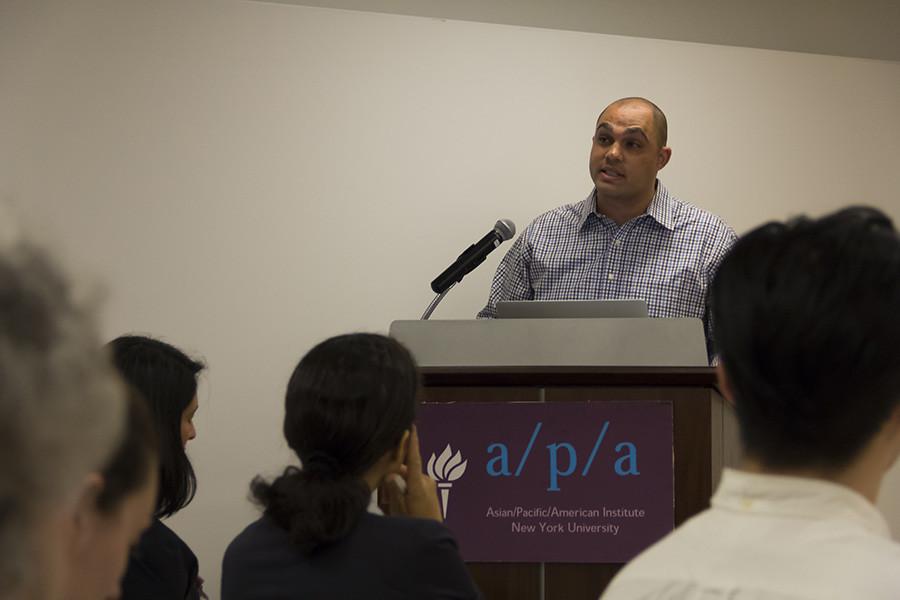
  • Panel discusses mixed race scholarship

    Washington Square News: NYU’s Independent Student Newspaper
    2015-04-21

    Amanda Morris, Contributing Writer


    Jared Sexton speaks on the topic of mixed race individuals. Sexton is the director of the African American Studies program in UC Irvine. (Shawn Paik)

    In studying mixed race identities, the historical focus has been on the individual, but speakers at Monday’s roundtable conversation “What’s Radical About Mixed Race?” aimed to reframe discussion in a way that allows for more nuanced understanding of racial identity.

    Speakers at the event, which was hosted by the Asian/Pacific/American Institute, included Minelle Mahtani, an associate professor at the University of Toronto, and Jared Sexton, an associate professor and director of African American studies at the University of California, Irvine.

    Sexton said hypodescent, a condition in which people with multiple race identities are automatically classified according to their non-white race, is one of the concerns researchers of mixed race have had in the past. Sexton said he wants researchers to re-examine this issue in a larger framework of racial stereotypes.

    “Some of the preoccupations are the issue of hypodescent and challenging its reflexive use, but in challenging hypodescent, multiracial studies also runs the risk of re-stigmatizing the very identities that it claims to combine,” Sexton said.

    Mahtani said some mixed raced individuals try to fuse their various identities, but often reinforce white supremacy by ignoring their non-white ancestry. Mahtani added that the media often takes advantage of people of mixed race, using their perceived racial ambiguity to appeal to several demographics at once…

    …“We need to ask new questions,” Mahtani said. “Not ‘What is mixed race?’ but ‘How does the meaning of mixed race change over time?’”

    University of Washington student Na’quel Walker, who attended the event, said she often had trouble with her identity as a child.

    “When I was younger, for me to say ‘I’m mixed,’ was to denounce blackness,” Walker said. “I was trying to elevate myself because I wanted to feel special or different, but I was running away from my blackness.”

    Nicole Holliday, a doctoral student at NYU in linguistics who is studying the speech patterns of people of mixed race, agreed that research into mixed race culture needs to take a new approach…

    Read the entire article here.

  • Color Blindness and Racial Politics in the Era of Obama

    Books & Ideas
    2010-12-08

    Andrew J. Diamond, Professor of American History and Civilization
    Université Paris-Sorbonne, France

    At a time when a supposedly “post-racial” America is becoming increasingly polarized over its first black president, historian Thomas Sugrue proposes a badly needed perspective on Obama’s attempts to negotiate between color blindness and race consciousness. Despite the depth of his historical perspective, he understates how destructive Obama’s religious moralism is for the cause of racial progress.

    Reviewed: Thomas J. Sugrue, Not Even Past. Barack Obama and the Burden of Race, Princeton University Press, 2010, 178p., $24.95

    Thomas J. Sugrue’s Not Even Past is one of the latest contributions to the exploding field of Obama studies. Sugrue discloses in the opening pages that he voted for Barack Obama, made a small financial contribution to his campaign, and even worked on the candidate’s urban advisory committee, but his objective in his own rendering of Obama’s breathtaking rise to the White House is “balance”. In a moment when the United States is becoming increasingly polarized over its first black president, with a rising crescendo of criticism on both the right and left of the American political spectrum, this is an ambitious project to say the least. But Sugrue, an eminent Professor of History and Sociology at the University of Pennsylvania and a pioneer in the new urban historiography of race and power in the postwar American metropolis, is just the guy for the job, even if, in the final analysis, Obama’s detractors will no doubt have more complaints with the book than his supporters. And yet, if one gets the sense that Sugrue is at times pulling punches, he ultimately manages to produce an even-handed and illuminating analysis of the Obama story.

    Not Even Past, which consists of three essays adapted from a series of lectures the author presented at Princeton University in 2009, stands out among the recent works on what Barack Obama means to the United States, in part, because Sugrue remains true to his métier. Joining a field crowded with works of a somewhat polemical and journalistic bent, Sugrue delivers a rich, lucid, and badly needed account of the historical events, political movements, and ideological currents that shaped the ground upon which Obama negotiated his racial identity, developed his political views, and positioned himself for an improbable run for the presidency. Yet, this is as much a story about the world that made the man than it is about the man himself. “It is the story”, Sugrue writes, “of a journey through one of the most contentious periods of America’s racial history, through America’s post-1960s multicultural turn, into the syncretic black urban politics of the late twentieth century, onto the contested intellectual and cultural terrain of race and ‘identity politics’ in the late 1980s and 1990s, and finally to a moment in the early twenty-first century when America still lived in the shadow of the unfinished civil rights struggles of the previous century while influential journalists, politicians, and scholars hailed the emergence of a post-racial order” (p. 16). These were treacherous waters indeed for black politicians and white liberals alike, both of whom had to navigate a course through the ideological cross-currents of color blindness and race consciousness. These conditions had the Democratic Party lost at sea for the good part of three decades. Obama’s journey to political and racial self-discovery is also the story of how the Democrats rediscovered their bearings in a country drifting ineluctably rightward…

    Read the entire article in HTML or PDF format.

  • Obama on Racism circa 1995

    Horizons: Nancy LeTourneau’s big picture look at politics and life
    2015-04-16

    Nancy LeTourneau

    It is always fascinating to find articles and video about Barack Obama from the past. Recently a group called 22-CityView in Cambridge released the video of a reading and book discussion on Dreams From My Father by Obama back in 1995. At the time he had graduated from Harvard Law School, moved back to Chicago, was working as a civil rights lawyer and had recently married Michelle.

    The reading is from what I remember as the most racially poignant part of the book. It takes place when he was 16 and includes the incident when his maternal grandmother was frightened by a black man at her bus stop as well as an interchange Barack had about that with Frank Marshall Davis

    Read the entire article here.

  • Conjugal Rights: Marriage, Sexuality, and Urban Life in Colonial Libreville, Gabon

    Ohio University Press
    2014
    336 pages
    6 × 9 in., 7 b&w photos, 4 maps
    Paperback ISBN: 978-0-8214-2120-8
    Hardcover ISBN: 978-0-8214-2119-2
    Electronic ISBN: 978-0-8214-4503-7

    Rachel Jean-Baptiste, Assistant Professor of African History
    University of California, Davis

    Conjugal Rights is a history of the role of marriage and other arrangements between men and women in Libreville, Gabon, during the French colonial era, from the mid–nineteenth century through 1960. Conventional historiography has depicted women as few in number and of limited influence in African colonial towns, but this book demonstrates that a sexual economy of emotional, social, legal, and physical relationships between men and women indelibly shaped urban life.

    Bridewealth became a motor of African economic activity, as men and women promised, earned, borrowed, transferred, and absconded with money to facilitate interpersonal relationships. Colonial rule increased the fluidity of customary marriage law, as chiefs and colonial civil servants presided over multiple courts, and city residents strategically chose the legal arena in which to arbitrate a conjugal-sexual conflict. Sexual and domestic relationships with European men allowed some African women to achieve a greater degree of economic and social mobility. An eventual decline of marriage rates resulted in new sexual mores, as women and men sought to rebalance the roles of pleasure, respectability, and legality in having sex outside of kin-sanctioned marriage.

    Rachel Jean-Baptiste expands the discourse on sexuality in Africa and challenges conventional understandings of urban history beyond the study of the built environment. Marriage and sexual relations determined how people defined themselves as urbanites and shaped the shifting physical landscape of Libreville. Conjugal Rights takes a fresh look at questions of the historical construction of race and ethnicity. Despite the efforts of the French colonial government and society to enforce boundaries between black and white, interracial sexual and domestic relationships persisted. Black and métisse women gained economic and social capital from these relationships, allowing some measure of freedom in the colonial capital city.

  • Obama’s Mother

    Books & Ideas
    2009-05-20

    Gloria Origgi

    The American presidential election was won by a woman: Stanley Ann Dunham. Born in 1942, she died of cancer in 1995, shortly after turning 52, and thus without having seen her visionary dream realized: the election of her son, Barack Hussein Obama, as 44th President of the United States.

    The male name was imposed on her by Stanley Dunham, her father, who would have preferred a boy. As the only child of Stanley and his wife Madelyn Payne, Stanley Ann was nonconformist young girl and a solitary mother, convinced that she could raise her children in a way that would prepare them for a new world, globalized and multicultural, a world that certainly didn’t exist in her daily life as a middle-class girl in an anonymous little town in Kansas. Barack – or Barry, as she called him – is her creation, the fruit of a patient, attentive and loving education that was the commitment of her life, as she saw in her two racially mixed children the reflection of a better future, one in which the warm commingling of blood pacifies the false oppositions and odious attachments, the “unreal loyalties”, as Virginia Woolf called them, that reassure us in the desperate need for social identity to which our species falls prey.

    When Barack Obama was born on August 4, 1961, he was still considered in half the American states the criminal product of miscegenation, or the interbreeding of races, a heinous biological hybrid whose existence simply wasn’t taken into consideration while those who committed it were punished with incarceration. Today it is a hard-to-pronounce word that was coined in the United States in 1863, with a specious Latin etymology, from miscere (mix) and genus (race), to indicate the supposed genetic difference between whites and blacks. The question of miscegenation became crucial during the Civil War and subsequent emancipation of the slaves. It was fine to grant civil rights to non-whites, but to allow intimate relations between whites and blacks was another story. The term appeared for the first time in the title of a pamphlet published in New York, Miscegenation: The Theory of Blending of the Races, Applied to the American White Man and Negro, in which the anonymous author promoted the idea of racial mixing as the project of the Republican Party, which supported the abolition of slavery. By encouraging the interbreeding of whites and blacks, racial differences would be progressively attenuated until they disappeared altogether. It was soon discovered that the pamphlet had been created by the Democrats in order to frighten American citizens faced with the intolerable Republican project of encouraging racial mixing. The crime of miscegenation was definitively abolished in 1967, when the U.S. Supreme Court ruled the anti-miscegenation laws to be unconstitutional in response to Loving v. Virginia, a case in which a racially mixed married couple was sentenced to a year in prison – with the sentence suspended for 25 years on condition that the couple leave the state of Virginia – for having been found in bed together under the same roof. The marriage certificate hanging above the nuptial bed wasn’t considered valid by the police – who, armed with rifles, broke down the entry door and beat the humiliated couple – because it was obtained in another county, one in which miscegenation wasn’t illegal. This occurred in 1959, and the couple had to wait eight years for the moral indecency of their ordeal and their own innocence to be recognized.

    One must try to imagine that America in order to understand the courage of Stanley Ann, who was 18 years old and 4 months pregnant when she married the brilliant young Kenyan student Barack Obama Sr., the first African to be admitted to the University of Hawaii. He was 25. He’d arrived in Hawaii in 1959 thanks to a scholarship from the Kenyan government, which was also sponsored by the United States to help some of the more gifted African students get an education at an American University so they could return to their native country and become part of a new, competent, modern elite…

    Read the entire article in HTML or PDF.