• Volunteers Needed for Linguistic Research! It Pays!

    2015-01-31

    Nicole Holliday, Ph.D. Candidate
    Department of Linguistics
    New York University

    Nicole Holliday, a graduate student in the NYU Department of Linguistics is seeking participants in the Washington D.C. metro area for a research study on how individuals with one black parent and one white parent talk to friends. Participants must be male, between the ages 18-32, and have one black parent and one white parent. The study involves participating in a short conversation and interview, and takes approximately 1 hour. Participants will be compensated for their time! If you or someone you know may be eligible, please e-mail me at nrh245@nyu.edu!

  • Exposure to Racial Ambiguity Influences Lay Theories of Race

    Social Psychological and Personality Science
    Volume 6, Number 4 (May 2015)
    pages 382-390
    DOI: 10.1177/1948550614562844

    Diana T. Sanchez, Associate Professor of Psychology
    Rutgers, The State University of New Jersey

    Danielle M. Young
    Rutgers, The State University of New Jersey

    Kristin Pauker, Assistant Professor of Psychology
    University of Hawaii, Manoa

    Biological lay theories of race have proven to have pernicious consequences for interracial relations, yet few studies have examined how intergroup contact itself (particularly with those who naturalistically challenge these conceptions) affects beliefs about race. Three studies (a correlational study, an interaction study, and an experimental study) examine whether exposure to racially ambiguous individuals reduces Whites’ biological lay theories of race across time. Study 1 demonstrates that increased exposure to racial ambiguity across 2 weeks reduced White individuals’ biological lay theories. Study 2 shows that Whites who interacted in a laboratory setting with a racially ambiguous individual were less likely to endorse biological lay theories, an effect that sustained for 2 weeks. Study 3 finds that the reduction in biological lay theories after exposure to racial ambiguity is mediated by the tendency for Whites’ lay theories of race to conform to beliefs they presume racially ambiguous individuals hold.

    Read or purchase the article here.

  • How Europeans evolved white skin

    Science
    2015-04-02
    DOI: 10.1126/science.aab2435

    Ann Gibbons, Contributing Correspondent

    ST. LOUIS, MISSOURI—Most of us think of Europe as the ancestral home of white people. But a new study shows that pale skin, as well as other traits such as tallness and the ability to digest milk as adults, arrived in most of the continent relatively recently. The work, presented here last week at the 84th annual meeting of the American Association of Physical Anthropologists, offers dramatic evidence of recent evolution in Europe and shows that most modern Europeans don’t look much like those of 8000 years ago.

    The origins of Europeans have come into sharp focus in the past year as researchers have sequenced the genomes of ancient populations, rather than only a few individuals. By comparing key parts of the DNA across the genomes of 83 ancient individuals from archaeological sites throughout Europe, the international team of researchers reported earlier this year that Europeans today are a mix of the blending of at least three ancient populations of hunter-gatherers and farmers who moved into Europe in separate migrations over the past 8000 years. The study revealed that a massive migration of Yamnaya herders from the steppes north of the Black Sea may have brought Indo-European languages to Europe about 4500 years ago.

    Now, a new study from the same team drills down further into that remarkable data to search for genes that were under strong natural selection—including traits so favorable that they spread rapidly throughout Europe in the past 8000 years. By comparing the ancient European genomes with those of recent ones from the 1000 Genomes Project, population geneticist Iain Mathieson, a postdoc in the Harvard University lab of population geneticist David Reich, found five genes associated with changes in diet and skin pigmentation that underwent strong natural selection…

    Read the entire article here.

  • Boutté play to explore questions of race and identity

    Illinois State University
    2015-03-25

    Eric Jome, Director of Media Relations

    When Duane Boutté, an assistant professor in the School of Theatre and Dance, read James Weldon Johnson’s novel The Autobiography of an Ex-Colored Man, the story struck a familiar chord. It also served as further inspiration for Boutté to develop a play based loosely on his own family history.

    Johnson was an author, songwriter, professor, lawyer, diplomat and civil rights leader in the early 20th century. The executive secretary of the National Association for the Advancement of Colored People (NAACP) in the 1920s, Johnson also composed the lyrics to Lift Ev’ry Voice and Sing, a song the NAACP promoted as a black national anthem.

    The book’s plot revolves around the life of a man struggling with his own racial identity. The un-named main character leads an idyllic childhood in the American south, taking piano lessons and developing a love for the music of Chopin. His world is changed when he learns that his mother is of mixed race, even though she passes for white. He eventually comes to terms with his heritage, but ultimately decides to keep his true identity a secret, even from his children.

    Boutté was immediately intrigued. Johnson’s novel explored themes of identity that resonate deeply with him. His family tree, rooted in Louisiana, includes black and white branches. “I have maternal and paternal grandparents of mixed race, but they always identified as black,” he said. “Throughout American history, mixed-race children were more often raised by the black branch and shunned by the white. My great-great-grandfather in Louisiana established his own family cemetery so that both black and white family members could be buried in the same area, but I’ve always been struck by stories about a few mixed-race relatives of ours who simply passed for white.”…

    Read the entire article here.

  • Mestizaje and Globalization: Transformations of Identity and Power

    University of Arizona Press
    2014
    264 pages
    10 photos, 3 illlustrations, 5 tables
    6.00 x 9.00
    Cloth ISBN: 978-0-8165-3090-8

    Stefanie Wickstrom, Senior Lecturer of Political Science
    Central Washington University, Ellensburg, Washington

    Philip D. Young (1936-2013), Professor Emeritus of Anthropology
    University of Oregon

    The Spanish word mestizaje does not easily translate into English. Its meaning and significance have been debated for centuries since colonization by European powers began. Its simplest definition is “mixing.” As long as the term has been employed, norms and ideas about racial and cultural relations in the Americas have been imagined, imposed, questioned, rejected, and given new meaning.

    Mestizaje and Globalization presents perspectives on the underlying transformation of identity and power associated with the term during times of great change in the Americas. The volume offers a comprehensive and empirically diverse collection of insights concerning mestizaje’s complex relationship with indigeneity, the politics of ethnic identity, transnational social movements, the aesthetic of cultural production, development policies, and capitalist globalization, with particular attention to cases in Latin America and the United States.

    Beyond the narrow and often inadequate meaning of mestizaje as biological and racial mixing, the concept deserves an innovative theoretical consideration due to its multidimensional, multifaceted character and its resilience as an ideological construct. The contributors argue that historical analyses of mestizaje do not sufficiently understand contemporary ways that racism, ethnic discrimination, and social injustice intermingle with current discourse and practice of cultural recognition and multiculturalism in the Americas.

    Mestizaje and Globalization contributes to an emerging multidisciplinary effort to explore how identities are imposed, negotiated, and reconstructed. The chapter authors clearly set forth the issues and obstacles that indigenous peoples and subjugated minorities face, as well as the strategies they have employed to gain empowerment in the face of globalization.

  • In Confessions of a Peppermint Pattie, a ‘Whiteblack’ Girl Asks if She’s Black Enough

    The Root
    2015-03-24

    Hope Wabuke, Media Director
    Kimbilio Center for African-American Fiction

    From the way she speaks to the color of her skin, a former TV personality explores the ways in which she does and doesn’t fit society’s conceptions of blackness.

    When Barack Obama arrived on the national political stage and emerged as a presidential contender, more than one observer asked whether the young, biracial, Ivy League-educated U.S. senator was black enough to be the first African-American president. And this kind of authenticity challenge isn’t new: Many other black Americans—upwardly mobile and highly educated—are sometimes seen as “not black enough.” There’s a sense that to be black, one must fit into a narrow box of stereotypes rather than embrace the many-faceted experiences and identities of black people.

    So what does it mean to be black—and to be black enough?

    These, ostensibly, are the questions that former TV host and news anchor Donna Davis poses in her debut nonfiction book, Confessions of a Peppermint Pattie: Why I Really Am Black Enough Already, Y’All. This journey begins when Davis’ 14-year-old son tells her that she is “not a real black person” but “so white until you’re not even an Oreo anymore.” He calls her a “York Peppermint Pattie.”…

    Read the entire article here.

  • A Sharp White Background

    Renegade
    2015-04-02

    Kimiko Matsuda-Lawrence (aka the Blazian Invasion)

    how I learned what race feels like

    Just Words

    I am riding home from middle school in Washington, D.C. one day when a white man gets on my bus full of black faces and calls us nigger. My stomach drops. The boys at the back of the bus rise. This is the first time I will hear that word exit the mouth of a real-life white person, not in the movies, but here, on my bus, on this bus full of blackness. As I walk home from the bus stop that day, I struggle to make sense of the feeling this man has left with me, the smallness, the brokenness, the shame slowly growing inside me. I will not hear this word shouted by a white man into a crowd of black and brown for another eight years, and eight years later I will still not know what to do.

    In the basement cafeteria of my black elementary school, I am teased for the musubi I bring in my lunchbox, white rice wrapped in nori, pressed into pyramid in the salty palm of my mother’s hand. “Ewww, what is that smell?” “Seaweed,” I answer. The word feels foreign and wrong on my tongue, but I push it out anyway, attempting awkward translation. “Seaweed??” They crinkle their noses and I feel I am foreign, I am wrong, I do not fit into this landscape of lunchables, gushers, and frozen fishsticks. I go home. I ask my mother to pack me a sandwich. I miss musubi.

    When my classmates pull their eyes into slits, contort their mouths into ching chong chinaman talk, and call our volunteer chess teacher Mr. Tsunami though that is not his name, my cheeks flash hot again. Do my eyes look like that? Are they talking about me? Somehow I know I am tied to this taunting, that I am target though they’re not looking at me, the words still clinging to my skin as if sensing the yellow beneath the brown. I look at my eyes in the mirror, turn my head to the side, search for slits. Who is this they’ve made of me?…

    Read the entire article here.

  • Mixed-race Migration and Adoption in Gish Jen’s The Love Wife

    Canadian Review of Comparative Literature / Revue Canadienne de Littérature Comparée
    Volume 42, Issue 1, Mars 2015
    pages 45-56

    Jenny Wen-chuan Chu
    National Kaohsiung Normal University, Taiwan

    Migration is a way of geographic movement. It involves a sense of belonging, nostalgia and diaspora issues. Besides, adoption in the migrated family illustrates the fluidity and tenacity of racial boundaries in different national and racial origins. In Gish Jen’s The Love Wife, the question of Mama Wong’s motives haunts Blondie and Carnegie. Is Lan a nanny who teaches their two Asian daughters to be more Chinese, or is she a love wife who drives Blondie out? In contemporary America, an interracial marriage like Carnegie and Blondie’s is increasingly common. We might expect Carnegie to naturally speak Chinese and know his culture, but it is Blondie who speaks Chinese and instructs their adopted children on Asian heritage. It is not natural. However, when Carnegie discovers that he is adopted, and adoption is a natural occurrence in China, he finally realizes that nothing is unnatural. His home is based on mutual love and sharing multiple cultures, not blood or skin colour.

    In the dimension of mixed-race migration, home is a discourse of locality, and place of feelings and rootedness. According to Henri Lefebvre, home belongs to a differential space, i.e., a spiritual and imaginary space. Our memories and souls are closely related to such differential space. Gaston Bachelard, too, argues that our home is a privileged entity of the intimate values that we take it as our differential space: “Our [home] is our corner of the world” (4). Home is no longer fixed, but fluid and mobile. Nostalgia is inevitable. But loving homes provide more stability than do memories of good old days. In the dimension of mixed-race adoption, the American dream is internalized as the way of the mixed-race family’s lifestyle. In America, Chinese culture is also highly strengthened in the diversity of Chinese American families. However, how can the second generation of Chinese immigrants enjoy their individual American dreams, but still have to cope with the demands and expectations of their familial Chinese parents?

    In The Love Wife, we observe that the adopted children perceive and negotiate their ethnic/racial identities and sense of esteem as well as their acceptance and ease with such an adopted status. Wendy and Lizzy are both Asian Americans. Blondie, who has a WASP background, has always been at the mercy of Carnegie’s Chinese mother, the imperious Mama Wong. When Mama Wong dies, her will requires a “relative” of hers from China to stay with the family. The new arrival is Lan, middle-aged but still attractive. She is Carnegie’s mainland Chinese “relative,” a tough, surprisingly lovely survivor of the Cultural Revolution. Blondie is convinced that Mama Wong is sending Carnegie a new wife, Lan, from the grave. Nevertheless, through identifying the sweet home with multiple cultures, Carnegie and Blondie’s mixed-race family opens the room for the practices of migration and adoption.

    The author, Gish Jen, is a second generation Chinese-American. Her parents emigrated from China in the 1940s, her mother from Shanghai and her father from Yixing. She grew up in Queens, New York, moved to Yonkers, and then settled in Scarsdale. Different from those prominent Chinese-American writers who look back at Chinese-American history for their subject matter and focus on the conflicts between Chinese parents and American children, such as Amy Tan, Maxine Hong Kingston, etc., Jen is developing her distinctive voice. She aims at full participation in American life and reveals in her writings a strong desire to be a real American. The Love Wife, her third novel, portrays an Asian-American family with interracial parents, a biological son, and adopted daughters as “the new American family.” Jen turns to the story of transnational adoption, addressing that kinship plays a crucial role in an interracial family.

    Jen’s The Love Wife has been discussed critically in several articles. Fu-jen Chen and Su-lin Yu’s paper explores the imaginary binary relationship between Blondie and Lan, as well as Žižek’s “parallax gap,” through the gaze of the (m)Other in The Love Wife. It argues:

    The polarized differences between Blondie and Lan are sustained on the grounds of a safe distance at which they…

  • Cast Into Racial Limbo: The Histories, Experiences, and Intricacies of Racial Passing in Twentieth Century America

    Strigidae: A Journal of Undergraduate Writing in the Arts and Humanities
    Volume 1: Issue 1 Written Bodies/Writing Selves (January 2015)
    Article 3
    8 pages

    Hersch Rothmel
    Keene State College, Keene, New Hampshire

    The deep, complex, and contradictory layers that manifest through the intricate and subtle art of passing provide a catalyst for a greater understanding of how black identities have been constructed over time. Understanding passing as a historical, cultural, political, and social marker is necessary in assessing racial histories of America, and this understanding makes it possible to cultivate new perspectives and deeper critical analyses of how race has evolved and survived U.S. history.

    Read the entire article here.

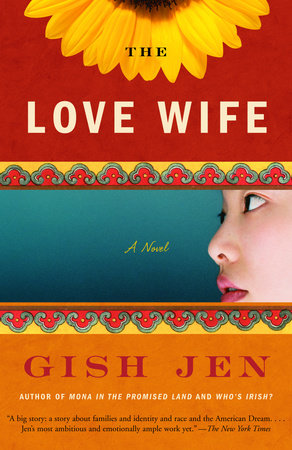
  • The Love Wife: A Novel

    Vintage Books
    2005-10-11
    400 pages
    Paperback ISBN: 978-1-4000-7651-2

    Gish Jen

    From the massively talented Gish Jen comes a barbed, moving, and stylistically dazzling new novel about the elusive nature of kinship. The Wongs describe themselves as a “half half” family, but the actual fractions are more complicated, given Carnegie’s Chinese heritage, his wife Blondie’s WASP background, and the various ethnic permutations of their adopted and biological children. Into this new American family comes a volatile new member. Her name is Lanlan. She is Carnegie’s Mainland Chinese relative, a tough, surprisingly lovely survivor of the Cultural Revolution, who comes courtesy of Carnegie’s mother’s will. Is Lanlan a very good nanny, a heartless climber, or a posthumous gift from a formidable mother who never stopped wanting her son to marry a nice Chinese girl? Rich in insight, buoyed by humor, The Love Wife is a hugely satisfying work.