• Multiracial Identity: An International Perspective by Mark Christian [Book Review]

    Journal of Black Studies
    Volume 32, Number 2 (November 2001)
    pages 261-264
    DOI: 10.1177/002193470103200206

    Molefi Kete Asante, Professor of African American Studies
    Temple University

    Multiracial Identity: An International Perspective, by Mark Christian. New York: St. Martin’s Press, 2000.

    Mark Christian has written a perceptive, enlightening account of the international politics of racial identity. Here is the first example of a scholarly approach, using African agency, to the issue of race and identity in the United Kingdom and the United States. Thus, what Christian has given us is not so much a comparative discussion of multiracial identity but a discourse on the meaning of the term multiracial identity given the social and political history of the United Kingdom and the United States. It is easy to understand why this theme has not been attempted before Multiracial Identity. It is a difficult subject to plow through given the many stumps that stick out of the political ground to halt the would-be interpreter. Christian showed an unusual courage in taking on this deeply complicated subject. He has simply burst the bubble of racial quietude in both the United Kingdom and the United States by demonstrating how the concept of multiracial identity is wrapped up in the idea of White supremacy. Racism in Britain, we also discover, is hardly different from racism in the United States and other parts of the world. Although there have been British intellectuals in the past eager to suggest that Britain was categorically more progressive in its race relations than the United States or South Africa, Christian has shown that racism is an international phenomenon. This book is important if for no other reason than the fact that Christian has taught us that the elements of racism that appear pervasive and all too common in America’s national life occur with regularity in Britain and other nations as well. This is a profound point. He has demonstrated a broad and deep appreciation of the difference between Britain and the United States while recognizing that there is a commonality of the engine of racial animosity. Both societies operate on the basis of White racial supremacy. Furthermore, British…

    Read or purchase the review here.
  • Hybrid Hotties: Intersections of Gender and Race in Multiracial Bodies

    Rhode Island School of Design
    55 Angel Street, MET Room A
    Providence, Rhode Island
    Monday, 2011-03-21, 19:00-20:30 EDT (Local Time)
    (free and open to the public)
    Information: 401-277-4957

    Ulli K. Ryder, Ph.D., Visiting Scholar
    Center for the Study of Race and Ethnicity in America
    Brown University

    This lecture and discussion will explore the supposed beauty of mixed race faces and bodies. According to a recent poll in Allure Magazine, most people believe mixed race faces are the most beautiful. Mix-d:UK (based in Manchester, England) is currently casting for their second “Mixed Face” modeling contest. Marketing firms are cashing in on the “mixed race wave” and have begun marketing products using racially ambiguous actors and actresses. While it seems like these are markers of racial progress, we need to question the reality of this supposition. Perceptions of mixed race attractiveness are dependent on a number of factors such as the racial mixture and gender of the individual being viewed. Which mixed race people are “beautiful”? Are some multiracials more attractive than others? Does any of this change or dismantle long-standing notions of beauty based on Western European ideals? And does “beauty” inevitably lead to political or social equality?

    Ulli K. Ryder, Ph.D. is an award-winning educator, consultant, writer, editor and thinker. She facilitates discussions of race, ethnicity, identity formation and media to foster diversity and create open dialogue.

    Her expertise has been sought by institutions such as the University of Southern California, University of California Los Angeles, Loyola Marymount University, University of Rhode Island, Simmons College, Emerson College, and Brown University. She has been a Visiting Scholar at Brown University since 2009 where she has taught courses on ethnic Los Angeles history and multiracial identities as well as acted as advisor and Senior Thesis Editor for Ethnic Studies majors.

    In addition to teaching, Dr. Ryder is an expert on diversity outreach and was selected as the Graduate Student in Residence for Diversity Outreach by the University of Southern California’s Graduate School and was Program Coordinator for the Summer Humanities Institute at UCLA.

    Dr. Ryder earned her Ph.D. in American Studies & Ethnicity from the University of Southern California, where she was named a Top Graduate for 2008. She also holds a Master of Professional Writing (USC), a Master of Afro-American Studies (UCLA) and BA from Simmons College in English and African American Studies. Take a workshop or class with Dr. Ryder, or invite her to your college or corporate campus.

  • Does Multiracial Matter? A Study of Racial Disparities in Self-Rated Health

    Demography
    Volume 48, Number 1
    pages 127-152
    DOI: 10.1007/s13524-010-0005-0

    Jenifer L. Bratter, Associate Professor of Sociology
    Rice University

    Bridget K. Gorman, Associate Professor of Sociology
    Rice University

    How do self-identified multiracial adults fit into documented patterns of racial health disparities? We assess whether the health status of adults who view themselves as multiracial is distinctive from that of adults who maintain a single-race identity, by using a seven-year (2001–2007) pooled sample of the Behavioral Risk Factor Surveillance System (BRFSS). We explore racial differences in self-rated health between whites and several single and multiracial adults with binary logistic regression analyses and investigate whether placing these groups into a self-reported “best race” category alters patterns of health disparities. We propose four hypotheses that predict how the self-rated health status of specific multiracial groups compares with their respective component single-race counterparts, and we find substantial complexity in that no one explanatory model applies to all multiracial combinations. We also find that placing multiracial groups into a single “best race” category likely obscures the pattern of health disparities for selected groups because some multiracial adults (e.g., American Indians) tend to identify with single-race groups whose health experience they do not share.

    Read or purchase the article here.

  • Redefining Race and Ethnicity in the US

    Voice of America
    2011-03-14

    Todd Grosshans

    The number of young Americans with mixed race and ethnicity is rising real fast in the United States. Many are going to college helping to bridge racial and ethnic divides on campuses nationwide. VOA’s Todd Grosshans takes a closer look on the campus of the University of Maryland just outside Washington DC.

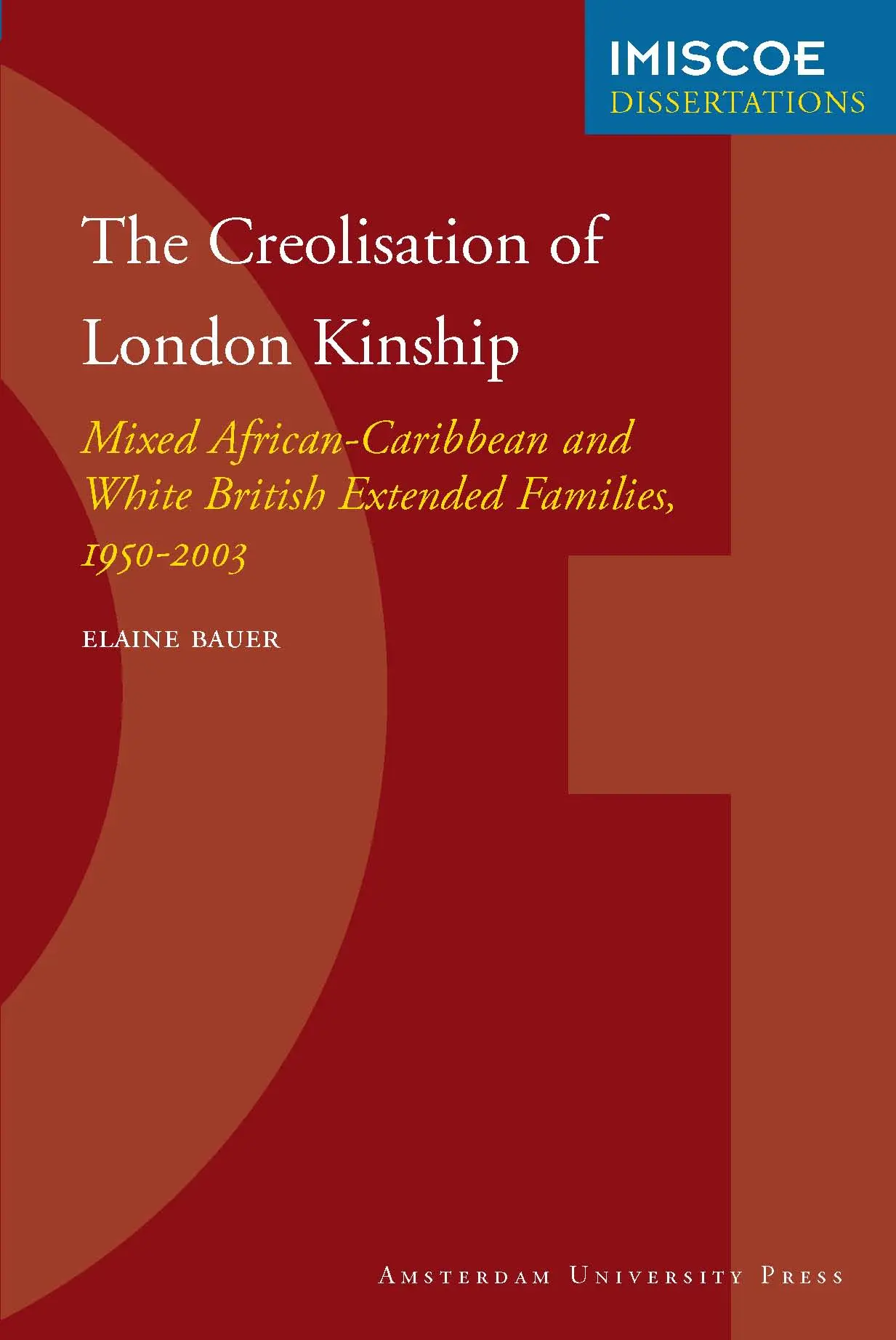
  • The Creolisation of London Kinship: Mixed African-Caribbean and White British Extended Families, 1950-2003

    Amsterdam University Press
    November 2010
    282 pages
    Paperback ISBN: 978 90 8964 235 6

    Elaine Bauer, Fellow at the Young Foundation; Associate Fellow at the Institute for the Study of the Americas, University of London

    In the last 50 years, the United Kingdom has witnessed a growing proportion of mixed African-Caribbean and white British families. With rich new primary evidence of mixed-race in the capital city, The Creolisation of London Kinship thoughtfully explores this population. Making an indelible contribution to both kinship research and wider social debates, the book emphasises a long-term evolution of family relationships across generations. Individuals are followed through changing social and historical contexts, seeking to understand in how far many of these transformations may be interpreted as creolisation. Examined, too, are strategies and innovations in relationship construction, the social constraints put upon them, the special significance of women and children in kinship work and the importance of non-biological as well as biological notions of family relatedness.

  • Lone Mothers of Children from Mixed Racial and Ethnic Backgrounds: A Case Study

    Single Parent Action Network (SPAN)
    January 2010
    41 pages

    Chamion Caballero, Senior Research Fellow
    London South Bank University

    This report draws on case study findings with 10 lone mothers of mixed racial and ethnic children to look at their everyday experiences of raising their children, particularly the ways in which they seek to give their children a sense of identity and belonging and what support or challenges they face in doing so.

    Read the entire report here.

  • Love in black and white

    Electronic Precinct
    University of Liverpool
    August 1998


    Muriel Fletcher and Margaret Todd, (second and third from left, middle row) with students and staff of the School of Social Science 1926-27
    Source: University of Liverpool

    Two students who graduated from this University in 1927 play important roles in the film ‘Love in black and white’, which will be broadcast as part of the “Windrush” series. One graduate, Muriel Fletcher, wrote a report about mixed marriages in dockland Liverpool which laid the foundation for 50 years of stigmatisation. The other, Margaret Todd, later Simey, spent time in the Caribbean and, on her return to Liverpool, became a champion of the black community.

    The programme was made by Liverpool producer/director Bea Freeman, who is herself a Liverpool graduate and one of the University’s first ‘Second Chance’ students.

    ‘Fifty years ago, the Fletcher report stigmatised white women who married black men. Now, white women who have been happily married to black men for half a century get their chance to tell their story. It is a story of the stigma and discrimination which they, their partners and their children suffered’, she said…

    Read the entire article here.

  • Race and Mixed Race (LS 355)

    University of Illinois, Urbana-Champaign
    Fall 2011

    Explores the history of racial classification in the U.S. with special attention to the census and the role of the state more generally in defining race. Emphasis on how race-mixing has been understood in American culture, and on the current literature on “multiracials” and the future of “race” in the U.S. Readings are drawn from interdisciplinary sources, but examined from a sociological perspective. Same as AAS 355 and SOC 355.

  • The Invisible Line: American families’ journeys from black to white

    Research news@Vanderbilt
    Vanderbilt University
    2011-02-17

    Amy Wolf

    The idea of someone transitioning from black to white, without science or surgery, seems hard to grasp on the surface. Yet Vanderbilt Law School professor Daniel J. Sharfstein finds that African Americans have continually crossed the color line and assimilated into white communities from 17th century America through today. This actual journey has little to do with one’s skin color and more to do with a society’s willingness to look beyond race.

    “We talk about the great migration north of African Americans in the 20th century, but this mass migration across the color line impacted millions of people and was hundreds of years in the making,” said Sharfstein. “It’s very easy to forget this history. This process of migrating across the color line is something that falls outside of what we think of as African American history because it’s a history that people were trying to cover up and forget as it was happening.”…

    …Self definition, not color, was key

    Sharfstein spent almost a decade researching dozens of families that, for social, economic, safety and other reasons, chose to change their race and create new lives. Sharfstein found court and government records, personal letters and other archives that helped paint vivid pictures of these Americans.

    While previous records of “passing” have focused on individuals’ struggles to redefine themselves, often by leaving their homes and fabricating new identities, Sharfstein found large numbers of people who managed to defy the legal definitions of race right within their own communities. Sharfstein found that what mattered most was not the color of their skin, but how they defined themselves and related to their neighbors.

    “What this research tells us is that the categories of black and white have never been about blood. There were plenty of people throughout American history who were not just white, but quintessentially white, powerfully white, and had African American ancestors,” said Sharfstein. “Then we’re left thinking, ‘What is black and what is white then if it’s not about blood and biology?’ And what we wind up with is just the fact of separation and hierarchy.”

    Three families’s stories

    Sharfstein focused much of his research on three families whom he chronicled in a new book titled “The Invisible Line: Three American Families and the Secret Journey from Black to White.”…

    Read the entire article here.

  • BBC Two explores what it means to be mixed-race in Britain

    British Broadcasting Corporaton
    2010-03-10

    Mixed-Race Britain is put under the spotlight this autumn on BBC Two in a collection of revealing and compelling new programmes.

    Britain in 2011 has proportionately the largest mixed population in the Western world, but 100 years ago people of mixed race lived on the fringes of British society, an invisible community unacknowledged by the wider world.

    With an exciting mix of drama and documentaries, the programmes provide a window into the varied and surprising lives of mixed-race people in the UK and help us understand what the increasing rise in mixed-race people means for the way we live now in Britain.

    …Leading the programming is Shirley Bassey—A Very British Diva (working title), an intimate and revealing drama that tells the extraordinary life story of Dame Shirley Bassey—one of Britain’s national treasures and one of the world’s most enduring and successful divas. But her rise from poverty to international stardom is no ordinary rags-to-riches story…

    In a three-part series, journalist and TV presenter George Alagiah leads viewers through the remarkable and untold story of how Britain’s mixed-race community has become part of everyone’s lives today. With previously unseen footage and unheard testimony, Mixed Britannia (working title) uncovers a tale of illicit love, marriage, children, tragedy and triumph.

    Charting events from the turn of the 20th century to the present day, George explores the social factors that have influenced the shape of the mixed-race Britain we see today.

    He’ll find out about the flourishing love between merchant seamen and liberated female workers during the First World War; how the British eugenics movement physically examined mixed-race children in the name of science; how pioneering white couples—including English aristocrats—adopted mixed-race babies; and how Britain’s mixed-race population exploded with the arrival of people from all over the globe—making them the fastest-growing ethnic group in the UK.

    Mixed—Sex, Race And Empire is a one-off documentary exploring the social, sexual, economic and political issues that led to the race mixing of people across the world. From India to West Africa via South America and the USA, this programme reflects upon the stories and consequences of racial mixing across the world…

    Read the entire press release here.

    Notes from Steven F. Riley.

    For some early 20th century background material on the topics covered in Mixed Britannia, see: