• Racial Reorganization and the United States Census 1850–1930: Mulattoes, Half-Breeds, Mixed Parentage, Hindoos, and the Mexican Race

    Studies in American Political Development
    Volume 22, Issue 1 (March 2008)
    pages 59-96
    DOI: 10.1017/S0898588X08000047

    Jennifer L. Hochschild, Henry LaBarre Jayne Professor of Government and Professor of African and African American Studies
    Harvard University

    Brenna Marea Powell, Associate Director
    Stanford Center on International Conflict and Negotiation
    Stanford University

    Between 1850 and 1930, demographic upheaval in the United States was connected to reorganization of the racial order. Socially and politically recognized boundaries between groups shifted, new groups emerged, others disappeared, and notions of who belonged in which category changed. All recognized racial groups—blacks, whites, Indians, Asians, Mexicans and others—were affected. This article investigates how and why census racial classification policies changed during this period, only to stabilize abruptly before World War II. In the context of demographic transformations and their political consequences, we find that census policy in any given year was driven by a combination of scientific, political, and ideological motivations.

    Based on this analysis, we rethink existing theoretical approaches to censuses and racial classification, arguing that a nation’s census is deeply implicated in and helps to construct its social and political order. Censuses provide the concepts, taxonomy, and substantive information by which a nation understands its component parts as well as the contours of the whole; censuses both create the image and provide the mirror of that image for a nation’s self-reflection. We conclude by outlining the meaning of this period in American history for current and future debates over race and classification.

    Read the entire article here.

  • Racial Measurement in the American Census: Past Practices and Implications for the Future

    Annual Review of Sociology
    Volume 29 (August 2003)
    pages 563-588
    DOI: 10.1146/annurev.soc.29.010202.100006

    C. Matthew Snipp, Professor of Sociology and Director of the Center for Comparative Studies in Race and Ethnicity
    Stanford University

    In 1977, the federal Office of Management and Budget (OMB) established an official classification standard for the measurement of race in the American population. In so doing, the OMB authorities created what amounted to a racial cosmology that spread throughout American society, affecting public perceptions about the racial hierarchy of American society. In 1997, the OMB issued a revised version of this classification in which small changes may profoundly affect the way policymakers and the American public think about race. At the very least, these revisions present significant challenges to social scientists who study race and ethnicity. This review begins with a brief historical overview of racial data collected by the federal government. It subsequently examines the circumstances leading up to the 1997 revisions of OMB Directive No. 15 and discusses how these revisions may affect social scientific research on the subject of race and ethnicity.

    Read or purchase the article here.

  • A Race about Race: Race, Inter-Race and Post-Race in the Study of Human Genetics

    Afterimage: The Journal of Media Arts and Cultural Criticism
    Volume 30, Number 2 (September/October 2002)

    Paul Vanouse, Associate Professor of Visual Studies
    The State University of New York, Buffalo

    In 1929, Charles B. Davenport, Director of the Biological Laboratory at Cold Spring Harbor in New York, co-published Race Crossing in Jamaica, a 512-page study on the “problem of race crossing, with special reference to its significance for the future of any country containing a mixed population.”  The island of Jamaica was chosen for its isolated pockets of “pure-blooded negro, mulatto and White” of similar economic class. The method of evaluation entailed primarily anthropomorphic and psychological examinations of hundreds of subjects from these three groupings. Anthropomorphic examinations included 60 measurements of body regions, including face breadth, cranial capacity and relative height in varied positions. Psychological tests included the Knox moron test and the criticism-of-absurd-sentences test. The book concluded that Blacks and Whites differ in both physical and mental capacities and that among the Browns, while some are equal to or superior to their progenitor races, “there appear[s] to be an excessive per cent over random variation who seem unable to utilize their native endowment.” In a concurrent solo publication of the same title, Davenport states this conclusion more forcefully. A population of hybrids “will be a population carrying an excessively large number of intellectually incompetent persons.” In this publication he also suggests one method to make cross-breeding permissible: “If only society had the force to eliminate the lower half of a hybrid population then the remaining upper half of the hybrid population might be a clear advantage to the population as a whole, at least so far as physical and sensory accomplishments go.”

    Davenport is probably the most influential and prolific eugenic scientist in the United States, but his texts were hardly the forerunners of racist science. An often discussed, early predecessor is Paolo Mantegazza, whose iconic Morphological Tree of the Human Races (1890) is a branching timeline of human development reaching its pinnacle with the Aryan race. In 1883, Francis Galton, a cousin of Charles Darwin, actually coined the term “Eugenics” (good in birth) as a science dedicated to improving human stock by getting rid of so-called undesirables and increasing the number of desirables. In its contemporary usage, Eugenics is defined as “a science that deals with the improvement (as by control of human mating) of hereditary qualities of a race or breed,” a distinctly more encompassing concept than Galton’s. Yet, it is ultimately the socially conservative approaches of its main promoters (separation, segregation and sterilization) that we associate with the term. “Negative Eugenics,” as it has been terme d, is concerned with limiting who can breed and with whom. For example, as Davenport laments, because of racial intermixing: “The standard races of mankind are rapidly disintegrating.”  Improvement and conservation were key contradictory goals in many of the early eugenic writings on race. (It should be noted, however, that Eugenics was in no way limited to racial concerns, and, indeed, many of the most heinous sterilization campaigns in the U.S. involved persons convicted of crimes or deemed “feebleminded.”)

    Davenport’s Jamaica study sought to definitively disprove the theory of “hybrid vigor,” which was espoused by laissez-faire social Darwinists who felt that, in keeping with the theory of evolution, the fitness of the human race would be ensured because weaker, recessive genetic material would naturally be weeded out. Hybrid coupling, in Davenport’s opinion, is only viable if undesirable offspring can be eliminated, whereas conservative inbreeding produces more reliable results and preserves the integrity of the existing racial groups. As theorist Paul Gilroy has noted, the concept of race was invented during colonization to justify sub-human treatment of enslaved and colonized peoples and to reify concepts of nation and national identity. The stigmatization of racial intermixing was promoted to keep these boundaries stable. It is no surprise then that conservative, negative Eugenics was welcomed and fostered across the most fervent nationalist enterprises, especially those of the U.S., Germany and England…

    Purchase the article here.

  • A Mixed Race: Ethnicity in Early America, edited by Frank Shuffelton (Oxford University Press, 1993) [Review]

    African American Review
    Volume 29, Number 1 (Spring 1995)
    pages 149-152

    Raymond F. Dolle, Associate Professor of English
    Indiana State University

    A Mixed Race extends the recent work of ethnographic critics, such as James Clifford (The Predicament of Culture: Twentieth-Century Ethnography, Literature, and Art [1988]), and such literary critics as Werner Sollors (Beyond Ethnicity: Consent and Descent in American Culture [1986]) and William Boelhower (Through a Glass Darkly: Ethnic Semiosis in American Literature [1987]). These critics have argued that ethnicity is not located solely in an essential cultural identity, continuity, or tradition, and that texts should not be understood as mimetic descriptions of an essential, unchanging ethnic difference (even though that is often the pretense of these texts). Rather, the center of ethnicity should be seen as a dynamic relation between cultural groups, and their texts as orchestrations of multivocal exchanges among these groups as they transform themselves (the hegemonic group included) in the process of confronting others. Thus, ethnicity is performance, a group’s continually changing self-understanding in relation to a changing larger world, a struggle for control over narratives, values, and the self. Furthermore, this process of ethnicity is carried on by means of signs and codes that are generated by the groups to negotiate relationships with other hostile or accommodating groups. So, to understand more fully the ethnic foundation of our culture, we must recognize ethnic semiosis in colonial texts. Such clarifying views have enabled the scholars in this volume to consider the circumstances, rhetorical negotiations, and representation of ethnic formation in early America…

    Read the entire article here.

  • Oreo

    Northeastern University Press (now University Press of New England)
    2000 (Originially published in 1974.)
    224 pages
    6 x 9″

    Fran Ross

    Forward by Harryette Mullen

    This uproariously funny satire about relations between African Americans and Jews is as fresh and outrageous today as when it was first published in 1974.

    Born to a Jewish father and black mother who divorce before she is two, Oreo grows up in Philadelphia with her maternal grandparents while her mother tours with a theatrical troupe. Soon after puberty, Oreo heads for New York with a pack on her back to search for her father; but in the big city she discovers that there are dozens of Sam Schwartzes in the phone book, and Oreo’s mission turns into a wickedly humorous picaresque quest. The ambitious and playful narrative challenges accepted notions of race, ethnicity, culture, and even the novelistic form itself.

  • Traveling Identities: Mixed Race Quests and Fran Ross’s “Oreo”

    African American Review
    Volume 40, Number 1 (Spring 2006)

    Tru Leverette
    University of North Florida, Jacksonville

    The Frontier: Where Two Come Together

    Traveling to my grandmother’s funeral during my first marriage, my white husband and I walked down the narrow plane aisle toward our seats. In front of me was a black woman who stopped the line when she reached her row and asked the white man in the aisle to excuse her as she settled herself into the window seat. As she seated herself, the man looked at me and asked, “Are you two together?” I said no and proceeded past him and his bewildered look.

    My husband scoffed, loudly enough for the man to hear, “That was an interesting assumption, huh?”

    “Yeah,” I replied. “But you know that happens to me all the time.”

    And, indeed, it does. People readily assume I “belong” with any other people of color in the vicinity, and rarely, if ever, do they assume that I “belong” with my husband. Reflecting on the incident now, I wonder how effectively I could have articulated my sense of place if I’d answered the man’s question affirmatively, though unexpectedly: “Yes, I am two together.”

    Because I see myself as both black and white, I, like many other persons born to parents of different races, sometimes think of myself as moving in the space that unites the two, as traveling from one shore to another given certain contexts, and other times as sailing the river that forms the meridian between two shores. Such metaphors of movement, travel, and cruising are not uncommon in explorations of mixed race identity; in fact, the metaphor of border-crosser has been taken up readily and used to suggest a mobility and  indeterminacy that may not be as easily accessible as the metaphor suggests. Mixed race identity often has been considered a “frontier” in race relations, if I can extend the travel metaphor into the realm of quest. (1) Thus, the anecdote with which I began this essay fittingly exemplifies the role of movement, travel, and quest in explorations and definitions of mixed race identity. Alternatively, the anecdote may invoke Denise Riley’s suggestion that identity “is more accurately conceived as a state which fluctuates for the individual” (6). The notion that various components of identity come into the foreground and recede  in differing situations may be more useful in interrogating the workings of identity than that of the border crosser. We may imagine individuals traveling with identities whose components are variously enacted or shelved without imagining that these individuals are completely liberated from the constraints of identity, as if their ability to cross borders were a ticket into every desirable community and a ticket out of every undesirable situation.

    These introductory comments regarding travel and quest are important to the following discussion of Oreo, the recently republished novel by Fran Ross. This novel explores the possibilities within mixed race identity as it attempts to assert a utopian sense of racial harmony and wholeness and to grapple with the theoretical and philosophical questions of mixed race and gender. Its metaphors of traveler and quester concur with discourses of mixed race that  theorize such individuals in terms of the past—as outcasts who seek an acknowledgement and understanding of their origins—and in terms of the future—as pioneers whose existence may foster the racial harmony of utopian visions. In keeping with other discourses of mixed race identity, the novel prioritizes questions of history and origins as well as future possibilities for imagining race. Within Oreo, the personal utopia sought also connects to the longing for a national utopia that would rectify the racial discord of the period in which it was written—during the Black Nationalist Movement of the 1970s. Originally published in 1974, Ross’s novel was not well received since it both literally and figuratively plays with the ideologies of race and gender that were being debated at the time. One January 1975 review describes the novel as “experimental, intelligent, and even funny in places. The dialogue, however, is a strange mixture of Uncle Remus and Lenny Bruce, and quite often unintelligible” (Salassi 146). This initial review offers a striking contrast to one following the novel’s reprinting in 2000, when it is heralded as “a true twenty-first century novel.” According to this review, the novel’s “wit is global, hybrid and uproarious; its meditation on language is simultaneously irreverent, appropriative and serious” (Foreman and Stein-Evers 36). This latter review, however, problematically champions “the goodness of ambiguity which leads everywhere,” asserting that “the triumphant  chameleon [Oreo] goes unnoticed wherever it chooses.” Such claims of liberty and unobstructed movement display precisely the dangerous assumption inherent in notions of the border crosser as they are often articulated. Oreo by no means suggests that the dualities of identity make it possible for one to escape the realities and constraints of racism, sexism, and oppression. Rather, the novel suggests that dualities allow one to play (both literally and figuratively) with the structures of identity, allow one to manipulate boundaries and seek agency in arenas where these structures might seem rigid and inaccessible, respectively…

    Read the entire article here.

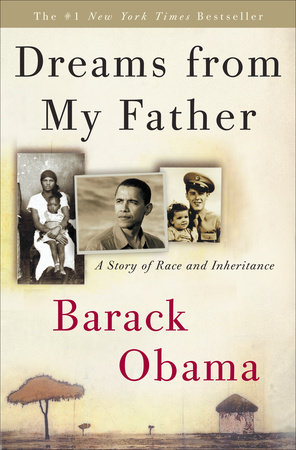
  • Dreams from My Father: A Story of Race and Inheritance

    Crown an Imprint of Random House
    July 1995
    464 pages
    Hardcover ISBN: 978-0-307-38341-9 (0-307-38341-5)

    Barack Obama, President of the United States

    Nine years before the Senate campaign that made him one of the most influential and compelling voices in American politics, Barack Obama published this lyrical, unsentimental, and powerfully affecting memoir, which became a #1 New York Times bestseller when it was reissued in 2004. Dreams from My Father tells the story of Obama’s struggle to understand the forces that shaped him as the son of a black African father and white American mother—a struggle that takes him from the American heartland to the ancestral home of his great-aunt in the tiny African village of Alego.

    Obama opens his story in New York, where he hears that his father—a figure he knows more as a myth than as a man—has died in a car accident. The news triggers a chain of memories as Barack retraces his family’s unusual history: the migration of his mother’s family from small-town Kansas to the Hawaiian islands; the love that develops between his mother and a promising young Kenyan student, a love nurtured by youthful innocence and the integrationist spirit of the early sixties; his father’s departure from Hawaii when Barack was two, as the realities of race and power reassert themselves; and Barack’s own awakening to the fears and doubts that exist not just between the larger black and white worlds but within himself.

    Propelled by a desire to understand both the forces that shaped him and his father’s legacy, Barack moves to Chicago to work as a community organizer. There, against the backdrop of tumultuous political and racial conflict, he works to turn back the mounting despair of the inner city. His story becomes one with those of the people he works with as he learns about the value of community, the necessity of healing old wounds, and the possibility of faith in the midst of adversity.

    Barack’s journey comes full circle in Kenya, where he finally meets the African side of his family and confronts the bitter truth of his father’s life. Traveling through a country racked by brutal poverty and tribal conflict, but whose people are sustained by a spirit of endurance and hope, Barack discovers that he is inescapably bound to brothers and sisters living an ocean away—and that by embracing their common struggles he can finally reconcile his divided inheritance.

    A searching meditation on the meaning of identity in America, Dreams from My Father might be the most revealing portrait we have of a major American leader—a man who is playing, and will play, an increasingly prominent role in healing a fractious and fragmented nation.

  • Nowhere People

    Penguin Books Australia
    January 2005
    300 pages
    Paperback ISBN-13:9780143001911

    Henry Reynolds, Emeritus Associate Professor of History and Politics
    James Cook University, Australia

    ‘That’s how at six at night on 11 May 1928 I stopped being a Yanyuwa child and became a nowhere person… Motherless, cultureless and stuck in a government institution because my mother was Aboriginal and my father was not. I ceased to be an Aboriginal but I would never be white. I was not something bad, shameful, called a half-caste.’—Hilda Jarman Muir

    In the nineteenth and twentieth centuries, people of mixed Aboriginal and European ancestry—half-castes—were commonly assumed to be morally and physically defective, unstable and degenerate. They bore the brunt of society’s contempt, and the remobal of their children created Australia’s stolen generations.

    Nowhere People is a history of beliefs about people of mixed race, both in Australia and overseas. It explores the concept of racial purity, eugenics, and the threat posed by miscegenation. Award-winning author Henry Reynolds also tells for the first time of his own family’s search for the truth about his father’s ancestry, and gives a poignant account of the contemporary predicament facing people of mixed heritage.

  • Thoroughly Modern Mulatta: Rethinking “Old World” Stereotypes in a “New World” Setting

    Biography
    Volume 28, Number 1 (Winter 2005)
    pages 104-116
    E-ISSN: 1529-1456, Print ISSN: 0162-4962
    DOI: 10.1353/bio.2005.0034

    Maureen Perkins, Associate Professor of Sociology
    Curtin University, Perth, Western Australia

    This paper examines the role of racial stereotypes in the life narratives of several women of color living in Australia. While coming from very different parts of the world, all show an awareness of popular images of the mixed race woman. Their sensitivity on this issue points to the continuing effects of past racism and the globalization of colonial discourse, as well as hints at a sense of community based on color which crosses established “ethnic” boundaries.

    In 2001 I interviewed seven women “of color” who had come to Australia from different countries and cultures. I talked with each of them about their childhoods and their experiences of growing up. Although interviewers have often used life stories to understand the collective, (1) the purpose of my interviews was not to construct a picture of Australian society. I was more interested in what could be called transcultural commonality, ways in which these women, while coming from different linguistic and socioeconomic backgrounds, felt that they could identify with “color” as a shorthand for certain types of understanding. I wanted to pursue the question of whether being a woman “of color” in a country which did not usually recognize this term in its lexicon of race and ethnicity actually provided a form of community that cut across more established “ethnic” identities. If it did so, it seemed to me that it would be the globalized nature of colonial discourse that created such a common understanding. It was, then, the points of intersection in these life stories that I set out to trace, rather than the specific context of individual narratives.

    The meetings were, no doubt, greatly influenced by what I thought I shared with these women, and it would be no exaggeration to say that in some ways I was consciously learning about myself in the process. In asking specifically whether their skin color had been an issue in their childhoods, and whether they had felt it marked them out as different, I was using my own memories of growing up as a brown-skinned immigrant in 1950s London. Nevertheless, I tried to treat each contact as a conversation rather than a formal interview with specific questions. At no point did I introduce the term “mulatta” or “half-caste,” or even “mixed race,” but I did raise the question of whether they had experienced racism. Despite their very different backgrounds, all had experienced racism of some kind, and were acutely aware of its presence in Australian society. The history of colonialism was something that each referred to, though all were conscious of living much more liberated lives, in racial terms, than their parents had done.

    Two historians of colonialism, Catherine Hall and Robert Young, have disagreed about whether the racial language of the past can change its meaning. Young writes that however many new meanings of “race” there are, the old refuse to die: “They rather accumulate in clusters of ever-increasing power, resonance and persuasion.” “So what,” is Hall’s reaction: “the origin of a word cannot determine its meanings across time” (127). The one key word about which they most disagree is “hybridity.” Young uses it in the subtitle of his influential book, Colonial Desire: Hybridity in Theory, Culture and Race. He believes that, while given different inflections, the word cannot stand outside the past, and in fact “reinvokes it” (“Response” 146). Hall, on the other hand, writes about the possibility of re-articulating meanings, and the need to consider the historical context in which people make new meanings from old words.

    This debate between Hall and Young is central to understanding the role of color in modern Western societies. Race theory developed by Europeans in the nineteenth century placed a high value on purity. Miscegenation, or breeding between races, was seen as a “mis” take, and like all “mis” words would have a sorry outcome. The legacy of this period of history has been to render all of the terms describing mixed race offensive and painful to some people. Australian Aboriginal communities, for example, reject the term “half-caste” because of its connotations of “part” Aboriginality and its association with the removal of the stolen generations. (2) Werner Sollors writes of the difficulty of describing a condition which in its very conceptualization necessitates thinking racially. Julian Murphet calls the “mulatto” an “unspeakable concept.” In a British context, the distinguished sociologist of race Michael Banton wrote in 2001: “The use of race in English to identify certain kinds of groups sometimes leads to use of the expression ‘mixed-race,’ which is objectionable because of its implication that there are pure races” (185). Banton would not be alone in thinking the term “mixed race” offensive.

    Yet Banton’s comments were going to press at the same time as the English census forms for 2001 were becoming available, with their whole new category of “mixed.” Similarly, in the United States, the 2000 census allowed citizens to identify as mixed race for the first time. In both countries, people of “mixed race” themselves have been amongst those agitating for the recognition that such a census category would give them. At the same time, “mixed race studies,” using postcolonial hybridity theory, have become increasingly influential. (3) Can the connotations of a word change, so that its historical traces no longer impact in new contexts?…

    Read or purchase the article here.

  • Dominica in Brooklyn

    The New York Times
    2011-01-13

    Carol Vogel, Art Reporter

    The Brooklyn Museum has acquired an 18th-century painting by Agostino Brunias, a little-known London-based Italian artist. Around 1764 the British government sent Brunias to the West Indies to document one of that empire’s newest colonies, Dominica. Depicting two richly dressed mulatto women on a walk accompanied by their mother and children—all members of the island’s colonial elite—the painting also shows eight African servants on a sugar plantation.

    “We have a large West Indian community,” said Richard Aste, the museum’s curator of European art. “When I saw it, it just screamed Brooklyn. We were looking for something from the 18th century, and we didn’t have anything like this.”

    Mr. Aste first saw the painting in Paris in September at the booth of the London gallery Robilant & Voena at the Biennale des Antiquaires. The dealers had bought it from Sotheby’s after the painting failed to sell at auction a year ago. It had belonged to Jayne Wrightsman, a collector and a longtime trustee of the Metropolitan Museum of Art.

    While the Brooklyn Museum will not say what it paid for the painting, Sotheby’s was estimating it would bring $200,000 to $300,000. The museum has titled the canvas “Free Women of Color With Their Children and Servants in a Landscape,” and it will go on view on March 7.