• “Race” and “post-colonialism”: should one come before the other?

    Ethnic and Racial Studies
    Published online 2018-01-15
    19 pages
    DOI: 10.1080/01419870.2018.1417617

    Nasar Meer, Professor of Race, Identity and Citizenship
    School of Social and Political Sciences
    University of Edinburgh, Edinburgh, United Kingdom

    One unsettled analytical question in race scholarship concerns the relationship between categories of race and categories of post-colonialism. These are often run together or are used interchangeably; sometimes an implicit hierarchy of one over the other is assumed without explicit discussion. In that activity, a great deal is enveloped, including a portrayal of race scholarship which can be at some variance from how race scholars conceive it. In this paper, it is argued that paying attention to a distinction between these two categories, and then trying to get them not only in the “right order”, but also on their own terms, is conceptually fruitful – however messy the outcome may be. What is advocated is an approach in which categories of race and post-colonialism are not subsumed into one another, but retain their distinctive and explanatory power.

    Read or purchase the article here.

  • Gringa, Black or Afro-Latina? I’ve Been Called All Three

    Latina
    2017-02-09

    Barbara Gonzalez

    I’ve always had a very complicated relationship with the term “belonging.” Perhaps it’s because I’ve straddled so many worlds in my life, but my true “belonging” place often feels like it’s in the fringes.

    My parents are completely representative of Puerto Rico’s diasporic history. My mom’s deep brown complexion and large-and-in-charge, black, kinky curls serve as the complimentary to my father’s fair, freckled skin with soft, dark brown curls. Together, they made me: medium-light skin, a bushel of tight, black corkscrew curls on my head and dark brown eyes. For as long as I can remember, my mother has called me hincha, which in our dialect of Spanish means pale or light-skinned. I don’t know why, but from a very young age the word made me feel like an outsider…

    Read the entire article here.

  • The Conversation I’ve Been Dreading: Ijeoma Oluo Talks About Race with Her Mom

    Literary Hub
    2018-01-17

    Ijeoma Oluo

    ‘At this point I’m regretting the invention of the telephone.’

    From So You Want To Talk About Race by Ijeoma Oluo.

    When my white mother gave birth to me, and later my brother, in Denton, Texas, she became the subject of a lot of racial commentary in her conservative southern community. But surprisingly, my mother and I had our first really substantive conversation about race late in my life, when I was 34 years old. I was well into my career in writing about culture and social justice and my opinions and identity around race were pretty well documented by then. But the truth is, like many families, our conversations growing up mostly revolved around homework, TV shows, and chores.

    While I was growing up, my mother had given the obligatory speeches that all parents of black children must give: don’t challenge cops, don’t be surprised if you are followed at stores, some people will be mean to you because of your beautiful brown skin, no you can’t have the same hairstyle as your friends because your hair doesn’t do that. But those conversations were one-offs that ceased to be necessary once we were old enough to see the reality of race for ourselves.

    Having a white mother, my siblings and I likely had even fewer conversations about race than black children raised by black parents, because there was a lot about our lives that our mother’s whiteness made it hard for her to see. My mother loved our blackness as much as was possible for any nonblack person to do, she loved our brown skin, our kinky hair, our full lips, our culture, and our history. She thought we were beauty incarnate…

    Read the entire article here.

  • I’m White And Latina, Is That A Problem For You?

    Latina
    2018-01-18

    Tess Garcia


    Tess Garcia

    My mom is white. My dad is white. I am white, and I am Latina…I think.

    Argentina is largely populated by the descendants of white colonists, who came surging in during the late 19th century. According to a 2009 study, the country’s population is approximately 78.5 percent European. That explains how my dad, who was born in the Argentine city of Tunuyán, melds perfectly into the largely Caucasian community he’s spent most of his life in, the one where he raised my siblings and I.

    Add a red-haired American mother to the equation, and you’ve got some very, very white kids…

    Read the entire article here.

  • ‘A Lot Is Still So Much the Same’: Misty Copeland on Decades of Racism and Ballet

    TIME
    2018-01-16

    Olivia B. Waxman


    Misty Copeland (right) and Raven Wilkinson at the Urban World Film Festival in New York, NY, on Sep. 27 2015. MediaPunch/REX/Shutterstock

    In the years since she became the first black ballerina to be a principal dancer with the American Ballet Theatre, Misty Copeland has become a well-known symbol of breaking down barriers in her art. The strides she has made build on the work of one particular dancer — a mentor of Copeland’s, Raven Wilkinson, who broke new ground in similar ways during the 1950s. And, though much has changed since that era in both civil rights and on the stage, Copeland tells TIME that there is still a long way to go.

    Wilkinson’s passion for ballet began at an early age and would take her around the nation with the Ballet Russe de Monte Carlo. As the first African American ballerina to dance with a major touring troupe, she performed the coveted solo waltz in Les Sylphides.

    But her story — which is told in the new picture book Trailblazer: The Story of Ballerina Raven Wilkinson, written by Leda Schubert and illustrated by Theodore Taylor III, and released Tuesday in time for Black History Month in February — didn’t always feel like a fairy tale…

    Read the entire article here.

  • 2020 Census To Keep Racial, Ethnic Categories Used In 2010

    National Public Radio
    2018-01-26

    Hansi Lo Wang, National Correspondent


    A map shows the locations of the U.S. Census Bureau’s regional offices for the 2020 census.
    Hansi Lo Wang/NPR

    A Census Bureau announcement about the race and ethnicity questions for the 2020 census suggests the Trump administration will not support Obama-era proposals to change how the U.S. government collects information about race and ethnicity, census experts say.

    If approved, the proposals would change how the Latino population is counted and create a new checkbox on federal surveys for people with roots in the Middle East or North Africa. Research by the Census Bureau shows these revisions could improve the accuracy of the upcoming national headcount in 2020. Any changes would carry wide implications for legislative redistricting, civil rights laws and health statistics.

    So far, though, the White House’s Office of Management and Budget, which sets the standards for race and ethnicity data for federal agencies, has not released any decisions. OMB has also not responded to NPR’s request for comment…

    Read the entire article here.

  • Census Bureau Statement on 2020 Census Race and Ethnicity Questions

    United States Census Bureau
    2018-01-26
    Release Number: CB18-RTQ.02

    Public Information Office
    Telephone: 301-763-3030
    E-Mail: pio@census.gov

    REPSONSE TO QUERY

    Jan. 26, 2018 – The 2020 Census race and ethnicity questions will follow a two-question format for capturing race and ethnicity for both the 2018 Census Test and the 2020 Census, which adheres to the 1997 Standards for the Classification of Federal Data on Race and Ethnicity (Statistical Policy Directive No. 15) set by the Office of Management and Budget. The Census Bureau will not include a combined question format for collecting Hispanic origin and race, or a separate Middle Eastern or North African category on the census form. The upcoming 2018 Census Test in Providence County, R.I., which begins on March 16, will reflect the proposed 2020 Census race and ethnicity questions.

    The Census Bureau remains on schedule as it implements the operational plan and will provide the planned 2020 Census questionnaire wording to Congress by March 31, 2018, as directed by law. The Census Bureau will continue to further its extensive research on how to collect accurate race and ethnicity data across its surveys.

    For more information, click here.

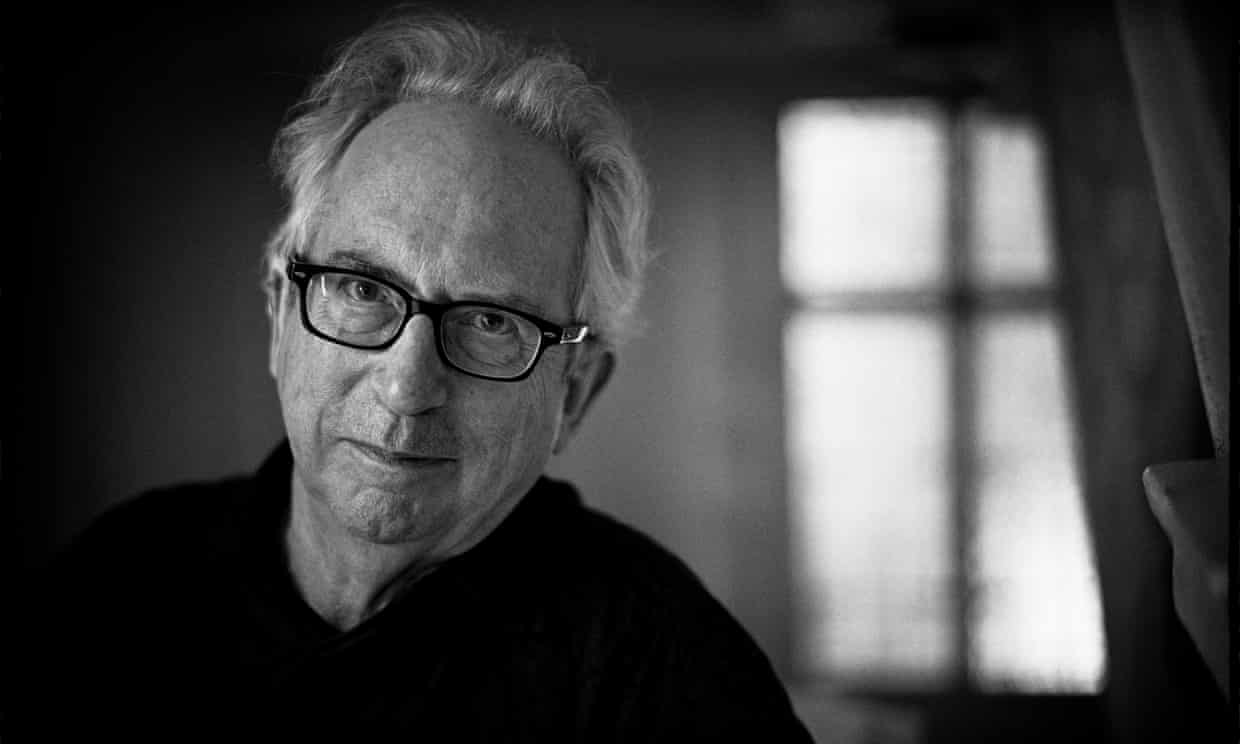
  • A Long Way from Home review – Peter Carey’s best novel in decades

    The Guardian
    2018-01-15

    Alex Preston

    The acclaimed writer’s 14th novel is a nuanced story of racial identity set in postwar Australia

    Writers are by nature chameleons, with each new character a new disguise to take on, a fresh skin to inhabit. It shouldn’t surprise, then, that racial passing has such a rich literary history. Nella Larsen’s 1929 novel, Passing, is a near-forgotten classic, telling of two mixed-race women, Clare and Irene, who identify as white and black respectively. More recently, we’ve had Philip Roth’s The Human Stain, in which the African American Coleman Silk attempts to pass for a Jewish academic. Then there’s Francis Spufford’s Golden Hill, whose concluding revelation about one of the characters’ racial identities does what all good end-of-book twists ought to, shedding new light on the entire novel.

    A Long Way from Home, Peter Carey’s 14th novel, uses the story of a light-skinned Indigenous Australian who has been brought up white to address the country’s brutal history of racism. It seems strange at first that Carey – surely Australia’s greatest living novelist, even if he hasn’t dwelled there for decades – has taken so long to get around to the subject. In a recent interview in the Australian, he said that he’d always felt that it was not the place of a white writer to tell this tale. Then something changed: “You can’t be a white Australian writer and spend your whole life ignoring the greatest, most important aspect of our history, and that is that we – I – have been the beneficiaries of a genocide.”…

    Read the entire review here.

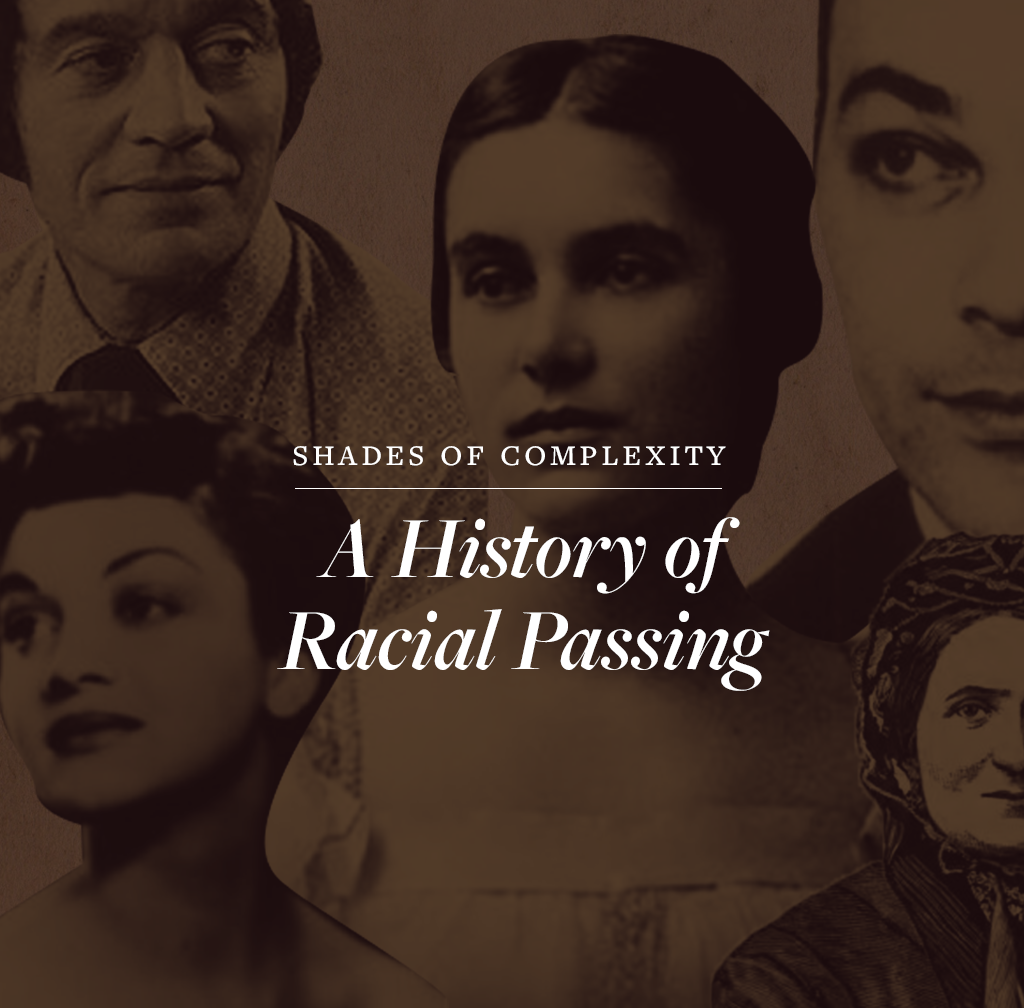
  • Shades of Complexity: A History of Racial Passing

    Literature and Digital Diversity
    Department of English
    Northeastern University, Boston, Massachusetts
    2017-12-11

    Elizabeth Maddock Dillon, Professor of English

    Sarah Connell, Assistant Director, Women Writers Project

    This archival exhibit was created by Vanessa Gregorchik in Literature and Digital Diversity, fall 2017.

    Introduction

    On the surface, race appears as a simple category to quantify—the color of one’s skin, the box one circles on the census, even the percentage that appears on an at-home DNA testing kit. But the reality of one’s racial identity is hardly objective. This archive outlines the stories of individuals who chose to “pass” as a different race, or as a portion of their racial background, often in pursuit of societal advancement that their given race prevented them from obtaining. The decision to accept or deny any aspect of one’s identity is a complex and difficult decision, and this collection aims to educate the public on those challenges and intricacies faced by those of multiracial backgrounds in both the era of segregation and today.

    Organization

    This archive is structured around the environments and dominant factors in each individual’s decision to pass—including emancipation, education, and employment. This division is not intended to claim that these are the sole or even intentional reasons to racially pass, but rather to thematically organize stories that share similar domains. To best tell the narrative of both the individuals and the broader social climate they lived in, I collected individual and family portraits, illustrations, and newspaper clippings. I aimed to represent both the singular person and the communities they were joining or leaving…

    Read this entire digital archive here.

  • The Ineradicable Color-Line: Danzy Senna’s “New People”

    Los Angeles Review of Books
    2017-08-01

    Gabrielle Bellot, Staff Writer
    Literary Hub

    Danzy Senna, New People, A Novel (New York: Riverhead, 2017)

    IN LONDON IN JULY, at the dawn of a new century, W. E. B. Du Bois spoke in front the Pan-African Conference about the challenges of the era to come. “[T]he problem of the Twentieth Century,” he said, in a statement that would later appear in and come to define his epochal collection of essays, The Souls of Black Folk, “is the problem of the color-line.” The idea of describing American antiblack racial segregation by the simple, if not even deceptively charming, term color-line, had appeared two decades earlier in the title of Frederick Douglass’s 1881 essay, “The Color Line,” but it would come to be associated particularly with The Souls of Black Folk. So seductive was the phrase for Du Bois that he used it two more times to bookend an essay in the book, “Of the Dawn of Freedom,” but it was, of course, more than a memorable line. The color-line was as explicit as it was psychic, delineated in signs, denials, and public executions as much as it was in one’s choice of path, one’s footfalls, one’s bones and dreams. Racism is merely obvious when it becomes visible; its potential existence follows us, invisibly and phantasmally, when we’ve come to expect it…

    The problem of the 21st century in the United States is still the color-line, a line that extends back into prior centuries. This is the age of identity — as all ages have been, really, but the very notions of what it means to have an identity or to be something are now, more than ever, at the fore. But even as we have blurred racial lines in ways scarcely imaginable when The Souls of Black Folk appeared in 1903, we still have our clear-cut demarcations. And in many ways, lines of color, alongside the complexities of what it means to pass as one thing or another, may be what best defines Danzy Senna’s epochal — in its most literal sense — new novel, New People. Du Bois is not an explicit presence in the novel, yet his thematic and political concerns — updated, as it were, for this new era — haunt New People. These themes of passing and racial demarcations informed Senna’s first novel, Caucasia, as well. New People also explores an idea common in Percival Everett’s fiction — the two, incidentally, are married — of reclaiming and repackaging racial stereotypes as a person of color…

    Read the entire review here.