Mixed Race Studies

Scholarly perspectives on the mixed race experience.

    • About This Site
    • Bibliography
    • Contact Information
    • Date and Time Formats
    • Forthcoming… (Updated 2021-09-01)
    • Likely Asked Questions
    • List of Book Publishers
    • List of Definitions and Terms
    • My Favorite Articles and Papers
    • My Favorite Posts
    • My Recent Activities
    • Praise for Mixed Race Studies
    • Tag Listing
      • Tag Listing (Ordered by Count)
    • US Census Race Categories, 1790-2010
    • 1661: The First ‘Mixed-Race’ Milestone
    • 2010 U.S. Census – Some Thoughts

recent posts

  • The Routledge International Handbook of Interracial and Intercultural Relationships and Mental Health
  • Loving Across Racial and Cultural Boundaries: Interracial and Intercultural Relationships and Mental Health Conference
  • Call for Proposals: 2026 Critical Mixed Race Studies Conference at UCLA
  • Participants Needed for a Paid Research Study: Up to $100
  • You were either Black or white. To claim whiteness as a mixed child was to deny and hide Blackness. Our families understood that the world we were growing into would seek to denigrate this part of us and we would need a community that was made up, always and already, of all shades of Blackness.

about

  • Twitter
  • Facebook
  • Instagram
  • Chino: Anti-Chinese Racism in Mexico, 1880-1940

    2017-11-27

    Chino: Anti-Chinese Racism in Mexico, 1880-1940

    University of Illinois Press
    April 2017
    278 pages
    6.125 x 9.25 in.
    12 black & white photographs, 2 line drawings, 7 maps, 2 tables
    Cloth ISBN: 978-0-252-04086-3
    Paper ISBN: 978-0-252-08234-4
    Ebook ISBN: 978-0-252-09935-9

    Jason Oliver Chang, Assistant Professor of History and Asian American Studies
    University of Connecticut
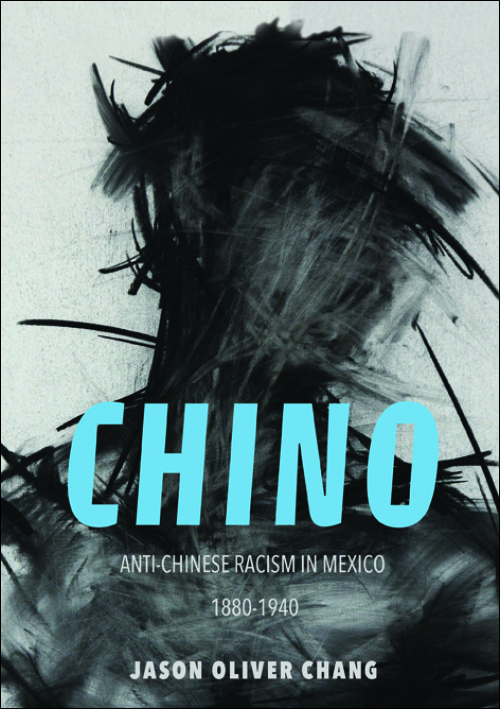
    The politics of racial difference amid the tumult of modern Mexican history

    From the late nineteenth century to the 1930s, antichinismo–the politics of racism against Chinese Mexicans–found potent expression in Mexico. Jason Oliver Chang delves into the untold story of how antichinismo helped the revolutionary Mexican state, and the elite in control of it, build their nation.

    As Chang shows, anti-Chinese politics shared intimate bonds with a romantic ideology that surrounded the transformation of the mass indigenous peasantry into dignified mestizos. Racializing a Chinese Other became instrumental in organizing the political power and resources for winning Mexico’s revolutionary war, building state power, and seizing national hegemony in order to dominate the majority Indian population. By centering the Chinese in the drama of Mexican history, Chang opens up a fascinating untold story about the ways antichinismo was embedded within Mexico’s revolutionary national state and its ideologies.

    Groundbreaking and boldly argued, Chino is a first-of-its-kind look at the essential role the Chinese played in Mexican culture and politics.
  • Julie Lythcott-Haims on Being a ‘Real American’ and Growing Up Black

    2017-11-27

    Julie Lythcott-Haims on Being a ‘Real American’ and Growing Up Black

    Forum
    KQED Radio
    San Francisco, California
    2017-09-14

    Mina Kim, Host


    Julie Lythcott-Haims

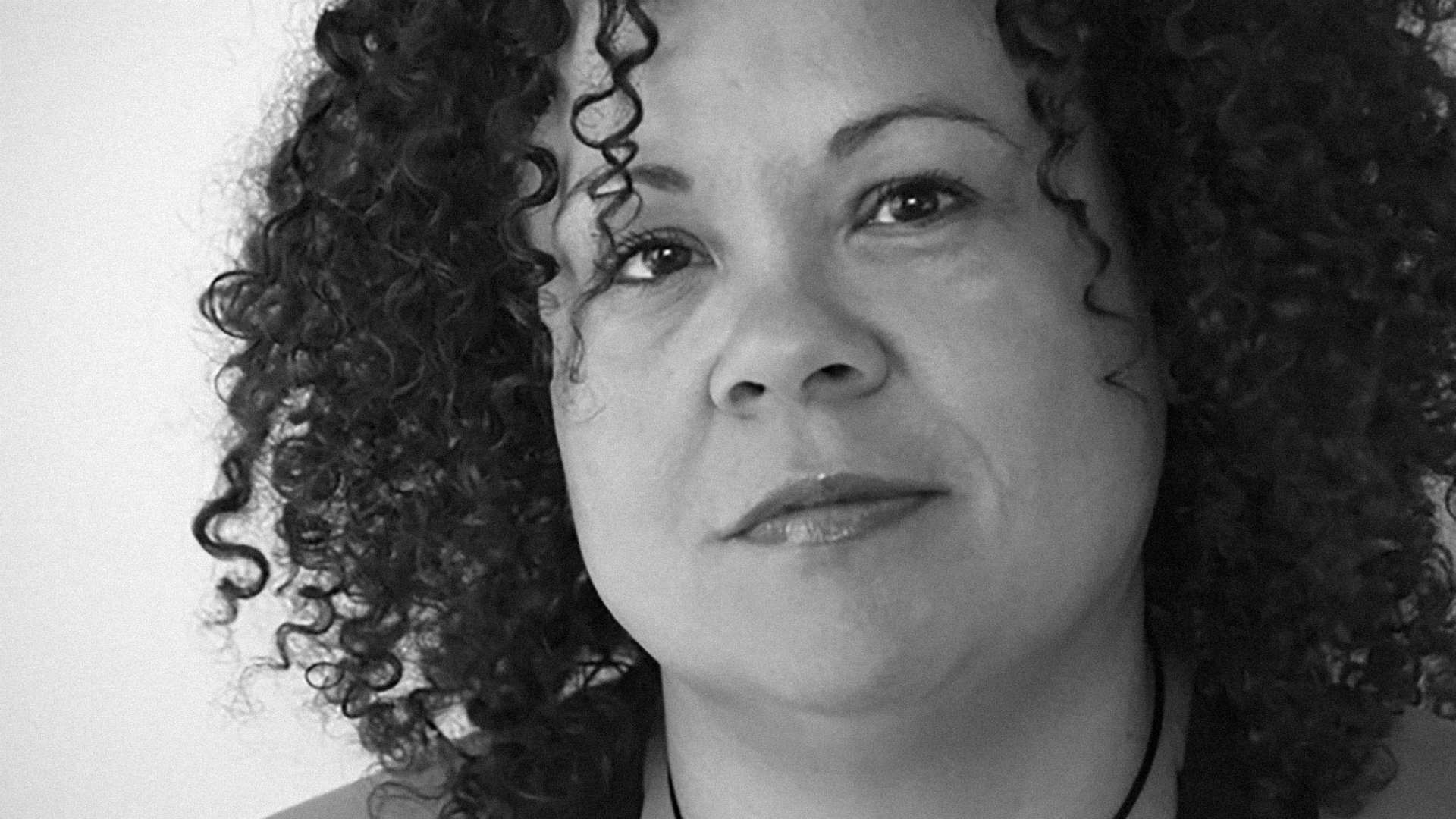
    Julie Lythcott-Haims sold Girl Scout cookies and later ran track in high school. But as a black and biracial woman, Lythcott-Haims says her identity was often questioned, even though she felt as American as her peers. As the descendant of a South Carolina slave and her owner, Lythcott-Haims writes, “I’m so American it hurts,” She joins Forum to talk about her book “Real American: A Memoir”, what it means to be a real American and the racism and microaggressions she faced throughout her life…

    Download the interview (00:53:00) here.

  • ASU student explores how parents in multi-racial families communicate about race

    2017-11-27

    ASU student explores how parents in multi-racial families communicate about race

    ASU Now
    Arizona State University
    2017-10-27


    ASU doctoral student Annabelle Atkin

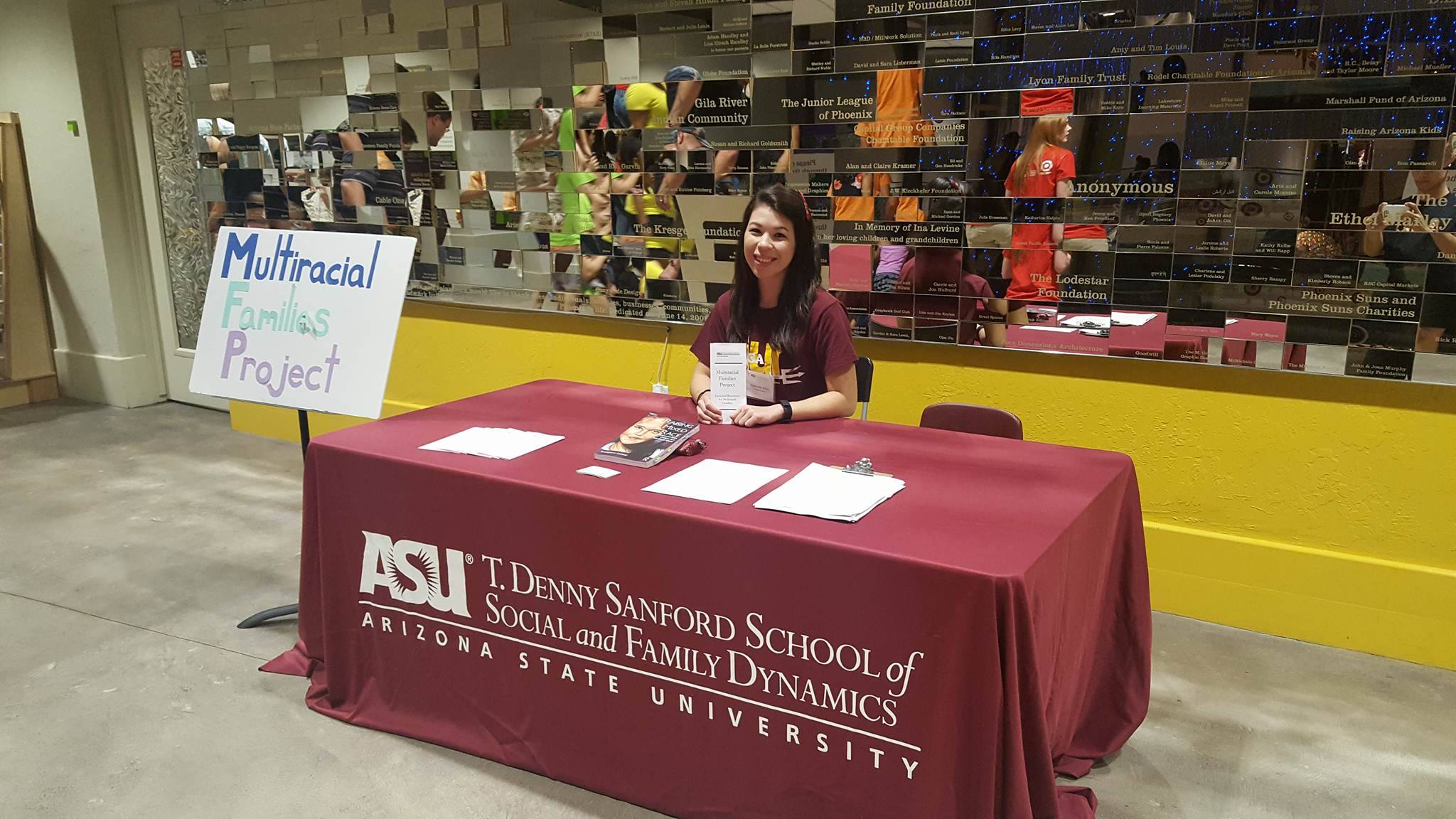
    It’s First Friday at the Children’s Museum in Phoenix, Arizona. Amid the kids exploring giant bubbles, a kiddie car wash, and a paint maze, there is an 8×4 folding table with a red tablecloth draped over it. Behind the table sits the smiling face of Annabelle Atkin, a doctoral student at the T. Denny Sanford School of Social and Family Dynamics at Arizona State University. An assortment of children’s books featuring characters with diverse racial backgrounds is spread before her. To her right is a colorful poster describing her multiracial families project.

    Atkin is working on recruiting multi-racial families for her research. She is exploring how parents of multi-racial families communicate with their children about race, as well as the effects those conversations have on their children’s racial identity and development. Her excitement and interest in this topic shines through when she talks about the families she’s met so far…

    Read the entire article here.

  • “Cultural and ethnic labels do not lend themselves to neat boundaries. ‘Métis’ can refer to the historic Métis community in Manitoba’s Red River Settlement or it can be used as a general term for anyone with mixed European and Aboriginal heritage.”

    2017-11-25

    “There is no consensus on who is considered Métis or a non-status Indian, nor need there be,” the court wrote. “Cultural and ethnic labels do not lend themselves to neat boundaries. ‘Métis’ can refer to the historic Métis community in Manitoba’s Red River Settlement or it can be used as a general term for anyone with mixed European and Aboriginal heritage.” For eastern Métis, proof of the latter is enough. Their organizations typically accept anyone who can provide a genealogical chart showing an Indigenous ancestor.

    Graeme Hamilton, “Who gets to be Metis? As more people self-identify, critics call out opportunists,” National Post, November 23, 2017. http://nationalpost.com/news/canada/who-gets-to-be-metis-as-more-people-self-identify-critics-call-out-opportunists.

  • The Skyscraper’s Unseeing Eyes: Louis Sullivan, Nella Larsen, and Racial Formalism

    2017-11-25

    The Skyscraper’s Unseeing Eyes: Louis Sullivan, Nella Larsen, and Racial Formalism

    American Literature
    Volume 89, Issue 3
    2017-09-01
    DOI: 10.1215/00029831-4160846

    Sue Shon

    Since its inception, the skyscraper has served as an icon of American innovation, modernity, and freedom. Upholding this image has erased the racial thinking and racist practices foundational to this born-and-bred American architectural form. This essay restores the import of race to the skyscraper by reading formalist theories by the father of modern architecture, Louis Sullivan, alongside a work of African American modernist fiction, Nella Larsen’s Passing (1929). Reading Sullivan alongside Larsen explains how skyscrapers and blackness together have defined what gets seen as modern. The unexpected pairing reveals the visual racial logics built into skyscraper aesthetics and adds an architectural thread to the well-established scholarship on Larsen’s novel.

  • Who gets to be Metis? As more people self-identify, critics call out opportunists

    2017-11-24

    Who gets to be Metis? As more people self-identify, critics call out opportunists

    National Post
    2017-11-23

    Graeme Hamilton


    Robin Robichaud shows his t-shirt after a meeting for the Wobtegwa aboriginal community, a new Metis group.
    Christinne Muschi /National Post

    The arrival of new players is stirring up tension with established Métis groups and raising concern among First Nations leaders

    SHERBROOKE, Que. – The scent of burning sage lingers in the air as drummers begin a song of welcome. They are traditions dating back centuries, but on this Sunday afternoon the ceremony opens a gathering of one of the country’s youngest Aboriginal groups — the two-year-old Wobtegwa Métis clan.

    The meeting, held in a high school auditorium, has brought together members from a corner of Quebec stretching northeast from Montreal past Quebec City and south to the United States border. Some of those present have long known of their Indigenous roots; for others the discovery has come recently. But they have all come together to push for government recognition of their rights.

    “This clan is sovereign on its territory,” Yves Cordeau, band chief for the Lac-Mégantic region informs the group.

    If the claim comes as news to many in Quebec, it’s because the province’s Métis awakening is recent. Raynald Robichaud, the Wobtegwa’s clan chief, says even members of his own family discouraged him from returning to his Aboriginal roots. “We knew we had a great-grandmother who was aboriginal, but our family absolutely did not want to talk about it, because they were afraid,” he says. “For us now, the fear is gone, and people are coming back.”…

    …Checking a box on a census or connecting to family heritage is one thing. But as groups like the Wobtegwa lay claim to special services and territorial rights — in some cases, the same land as other Aboriginal groups — a backlash to the influx of new Métis is emerging. Some critics question the motivation of those who “become” Métis, and the impact of their activism on more established groups. Others question the right to self-identify at all…

    …Leroux, Gaudry and organizations representing western Métis maintain that mixed ancestry alone does not make one Métis. True Métis — as recognized by the Constitution as one of Canada’s three aboriginal groups — must have roots in Manitoba’s historic Red River settlement, they say. That can include Métis all the way west to British Columbia and into Ontario, but not as far east as Quebec and the Maritimes…

    Read the entire article here.

  • How The U.S. Defines Race And Ethnicity May Change Under Trump

    2017-11-23

    How The U.S. Defines Race And Ethnicity May Change Under Trump

    All Things Considered
    National Public Radio
    2017-11-23

    Hansi Lo Wang


    The Trump administration is expected to announce possible changes to how the U.S. government collects information about race and ethnicity by Dec. 1.
    Chelsea Beck/NPR

    Some major changes may be coming to how the U.S. government collects data about the country’s racial and ethnic makeup.

    The Trump administration has been considering proposals to ask about race and ethnicity in a radical new way on the 2020 Census and other surveys that follow standards set by the White House.

    Introduced when President Obama was still in office, the proposed changes could result in a fundamental shift in how the government counts the Latino population.

    Another proposal would create a new checkbox on the census form for people with roots in the Middle East or North Africa, or MENA, which would be the first ethnic or racial category to be added in decades.

    The White House’s Office of Management and Budget is expected to release a decision on these proposals by Dec. 1, but an announcement may come out before the end of the month…

    Read the entire article here. Listen to the story here. Read the transcript here.

  • Myth of race still embedded in scientific research, scholar says

    2017-11-21

    Myth of race still embedded in scientific research, scholar says

    Cornell Chronicle
    2017-11-20

    Susan Kelley
    Telephone: 607-255-9737


    Dorothy Roberts, professor of law, Africana studies and sociology at the University of Pennsylvania, speaks Nov. 15 in Klarman Hall.
    Chris Kitchen/University Photography

    The concept of “race” – the idea that humans are naturally divided into biologically distinct groups – has been definitively proven false. But the 21st century has seen a disturbing increase in scientists inaccurately presenting race as the reason for racial inequality, says an acclaimed scholar of race, gender and law.

    “Social scientists absolutely should engage with this rise of racial science to work on research designs that account for structural racism and state violence and that confront the racial politics of science … and unabashedly put racial justice at the center,” said Dorothy Roberts Nov. 15.

    Roberts, a professor of professor of law, Africana studies and sociology at the University of Pennsylvania, spoke on “Racism and the New Racial Science” at the 2017 Institute for the Social Sciences’ Annual Lecture in Klarman Hall.

    There has been a long legacy of scientists presenting the concept of biological race as an explanation for racial inequality, Roberts said. European typologists created the idea of race in the 17th century to support slavery, colonialism and the conquest of people whom they defined as separate and inferior, Roberts said…

    Read the entire article here.

  • My mother spent her life passing as white. Discovering her secret changed my view of race — and myself.

    2017-11-21

    My mother spent her life passing as white. Discovering her secret changed my view of race — and myself.

    The Washington Post
    2017-11-20

    Gail Lukasik


    The author’s mother, Alvera Fredric, was born into a black family in New Orleans but spent her life passing as white. (Family photo)

    I’d never seen my mother so afraid.

    “Promise me,” she pleaded, “you won’t tell anyone until after I die. How will I hold my head up with my friends?”

    For two years, I’d waited for the right moment to confront my mother with the shocking discovery I made in 1995 while scrolling through the 1900 Louisiana census records. In the records, my mother’s father, Azemar Frederic of New Orleans, and his entire family were designated black.

    The discovery had left me reeling, confused and in need of answers. My sense of white identity had been shattered.

    My mother’s visit to my home in Illinois seemed like the right moment. This was not a conversation I wanted to have on the phone.

    But my mother’s fearful plea for secrecy only added to my confusion about my racial identity. As did her birth certificate that I obtained from the state of Louisiana, which listed her race as “col” (colored), and a 1940 Louisiana census record, which listed my mother, Alvera Frederic, as Neg/Negro, working in a tea shop in New Orleans. Four years later, she moved north and married my white father…

    Read the entire article here.

  • No doubt I am mixed, but I’m mixed and black. Blackness can accommodate mixedness, in a way that whiteness, with its myths of purity cannot.

    2017-11-20

    No doubt I am mixed, but I’m mixed and black. Blackness can accommodate mixedness, in a way that whiteness, with its myths of purity cannot. In some contexts I am black, in others mixed, sometimes I am Irish, others Nigerian (white is still off limits), but I am always me, always with the potential to identify as any of these things.

    Emma Dabiri, “Emma: On Whether Irish Black People Are Woke, and on Changing “Foreign” Names,” Dublin Inquirer, October 25, 2017. https://www.dublininquirer.com/2017/10/25/emma-on-whether-irish-black-people-are-woke-and-on-changing-foreign-names/.

Previous Page
1 … 245 246 247 248 249 … 1,428
Next Page

Designed with WordPress