• When it comes to race and ethnicity in America, it can all get very complicated depending on who is defining whom, and why. People are not always what they appear to be. People are sometimes not what they want to be. In reality, race is as much a matter of politics as biology; ethnicity as much an expression of fashion as fate. It can be transient, changing from time to time and place to place.

    Jonathan Tilove, “Of Susie Guillory Phipps and Chief Redbone: The Mutability of Race,” Newhouse News Service, (July 9, 1992). http://jonathantilove.com/mutability-of-race/

  • “Wait . . . they had a white baby?!?!”

    Stephen Murphy-Shigematsu
    2012-09-01

    Stephen Murphy-Shigematsu
    Stanford University

    My niece recently had a baby, a beautiful boy. The proud grandmother showed the photo of the newborn to family members and everyone oohed and aahed. One of his cousins looked at the picture and said, “Oh he’s so cute!”  But suddenly a puzzled look came over him and he blurted out, “Wait . . . they had a white baby?!?!
     
    When I heard this story I thought, Oh, it’s already started. People see colors and label according to what they see. The little cousin saw white and labeled the baby white. But mom is Japanese as well as Irish and Scottish. Dad is Irish as well as African American and American Indian. The baby is therefore all of these. But he is already being labeled by a single category, a race.
     
    And he is already being looked at in relation to his family. The little cousin was intrigued  because to him mom is probably white and dad black, so put black and white together and what do you get? A white baby?…

    Read the entire article here.

  • Tiger Mom’s Hapa Cubs

    Stephen Murphy-Shigematsu
    2012-05-09

    Stephen Murphy-Shigematsu
    Stanford University

    Are persons with one Asian parent and one non-Asian parent Asian or not Asian? Schools don’t seem to know where to place them, leaving them on their own to determine their identities. In the article, “Some Asians’ college strategy: Don’t check ‘Asian’,” some young Hapa reveal the ambivalence and flexibility surrounding their identities. Parents wondering if they should regard their kids as Asian might take a lesson from Tiger Mom Amy Chua, who raised two Hapa children.

    Amy describes her two girls, Sophia and Lulu, as having “brown hair, brown eyes, and Asianesque features.” They both speak Chinese and Sophia eats “all kind of organs and organisms, duck webs, pig ears, and sea slugs, critical aspects of Chinese identity.” Yet, on their first trip to China, the girls are treated as spectacles, drawing curious crowds, even in cosmopolitan Shanghai, when people stared, giggled, and pointed at the “two little foreigners who speak Chinese.” At the zoo, when the girls were taking pictures of the baby pandas, the crowd was taking pictures of the girls

    Read the entire article here.

  • Stonequist’s Concept of “The Marginal Man” in Langston Hughes’ Play Mulatto

    International Journal of Applied Linguistics & English Literature
    ISSN 2200-3592 (Print), ISSN 2200-3452 (Online)
    Volume 1, Number 4 (September 2012)
    pages 125-130

    Farshid Nowrouzi Roshnavand
    University of Tehran, Iran

    Rajabali Askarzadeh Torghabeh, Assistant Professor of Letters and Humanities
    Ferdowsi University of Mashhad, Iran

    Born with the inception of the slave trade, interracial mixing has always been a moot point throughout the history of the United States. In America’s racist climate, the mulatto offspring of every interracial relationship was deemed by the dominant white society to be born of transgression and thus was marginalized and disenfranchised as an alleged tainter of white “pure blood” and a threat to the societal system of structural positions. Facing discrimination and injustice like black Americans, white-black mulattoes also suffered from not belonging to a definite racial group. This duality of a mixed-blood’s life has grabbed the attention of many scholars including Everett Verner Stonequist who discussed the fragile subalternized status of the “marginal man” in an antagonistic environment while he rejects and craves for both of his racial ancestries at the same time. Envisioning a three-phase life-cycle for a mulatto, Stonequist maintained that the mulatto has either to conform to the status quo and survive or defy the power structures and embrace, mostly unfavorable, consequences. This paper aims to apply Stonequist’s concept of “marginal man” to Langston Hughes’ play Mulatto (1935) and tries to show how the alienated and rootless protagonist is inevitably precipitated into death and destruction.

    Read the entire article here.

  • Race and a Political Race

    Everyday Sociology Blog
    2012-09-28

    Jonathan R. Wynn, Assistant Professor of Sociology
    University of Massachusetts, Amherst

    Dwanna L. Robertson
    University of Massachusetts, Amherst

    The Massachusetts Senate race between incumbent Scott Brown and Harvard Law Professor Elizabeth Warren took an unexpected sharp turn this week. Shades of racialized language (reminiscent of the 2008 Presidential campaign) seeped in. This actually started in April, when Brown’s staffers uncovered that Warren claimed she was a minority, implicating her as committing ethnic fraud because she lacked proof of a Native American ancestry.
     
    During their first political debate, Brown went straight at this issue in a prepared remark, saying, “Professor Warren claimed she was a Native American, a person of color—And as you can see, she’s not.” With this statement, Brown contends he can identify Native Americans—and other people of color—just by looking at them.

    It would be humorous—Did she accidentally forget to braid her hair and wear her moccasins?—if it didn’t have serious undertones cutting at the heart of race and politics in the U.S.. Brown suggests Warren received special consideration for claiming she was part Cherokee. “When you are a U.S. Senator,” he stated, “you have to pass a test and that’s one of character and honesty and truthfulness. I believe and others believe she’s failed that test.” But did Warren fail the test?…

    ..Back to Brown’s assertion idea that our eyes can tell us a person’s race. Sociologist Mary Campbell has been working on misclassification of race based upon skin tone, finding not only that American Indians experience a high level of misidentification, but that in the process they also experience higher levels of psychological distress…

    There is, however, a real challenge when it comes to speaking of how indigenous folk look. It is not just that it’s a bad idea to think facial features are satisfactory markers of race. It is that the emphasis on perception also indicates a complete misunderstanding of U.S. History: People who claim First Nation Heritage are of a mixed ethnic background due to generations of attempted racial extermination, cultural oppression, and a breaking of tribal links to land and community…

    Read the entire article here.

  • Playing for Malaya: A Eurasian Family and the Pacific War

    University of Hawai‘i Press (Distributed for the National University of Singapore Press)
    2011
    208 pages
    Paper ISBN: 978-9971-69-573-6

    Rebecca Kenneison

    Reggie, according to his niece Wendy, ‘only told what Reggie wanted you to know.’ Reggie was my father. He had honed the technique of talking with apparent openness and using that talk as a decoy duck: while you were listening to it quack around the pond, you weren’t noticing all the others hiding in the reeds. What follows includes tales that Reggie told repeatedly but, on the whole, it’s about what Reggie didn’t tell me.

    So begins a stunning personal account of a Eurasian family living in Malaya. Reggie was the author’s father, and one of the many gaps in his account of his family was that his mother was Eurasian. When Rebecca Kenneison discovered this omission after his death, she set out to learn more about her extended family on the other side of the world.

    Set in the 1930s and 1940s, this book recounts the experiences of an extended Eurasian family during the invasion and occupation of Malaya by the Japanese. Colonial society considered Eurasians insufficiently European to be treated as British, but during the Pacific War they seemed all too European to the Japanese, who subjected the Eurasian community to discrimination and worse. Because many Eurasians, including members of the Kenneison family, supported the Allied cause, their wartime experiences are an extraordinary account of tragedy, heroism and endurance, presented here with great eloquence and clarity.

  • That’s How It Goes: Autobiography Of A Singapore Eurasian

    Select Books
    2008
    235 pages
    Paperback ISBN: 9789814022392

    F. A. C. “Jock” Oehlers

    These memoirs by a member of one of Singapore’s leading Eurasian families offers many sidelights onto Singapore’s life in the mid-20th century. The author, then a dental student, tells of the hardships of his life with a young family at the Japanese-enforced agricultural settlement for Eurasians at Bahau, Negri Sembilan. He tells of his career as an oral surgeon at the University and in private practice, his involvement with the development of the Singapore Kennel Club until his 1990 retirement to Perth, West Australia. With black-and-white photographs.

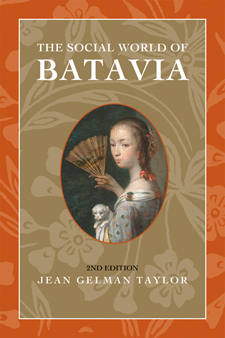
  • The Social World of Batavia: Europeans and Eurasians in Colonial Indonesia (Second Edition)

    University of Wisconsin Press
    April 2009 (First Published in 1983)
    312 pages
    6 x 9  
    14 b/w illustrations

    Jean Gelman Taylor, Associate Professor of History
    University of New South Wales

    In the seventeenth century, the Dutch established a trading base at the Indonesian site of Jacarta. What began as a minor colonial outpost under the name Batavia would become, over the next three centuries, the flourishing economic and political nucleus of the Dutch Asian Empire. In this pioneering study, Jean Gelman Taylor offers a comprehensive analysis of Batavia’s extraordinary social world—its marriage patterns, religious and social organizations, economic interests, and sexual roles. With an emphasis on the urban ruling elite, she argues that Europeans and Asians alike were profoundly altered by their merging, resulting in a distinctive hybrid, Indo-Dutch culture.

    Original in its focus on gender and use of varied sources—travelers’ accounts, newspapers, legal codes, genealogical data, photograph albums, paintings, and ceramics—The Social World of Batavia, first published in 1983, forged new paths in the study of colonial society. In this second edition, Gelman offers a new preface as well as an additional chapter tracing the development of these themes by a new generation of scholars.

  • Of Susie Guillory Phipps and Chief Redbone: The Mutability of Race

    Newhouse News Service
    1992-07-09

    Jonathan Tilove

    Black is black and white is white, but what about Susie Guillory Phipps?

    Phipps looks white. She always thought she was white. So did her first and second husbands. Until, at the age of 43, she discovered she was 3/32nds black and therefore legally black according to the state of Louisiana.

    And what about the Ramapough Mountain People of New Jersey? They have long been described as a predominantly black people of mixed race. But they consider themselves Indians and are asking the federal government for official recognition as a tribe, status that could entitle them to a casino gambling franchise 30 miles from Manhattan.

    When it comes to race and ethnicity in America, it can all get very complicated depending on who is defining whom, and why. People are not always what they appear to be. People are sometimes not what they want to be. In reality, race is as much a matter of politics as biology; ethnicity as much an expression of fashion as fate. It can be transient, changing from time to time and place to place.

    Sylvia Yu Gonzalez, 22, is a Mexican-Korean-American. She spent her early years in the barrio in Phoenix but when she was 12 moved to San Diego where she attended mostly white schools. On the advice of a guidance counselor, she identified herself on school forms as Mexican-American for future affirmative action purposes. But by the time she headed off to Berkeley for college, “I pretty much perceived myself as white.”.

    Berkeley, the citadel of multiculturalism, was less forgiving. Gonzalez found that in their lust for diversity, people insisted she identify herself racially, and that white obviously wouldn’t wash. “It was really painful to me.”

    Gonzalez says she turned against her white friends but didn’t want to choose between being Mexican or Korean, reluctant to give up either. Instead she chose the company of blacks and American Indians. But a couple of years ago she found out about the Multicultural Interracial Student Coalition at Berkeley, an organization of mixed-race students of all descriptions. She had finally found a place “where I could bring all of myself.” She now identifies herself as multiracial…

    …It is with blacks that any fluid notions of race and ethnicity run splat into a wall. It is the iron law of American race relations– the so-called one-drop rule. Anyone with any known African black ancestry (therefore theoretically having at least one drop of African black blood) is black.

    Period. And the rule has an implicit corollary, according to sociologist F. James Davis: “It’s better to be anything than black.”

    Davis, the author of Who Is Black?, says the one-drop rule is the effective standard, whether by statute or case law, in every state of the union except Hawaii, where being mixed-race is the rule rather than the exception.

    But this stark line between black and white cannot undo some rather basic genetic facts of life. Physical anthropologists have estimated that about a quarter of the genes of American blacks come from white ancestors and up to 5 percent of the genes of the white population are from African ancestors…

    Read the entire article here.

  • “I’m not about to have my children check more than one box only to be relegated back to the black category,” said [Susan] Graham [of Project RACE]… She left the race question blank.

    Jonathan Tilove, “Will new age of mixed-race identities loosen the hold of race or tie it up in tighter knots?” Newhouse News Service, (April 20, 2000). http://jonathantilove.com/mixed-race/