• Chesnutt and Realism: A Study of the Novels [Review]

    Rocky Mountain Review
    Rocky Mountain Language Association
    Volume 61, Number 1 (Spring 2007)
    pages 41-43

    Susana M. Morris, Assistant Professor of English
    Auburn University

    Ryan Simmons. Chesnutt and Realism: A Study of the Novels. Tuscaloosa: University of Alabama Press, 2006. 198p.

    Ryan Simmons’ Chesnutt and Realism: A Study of the Novels is a timely work that proposes a key paradigm shift in critical studies about Charles W. Chesnutt. Simmons argues that all too often Chesnutt is on the periphery of studies on realism when he should be considered as a major contributor to the genre, alongside William Dean Howells, Henry James, and others. Nonetheless, Simmons’ goal is not to simply judge Chesnutt against canonical white authors. Rather, Simmons contends that criticism should recognize Chesnutt for his challenge to white readers to reconsider their racial politics and his life-long career goal to determine the best way to sway an often indifferent mainstream audience. For Simmons, labeling Chesnutt as a realist is not posthumous classification, but rather a recognition of how Chesnutt viewed himself as a writer…

    …Simmons explores the “tragic mulatta” in the posthumously released novella Mandy Oxendine and The House Behind the Cedars and argues that while these texts may, on the surface, recycle the oft-told tragic nature of the mixed raced woman, they actually reveal a more complex negotiation about race, identity, and community. characters in these texts upset rigid classifications of race and, for Chesnutt, the very possibility of the passing motif illustrates both “cultural fluidity” and the fragility of the foundations of race-based discrimination (78). Thus, these works are part of Chesnutt’s mission to have his readers recognize that while they cannot change the history of slavery and oppression, they do have the power to not let these circumstances overdetermine their society’s future. While Simmons champions Mandy Oxendine and The House Behind the Cedars as complex renderings of race, he does, however, finds fault with what he sees as Chesnutt’s inability to forward solutions to the problems that he documents. This critique is a running commentary for Simmons and he cites it as one of Chesnutt’s major critical shortcomings…

    Read the entire review here.

  • Chesnutt and Realism: A Study of the Novel

    The University of Alabama Press
    2006
    208 pages
    Cloth ISBN: 978-0-8173-1520-7
    E-Book ISBN: 978-0-8173-8228-5

    Ryan Simmons

    An important examination of Charles Chesnutt as a practitioner of realism.
     
    With the release of previously unpublished novels and a recent proliferation of critical studies on his life and work, Charles W. Chesnutt (1858–1932) has emerged as a major American writer of his time—the age of Howells, Twain, and Wharton. In Chesnutt and Realism, Ryan Simmons breaks new ground by theorizing how understandings of literary realism have shaped, and can continue to shape, the reception of Chesnutt’s work.
     
    Although Chesnutt is typically acknowledged as the most prominent African American writer of the realist period, little attention has been paid to the central question of this study: what does it mean to call Chesnutt a realist? A writer whose career was circumscribed by the dismal racial politics of his era, Chesnutt refused to conform to literary conventions for depicting race. Nor did he use his imaginative skills to evade the realities he and other African Americans faced. Rather, he experimented with ways of portraying reality that could elicit an appropriate, proportionate response to it, as Simmons demonstrates in extended readings of each of Chestnutt’s novels, including important unpublished works that have been overlooked by previous critics.
     
    Chesnutt and Realism also addresses a curiously neglected subject in American literary studies—the relationship between American literary realism and race. By taking Chesnutt seriously as a contributor to realism, this book articulates the strategies by which one African American intellectual helped to define the discourses that influenced his fate.

  • Multicultural Artist and Educator to Speak at UVU

    Utah Valley University
    Orem, Utah
    2011-03-24

    Jim Rayburn

    Louie Gong, a nationally-recognized artist and mixed-heritage advocate, will speak at Utah Valley University on March 31 at 2 p.m. at the Sorensen Student Center, room 206A.

    Gong—of Nooksack, Squamish, Chinese, French and Scottish descent—is known best for his custom-designed Vans and Converse shoes and is a national leader in the discourse about mixed-race identity. He is a self-taught artist whose mash-up of traditional and pop culture influences is resonating with people all over the world. His Coast Salish-style artwork is especially popular with skateboarders…

    …His remarks on March 31 will be centered on the realities of modern society while maintaining one’s cultural heritage…

    Read the entire press release here.

  • Mixed Dreams: Exploring “Multi” Experiences in the U.S.

    EXCO (Experimental College)
    Spring 2011
    Oberlin College, Oberlin, Ohio

    Nicole Asong Nfonoyim

    The experiences and identities of mixed-race people in the United States have often been marginalized if not rendered invisible, silenced and subsumed under the dominant black-white binary. While mixed identities have been part of U.S. history since the nation’s birth, the year 2010 marked only the second time in U.S. history that Americans will be able to check more than one racial/ethnic category in the census. From the overwhelming 6.8 million individuals who checked “more than one box” in the 2000 U.S. Census to the election of President Barack Obama (a self-proclaimed “mutt”)—“multi”* Americans are gaining unprecedented visibility in the 21st century. With this visibility, however comes inevitable scrutiny and ambivalence as evidenced by debates over Obama’s racial identity as well as the mixed racial ancestry of the growing number of U.S-born Latino/as who are gaining considerable social and political ground. With a nation so obsessed with race and yet as intent on hastening a post-racial era on the backs of Americans of color, re-imagining conceptions of race and mixed identities has never been more important.

    This course will provide an introduction to contemporary discussions, debates and narratives surrounding multi America. By reading and discussing scholarly, literary, editorial, and visual texts we will critically examine the spaces multi people occupy in the U.S. as well as the identity politics and perspectives that mark these experiences. We will also explore the growing narratives and spaces being created to build communities and express multi subjectivities. Through class discussions, assignments and a final project, students will also be encouraged to explore their own identities and subjectivities as they relate to larger discourses and narratives around race and intersecting identities.

    Oberlin’s Experimental College (ExCo) is a student-run initiative that allows all members of the Oberlin community to teach and take courses outside the scope of the college’s traditional curriculum. With its flexible nature, the program reflects the current intellectual, social, and aesthetic trends of the Oberlin community, providing opportunities to explore or expand upon subject matter beyond the usual course offerings.

    For more information, click here.

  • Comparative racisms: What anti-racists can learn from Latin America

    Ethnicities
    Volume 11, Number 1 (2011-03-31)
    pages 32-58
    DOI: 10.1177/1468796810388699

    Jonathan Warren, Chair of the Center for Brazilian Studies; Associate Professor of International Studies
    University of Washington

    Christina A. Sue, Assistant Professor of Sociology
    University of Colorado, Boulder

    There has been extensive debate about the putative imperial dimensions of critical race studies in Latin America. The concern is that US racial discourses, identities and anti-racist strategies are being incorrectly applied to, if not forced upon, Latin America. Those who disagree with this position, including ourselves, argue that it is legitimate to take insights and understandings gleaned in the USA as tools for understanding and challenging racism in Latin America. However, we also believe that the exchange of ideas regarding effective anti-racist strategies should flow in both directions. Therefore, in this article we change the direction of the traditional dialogue by discussing ways in which research in Latin America can inform the theoretical foundation of antiracism in other countries, such as the USA. Specifically, we discuss the implications of current strategies of race mixing, minimization of racial consciousness, colorblindness, multiculturalism and racism literacy for current theories of anti-racism.

    There has been extensive debate about the putative imperial dimensions of critical race studies in Latin America. The concern is that US racial discourses, identities and anti-racist strategies are being incorrectly applied to, if not forced upon, Latin America. Is it appropriate to refer to self-identified mixed-race Latin Americans as ‘black’ or ‘Indian’? Should the language of US anti-racism, which includes terms such as white supremacy and segregation, be used to describe the racial terrain in Latin America? Is the encouragement of black and indigenous movements in Latin America productive? Sociologists Pierre Bourdieu and Loïc Wacquant (1999) have argued that US perspectives on race represent merely another dimension of ‘cunning imperialist reason’. Latin America is being pressured to emulate not only US models of capitalism, modernity and democracy, but also its less-than-laudable politics of race.

    Those who disagree with this position, including ourselves, argue that it is legitimate to take insights and understandings gleaned in the USA as tools for understanding and challenging racism in Latin America. Theoretical models, concepts and political tactics can be inappropriately applied to different contexts, but this certainly is not inevitable. In fact, ideas, directions, clues and insights generated in one region may prove useful in another part of the world, especially when applied with a learned sensitivity of the particularities of the place, both from which the lessons were generated and to which they are being applied. Just as it has proved beneficial to take theoretical and political insights generated in Europe to better understand and navigate capitalism and modernity elsewhere in the world, it is equally suitable to use knowledge garnered in US anti-racist endeavors to situations beyond its borders. Indeed, it seems arbitrary to suggest that intellectuals and activists can draw on the traditions of Weber and Kafka, but not on those of DuBois and Morrison. To dismiss exchanges based on these latter traditions as ‘brutal ethnocentric intrusions’ or the advancement of ‘racistoid perspectives’ (Bordieu and Wacquant, 1999) seems crude and reductive at best.

    Largely overlooked in the heat of this debate have been the insights that Latin America may offer the ongoing struggle against racism in the USA and elsewhere. This article hopes to enliven this nascent discussion (see Sawyer, 2003; Telles, 2004; Wade, 2004), and perhaps, in the process, alleviate some of the feelings of US imperialism given the North–South direction of the didactic process in recent decades. In other words, rather than focusing on what the US experience can teach Latin America (the emphasis of much of the scholarship in the past few decades), we wish to elaborate on the lessons race and ethnic studies in Latin America may hold for anti-racists in the USA. Fortunately, many putative solutions to racism currently touted in the USA are not untested propositions. Although unbeknownst to many proponents of these anti-racist proposals, their ideas have circulated and have undergone empirical scrutiny for well over a century in other parts of the hemisphere.

    Below, then, is a discussion of some of the key findings from the contemporary scholarship on race in Latin America. This overview is not meant to be a review of the increasingly vast literature on the topic; instead we seek to highlight those findings that are of particular relevance to ongoing policy and academic debates in the North Atlantic. To scholars of race in Latin America, this selected summary offers an original synopsis of literature on race and racism in the region. Our intended audience, however, is not foremost Latin Americanists but rather North Atlantic scholars and policymakers, who could benefit greatly from a better understanding of the Latin American experience with race…

    Race mixing and mixed-race identities have not proven successful anti-racist strategies.

    In the United States it is often implied, if not explicitly stated, that race mixing will disarm racism (AMEA, 1997–2006;2 Daniel, 2002; D’Souza, 1995; Gay, 1987; Fernández, 1996; Harris, 1964; Kalmijn, 1998; Nakashima, 1992; Patterson, 2000; Zack, 1993). Social pundit Dinesh D’Souza argues, in The End of Racism, that ‘the country is entering a new era in which old racial categories are rapidly becoming obsolete. The main reason for this is intermarriage’ (1995: 552). Writing in The New Republic, under the headline ‘Race Over’, the Harvard sociologist Orlando Patterson asserts that the color line will not be an issue much longer since ‘migratory, sociological, and biotechnological developments’ are undermining race (2000: 6). Cultural and biological race mixing, coupled with new biotechnological methods to change hair texture and skin color, enabling African Americans to ‘enhance their individuality’ by ‘opting for varying degrees of hybridity’, will ultimately change the future of race (Patterson, 2000: 6). The outlook is clear to Patterson: ‘By the middle of the twenty-first century, America will have problems aplenty. But no racial problems whatsoever’ (2000: 6). By 2050, ‘the social virus of race will have gone the way of smallpox’ (2000: 6).

    The ‘race mixers’’ basic thesis is that, if racial identities and the physical markers of these traditional categories are eroded, giving way to multiracial identities and a racial continuum, then racial discrimination will fade. It is promised that the racial hierarchy will evaporate if Americans emphasize their commonalities (rather than their differences) with their compatriots by embracing café-au-lait identities and attempting through miscegenation (or biotechnology), to produce greater numbers of mixed-race (or hybrid-looking) subjects. Reginald Daniel, for one, sees multiracial identities as enabling ‘whites and blacks and everyone in between to transcend their separate and hostile worlds… Such a transformation in thought and behavior would move the US closer to the ideal of a land of equal opportunity for all’ (2002: 194). Susanne Heine, a guest editor for Interracial Voice, also sees multiracial practices as a powerful tool for dismantling the racial hierarchy. ‘Intermarriage’, she asserts, will make:

    ‘Black America’ just one more of history’s footnotes… With each new wave of immigrants who cause new mixes to arise, ‘Black America’ and ‘White America’ will continue to fade into each other, atrophying and losing their steam, even as ‘America’, the one, the real and the only, that Destiny has as her ultimate design, begins taking shape. (2006: 3–4).

    In sum, US advocates of race mixing clearly anticipate that such practices will lead to the disappearance of racism in society.

    In Latin America, intellectuals, governments and ordinary citizens have long promoted mestizaje (race mixture) as the means for transcending race and producing national cohesion. For example, early 20th-century Mexican social scientists and policy makers vigorously advocated for race mixing in order to erode racial divisions, which they viewed as impeding national cohesion and development. As Alan Knight notes, the Reforma was concerned that Mexico had ‘failed to create a genuine, unitary nation—after the model of France, Germany or Japan, nations from which ‘‘there arises a solemn cry of shared blood, of shared flesh, that cry which is above all else, since it is the voice of life, the mysterious force which pulls material together and resists its disintegration’’’ (citing Manuel Gamio, Knight, 1990: 88). The need to build a unified nation thus rested on the creation of a mixed-race population…

    …Despite the race-mixers’ predictions, both past and present, the official encouragement and popular embrace of mixed-race practices and identities have not ended race or racism in Latin America. To be sure, blackness and Indianness as habitable identities have been dramatically weakened; however, this café con leche reality has not led to the demise of race. As one Afro-Cuban doctor noted: ‘Race is a problem here. Race mixture only creates other categories and a means to whiten your children. But everyone knows that it is best to be white and worst to be black’ (Sawyer, 2006: 124). Similarly, in Venezuela, despite the pride of a café con leche mixed race identity, Venezuelans want to have as little café and as much leche as possible (Herrera Salas, 2007; Wright, 1990). In other words, far from diminishing racism, mixed-race identities have been claimed as a strategic measure to escape blackness and Indianness (Burdick, 1998a; Degler, 1971; Goldstein, 2003; Sue, 2010; Twine, 1998).

    Furthermore, scholars of race in Latin America have argued that the region’s emphasis on race mixture has masked race-based inequalities and discrimination (Hasenbalg and Huntington, 1982; Twine, 1998), allowed prejudice to go unchecked (Robinson, 1999; Sagrera, 1974), and produced a feeling of relief among whites, exempting them from the responsibility of addressing racial inequities (Hasenbalg, 1996). Additionally, others believe it has inhibited demands for indigenous and black rights and access to resources (Mollett, 2006). To take one example, Charles Hale (1999) found that discourses of mestizaje and hybridity closed discussions of collective rights and racism just when these discussions were beginning to make a difference in Guatemala. Confirming Hale’s observations, Tilley noted that the budding Mayan movement has stimulated a more politically potent backlash anchored in the widely accepted belief that race mixing has eroded racial distinctions. That is, ‘collective Mayan protest was [portrayed as] nonsensical and specious, even racist [because] Indian and Spanish races had long ago been ‘forged’ into one’ (Tilley, 2005).

    Unfortunately, then, the promotion of race mixture, as well as identification as mestizo and white by individuals of African and indigenous descent, have not delivered the blow to racism that many have predicted. Studies of Latin America show that race continues to be socially significant even though racial identifications and locations are smooth gradations rather than entrenched positions (Martinez Novo, 2006; Sawyer, 2006; Telles, 2004; Wade, 1993). Racial inequalities flourish despite the fact that race mixture and interracial marriage have been commonplace and officially encouraged for more than a century…

    Read or purchase the article here.
    Read a corrected proof here.

  • Racial/Ethnic Identities and Related Attributed Experiences of Multiracial Japanese European Americans

    Journal of Multicultural Counseling and Development
    Volume 32 (October 2004)
    pages 206-221

    Karen L. Suyemoto, Associate Professor of Psychology and Asian American Studies
    University of Massachusetts, Boston

    Surveys from 50 multiracial Japanese European Americans supported the endorsement of multiple simultaneous racial/ethnic identities and a differentiated multiracial identity. Experiences associated with being multiracial included feeling different, sensitivity to cultural cues, appreciation of different viewpoints, acceptance of  difference, and disliking exclusion. Implications for research and therapy are discussed.

    In the 2000 U.S. census, 6.8 million people (2.4%) actively endorsed two racial categories (U.S. Bureau of the Census, 2001). This is likely an underreporting of the multiracial population, given that many racial/ethnic minority group organizations lobbied againstendorsing multiple races because of the lack of clarity regarding how the census data would be used regarding allocating resources or creating policy related to racial and ethnic groups. In 1990, 5% of the respondents to the U.S. census reported mixed ancestry (Waters, 2000). Sociologists already estimate that up to 90% of Black Americans have White ancestors (Wehrley, 1996), the majority of Latinos/as and American Indians are of mixed racial and ethnic heritage (Amaro & Zambrana, 2000; Fernandez, 1992; Mihesuah, 1996), and interracial marriage is becoming the numerical norm for some racial/ethnic minority groups such as American Indians and Japanese American women (Jaimes, 1995; Kitano, Fujino, & Sato 1998).

    In spite of these trends, the psychological literature on racial/ethnic identity continues to predominantly reflect the monoracial experience both in the individuals who participate in research and in the theories/models that are constructed. Two of the most problematic aspects of monoracial racial/ethnic identity models for multiracial people are the assumptions that there will be a single reference group in the identity development process and a single “achieved identity” (Kerwin & Ponterotto, 1995; Root, 1990). The pressure to choose only one identity and the social message that having multiple identities is problematic have been continually identified as difficult for multiracial individuals (Gibbs & Hines, 1992; Hall, 1992; Root, 1990, 1997).

    Hall (1992) reported that 10 of her 30 Black Japanese interviewees chose the “other” category rather than a single identification as only Japanese or only Black. The comments made by the individuals whom she interviewed indicated that choosing only one monoracial identity was frustrating and limiting. Gibbs and Hines’s (1992) interviews with 12 multiracial adolescents and their 10 families also described conflicts about having to choose only one identity or heritage. C. W. Stephan and Stephan (1989) conducted the only quantitative study that explicitly explored multiple ethnic identities. Their survey of students with multiethnic backgrounds (not all multiracial as usually defined in the United States; e.g., Japanese Chinese students were included) found that 73% of Japanese multiethnic participants listed a multiple identity on at least one of the five situationally specific ethnic identity questions (e.g., “When you are with your closest friends, which ethnic group do you feel you belong to?”). In their second study with Hispanic multiethnic students, 44% of the students listed a multiple identity on at least one measure. In spite of these studies identifying difficulties with a single, monoracial identification, I do not know of any published research that explicitly investigates the extent to which multiracial individuals actually do identify in multiple ways.

    Another major difficulty with applying monoracial racial/ethnic identity models to the multiracial experience is that they do not include the possibility of a multiracial identity. However, many authors have suggested that a multiracial identity could itself be either the identity or an identity claimed by multiracial individuals (Collins, 2000; Kich, 1992; Root, 1990). Developing a multiracial identity may contribute to resolving problems of belonging, exclusion, and negotiating multiple reference groups that are discussed in the critiques of monoracial racial/ethnic identity models’ applicability to multiracial individuals (Collins, 2000; Kich, 1992; Root, 1990)…

    Read the entire article here.

  • Understanding what it means to be mixed

    Excalibur
    York University’s Community Newspaper
    2011-03-30

    Victoria Alarcon, Sports & Health Editor

    People have always seen me as different. It doesn’t matter where I went, when it happened or who it was; I’ve too often come face-to-face with puzzled looks and people examining me, trying to dissect what I was. That curious look prefaced the inevitable question: “Where are you from?”

    “This question of ‘where do you come from?’ has become normalized. For people that is a normal way of trying to figure something out about someone,” said Arun Chaudhuri, an anthropology professor at York University.

    “It’s a very profound expectation of how you’re supposed to understand someone in terms of talking about where they came from and their origin.”

    I’ve been called Chinese, Japanese, Filipino and a few other names that weren’t even close. But what people don’t know is that I’m mixed race.

    Growing up I had a father whose ancestors came from China and a mother who was very much from a traditional Spanish family. They got married, and just like that, I was born into a mixed family. From my Asian eyes to my beige skin, I was neither Chinese nor Spanish, but both. The hardest part was constantly being surrounded by scrutinizing eyes and getting past their judgments to accept what I was…

    Read the entire article here.

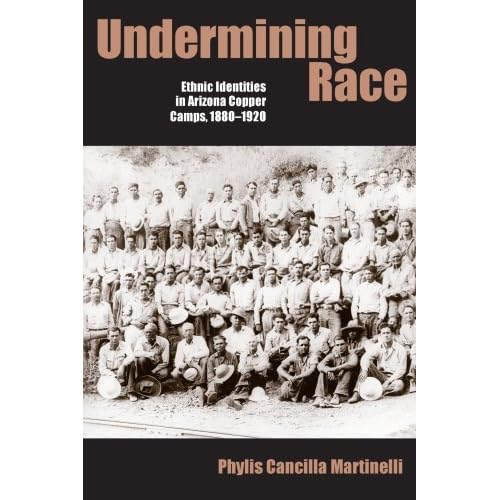
  • Undermining Race: Ethnic Identities in Arizona Copper Camps, 1880-1920

    University of Arizona Press
    2009
    240 pages
    6.0 x 9.0
    Cloth ISBN: 978-0-8165-2745-8

    Phylis Cancilla Martinelli, Professor of Sociology
    Saint Mary’s College of California, Moraga, California

    Undermining Race rewrites the history of race, immigration, and labor in the copper industry in Arizona. The book focuses on the case of Italian immigrants in their relationships with Anglo, Mexican, and Spanish miners (and at times with blacks, Asian Americans, and Native Americans), requiring a reinterpretation of the way race was formed and figured across place and time.

    Phylis Martinelli argues that the case of Italians in Arizona provides insight into “in between” racial and ethnic categories, demonstrating that the categorizing of Italians varied from camp to camp depending on local conditions—such as management practices in structuring labor markets and workers’ housing, and the choices made by immigrants in forging communities of language and mutual support. Italians—even light-skinned northern Italians—were not considered completely “white” in Arizona at this historical moment, yet neither were they consistently racialized as non-white, and tactics used to control them ranged from micro to macro level violence.

    To make her argument, Martinelli looks closely at two “white camps” in Globe and Bisbee and at the Mexican camp of Clifton-Morenci. Comparing and contrasting the placement of Italians in these three camps shows how the usual binary system of race relations became complicated, which in turn affected the existing race-based labor hierarchy, especially during strikes. The book provides additional case studies to argue that the biracial stratification system in the United States was in fact triracial at times. According to Martinelli, this system determined the nature of the associations among laborers as well as the way Americans came to construct “whiteness.”

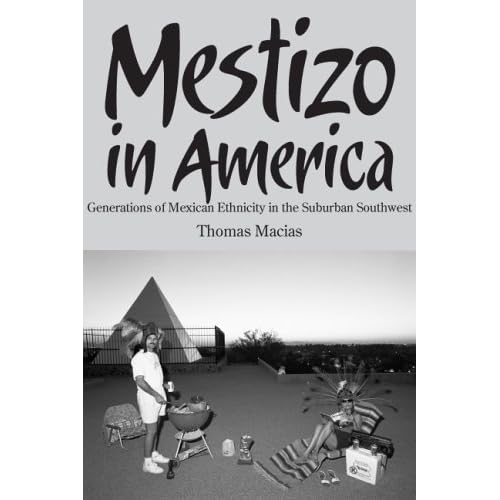
  • Mestizo in America: Generations of Mexican Ethnicity in the Suburban Southwest

    University of Arizona Press
    2006
    200 pages
    6.0 x 9.0
    Cloth ISBN: 978-0-8165-2504-1; Paper ISBN: 978-0-8165-2505-8

    Thomas Macias, Assistant Professor of Sociology
    University of Vermont

    How much does ethnicity matter to Mexican Americans today, when many marry outside their culture and some can’t even stomach menudo? This book addresses that question through a unique blend of quantitative data and firsthand interviews with third-plus-generation Mexican Americans. Latinos are being woven into the fabric of American life, to be sure, but in a way quite distinct from ethnic groups that have come from other parts of the world. By focusing on individuals’ feelings regarding acculturation, work experience, and ethnic identity—and incorporating Mexican-Anglo intermarriage statistics—Thomas Macias compares the successes and hardships of Mexican immigrants with those of previous European arrivals. He describes how continual immigration, the growth of the Latino population, and the Chicano Movement have been important factors in shaping the experience of Mexican Americans, and he argues that Mexican American identity is often not merely an “ethnic option” but a necessary response to stereotyping and interactions with Anglo society. Talking with fifty third-plus generation Mexican Americans from Phoenix and San Jose—representative of the seven million nationally with at least one immigrant grandparent—he shows how people utilize such cultural resources as religion, spoken Spanish, and cross-national encounters to reinforce Mexican ethnicity in their daily lives. He then demonstrates that, although social integration for Mexican Americans shares many elements with that of European Americans, forces related to ethnic concentration, social inequality, and identity politics combine to make ethnicity for Mexican Americans more fixed across generations. Enhancing research already available on first- and second-generation Mexican Americans, Macias’s study also complements research done on other third-plus-generation ethnic groups and provides the empirical data needed to understand the commonalities and differences between them. His work plumbs the changing meaning of mestizaje in the Americas over five centuries and has much to teach us about the long-term assimilation and prospects of Mexican-origin people in the United States.

  • Passing as Black

    The University of Vermont
    University Communications
    2011-03-30

    Lee Ann Cox

    The new dynamics of biracial identity in America

    There’s a rule everybody knows. Not the golden one. Since the days of slavery and Jim Crow segregation, when “one drop” of black ancestry determined the whole of who you were, black-by-default is a weakened but lingering cultural assumption and it shapes the way many mixed-race people navigate their lives. But a lot has changed, too. Particularly in the pre-civil rights era, passing as white—if appearances made it plausible—was a way to defy racist restrictions. Now, new research by University of Vermont sociologist Nikki Khanna shows that passing has a new face.

    In a study published in the Social Psychology Quarterly, Khanna finds that not only do black-white biracial adults exercise considerable control over how they identify, there is “a striking reverse pattern of passing today,” with a majority of survey respondents reporting that they pass as black.

    Passing, as currently defined, is about adopting an identity that contradicts your self-perception of race. Despite having a white mother and a black father, President Obama considers himself black. He is not passing—his identity is solidly rooted within the black community. The people Khanna interviewed, however, view themselves as biracial or multiracial, but choose to pass as black in certain contexts…

    Read the entire article here.