• Trans-racial Mothering: Double-Edged Privilege

    Journal of Social Distress and the Homeless
    Volume 17, Issue 1-2 (01 February 2008)
    pages 8-36
    DOI: 10.1179/sdh.2008.17.1-2.8

    Martha Satz, Assistant Professor of English
    Southern Methodist University, Dallas, Texas

    In this essay, the white adoptive mother of two bi-racial children reflects upon her thirty year experience of parenting to make several philosophical claims. She argues that through the unique mother-child bond, trans-racial mothering may produce knowledge of others’ experience that crosses the racial divide. She claims that in this way trans-racial mothering produces epistemic and ethical privileges that may give the mother an advantaged position in public dialogue. Yet, paradoxically, in light of this epistemological transformation, highlighting the works of Black legal scholars and theoreticians, she argues against the general practice of trans-racial adoption of which she is the beneficiary.

    Read or purchase the article here.

  • Jeff Chang in conversation with Adam Mansbach

    Kepler’s Books
    1010 El Camino Real
    Menlo Park, California 94025-4349
    Tuesday, 2015-01-26, 19:30 PST (Local Time)

    It’s hard to express just how cool and important Who We Be is with words alone. Jeff seems to share this sentiment when it comes to a cultural history of the idea of racial progress because Who We Be remixes comic strips and contemporary art, campus protests and corporate marketing campaigns, Martin Luther King, Jr. and Trayvon Martin.

    Now you can join the conversation too: How do Americans see race now? How has that changed – and not changed – over the half-century? After eras framed by words like “multicultural” and “post-racial,” do we see each other anymore clearly? Join us for a timely discussion with journalist, music critic, and Executive Director of the Institute for Diversity in the Arts at Stanford University, Jeff Chang. He will be interviewed by the author of Go the F**k to Sleep, Adam Mansbach, to celebrate the paperback release of Who We Be.

    Jeff Chang co-founded and ran the indie hip hop label, then known as SoleSides, but now known as Quannum Projects, and helped launch the careers of DJ Shadow, Blackalicious, Lyrics Born, and Lateef the Truth Speaker. The anti-apartheid and the anti-racist movement at UC Berkeley politicized Chang and he worked as a community laborer and student organizer; Chang was an organizer of the inaugural National Hip-Hop Political Convention. In 2007 Chang interviewed Barack Obama, for the cover of Vibe Magazine. He’s the author of Can’t Stop Won’t Stop and has written for The Nation, the New York Times, the San Francisco Chronicle, The Believer, Foreign Policy, Salon, Slate, and Buzzfeed, among others.

    Adam Mansbach is the author of Angry Black White Boy, a San Francisco Chronicle Best Book of 2005 and The End of the Jews (for which he won the California Book Award for fiction in 2008). Mansbach was the founding editor of the 1990s hip-hop journal Elementary. He lives in Berkeley and co-hosts a radio show, “Father Figures.”…

    For more information and to RSVP, click here.
  • What is the Defining Divide? False Post-Racial Dogmas and the Biblical Affirmation of “Race”

    Black Theology
    Volume 13, Issue 2 (August, 2015)
    pages 166-188
    DOI: 10.1179/1476994815Z.00000000054

    Kumar Rajagopalan
    London Baptist Association, London, United Kingdom

    This essay offers a critical reflection on the challenges of addressing the concept of “race,” and whether there is a post-racial era in which we are presently living. The essay demonstrates the interconnected nature of “race,” as forming the destructive underpinning for the oppressive frameworks that have given rise to slavery, colonialism, caste discrimination, and economic exploitation. The essay proposes an interdisciplinary, practical theological approach to uncovering the often concealed ways in which racism and White privilege function in many Western democratic societies and within the Church.

    Read or purchase the article here.

  • Obama as Text: The Crisis of Double-Consciousness

    Comparative American Studies
    Volume 10, Issue 2/3 (August 2012)
    pages 211-225
    DOI: 10.1179/1477570012Z.00000000016

    Simon Gikandi, Robert Schirmer Professor of English
    Princeton University

    The argument of this essay is that given the unique circumstances of his life, including his location in multiple spaces of cultural identity, Obama is an indeterminate signifier. To textualize Obama, we must account for how the narrative of his life is structured by need and demand as he tries to comprehend his own location and dislocation in American culture and to give meaning to the gap between the idea of what he is and what others assume him to be. In this regard, Obama is probably the quintessential subject of what W. E. B. Du Bois famously described as ‘double-consciousness’.

    Read or purchase the article here.

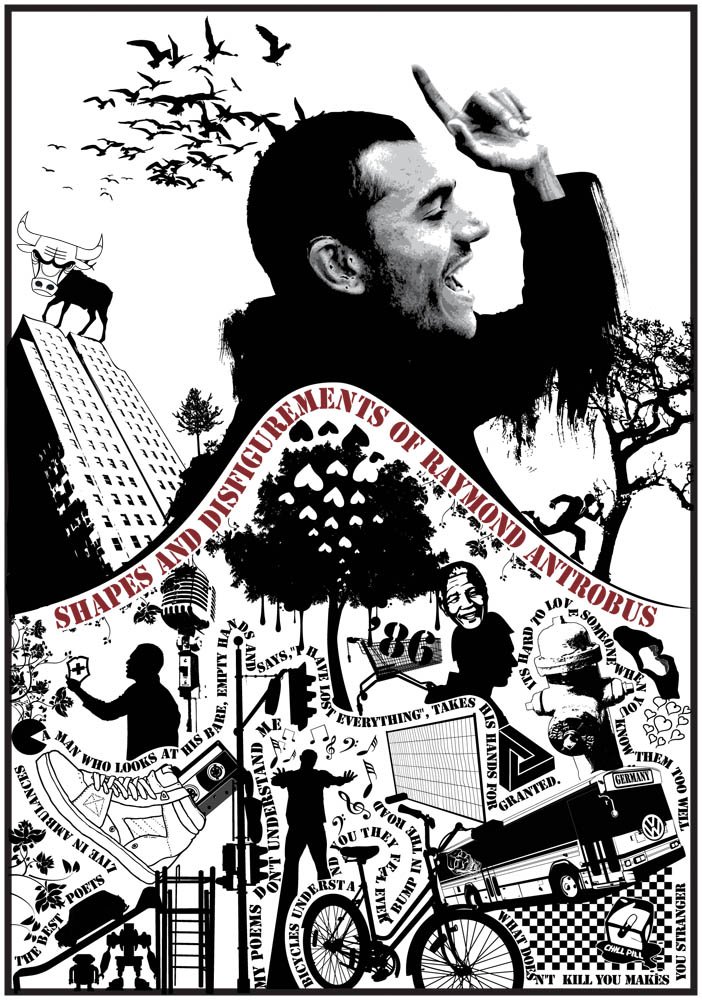
  • Shapes & Disfigurements of Ramond Antrobus

    Burning Eye Books
    2013-11-03
    36 pages
    12.9 x 0.3 x 19.8 cm
    Paperback ISBN: 978-1909136076

    Raymond Antrobus

    This third book in the Burning Eye pamphlet series (following Sally Jenkinson’s Sweat-borne Secrets and Mairi Campbell-Jack’s This Is A Poem…) presents Raymond Antrobus, a poet from Hackney with a talent for plucking poetry from the mouths of ordinary people. Whether a strawberry seller in Sweden, a homeless man on a London street or a taxi driver in South Africa, Raymond channels their voices through his own. This is the work of a confident young poet with an exceptional ear for language.

  • Multiracial in the Workplace: A New Kind of Discrimination?

    Buchanan Ingersoll & Rooney PC Fall 2015 Speaker Series presents: “Multiracial in the Workplace: A New Kind of Discrimination?”
    University of Pittsburgh
    2015-12-10

    Tanya Hernandez, Professor of Law
    Fordham University

    Welcome by:

    Larry Davis, Dean, Donald M. Henderson Professor, and Director
    Center for Race and Social Problems, University of Pittsburgh

    Introduction by:

    Jeffrey Shook, Associate Professor
    School of Social Work, University of Pittsburgh

    Watch the video (01:02:59) here.

  • Law is still black & white, not multiracial, Fordham prof says

    University Times: The Faculty & Staff Newspaper Since 1968
    University of Pittsburgh
    2016-01-07

    Marty Levine

    Despite the fact that more people are identifying themselves as multiracial on the U.S. census, decisions in discrimination cases involving multiracial defendants still are primarily based on the presence of anti-black prejudice, and there is no need to change civil rights laws.

    That was the message of Tanya Hernandez, professor of law at Fordham University, who delivered the final fall Buchanan, Ingersoll & Rooney lecture in the School of Social Work’s Center on Race and Social Problems last month.

    Hernandez, author of “Racial Subordination in Latin America,” spoke on the topic “Multiracial in the Workplace: A New Kind of Discrimination?” She is studying mixed-race identity and discrimination law in the United States in preparation for her next book…

    Read the entire article here.

  • A Tale of Two Plantations: Slave Life and Labor in Jamaica and Virginia, by Richard Dunn

    The English Historical Review
    Volume 130, Issue 547, December 2015
    pages 1575-1577
    DOI: 10.1093/ehr/cev299

    Trevor Burnard, Professor of History
    University of Melbourne, Parkville, Victoria, Australia

    A Tale of Two Plantations: Slave Life and Labor in Jamaica and Virginia, by Richard Dunn (Cambridge, MA: Harvard U.P., 2014; pp. 540. £29.95).

    When Richard Dunn wrote a preliminary essay, published in a major journal, comparing the lives of enslaved people working on a large sugar plantation called Mesopotamia in western Jamaica between 1762 and 1834 with the lives of slaves on a large tidewater grain-producing estate in Virginia between 1808 and 1865, he concluded that the experience of slaves in Virginia was better than that of slaves in Jamaica. To his chagrin, a local newspaper summarised his article as if the competition somehow validated Virginian slavery as being not that bad, considering how it was in Jamaica.

    That was nearly forty years ago. Since then Dunn has moderated those early opinions so that he now has a much more nuanced view of slave life in the English-speaking Americas. As he says, with characteristic dry humour, taking forty years to write a book is ‘not a recommended modus operandi for historians’ (p. 1). The result, however, is a magnificent and deeply humane evocation of two deeply disturbing worlds of slavery, neither of which exceeded the other in dreadfulness, and in both of which man’s inhumanity to man is ever present. One great advantage of the length of time taken..

    Read or purchase the review here.

  • When Skin Privilege and Racial Belonging Collide

    (not) Mixed (up): A Biracial Swirl in a Black and White World
    2016-01-25

    Shannon Luders-Manuel

    I’ve been thinking a lot about color / race privilege and why it’s such a hot button issue for the biracial community. In a Facebook group that I moderate, for mixed race women of African-American or African descent, members have been arguing about issues related to color privilege and mulitiracial privilege: a) whether these are separate privileges, b) whether monoracial people also have privilege, c) whether the biracial / mixed race community should shoulder privileges even though we didn’t ask for them, d) whether the black community uses color privilege and multiracial privilege as a way to silence multiracial voices.

    For anyone not familiar with the recent discussion around privileges, most noticeably white privilege, this vlog is an excellent place to start

    …So why is it so hard for us in the multiracial community, and those with light-skinned privilege, to accept these realities without feeling defensive? Are we just reacting the same way some people do when confronted with white privilege, or does it go deeper?…

    Read the entire article here.

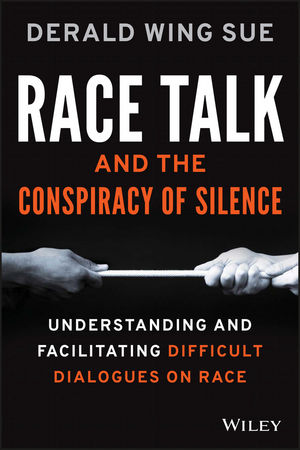
  • Race Talk and the Conspiracy of Silence: Understanding and Facilitating Difficult Dialogues on Race

    Wiley
    January 2015
    304 pages
    Hardcover ISBN: 978-1-118-95872-8
    Paperback ISBN: 978-1-119-24198-0
    E-book ISBN: 978-1-118-95965-7

    Derald Wing Sue, Professor of Psychology and Education
    Columbia University, New York, New York

    Turn Uncomfortable Conversations into Meaningful Dialogue

    If you believe that talking about race is impolite, or that “colorblindness” is the preferred approach, you must read this book. Race Talk and the Conspiracy of Silence debunks the most pervasive myths using evidence, easy-to-understand examples, and practical tools.

    This significant work answers all your questions about discussing race by covering:

    • Characteristics of typical, unproductive conversations on race
    • Tacit and explicit social rules related to talking about racial issues
    • Race-specific difficulties and misconceptions regarding race talk
    • Concrete advice for educators and parents on approaching race in a new way

    Table of Contents

    • Preface
    • Preface to the Paperback Edition
    • Acknowledgments
    • About the Author
    • SECTION ONE: THE CHARACTERISTICS, DYNAMICS, AND MEANING OF RACE TALK
      • CHAPTER ONE What Is Race Talk?
        • Race Talk Represents a Potential Clash of Racial Realities
        • Race Talk Pushes Emotional Hot Buttons
        • Race Talk Evokes Avoidance Strategies
        • Why Is Successful Race Talk Important?
      • CHAPTER TWO The Characteristics and Dynamics of Race Talk
        • What Are Characteristics of Race Talk?
        • How Do Societal Ground Rules (Norms) Impede Race Talk?
        • Why Is Race Talk So Difficult and Uncomfortable for Participants?
        • Conclusions
      • CHAPTER THREE The Stories We Tell: White Talk Versus Back Talk
        • Race Talk: Narratives and Counter-Narratives
        • Telling on Racism: Unmasking Ugly Secrets
    • SECTION TWO: THE CONSTRAINING GROUND RULES FOR RACE TALK
      • CHAPTER FOUR “The Entire World’s a Stage!”
        • The Politeness Protocol and Race Talk
        • The Academic Protocol and Race Talk
      • CHAPTER FIVE Color-Blind Means Color-Mute
        • Color-Evasion: “We Are All the Same Under the Skin”
        • Stereotype-Evasion: “I Don’t Believe in Those Stereotypes”
        • Power-Evasion: “Everyone Can Make It in Society, If They Work Hard Enough”
        • Myth of the Melting Pot
    • SECTION THREE: WHY IS IT DIFFICULT FOR PEOPLE OF COLOR TO HONESTLY TALK ABOUT RACE?
      • CHAPTER SIX “What Are the Consequences for Saying What I Mean?”
        • Ethnocentric Monoculturalism
        • Power and Oppression
      • CHAPTER SEVEN “To Speak or How to Speak, That Is the Question”
        • Communication Styles
        • Nonverbal Communication
        • Nonverbal Communication in Race Talk: Sociopolitical Considerations
        • Being Constrained and Silenced: Impact on People of Color
        • Conclusions
    • SECTION FOUR: WHY IS IT DIFFICULT FOR WHITE PEOPLE TO HONESTLY TALK ABOUT RACE?
      • CHAPTER EIGHT “I’m Not Racist!”
        • Cognitive Avoidance—Racism Denial
        • Emotional Avoidance—Fear, Guilt, and Other Feelings
        • Behavioral Avoidance—Helplessness and Hopelessness
        • Emotional Roadblocks to Race Talk
      • CHAPTER NINE “I’m Not White; I’m Italian!”
        • What Does It Mean to Be White?
        • The Invisibility of Whiteness: What Does It Mean?
        • The Fear of Owning White Privilege
        • Fear of Taking Personal Responsibility to End Racism: Moving From Being Nonracist to Becoming Antiracist
    • SECTION FIVE: RACE TALK AND SPECIAL GROUP CONSIDERATIONS
      • CHAPTER TEN Interracial/Interethnic Race Talk: Difficult Dialogues Between Groups of Color
        • Interracial/Interethnic Relationship Issues
        • Race Talk: Fears of Divide and Conquer
        • Sources of Conflict Between People of Color
      • CHAPTER ELEVEN Race Talk and White Racial Identity Development: For Whites Only
        • Developing a Nonracist and Antiracist Racial Identity
        • White Racial Identity Development and Race Talk
    • SECTION SIX: GUIDELINES, CONDITIONS, AND SOLUTIONS FOR HAVING HONEST RACIAL DIALOGUES
      • CHAPTER TWELVE Being an Agent of Change: Guidelines for Educators, Parents, and Trainers
        • Talking to Children About Race and Racism
        • Guidelines for Taking Personal Responsibility for Change
      • CHAPTER THIRTEEN Helping People Talk About Race: Facilitation Skills for Educators and Trainers
        • Ineffective Strategies: Five Things Not to Do
        • Successful Strategies: Eleven Potentially Positive Actions
    • References
    • Author Index
    • Subject Index