• Telling Multiracial Tales: An Autoethnography of Coming Out Home

    Qualitative Inquiry
    Volume 20, Number 1 (January 2014)
    pages 51-60
    DOI: 10.1177/1077800413508532

    Benny LeMaster
    Southern Illinois University, Carbondale

    What follows are experimental autoethnographic tales of ambiguous embodiment. The tales weave in and out of the text and work to articulate gender in unsuspecting spaces. Together, we reconsider gender through multiple locations at once. I offer an autoethnography of multiracial tales: a simultaneous telling of embodiment as it manifests in my multiracial body. Rather than privileging one “side” of the family over another, I experiment with a concurrent telling. That is, multivocality in one body. To help anchor the telling, I use the academy as an assemblage of meaning. In the end, I find that my White family resists and rejects my queer masculinity because of my pursuit of higher education while my Asian family embraces my queer masculinity because of the same pursuit. These stories can only be known when told and processed concurrently; never alone, and never separate.

    Read or purchase the article here.

  • One Drop, but Many Views on Race

    The New York Times
    2013-12-16

    Maurice Berger, Research Professor and Chief Curator
    Center for Art, Design and Visual Culture
    University of Maryland, Baltimore County

    In the 2010 census — when respondents could check more than one racial group — President Obama, the son of a black African father and a white mother, checked a single box: “Black, African-American or Negro.” Mr. Obama himself was unequivocal about it: “I self-identify as African-American — that’s how I am treated and that’s how I am viewed. And I’m proud of it.”

    Yet the president’s words are nuanced: While he opts to classify himself as black, he implies that his racial identity is also contingent on how he is seen and treated by others in a nation prone to racial absolutes, no matter how he sees himself.

    Those observations are among the provocative arguments presented by Yaba Blay in “(1)ne Drop: Shifting the Lens on Race” (BLACKprint Press), which examine what it means to be black. In it, she demonstrates how racial identity is not just biological or genetic but also a matter of context and even personal choice. It is revealing that the president’s definitive answer came after years of being dogged by outside doubters who questioned not just his race, but also his very nationality.

    “(1)ne Drop” explores the intricate and fraught issue of race through the observations of 60 contributors from 25 countries who self-identify, at least partly, as black, even if they are not always seen as such because of light skin, facial features or interracial ancestry. Their words are accompanied by portraits by Noelle Théard and a team of photographers directed by her. The book challenges narrow conceptions about blackness, both as an identity and as an experience, and the stereotypes and rigid boundaries of color that continue to divide us…

    …The books subject’s recount how their efforts to define themselves clashed with society’s imperative to assign neat racial categories in order to “make something that is fluid and uncertain more certain,” as a contributor, Deborah Thomas, noted. Some described the bewilderment and prying questions of acquaintances, co-workers and strangers attempting to discern their race. Others pointed to the social stigma of having complexions that are frustratingly — or insultingly — viewed as too dark or too light…

    Read the entire review here.

  • Obama: I’m Not Interested in Talking About Race in the Abstract

    The New York Observer
    New York, New York
    2007-11-26

    Jason Horowitz

    During a question-and-answer session in Berlin, New Hampshire last night, Barack Obama received a multi-part question about how he identified himself racially, race relations and his commitment to civil rights from an elderly liberal in a green ball cap…

    …As for how he identified himself, Obama was clear.

    “I’m an African American,” he said. “But I am somebody, like many African Americans, who has all kinds of stuff in him.”…

    Read the entire article here.

  • “Dreadful Deceit”: Race is a myth

    Salon
    Sunday, 2013-12-15

    Laura Miller, Staff Writer

    A historian argues that one of the defining elements of American culture is merely a “social fiction”

    Jacqueline Jones’ provocative new history, “Dreadful Deceit: The Myth of Race From the Colonial Era to Obama’s America,” contains a startling sentence on its 265th page. It comes after Jones quotes Simon Owens, the last of five African-Americans whose life stories she describes in the book. Owens — an auto worker, labor activist and writer who died in 1983 — stated, “I understood as a Negro first, in the South, the North, in the union, in the NAACP, in the C.P. [Communist Party] and in the S.W.P [Socialist Workers Party].” Jones adds, “Because generations of white people had defined him and all other blacks first and foremost as ‘Negroes,’ he had no alternative but to acknowledge — or, rather, react to — that spurious identity.”

    That racial identities are “spurious” is the foundational argument of this fascinating book. Race is a cultural invention, rather than a biological fact (on this scientists widely agree), and Jones, a history professor at the University of Texas and recipient of a MacArthur Fellowship, wants to show how pernicious and persistent this falsity is. In the book’s epilogue, she points to an article from the 2012 edition of the New York Times titled “How Well You Sleep May Hinge on Race,” based on a study showing that living in high-crime neighborhood or having chronic conditions like diabetes or hypertension can cause insomnia. But, as Jones observes, these are problems deriving from poverty, not race, and so the article “blatantly conflated socioeconomic status with the idea of race.”

    Of the five people whose life stories are told in “Dreadful Deceit,” the first is essentially voiceless: an enslaved man named Antonio, abducted from his homeland in Africa and murdered while being “corrected” by a colonial landowner in 17th-century Chesapeake. As Jones relates, Antonio’s race “had no practical meaning” to the man who purported to own him, Symon Overzee. Describing in well-researched detail the economic and political milieu of the time, she argues that what created Antonio’s vulnerability to Overzee was not his skin color or any other physical trait but his uprootedness, “without a tribe or a nation-state to protect and defend him in the Atlantic world.”…

    …None of the life stories in the book supports this argument more forcefully than that of Richard W. White, a Civil War veteran elected to the office of clerk of the Chatham County Superior Court in Georgia. One of his opponents in the election filed suit against White, charging that he was ineligible to hold office in Georgia because he was “colored.” White, who was relatively new in town and “from unknown parts and of unknown lineage,” appeared to be “white.” The evidence marshaled to prove that White was not white consisted, as the judge freely admitted, of “the reputation of the person in his community, that is what he says of himself — what others say of him — his associates and his general reputation.” In other words, Jones underlines, a man’s race in this community “would be a matter not of ethnicity or heritage or appearance or biology. It would be, purely and simply, a social fiction — one without any appreciable basis in physical reality.”…

    Read the entire review here.

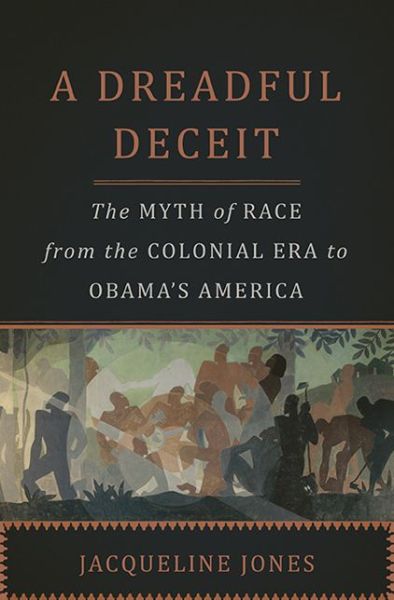
  • A Dreadful Deceit: The Myth of Race from the Colonial Era to Obama’s America

    Basic Books
    2013-12-10
    384 pages
    Hardback ISBN-13: 9780465036707

    Jacqueline Jones, Mastin Gentry White Professor of Southern History
    University of Texas, Austin

    In 1656, a Maryland planter tortured and killed an enslaved man named Antonio, an Angolan who refused to work in the fields. Three hundred years later, Simon P. Owens battled soul-deadening technologies as well as the fiction of “race” that divided him from his co-workers in a Detroit auto-assembly plant. Separated by time and space, Antonio and Owens nevertheless shared a distinct kind of political vulnerability; they lacked rights and opportunities in societies that accorded marked privileges to people labeled “white.”

    An American creation myth posits that these two black men were the victims of “racial” discrimination, a primal prejudice that the United States has haltingly but gradually repudiated over the course of many generations. In A Dreadful Deceit, award-winning historian Jacqueline Jones traces the lives of Antonio, Owens, and four other African Americans to illustrate the strange history of “race” in America. In truth, Jones shows, race does not exist, and the very factors that we think of as determining it— a person’s heritage or skin color—are mere pretexts for the brutalization of powerless people by the powerful. Jones shows that for decades, southern planters did not even bother to justify slavery by invoking the concept of race; only in the late eighteenth century did whites begin to rationalize the exploitation and marginalization of blacks through notions of “racial” difference. Indeed, race amounted to a political strategy calculated to defend overt forms of discrimination, as revealed in the stories of Boston King, a fugitive in Revolutionary South Carolina; Elleanor Eldridge, a savvy but ill-starred businesswoman in antebellum Providence, Rhode Island; Richard W. White, a Union veteran and Republican politician in post-Civil War Savannah; and William Holtzclaw, founder of an industrial school for blacks in Mississippi, where many whites opposed black schooling of any kind. These stories expose the fluid, contingent, and contradictory idea of race, and the disastrous effects it has had, both in the past and in our own supposedly post-racial society.

    Expansive, visionary, and provocative, A Dreadful Deceit explodes the pernicious fiction that has shaped four centuries of American history.

  • Afro-Mexico: Dancing between Myth and Reality by Anita González (review)

    Latin American Music Review
    Volume 34, Number 2, Fall/Winter 2013
    pages 288-291
    DOI: 10.1353/lat.2013.0019

    Alex E. Chávez, Visiting Assistant Professor
    Latin American and Latino Studies Program
    University of Illinois, Chicago

    Anita González, Afro-Mexico: Dancing between Myth and Reality. With photographs by George O. Jackson and José Manuel Pellicer. Austin: University of Texas Press, 2011. 183 pp. ISBN 978-0-292-72324-5.

    In a mixed-race country like Mexico, being “black” means being part of an ethnic group, but in addition to the unstable inhabitations of racial identities, the richness of expressive culture therein also has much to do with carving out senses of community. With this understanding, González explores the cultural negotiations of Afro-Mexican identity in terpsichorean traditions throughout Mexico—with specific focus on Veracruz and the Costa Chica of Guerrero and Oaxaca. She elaborates on various quotidian dance practices embedded with an African cultural subtext of influence that demonstrates how socially and historically constituted ethno-racial constructions are voiced through performance. Taking cues from methodologies in performance, theater, and dance studies, she homes in on the communicative potential of the gesticulant. Moreover, she incorporates ethnography and relies on photographs to illustrate the dance forms.

    Although there is existing scholarship that privileges broader socio-historical questions concerning the African diaspora in Latin America, studies focused on African-derived expressive forms in Mexico are few (Cruz Carretero, Martínez Maranto, and Santiago Silva 1990; McDowell 2000; Pérez Fernández 1990). In her efforts to show how Afro-Mexicans have been instrumental in cultural life in that country, González skillfully attends to the mobile history of ethnic encounter and exchange among Africans, indigenous groups, and the Spanish that has informed the hybridity of expressive forms and subjectivities over time. This approach in some ways gestures toward the types of analyses offered in Robin Moore’s Nationalizing Blackness (1997) and John Chasteen’s National Rhythms, African Roots (2004) in their own interrogations of the complicated nexus of performance, nation, and racial formation in Cuba and South America, respectively.

    Mexico’s own fraught ideologies of mestizaje and mexicanidad constitute an officialized discursive field that has promoted a unified national culture by way of de-emphasizing localized and pluri-ethnic productions of subjectivity; and as it pertains to González’s study, this ideological scaffolding has obfuscated—if not entirely excluded—the African component. In this regard, apart from considering phenotype, González suggests that racial identities are also defined by geographic locale to the extent that “most Afro-Mexicans are unaware of the historical circumstances that explain their presence in Mexico,” which places particular importance on the cultural negotiations of social location as such (37).

    At the core of Afro-Mexico lies González’s ambition to present a “diversity of perspectives about blackness” (103). She succeeds in this ambition as it relates to the dance forms in question. And by returning to the issues of archetype and stereotype repeatedly, she opens the door for considering the iterative relationship between racialization and performativity. Yet bringing the implicit connections between everyday life and institutionalized racial knowledges to the surface early in the book would have served in demonstrating more clearly how expressive culture fits within the arch of broader racial ideologies with implications for understandings of embodiment, performance, and the viscosity of race.

    Nonetheless, the unique contribution of the book emerges from González’s own position of expertise as an artist and dancer so that when she contends that “the bent body posture and looseness of the upper body” in certain forms have aesthetic roots in African dance (66), her own bodily knowledge is involved in making that statement. Dances, she argues, consist of gestures within musical phrases. Possibilities for storytelling exist therein that “express social outlooks” (46). These stories unfold at different levels, from personal to communal, from political to mythical—often simultaneously. Her analysis likewise operates on several levels—form and content of the dance, musicality, historical roots, and ultimately the playing out of contemporary politics, since many of the dances are “theatrical scenarios that include attacks, public whippings, sexual overtones, and other disreputable acts” (40). Still, her descriptions in some ways beg for a more in-depth ethnographic rendering of these expressive flows to illustrate how they communicate beliefs and ideas, the very representations that become myths about blackness over time and how they unfold in relation to larger and contested understandings of nation and racial formation. Afro-Mexico is premised on the contention that in a society where ethno-racial identities are disputed, myths contain within them…

  • Book Review of (1)ne Drop: Shifting the Lens on Race

    The Skanner
    Portland, Oregon, and Seattle, Washington
    2013-12-10

    Kam Williams

    Yaba Blay and Noelle Théard (dir. of photography), (1)ne Drop: Shifting the Lens on Race (Philadelphia: BLACKprint Press, 2013)

    Traditionally, in America, if you were just a teeny-weeny bit black, you’d always been considered black. This arbitrary color line was even codified by the Supreme Court decision in Plessy v. Ferguson, an 1896 case brought by an octoroon light enough to pass who sued for the right to sit in the “white only” section of a segregated train traveling through the South…

    …This means that folks, who only a generation ago would’ve been forced to identify themselves simply as black, now feel much more freedom to avail themselves of an array of alternatives along the ethnic spectrum. (1)ne Drop: Shifting the Lens on Race is a collection of essays reflecting on racial identity by 60 introspective individuals who until relatively recently would’ve been labeled black in the eyes of the law.

    This enlightening opus was edited by Dr. Yaba Blay, a professor of Africana Studies at Drexel University, and each contributor’s entry is accompanied by a proud portrait photographed by Noelle Théard, a professor at Florida International University. The book breaks down the contributors by three categories: “Mixed Black,” “American Black” and “Diaspora Black.”

    Although “Black” Kathleen Cross has a black father and a white mother, she has resisted the invitations to join the “Multiracial Movement, which she sees as divisive. By contrast, Harlemite Jozen Cummings describes himself as “Mixed,” with parents who are Japanese, Puerto Rican and African-American…

    Read the entire review here.

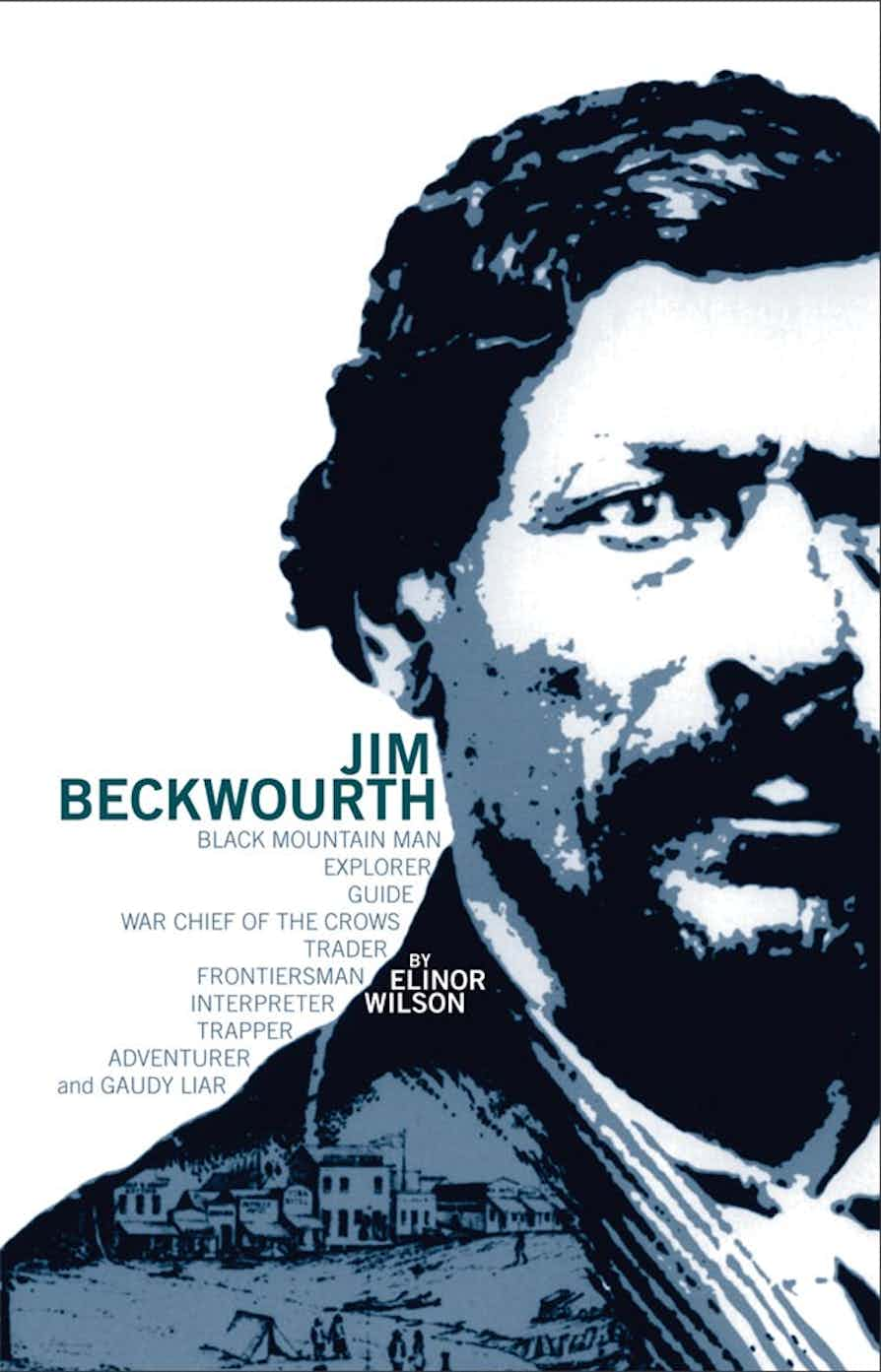
  • Jim Beckwourth: Black Mountain Man and War Chief of the Crows

    University of Oklahoma Press
    1980
    264 pages
    5.5″ x 8.25″
    Paperback ISBN: 9780806115559

    Elinor Wilson

    Dismissed as a “gaudy liar” by most historians and often discredited by writers who deprecated his mixed blood, James Pierson Beckwourth was one of the giants of the early West, certainly deserving to rank alongside Kit Carson, Bill Williams, Louis Vasquez, and Jim Bridger.

    Sometime around 1800 James Beckwourth was born a slave in Frederick County, Virginia, the natural son of Sir Jennings Beckwith and a slave girl. In 1810 Sir Jennings moved with his family to the wilderness of St. Louis, Missouri, where Jim was educated and eventually apprenticed to a blacksmith. His father recorded a Deed of Emancipation in his name on three different occasions, sending young Jim out into the world with his blessings.

    Jim Beckwourth’s apprenticeship as a fur trapper was served with General William Ashley’s grueling 1824 winter expedition to the Rocky Mountains. Except for a short stint as an army scout during the Seminole campaign, Jim spent the remainder of his long, eventful life in the West, dying among the Crow Indians whom he loved. He was fur trapper, trader, scout war chief of the Crow Nation, explorer, hotelkeeper, dispatch carrier, storekeeper, prospector, Indian agent for the Cheyennes—in short, a mountain man extraordinaire.

    In his old age Beckwourth dictated an autobiography to T.D. Bonner, a man more interested in making money with Jim’s adventures than in accurately recording his life. Beckwourth was later disparaged because of the inaccuracies that crept into Bonner’s account.

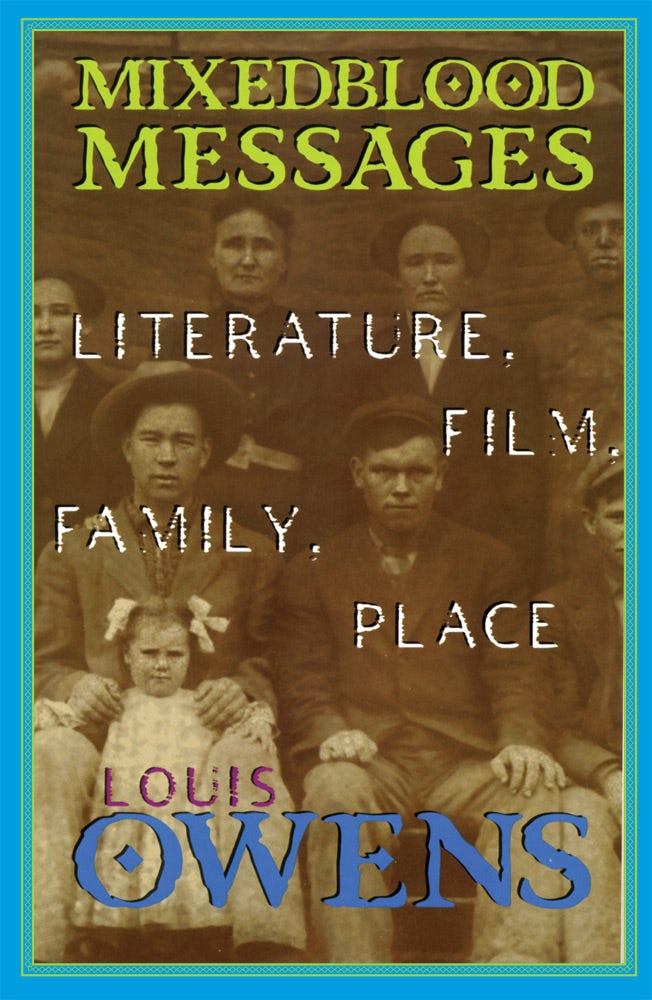
  • Mixedblood Messages: Literature, Film, Family, Place

    University of Oklahoma Press
    2001
    288 pages
    5.25″ x 8.5″
    Illustrations: 17 b&w photos
    Paperback ISBN: 9780806133812

    Louis Owens (1948-2002), Professor of English and Native American Studies
    University of California, Davis

    In this challenging and often humorous book, Louis Owens examines issues of Indian identity and relationship to the environment as depicted in literature and film and as embodied in his own mixedblood roots in family and land. Powerful social and historical forces, he maintains, conspire to colonize literature and film by and about Native Americans into a safe “Indian Territory” that will contain and neutralize Indians. Countering this colonial “Territory” is what Owens defines as “Frontier,” a dynamic, uncontainable, multi-directional space within which cultures meet and even merge.

    Owens offers new insights into the works of Indian writers ranging from John Rollin Ridge, Mourning Dove, and D’Arcy McNickle to N. Scott Momaday, Leslie Silko, James Welch, and Gerald Vizenor. In his analysis of Indians in film he scrutinizes distortions of Indians as victims or vanishing Americans in a series of John Wayne movies and in the politically correct but false gestures of the more recent Dances With Wolves. As Owens moves through his personal landscape in Oklahoma, Mississippi, California, and New Mexico, he questions how human beings collectively can alter their disastrous relationship with the natural world before they destroy it. He challenges all of us to articulate, through literature and other means, messages of personal and environmental — as well as cultural—survival, and to explore and share these messages by writing and reading across cultural boundaries.

  • Science Fiction and Multiraciality: From Octavia Butler to Harry Potter

    Brooklyn Historical Society
    Crossing Borders, Bridging Generations
    Saturday, 2013-12-14, 14:00-17:00 EST (Local Time)

    How do science fiction narratives investigate questions about identity, racism, and fear?

    Join us for a fun, interactive presentation and dialogue about mixed-race identity in the Harry Potter franchise, the legacy of African-American sci-fi author Octavia Butler, and the role of the imaginary in destabilizing oppression and re-envisioning multiracial community.

    We will be debunking myths, talking back to popular sci-fi movies and stories, and exploring new possibilities for racial justice through imagination. We will explore racial elements of popular fictional universes, participate in collective storytelling, and we encourage dressing up as your favorite sci-fi character!

    Presenters include: Eric Hamako from University of Massachusetts Amherst on Harry Potter and the Mistaken Myth of the Mixed-Race Messiah, and Walidah Imarisha, Co-Editor of Octavia’s Brood: Science Fiction Stories from Social Justice Movements.

    This event is co-sponsored by the Harry Potter Alliance and MixedRaceStudies.org.

    For more information, click here.