• A Continent Divided: The U.S.-Mexico War

    Center for Greater Southwestern Studies
    University of Texas at Arlington
    2013-06-18

    The Center for Greater Southwestern Studies at the University of Texas at Arlington announces the launch of a new website, A Continent Divided: The U.S.-Mexico War. Drawn from the holdings of UT Arlington’s Special Collections, long recognized as one of the premier archives on the war, the website features a broad range of primary source materials, as well as explanatory text on the events of 1846-1848. Dedicated to presenting the war as a bi-national conflict, the website currently features more than 50 translated Mexican broadsides, dealing with such topics as the fall of the Herrera government in 1845, the Polkos Revolt, and the post-war occupation of Mexico City.

    A Continent Divided is an ongoing, multi-year digital humanities project which, when completed, will offer one of the most comprehensive internet resources available on the U.S.-Mexico War.

    For more information, click here.

  • Of Racism and Remembrance

    Common-Place
    A Common Place, an Uncommon Voice
    Volume 1, Number 4, July 2001

    Aaron Garrett, Associate Professor of Philosophy
    Boston University

    Is interest in the racism of past and hallowed philosophers and statesmen the obsession of a politically correct society gone amok? Or is it an acknowledgement of the ways in which the racist ideas of our forebears still hold sway over our present social and political concerns? Does the racism of a thinker like Thomas Jefferson irremediably infect his writings and his legacy? Must it stalk him, creeping from century to century?

    These sorts of questions rage around Jefferson. Clearly the third president means a great deal to many Americans. Since his death in 1826—and even before it—the “American Sphinx” has been invoked in countless contexts and to countless purposes. And Jefferson’s slaveholding and his attitudes towards race have been debated on-and-off for nearly two hundred years. But no aspect of Jefferson’s life has been more hotly contested than his relationship with Sally Hemings, his house slave and purported mistress as well as his wife’s illegitimate half sister. As historian Winthrop Jordan has put it, “What is historically important about the Hemings-Jefferson affair is that it has seemed to many Americans to have mattered.”

    Yet it’s not at all clear what Thomas Jefferson’s political legacy, his racist writings, his slaveholding, his proclamations against slavery, his fear of miscegenation, and his (apparently) active miscegenation mean to us when taken together. Why do we care about this, particularly the purported relationship with Hemings, and what is it precisely we are caring about?…

    Read the entire article here.

  • One Drop of Love

    Hollywood Fringe Festival
    L.A.’s Largest Celebration of the Performing Arts
    2013-06-13 through 2013-06-30

    Fanshen Cox DiGiovanni, Playwright, Producer, Actress, Educator

    Jillian Pagan, Director

    Produced by: Ben Affleck, Matt Damon and Chay Carter

    Performances:

    Friday 2013-06-21, 14:30 PDT (Local Time)
    Lounge Theatre
    6201 Santa Monica Boulevard, Los Angeles, California

    Friday 2013-06-28, 16:15 PDT (Local Time)
    Lounge Theatre
    6201 Santa Monica Boulevard, Los Angeles, California

    Sunday 2013-06-30, 18:00 PDT (Local Time)
    Lounge Theatre
    6201 Santa Monica Boulevard, Los Angeles, California

    One Drop of Love is a multimedia solo show that journeys from the U.S. to East & West Africa and from 1790 to the present as a culturally Mixed woman explores the influence of the “one -drop rule” on her family and society. All proceeds from the Sunday, June 30th show will go to MASC – Multiracial Americans of Southern California – in celebration of Loving Day.

    For more information, click here.

  • The term ‘black Welsh’ remains for me a white person’s concept used to deny me my own experience of racial oppression (the Welsh themselves, are an oppressed and colonised people). ‘Black Welsh’ is not an identity; on the contrary, it is a duality and a contradiction. Perhaps this explains to some extent the high incidence of schizophrenia among black people. If I claim to be Welsh when everyone can plainly see that I am ‘foreign’, I must be mad. But if I claim to be black, that has no significance, it’s just like having freckles, and if I claim to be oppressed, I’m playing the race card, demanding special treatment. So to survive, I must be nothing, invisible and above all silent, because my very existence is a reminder that at least one white Welsh woman had sex with a black man, and that is the beginning of the end of the purity of the Welsh people. And without the Language of Heaven, the Calon Lân, (white heart) the sense of being a chosen, Godly people, what does it mean to be Welsh?

    Isabel Adonis, “Black Welsh Identity: the unspeakable speaks,” BBC News, North West Wales, May 30, 2006.
    http://isabeladonis.wordpress.com/2012/12/18/black-welsh-identity-the-unspeakable-speaks/

  • There is No There There: Women and Intermarriage in the Southwestern Borderlands

    Common-Place
    A Common Place, An Uncommon Voice
    Volume 13, Number 3, Spring 2013

    Amanda Taylor-Montoya

    Amanda Taylor-Montoya is an independent scholar living in southern New Mexico.

    Borderlands are fuzzy, slippery, ambiguous places. Whether imagined as a geographic region straddling an international border, “the contested boundaries between colonial domains,” or simply zones of intercultural contact where state or imperial power is weak, borderlands are spaces where social boundaries are unstable and social conventions appear more flexible. Cooperation and accommodation characterize the borderlands as much as conflict and violence. Historians often point to centuries of racial mixture to help explain the cultural fluidity and hybridization that prevail in the borderlands.

    Tales of liaisons that transgressed racial boundaries (beginning with the relationship between Hernán Cortés and Malíntzin Tenépal) are so common in histories of the Southwestern borderlands that they function as a kind of creation story for the region and its peoples. Here, men exchanged women—as captives or wives—to establish, bolster, or consolidate economic and social relationships. Indigenous women not only provided sexual companionship and domestic labor, but also served critical roles as translators, guides, and cultural mediators in colonial encounters between Europeans and native peoples. Whether consensual or coerced, mixed unions figured prominently in the borderlands economy and culture…

    …Spanish colonial society recognized a wide variety of mixed race peoples, but also maintained a stringent hierarchy between them. The racial system included not only españoles (Spaniards) and indios (Indians), but also people identified as mestizos (Spanish and Indian), mulatos (Spanish and African), castizos (Spanish and mestizo), castas (racial mixture), color quebrado (literally, “broken color”), and genízaros (Hispanicized Indians). One’s racial classification was determined not only by ancestry or phenotype, but also by occupation or class, and could change over time according to one’s circumstances.

    Race and legitimacy were intertwined in colonial New Mexico, as many associated mixed unions with illegitimacy and illicit sex. Consequently, many marriages—particularly among the elite—were arranged, in order to ensure matches with someone of equal status to preserve family honor. Simply put, the state’s acknowledgment of mixed race people did not alter the association of racial mixture with dishonor. In the first decades of the nineteenth century, New Mexicans increasingly moved away from the nuanced racial hierarchy in place during the colonial period toward a more rigid racialization of two categories: Spanish and Indian…

    Read the entire article here.

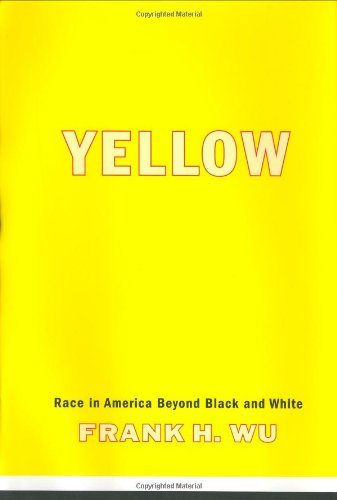
  • Yellow: Race in America Beyond Black and White

    Basic Books
    2002
    416 pages
    5.3 x 1.1 x 8 inches
    Paperback ISBN: 9780465006403; ISBN-10: 046500640X

    Frank H. Wu, Chancellor & Dean
    University of California, Hastings College of Law

    Writing in the tradition of W. E. B. Du Bois, Cornel West, and others who confronted the “color line” of the twentieth century, journalist, scholar, and activist Frank H. Wu offers a unique perspective on how changing ideas of racial identity will affect race relations in the twenty-first century. Wu examines affirmative action, globalization, immigration, and other controversial contemporary issues through the lens of the Asian-American experience. Mixing personal anecdotes, legal cases, and journalistic reporting, Wu confronts damaging Asian-American stereotypes such as “the model minority” and “the perpetual foreigner.” By offering new ways of thinking about race in American society, Wu’s work dares us to make good on our great democratic experiment.

    Table of Contents

    • 1. East Is East, East Is West: Asians as Americans
    • 2. The Model Minority: Asian American “Success” as a Race Relations Failure
    • 3. The Perpetual Foreigner: Yellow Peril in the Pacific Century
    • 4. Neither Black Nor White: Affirmative Action and Asian Americans
    • 5. True But Wrong: New Arguments Against New Discrimination
    • 6. The Best “Chink” Food: Dog-Eating and the Dilemma of Diversity
    • 7. The Changing Face of America: Intermarriage and the Mixed Race Movement
    • 8. The Power of Coalitions: Why I Teach at Howard
    • Epilogue: Deep Springs
    • References
    • Notes
    • Acknowledgments
    • Index
    • About the Author
  • Mary Seacole: The Black Woman Who Invented Modern Nursing

    Basic Books
    2004-11-19
    288 pages
    5.5 x 1 x 8.3 inches
    Hardcover ISBN: 9780786714148; ISBN-10: 078671414X

    Jane Robinson

    She was a black woman, and she flouted convention. In an age that put ladies in the parlor and preferred them to be seen and not heard, she was nursing the British wounded, not in hospital wards with Florence Nightingale but on the Crimean battlefields—and off them, she was running a restaurant and hotel. She purveyed homemade pickles in England; she mined for gold in Panama. For unabashed individuality, Mary Jane Grant Seacole knew no peer. Yet Punch, the Times, the Illustrated London News all ardently touted her, and Queen Victoria herself entertained her. Mary Seacole—childless widow of Horatio Nelson’s godson and “good ole Mother Seacole” to the soldiers at Sebastopol—was Britain’s first black heroine, and this robust, engaging biography by social historian Jane Robinson shows why. In a narrative driven by colorful adventure, Robinson charts Seacole’s amazing odyssey from her native Kingston, Jamaica, to her adopted London, via Panama, where she lent her doctoring and nursing skills to catastrophic outbreaks of cholera and yellow fever, and the Crimea, where she founded the famous British Hotel. Seacole makes numerous other eventful stops along the way, and everywhere, even in the face of disappointment, disaster, and loss, her indomitable spirit prevails.

  • Facing up to the Failure of “Racial Democracy” in Brazil

    Planète Afrique: Articles on Africa and the African Diaspora Written by Hishaam Aidi for Various Magazines
    First published: 2001-11-28

    Hishaam Aidi, Lecturer in Discipline of International and Public Affairs
    Columbia University

    What do the Brazilians who call themselves “prieto,” “pardo” and “mestico” have in common? Despite a dizzying array of options when it comes to racial classification, all would be considered “black” by US standards.

    A DNA study by Brazilian scientists found that 80 percent of the population has at least some African ancestry, and fully half of the nation’s 165 million inhabitants consider themselves to be of African descent. Brazil, the largest country in South America, is home to the largest black population outside of the African continent.

    But despite the widely held and consciously promoted view of Brazil as a “racial democracy,” vast inequalities exist between the country’s white minority and the mixed and black majority. Afro-Brazilians live in appalling conditions often concentrated in impoverished, crime-ridden favaelas (slums) of Brazil’s large urban centers; very few Afro-Brazilians are in government, whether in the legislature, state bureaucracy or the military. Afro-Brazilians have also long been excluded from the civil service and other professions, with newspapers advertising private sector jobs stipulating “good appearance,” code words for “white.” And only two percent of Brazil’s 1.6 million college students are black…

    Read the entire article here.

  • The Law Could Make You Rich

    Common-Place
    A Common Place, An Uncommon Voice
    Extra Issue: Volume 13, Number 3.5 (June 2013)

    Jared Hardesty
    Department of History
    Boston College

    Jared Hardesty is a PhD candidate in history at Boston College and is currently writing a dissertation on slavery, freedom, and unfreedom in eighteenth-century Boston

    Julie Winch, The Clamorgans: One Family’s History of Race in America. New York: Hill & Wang, 2011. 432 pp.

    Governor Riggins, a leader of Boston’s nineteenth-century black community, once publicly admonished a fellow person of color, William Patterson, and took the opportunity to offer a lesson to the community at large. Patterson had purchased unlicensed liquor for some fellow African Americans, and the authorities in Boston caught him red-handed. In the midst of dressing Patterson down, Riggins expressed the hope that the “law will make you smart.” His proclamation to his fellow Afro-Bostonians—the law could be a source of empowerment for African Americans—may have been lost on Patterson, but it was a message that blacks across the United States heard loud and clear. Half a continent away in St. Louis, Missouri, the mixed-race grandsons of Jacques Clamorgan geared up to file suit and lay claim to their grandfather’s extensive lands. For them, Riggins’s message carried special resonance and an additional caveat. For the Clamorgan men, the law not only made them smart, but could also make them rich…

    Read the entire review here.

  • More Talk Radio on 06/17/13 [with Professor Greg Carter]

    More Talk Radio
    KBOO Community Radio
    Portland, Oregon
    2013-06-17, 15:00-16:00Z, 08:00-09:00 PDT (Local Time)

    The United States of the United Races: A Utopian History of Racial Mixing

    Hosts Celeste Carey and Cecil Prescod interview Greg Carter about his new book “The United States of the United Races: A Utopian History of Racial Mixing.”

    Barack Obama’s historic presidency has re-inserted mixed race into the national conversation. While the troubled and pejorative history of racial amalgamation throughout U.S. history is a familiar story, Greg Carter asks us to reconsider an understudied optimist tradition, one which has praised mixture as a means to create a new people, bring equality to all, and fulfill an American destiny. He re-envisions racial mixture as a vehicle for pride and a way for citizens to examine mixed America as a better America.

    Greg Carter is Assistant Professor of History at the University of Wisconsin-Milwaukee.

    In “The United States of the United Races: A Utopian History of Racial Mixing” Greg Carter explores a broad range of documents and moments, unearthing a new narrative that locates hope in racial mixture.

    Download the episode here.