• Family Portrait in Black and White: A Talk With Julia Ivanova

    The Huffington Post
    The Blog
    2012-07-12

    E. Nina Rothe, Global Culture Explorer

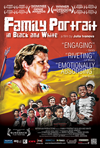
    The upcoming documentary by Julia Ivanova, titled Family Portrait in Black and White features a Ukrainian foster mother, Olga, and her brood of 27 foster kids. Ranging in ages between grade schoolers and legal adults, Olga’s children are for the most part the beautifully unique result of relationships between African students—attending the affordable universities of the former Soviet country — and Ukrainian women. In a national environment that presently leans more on the side of intolerance and bigotry, where neo-Nazi demonstrations can be the found on any given day in Kiev, Olga should be called a heroine.

    Yet the beauty of Ivanova’s insightful film lies in her cinematic portrayal of the woman behind the mother. Olga turns out to be a flawed, overbearing, opinionated result of the former Soviet regime, who loves by the rules and teaches by the book: her book. In other words, perfectly human.

    I caught up with Ivanova about her touching film and she shared her insightful views on the film’s imperfect heroine, as well as the future of these biracial children in a world that is increasingly partial to what is standard and un-unique.

    Your film tells the story of a woman who is human, not just a heroine. How did you become aware of this particular story?

    This particular story was very dear to me because for a number of years I wanted to make a film about biracial citizens of Eastern Europe and especially children who were born in Eastern Europe and don’t have a second identity other than the identity of the nation they feel they belong to. But the society sees them as different, so I was looking for a story that would allow me to explore this topic in its whole complexity. I was filming in Moscow in 2004 when I saw an article in the local newspaper of this woman in Ukraine with photos. Immediately I thought it was an excellent, excellent story and I got in touch with her a year or two later and then came to meet her…

    Read the entire interview here.

  • Family Portrait in Black and White: Documentary by Julia Ivanova

    Interfilm Productions
    Vancouver, British Columbia, Canada
    2011
    Institutional Use: Double DVD (includes 85 and 52 minute versions)
    Private Use: 85 minute DVD

    Julia Ivanova, Director

    Olga Nenya has 27 children. Four of them, now adults, are her biological children; the other 23 are adopted or foster children. Of those 23, 16 are biracial.

    She calls them “my chocolates,” and is raising them to be patriotic Ukrainians. Some residents of Sumy, Ukraine, consider Olga a saint, but many believe she is simply crazy. An inheritance from the Soviet era, a stigma persists here against interracial relationships, and against children born as the result of romantic encounters between Ukrainian girls and exchange students from Africa. For more than a decade, Olga has been picking up the black babies left in Ukrainian orphanages and raising them together so that they may support and protect one another.

    The filmmakers interview Neo-Nazis in Ukraine reveals the real dangers for a dark-skinned individual in the street. These white supremacist youth joke about their evening raids and how police seem to let them do it. Prosecutors are not particularly determined to give strict sentences to racially motivated crimes, and young thugs can get away with probation for beating someone nearly to death.

    Olga sends her foster children to stay with host families in France and Italy in the summers and over Christmas, where they are cared for by charitable families who have committed to helping disadvantaged Ukrainian youth since the Chernobyl disaster. Olga’s kids now speak different languages, and the older girls chat in fluent Italian with each other even while cooking a vat of borscht. But Olga doesn’t believe in international adoption and has refused to sign adoption papers from host families that wanted to adopt her kids.

    “At least when the kids grow up, they’ll have a mother to blame for all the failures that will happen in their lives,” she says.

    AWARDS:

    • 32nd GENIE AWARDS (Canada) (aka Canadian Oscars) “NOMINEE: Best Feature Documentary”
    • 18th HOT DOCS FILM FESTIVAL (Canada) “Grand Prize: Best Canadian Film Award”
    • 56TH VALLADOLID INTERNATIONAL FILM FESTIVAL (Spain) “Cultural Diversity Award” and “Time of History Third Prize”
    • 6TH MIRADASDOC –DOCUMENTARY FILM FESTIVAL (Spain) “Audience Award”
    • 6TH ADDIS INTERNATIONAL FILM FESTIVAL (Ethiopia) “Jury Award – Best Documentary”

    SCREENINGS:

    • Sundance Film Festival (USA)
    • International Documentary Film Festival (Amsterdam)
    • Los Angeles Film Festival (USA)
    • Mumbai Film Festival (India)
    • Haifa International Film Festival (Israel)
    • Hamptons International Film Festival (USA)
    • Cleveland International Film Festival (USA)
    • Glasgow International Film Festival (UK)
    • Thessaloniki Film Festival (Greece)
    • Message To Man Documentary Festival (Russia)
    • Bergen International Film Festival (Norway)
    • Vancouver International Film Festival (Canada)
    • New Zealand International Film Festival
    • Seattle International Film Festival (USA)
    • One World Film Festival (Romania, Czechoslovakia)
    • Human Watch Film Festival (UK)
    • Watchdocs (Poland)

    What are the areas of interest? The major areas of interest covered by the film include:

    • human rights
    • critical mixed-race studies
    • ideology
    • institutionalization
    • identity politics
    • transitional economy
    • international adoption
    • foster homes

    Who can benefit from the film? Family Portrait in Black and White is valuable for anyone with research interest in the following:

    • African Studies
    • Slavic Studies
    • Child and Family Studies
    • Sociology
    • Women’s Studies
    • Film and Media Studies
    • Mixed-Race Studies

  • Three Winton Triangle Presentations at Greensboro conference.

    Chowan Discovery Group
    2012-10-15

    Marvin T. Jones

    The Chowan Discovery presentations about the Winton Triangle, its Civil War history and Chowan Discovery historical markers attracted many enthusiastic attendees at the annual conference of the Afro-American Genealogical and Historical Society (AAGHS) in Greensboro. Included in the audiences were history professionals and authors.
     
    One of the joys of having three presentations at the conference was that the reputation of each lecture fed the attendance of the next.  This also gave more people the opportunity to hear about our work.  And then there are those increased sales of Carolina Genesis and the CDG mugs.  Hawking those mugs are fun, whether they sell or not – and they sold.  I enjoyed all of questions and comments.

    Among the participants, I saw growing awareness about tri-racial people and free people of color in North Carolina at the conference.  This is an important trend for our mission…

    Read the entire article here.

  • The Politics of Samba

    Georgetown Journal of International Affairs
    Volume 2, Number 2 (Summer/Fall 2001)

    Bruce Gilman

    Samba, which was created in its present form in the 1910s, yet whose roots reach back much farther and tie Brazil to the African continent, has played an integral part in Brazil’s conceptualization as a nation. Originally despised by Brazil’s elite, samba’s message of racial integration was eventually used by both progressive reformers and authoritarian dictators. Despite samba’s image abroad as a catalyst for racial miscegenation, its political message never took hold in Brazilian society. Today, samba continues to be as much a source of social integration as a prism of Brazil’s racial fractures.

    Historical Roots.

    It is probable that the word “samba” originated in Angola, where the Kimbundu word semba designated a circle dance similar in choreography to the west African batuque that Bantu slaves brought to Brazil. While the exact number of blacks entering Brazil during its period of slavery is unknown, it is commonly estimated that at least eigh- teen million Africans were “imported” between 1538 and 1828. The primary center from which the Portuguese disseminated slaves into the Brazilian interior was Salvador, Bahia. It was the second largest city in the Portuguese Empire after Lisbon, and famous for its sensuality and decadence expressed in its beautiful colonial mansions and gold-filled churches. In Bahia, African culture took root to such an extent that today many African traditions are better preserved there than any-where else in the New World. Sambas rhythm is rooted in the rich musical heritage that Africans took with them in their forced migration to Brazil.

    Although sambas rhythm is of African origin, its melody, harmony, form, and instrumentation are influenced by European traditions. The licentious lundu dance, derived from the rhythm of the batuque, became increasingly popular in Brazil in the late eighteenth century. At the same time, the flute, guitar, and cavaquinho, which initially accompanied the modinha the Brazilian way of playing the lyric song style of the Portuguese elite, would come to play an important role in samba. Brazilian poet and priest Domingo Caldas Barbosa (1740-1800), whose mother was a slave from Angola and whose father was a Portuguese businessman, broke with the tradition of the court style by substituting guitar for the harpsichord and introducing risqué lyrics in the most aristocratic salons of Lisbon. While Barbosa was indignantly criticized for his sensuous poetry, erudite Portuguese composers soon began producing their own modinhas. Both the lundu and the modinha crossed the boundaries between popular and elite, yet gained acceptance at the Lisbon royal court in an early instance of the fusion of African and Iberian styles. Brazil’s African-inspired musical traditions also merged with other non-Portuguese, European styles. In the mid-1840s, French traveling musical theater companies introduced the polka to Brazil. As the lundu fused with the polka, it turned into the maxixe, a Brazilianized version of the polka. The maxixe became the first genuinely Brazilian dance and decisively influenced the creation of samba as a specific genre, eventually finding acceptance among the elite of Rio de Janeiro.

    …Racial marginalization was also fostered by the growing conviction among nineteenth-century intellectuals that true Brazilian nationhood required ethnic homogeneity. Influential scientists regarded people of mixed race as indolent , undisciplined, and shortsighted. They argued that Brazil’s racial composition did not exemplify cultural richness or vitality, but rather constituted a singular case of extreme miscegenation; consequently, the person of mixed race evolved into a symbol of Brazilian backwardness. Blacks were seen as a major factor contributing to Brazil’s inferiority because they would never be able to absorb, and could only imitate, “Aryan” culture. Racial mixing thus furnished an explanation for the defects and weaknesses of Brazilian society and became a central issue in Brazil’s conceptualization as a nation.

    Most Brazilians believed that national homogeneity could be achieved through assimilation and miscegenation, but only if this guaranteed evolutionary superiority through a general “whitening” of the population. Thus, the most welcomed immigrants were southwestern Europeans who mixed readily with the rest of the Brazilian population; Africans were never considered among” possible candidates for immigration…

    Read the entire article here.
  • In the future, we will be…: Priyank Shah at TEDx Columbus

    TEDx Columbus
    2012-10-14

    Priyank Shah, Demographer, Futurist, Teacher

    Dr. Shah is a demographer and a very enthusiastic one. He’ll begin our day with baseline picture of where we are headed as a population so we will better understand ourselves as a society. But no worries, you’ll be entertained with his take on these trends, as he himself is a living example of one of the most prolific ones.

  • Census Bureau Establishes National Advisory Committee on Racial, Ethnic and Other Populations

    United States Census Bureau
    News Release
    CB12-195
    2012-10-12

    The U.S. Census Bureau announced today the establishment of the National Advisory Committee on Racial, Ethnic and Other Populations. The Census Bureau has also named the committee’s members and leadership.

    The National Advisory Committee will advise the Census Bureau on a wide range of variables that affect the cost, accuracy and implementation of the Census Bureau’s programs and surveys, including the once-a-decade census. The committee, which is comprised of 32 members from multiple disciplines, will advise the Census Bureau on topics such as housing, children, youth, poverty, privacy, race and ethnicity, as well as lesbian, gay, bisexual, transgender and other populations.

    “We expect that the expertise of this committee will help us meet emerging challenges the Census Bureau faces in producing statistics about our diverse nation,” said Thomas Mesenbourg, the Census Bureau’s acting director. “By helping us better understand a variety of issues that affect statistical measurement, this committee will help ensure that the Census Bureau continues to provide relevant and timely statistics used by federal, state and local governments as well as business and industry in an increasingly technologically oriented society.”

    The [32] members are:…

    Read the entire press release here.

  • ‘Passing’ in colonial Colombia

    Havard University Gazette
    2009-02-12

    Corydon Ireland, Harvard News Office

    Racial categories today are self-evident — part of what social scientists might call “socially constructed discourse.” Contemporary people of one race are aware of what other races look like, as well as where they themselves belong in the racial scheme of things.
     
    But racial categories were not so firm or reliable while being created centuries ago, in particular in early colonial Latin America. It’s this historical crucible of racial identities that anthropologist and Radcliffe Fellow Joanne Rappaport has chosen to study.
     
    She gave a glimpse of her work last week (Feb. 4) during a talk at the Radcliffe Gymnasium, where 80 listeners were drawn in by her intriguing title: “Mischievous Lovers, Hidden Moors, and Cross-Dressers: The Meaning of Passing in Colonial Bogotá.”
     
    “Spaniard or a mestizo, mulato, indio, or negro,” said Rappaport to begin. “What did these categories mean?”
     
    Or to put it another way, she added, what did race mean to these early modern people?
     
    For one, it wasn’t a matter of black and white, said Rappaport — that is, it was more subtle than “the genetic metaphor of bounded populations that has characterized the (pseudo) scientific discourse of race since the 19th century.”
     
    The word “white” seldom appears in the 16th and 17th century Latin American and Spanish documents she has pored over, she said. Europeans were instead identified by where they were from — Spain, France, or England, for instance. And in what is now present-day Colombia, people were identified not so much by racial categories but more often as citizens — vecinos — of a particular town or city.
     
    More important than “white” was the designation “noble,” said Rappaport, who teaches at Georgetown University. “It takes us out of a narrowly racial mindset.”…

    …Rappaport, a frequent scholarly traveler to old archives in Spain and Latin America, is using many ways to study the emergence of racial identity in early colonial societies. She’s looking at phenotype and physiognomy as they were used in legal documents 400 years ago and more; at how the moral attributes of racially mixed groups were described; and how these attributes were challenged by the literature of the day…

    Read the entire article here.

  • Under the skin

    Havard University Gazette
    2012-10-12

    Aaron Lester, Harvard Correspondent

    Deep experience informs panelists’ views on mixed-race life in U.S.

    When Carmen Fields’ future husband asked her to meet his mother, Fields refused. “No way. I didn’t want to be the reason she opened up the front door and dropped the Easter ham,” she told a Harvard audience on Wednesday.
     
    An African-American whose spouse is white, Fields knows from experience that life in the United States holds unique challenges for mixed-race couples and their children.
     
    Fields and fellow panel members — among them College junior Eliza Nguyen —addressed some of those issues during a discussion called “American Masala: Race Mixing, the Spice of Life or Watering Down Cultures?” at the Student Organization Center at Hilles.

    Nguyen, president of the Harvard Half Asian People’s Association (HAPA), distinctly remembers the moment it dawned on her that she was neither white, like her mother, nor Vietnamese, like her father. “I was in the fourth grade, taking a standardized test. And they had that box you were supposed to check off.” There was no box for biracial, and she was instructed to check only one. Nguyen, perplexed, asked her teacher which box to check. She was the only nonwhite student in her school. “Asian, of course,” her teacher told her. “I was confused,” said Nguyen. “Who am I?”…

    Read the entire article here.

  • Student-Organized Conference To Focus on ‘Mixed-Race Experience’

    Havard University Gazette
    2000-04-13

    Ken Gewertz, Gazette Staff

    For many of us, food can be a powerful reminder of who we are and where we come from.

    But the foods that Rebecca Weisinger ’02 remembers from her family dinner table were a little different from most.

    “Sometimes my mom would make Chinese dishes and then add potatoes to them, or she would serve sauerkraut on the side,” Weisinger said

    This combination of cuisines seemed natural in Weisinger’s family because her mother is a Chinese-American from Hawaii and her father a German-American from Wisconsin. The two met when they were students at M.I.T.

    This makes Weisinger a mixed-race American, one of a rapidly expanding group that has been receiving considerable attention of late. According to one estimate, mixed-race births are increasing at a rate 260 times as fast as all births combined. In some urban centers, one in every six babies is multiracial. Census experts estimate that by 2050, there will be over 27 million biracial and multiracial Americans…

    Read the entire article here.

  • Black Pride, Democratic Politics: Can They Be Separated in Blacks’ Support of Obama?

    The Associated Press
    2012-10-13

    Jesse Washington, National Writer, Race and Ethnicity

    Surviving slavery, segregation and discrimination has forged a special pride in African-Americans. Now some are saying this hard-earned pride has become prejudice in the form of blind loyalty to President Barack Obama.

    Are black people supporting Obama mainly because he’s black? If race is just one factor in blacks’ support of Obama, does that make them racist? Can blacks’ support for Obama be compared with white voters who may favor his Republican challenger, Mitt Romney, because he’s white?…

    Read the entire article here.