• Anomaly – Film Screening and Performance

    Bentley University
    Wilder Pavilion – Adamian Academic Center
    Waltham, Massachusetts
    Wednesday, 2012-10-24, 18:30 EDT (Local Time)

    Jessica Chen Drammeh, Director/Producer

    Sharon Smith, Co-Producer

    Anomaly is an award-winning documentary that provides a thought-provoking look at multiracial identity by combining personal narratives with the larger drama of mixed race in American culture. The characters use spoken word and music to tell their stories of navigating identity, family and community in a changing world. As it unfolds, Anomaly tells a story that is deeply personal, yet broadly American. Live music will follow the screening featuring Pete Shungu, who stars in the film.

  • The nation’s poet

    The Atlanta Journal-Constitution
    Personal Journeys
    2012-10-06

    Rosalind Bentley, Arts and Culture writer

    Personal Journeys is a new weekly feature for readers who like good writing and good story-telling

    The National Book Festival along the Mall in Washington is thronged with readers and authors who’ve come to revel in the written word on this fall day in 2004.

    Just three years old, the festival has been forged by first lady Laura Bush and the Library of Congress in the belief that literature is a living thing, that the right words, composed in just the right way, can push a life forward.

    To the podium steps poet Natasha Trethewey.

    Her work illuminates people in the shadows: a seamstress stitching her way through segregation; an early 20th-century prostitute so fair skinned she can pass for white; a dock worker’s wife who keeps her husband’s supper warm as she waits for him well into the night.

    Into some of her poems she has woven her own complex story: the blending of the black and white blood that made her; her blood tie to her native Mississippi; the blood of her mother, cruelly spilled.

    What binds the characters? It is that in the body of American letters, they have routinely been pushed to the edge of the page by other protagonists deemed more “universal.” This day Natasha reads poems that bring their marginalized stories to the center…

    …2012: It’s May. Natasha is the incoming chair of the creative writing program at Emory University and the newly minted poet laureate of her home state of Mississippi. She gets an unexpected call from the Library of Congress. Billington and his colleagues have been following her work since her first reading at the book festival. They are impressed with her 2007 collection, “Native Guard.” They are also taken with “Beyond Katrina,” her 2010 meditation on the psychological and structural wreckage dotting Mississippi’s Gulf Coast landscape years after Hurricane Katrina’s landfall.

    Billington believes the time for this kind of poet is right now. She is only 46 and in the prime of her artistic life. This will signal that the library is looking forward. He offers her the highest United States honor a poet can achieve, poet laureate of the nation.

    Saying yes isn’t hard, though the honor humbles her, even makes her a little nervous…

    …Sept. 13, 2012: The audience in the auditorium of the Library of Congress in Washington leaps to its feet. Applause crashes against the stage where a black woman in a dark dress stands, her hands clasped to her heart. Today, she looks as though she might burst with joy. This is U.S. Poet Laureate Natasha Trethewey, about to officially open the library’s literary season with a reading. She has come to tell an American story….

    Read the entire article here.

  • Afro-German Literature and Films

    Gerlind Institute for Cultural Studies, Oakland, California
    4 two-hour classes

    Marion Gerlind, Founder and Executive Director

    This seminar will familiarize students with the history of a minority population in Germany who has gained significant visibility in German media since the 1980s. Having confronted racist stereotyping and media (mis)representations, Black Germans have formed empowering social and historical identities around the self-label “Afro-German.” Using the classic book Farbe bekennen (Showing Our Colors), autobiographical essays, excerpts from novels and films, including later work by May Ayim and Ika Hügel-Marshall, students will study pre-colonial representations of Africa in Germany, Afro-Germans in the Weimar Republic and under National Socialism, as well as after 1945 to the present.

    This seminar will be conducted in German and/or English. Students are asked to read assigned texts prior to each session and be prepared to contribute to email discussions.

  • Invisible Woman: Growing up Black in Germany

    University of California, Berkeley
    Center for Race & Gender
    Multicultural Community Center, Hearst Field Annex-D
    2012-09-25, 12:40-14:00 PDT (Local Time)

    A reading by Ika Hügel-Marshall

    Ika Hügel-Marshall was the child of an African-American serviceman and a white German woman. Born and raised in post-Hitler Germany, she tells about her experience of anti-Black racism and how she came to terms with her identity as an Afro-German. Only at the age of 39 she met other Afro-Germans and was involved in setting up the “Initiative of Black Germans” (ISD). In 1993, she found her father in Chicago and met him and his family—a most profound experience.

    For more infomation, click here.

  • Review of Mazón, Patricia M.; Steingröver, Reinhild, eds., Not So Plain as Black and White: Afro-German Culture and History, 1890-2000

    H-German, H-Net Reviews
    June 2009

    Lynn Kutch, Assistant Professor of German
    Kutztown University of Pennsylvania

    Patricia M. Mazón, Reinhild Steingröver, eds. Not So Plain as Black and White: Afro-German Culture and History, 1890-2000. Rochester: University of Rochester Press, 2005. xvii + 247 pp. cloth ISBN 978-1-58046-183-2.

    A Defiant “We” Announces Its Birth: Understanding the Complexity of Black German Identity

    Given the long and varied history of cultural interactions between Africans and Germans–from the 1400s, when Africans populated Europe as slaves and court servants, to the pinnacle of German colonization in Africa in the late 1800s, to the post-World War I Rhineland occupation–the dominant German culture, perhaps understandably, has always viewed Africans as foreigners. This multifaceted collection interrogates the difficulty of categorizing the experience of Afro-Germans, a new organizing term in its own right. In each essay, the authors seek to expand the relatively limited current base of knowledge about the black German experience and to rectify the oftentimes ill-informed German and international reaction to that tradition. As a whole, the collected essays represent, as Sander Gilman puts it, a “major confrontation between the German image of Blackness and the reality of the Black” (p. 83). Gilman’s “confrontation” materializes in each essay’s distinctly articulated challenges to the common notion that racism toward blacks never existed in Germany. The book’s authors and editors not only dispute that comfortable assumption, they also sharpen the markedly German angle of the examination by claiming that attention paid to Vergangenheitsbewältigung, or coming to terms with the National Socialist past, has consistently overshadowed the German colonial legacy and historical attitude about Africans. A vital reading given its multicultural approach to German studies, the book demonstrates that, despite the widespread cultural eclipse of this theme, historians, writers, and filmmakers have successfully exploited their talent to display a new self-confidence while educating others on overt acts of prejudice and racism in Germany.

    Building upon previous research in the field and combining disciplines and methodologies, the editors have organized the volume into two thematic sections that will appeal to Afro-German readers as well as scholars with varying degrees of interest in and knowledge about the subject. The first subdivision, “Afro-Germans in Historical Perspective,” traces African intersections with German history from the colonial period through 1945. The second portion, “Cultural Representations and Self-Representations of Afro-Germans,” offers specific examples from various disciplines of the ever-changing perceived image over time and how the community of Afro-Germans seeks to define itself as a reaction to those general perceptions…

    Read the entire review here.

  • The Durability of Race

    RaceFiles: On Race and Racism in our Politics and Daily Lives
    2012-10-05

    Scot Nakagawa, Senior Partner
    ChangeLab

    There’s been a lot of talk lately about the death of racism. Many believe that as the global demographics change and Generation Y rises, racism will fade in significance. Some even suggest that what we are witnessing in the Obama backlash is just death throes.
     
    That argument ignores history.
     
    Here’s what I mean.
     
    Neither the Emancipation Proclamation nor the abolitionist movement were enough to end slavery. Slavery was defeated in a Civil War that was fought not over race equality nor just for the cuase of freeing slaves, but over federal authority. The cynicism at the root of the “war against slavery” is revealed by the fact that when legal race slavery was finally defeated in 1865, the culture of  white supremacy survived, both in the North and the South.
     
    Southern state governments, determined to maintain white supremacy, pivoted after the war and took advantage of an exception in the 13th Amendment that allowed for the indentured servitude of criminals. They created a set of legal codes that criminalized Black people. Crimes included changing employers without permission,vagrancy, and selling cotton after sunset.
     
    Once imprisoned, African Americans were subjected to neo-slavery in the form of labor camps and chain gangs. But the impact of neo-slavery was not just on those enslaved. The system terrorized Blacks throughout the South keeping them subjugated to white employers who in many cases were their former masters…

    Read the entire article here.

  • Travels of self-discovery: African heritage in Mexico

    American Observer: American University’s Graduate Journalism Magazine
    American University, Washington, D.C.
    2009-11-12

    Carmen Castro

    Cesareo Moreno clearly remembers his family visit to Guanajuato, Mexico, in 2004.

    He was on a mission to learn more about his Mexican heritage. Moreno told his uncle he wanted to learn more about the African culture.

    His uncle thought Moreno was talking about a project [what project? Is it African-related?] on the Mexican coastal state of Veracruz, Moreno says. When he told his uncle his research was about [African in?] their home state of Guanajuato, Moreno says his gave a look of disbelief.

    “He tells me in a dead serious way … just no there isn’t. It’s like it doesn’t exist. Not in our backyard. Not in our family. Not in our hometown,” Moreno said.

    It’s reactions like this that have motivated Moreno to put so much time into learning about the history of Afro-Mexicans, descendants of African slaves.  They were brought to Mexico during the Spanish colonization era in the early 16th century. It is a study that emerged in the 1940s with the groundbreaking research of anthropologist Gonzalo Aguirre Beltrán

    Read the entire article here.

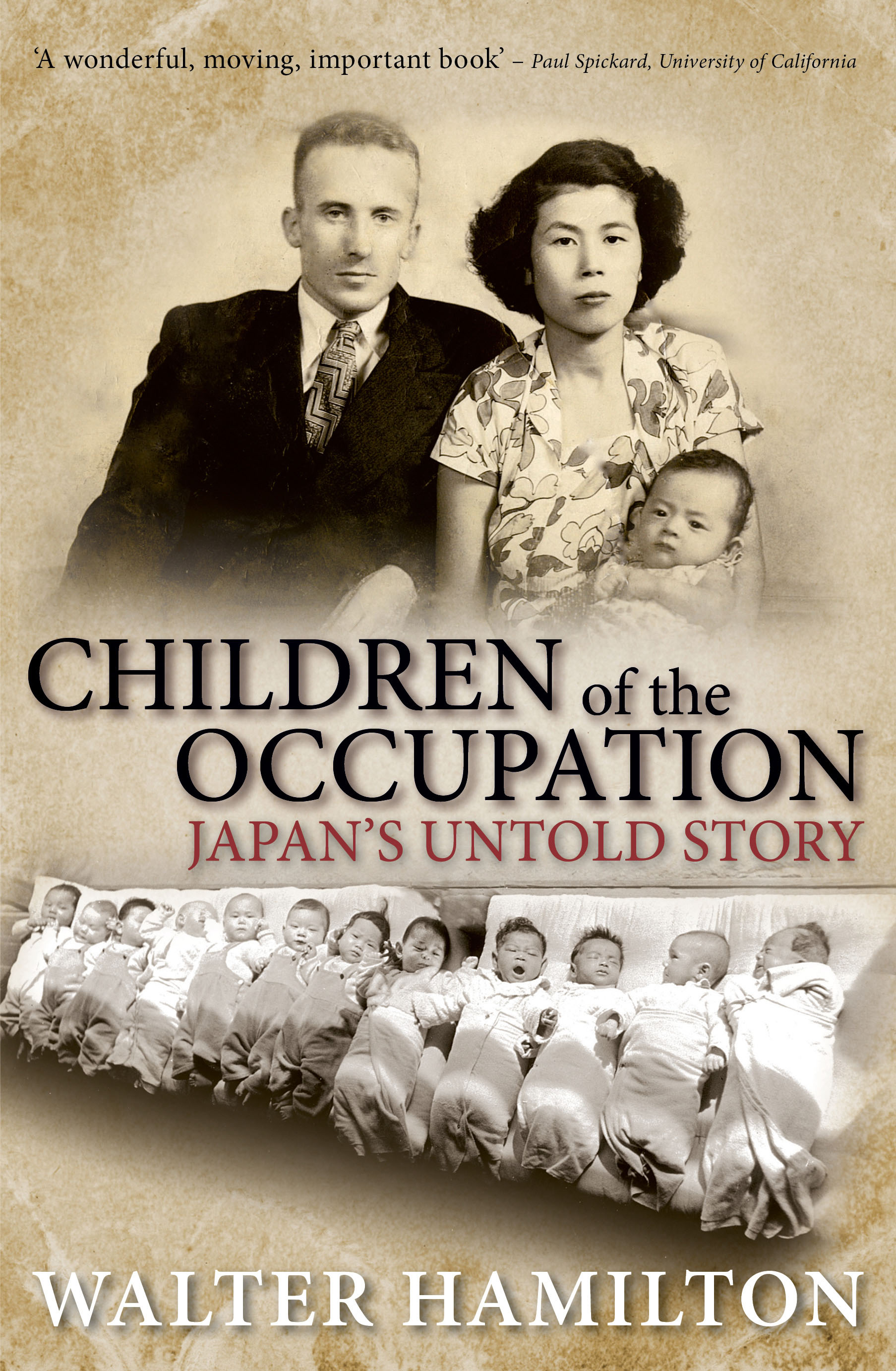
  • Children of the Occupation: Japan’s Untold Story

    NewSouth Books (American Edition coming soon from Rutgers University Press)
    July 2012
    352 pages
    234 x 153mm
    Paperback ISBN: 9781742233314

    Walter Hamilton, Journalist and Author

    This is a beautifully written, deeply moving and well-researched account of the lives of mixed-race children of occupied Japan. The author artfully blends oral histories with an historical and political analysis of international race relations and immigration policy in North America and Australia, to highlight the little-known story of the thousands of children that resulted from the unions of Japanese women and Allied servicemen posted to Japan following WWII. It is a powerful narrative of loss, longing and reconnection, written by the ABC’s long-time Tokyo correspondent, Walter Hamilton.

    Visit the website here.

  • Playing the Gene Card? A Report on Race and Human Biotechnology

    Center for Genetics and Society
    2009
    95 pages

    Osagie K. Obasogie, Associate Professor of Law
    University of California, San Francisco
    Also: Senior Fellow
    Center for Genetics and Society

    Preface by:

    Dorothy Roberts, George A. Weiss University Professor of Law and Sociology; Raymond Pace and Sadie Tanner Mossell Alexander Professor of Civil Rights
    University of Pennsylvania

    Executive Summary

    Race has become a prominent focus for human biotechnology. Despite often good intentions, genetic technologies are being applied in a manner that may provide new justification for thinking about racial difference and racial disparities in biological terms—as if social categories of race reflect natural or inherent group differences.

    The Human Genome Project (HGP) and subsequent research showed that there is less than 1% genetic variation among all humans. Patterns of mating and geographic isolation over thousands of years have conferred genetic signatures to certain populations. Yet scientists have found little evidence to support lay understandings that social categories of race reflect discrete groups of human difference. While HGP findings initially led many to conclude that race (as it is commonly conceived and used) is not genetically significant, the hope that science would promote racial healing has largely not materialized.

    In fact, trends in life science research have shifted the other way. There are increasing efforts to demonstrate the genetic relevance of race by mapping this less than 1% of variation onto social categories of race to find genetic explanations for racial disparities and differences.

    From page 21
    Figure 2: The essentialist and population concepts of race contrasted with the actual patterns of genetic variation (simplified to three geographic categories). Based on the work of Dr. Jeffrey Long at the University of Michigan and depictions created by the Race—Are We So Different? project of the American Anthropological Association.
    A Essentialist concepts of race that were popular throughout the 19th and early 20th century held that the human species was divided into several mutually exclusive yet tangentially overlapping groups based largely upon physical features such as skin color and facial features.
    B Population approaches treat race as clusters of local populations that differ genetically from one another, whereby each group is considered a race. As depicted, this concept suggests an outer periphery of unshared distinctiveness as well as substantial genetic similarity that is highlighted by the overlapping regions.
    C Contemporary data on human diversity supports a “nested subset” approach to race. This reflects the fact that “people have lived in Africa far longer than anywhere else, which has allowed the population in Africa to accumulate more of the small mutations that make up [human] genetic variation. Because only a part of the African population migrated out of Africa, only part of Africa’s genetic variation moved with them. For this reason, most genetic variation found in people living outside Africa is a subset of that found among Africans.”

    Many celebrate these developments as an opportunity to learn more about who we are and why certain groups are sicker than others. Yet some are struck by the extent to which these new conversations aimed at benefiting minority communities communities echo past discussions in which the science of biological difference was used to justify racial hierarchies.

    Although this new research is rapidly evolving and is fraught with controversy, it is being used to develop several commercial and forensic applications that may give new credence to biological understandings of racial difference—often with more certainty than is supported by the available evidence. This unrestrained rush to market race-specific applications and to use DNA technologies in law enforcement can have significant implications for racial minorities:

    • Race-based medicines have been promoted as a way to reduce inequities in healthcare and health outcomes. Yet the methodological assumptions behind them raise as many issues as the questionable market incentives leading to their development.
    • Genetic ancestry tests rely on incomplete scientific methods that may lead to overstated claims. The companies that sell them often suggest that biotechnology can authoritatively tell us who we are and where we come from.
    • DNA forensics have been used to exonerate those who have been wrongly convicted and can provide important tools for law enforcement. However, some forensic applications of genetic technologies might undermine civil rights—especially in minority communities.

    While each of these applications has been examined individually, this report looks at them together to highlight a fundamental concern: that commercial incentives and other pressures may distort or oversimplify the complex and discordant relationship between race, population, and genes. Applications based on such distortions or oversimplifications may give undue legitimacy to the idea that social categories of race reflect discrete biological differences.

    The concerns raised in this report should not be read as impugning all genetic research that implicates social categories of race. There is evidence that socially constructed notions of race may loosely reflect patterns of genetic variation created by evolutionary forces, and that knowledge about them may ultimately serve important social or medical goals. Yet, given our unfortunate history of linking biological understandings of racial difference to notions of racial superiority and inferiority, it would be unwise to ignore the possibility that 21st century technologies may be used to revive long discredited 19th century theories of race.

    Advances in human biotechnology hold great promise. But if they are to benefit all of us, closer attention should be paid to the social risks they entail and their particular impacts on minority communities.

    Contents

    • Executive Summary
    • About the Author
    • Acknowledgments
    • Preface by Dorothy Roberts, Kirkland & Ellis Professor of Law, Northwestern Law School
    • Race Cards and Gene Cards: A Note About the Report’s Title
    • Introduction | Are 21st Century Technologies Reviving 19th Century
      • Theories of Race?
      • How Have New Genetic Theories of Racial Difference Developed?
      • Context: After the Human Genome Project
      • Key Concern: Will Commercial and Forensic Applications Revive Biological Theories of Race?
      • In This Report
      • Sidebar: What Does It Mean to Say that Race Is Not Biologically Significant or that It Is a Social Construction?
    • Chapter 1 | Race-Based Medicine: One Step Forward, Two Steps Back?
      • Pharmacogenomics: The Concept Behind Race-Based Medicine
      • First on the Scene: BiDil
      • Concerns about BiDil
      • Addressing Disparities in Health Through Race-Specific Pharmaceuticals
      • Conclusion: Evaluating Race-Based Medicine
      • Recommendations
      • Sidebars: Major Projects on Human Genetic Variation
        • Why Genetic Variations Matter
        • Top-Down Marketing to the Black Community
        • Historical Theories of Race
        • Are More Race-Based Medicines Around the Corner?
        • The Slavery Hypothesis
    • Chapter 2 | Ancestry Tests: Back to the Future?
      • African American Ancestry
      • Context: Population Genetics
      • From Groups and Populations to Individuals
      • Techniques Used by Ancestry Tests
      • Concerns about the Genetic Ancestry Industry
      • Conclusion: Resisting Racial Typologies
      • Recommendations 30
      • Sidebars: Native Americans and Ancestry Tests
        • Race, Intelligence, and James Watson
        • Bioprospecting and Biopiracy
        • From Race to Population and Back
        • The Business of DNA Ancestry Testing
        • Special Types of DNA
        • Human Genetic Variation—A Work in Progress
    • Chapter 3 | Race and DNA Forensics in the Criminal Justice System
      • How Does It Work?
      • How Reliable Are DNA Forensic Technologies?
      • DNA Databases
      • Cold Hits and Partial Matches
      • Whose DNA Is in These Databases?
      • Sifting DNA Databases to Catch Family Members
      • Predicting Criminality
      • Using DNA to Build Racial Profiles
      • Conclusion: Effects on Minority Communities
      • Recommendations
      • Sidebars: DNA Entrapment?
        • The Scandal in Houston
        • The Innocence Project
        • “The Informer in Your Blood”
        • Juking Stats
        • “The Birthday Problem” and the Limits of Forensic Database Matches
        • Minority Communities and the War on Drugs
        • Civil Liberties and DNA Databases
        • Phrenology, a Classic Pseudo-Science
    • Conclusion
      • Racial Categories in Human Biotechnology Research
      • Race Impact Assessments
      • Responsible Regulation
    • Endnotes
    • About the Center for Genetics and Society

    Read the entire report here.

  • CUNY DSI Monograph Documents Dominican Heritage of First Settler

    The City University of New York
    City College
    2012-10-04

    Juan Rodríguez, native of Santo Domingo, comes to New York in 1613 and stays when his ship sails to Holland

    The first non-native to live in what is now New York City was a black or mixed race Dominican, a new monograph produced by researchers at the CUNY Dominican Studies Institute (CUNY DSI) documents. Juan Rodríguez, who was born on the colony of La Española, now the Dominican Republic, came to the Big Apple in 1613 aboard a Dutch trading vessel en route from the Caribbean. He decided to stay and live among the natives when the ship returned to Holland.
     
    “This is the kind of research that produces new academic knowledge and engages in a conversation with a scholarly community who studies New York City’s early history,” said Dr. Ramona Hernández, director of CUNY DSI. “This research also serves people from a practical point of view: A very early predecessor of the large Dominican population that thrives in New York City today, Juan Rodriguez’s story belongs to the history of all New Yorkers.
     
    “As residents of a port city with a uniquely multiethnic population since its very beginnings next to the mighty Hudson River, New York has always been a community of interactions and intermingling amongst races and ethnicities.”
     
    The monograph was commissioned by the American Chamber of Commerce of the Dominican Republic, which will receive the first copy at a luncheon meeting at City College Thursday, October 4. The following day, a two-hour colloquium with experts in translations and transcription will examine the challenges, excitement and insights of translating the documentation for the Juan Rodríguez story.
     
    Earlier this week, New York City Mayor Michael Bloomberg named a stretch of Broadway between W. 159th Street and W. 218th Street for Mr. Rodríguez. The section of the famed roadway runs through Washington Heights, home of one of the largest concentrations of Dominicans living outside their homeland.
     
    According to archival records reviewed by DSI researchers, Mr. Rodríguez, a black or mulatto free sailor born on La Española, arrived in an estuary of the Hudson River in the spring of 1613, aboard the “Jonge Tobias,” a Dutch ship captained by Thijs Mossel. After two months presumably spent trading with Native Americans, Captain Mossel decided to return to Holland, but Mr. Rodríguez refused to make the journey and was allowed to stay on shore…

    Read the entire article here.