• HIST 387 004: Inventing the Nation in Latin America

    George Mason University
    Spring 2012

    Matt Karush, Associate Professor of History

    Throughout the nineteenth and twentieth centuries, Latin Americans have struggled to define themselves and their nations. This quest for identity has involved governments, intellectuals, and artists, but also ordinary men and women. And the results have been extremely varied: whereas many nineteenth-century liberals dreamed of whitening or Europeanizing their populations, some revolutionaries and nationalists argued that the future lay in a glorious mixing of the European and indigenous or African races. This course will trace this history of identity formation and ask a series of key questions: Why did some formulations of race and nation gain acceptance in some places but not in others? What impact did these identities have on people’s lives? How have ideas about race and nation been expressed in popular culture? In addition to work by historians, we will be examining many primary sources: novels, essays, films, and music. We will focus particular attention on the cases of Colombia, Cuba, Mexico, and Brazil.

  • Blackness in Argentina: Jazz, Tango and Race Before Perón*

    Past and Present
    Volume 216, Issue 1 (August 2012)
    pages 215-245
    DOI: 10.1093/pastj/gts008

    Matthew B. Karush, Associate Professor of History
    George Mason University

    On the question of race and nation, the dominant Latin American paradigm has never applied to Argentina. In Mexico, Brazil and elsewhere, twentieth-century nationalists crafted ideologies of mestizaje that broke with European and North American models by celebrating the indigenous or African as crucial elements in a new racial mixture. Yet most Argentine intellectuals rejected this sort of hybridity and instead constructed national identities that were at least as exclusionary as those produced by their North American counterparts. The only mixtures they countenanced were those that followed from European immigration. Just as the United States was a ‘melting pot’, Argentina was a crisol de razas (crucible of races), in which Spaniards, Italians and other immigrant groups were fused into a new nation. This ideology, visible in the well-known aphorism that ‘Argentines descend from ships’, marginalized Argentines of indigenous and African descent and eventually erased them from national consciousness. As George Reid Andrews showed over thirty years ago, the alleged disappearance of the once-substantial Afro-Argentine population of Buenos Aires was at least as much the product of this ideological manoeuvre as it was the result of miscegenation, war and disease. Only recently has Argentina’s status as a white nation begun to be openly contested.

    Nevertheless, even if non-whites have been pushed off the historical stage, race remains a pervasive category in Argentine society. The word ‘negro’ is a commonplace in everyday speech, functioning both as a hateful insult and, paradoxically, as a term of endearment. Equally mysteriously, the insult usually alludes to indigenous rather than African ancestry. Typically, these usages are traced to the Peronist era. During his first two terms in office (1946–55), Juan Perón built a powerful working-class movement that challenged the nation’s hierarchies. Perón’s opponents attacked his followers in racial terms, labelling them cabecitas negras (little blackheads)…

    Read or purchase the article here.

  • Racial Theories (2nd Edition)

    Cambridge University Press
    April 1998
    264 pages
    Dimensions: 228 x 152 mm
    Paperback ISBN:9780521629454

    Michael Banton, Emeritus Professor of Sociology
    University of Bristol

    This thoroughly revised and updated edition of Michael Banton’s classic book reviews historical theories of racial and ethnic relations and contemporary struggles to supersede them. It shows how eighteenth- and nineteenth-century concepts of race attempted to explain human difference in terms of race as a permanent type and how these were followed by social scientific conceptions of race as a form of status. In a new concluding chapter, “Race as Social Construct,” Michael Banton makes the case for a historically sensitive social scientific understanding of racial and ethnic groupings that operates within a more general theory of collective action and is, therefore, able to replace racial explanations as effectively as they have been replaced in biological science. This book is essential reading for anyone wanting to understand contemporary debates about racial and ethnic conflict. This new edition is thoroughly updated and contains a new chapter on developments in recent years.

    Features

    • Reviews history of racial theories and place of race in history of science
    • Proposes new social science of racial and ethnic relations
    • Distinguishes racial and ethnic explanations and puts contemporary ideas in historical perspective

    Table of Contents

    1. Race as designation
    2. Race as lineage
    3. Race as type
    4. Race as subspecies
    5. Race as status
    6. Race as class
    7. Race as social construct
  • Brazil’s New Racial Politics

    Lynne Rienner Publishers
    2009
    251 pages
    ISBN: 978-1-58826-666-8

    Edited by:

    Bernd Reiter, Associate Professor of Political Science
    University of South Florida

    Gladys L. Mitchell (Gladys Mitchell-Walthour), Assistant Professor of Political Science
    Denison University, Granville, Ohio

    As the popular myth of racial equality in Brazil crumbles beneath the weight of current grassroots politics, how will the country redefine itself as a multiethnic nation? Brazil’s New Racial Politics captures the myriad questions and problems unleashed by a growing awareness of the ways racism structures Brazilian society.

     The authors bridge the gap between scholarship and activism as they tackle issues ranging from white privilege to black power, from government policy to popular advocacy, and from historical injustices to recent victories. The result is a rich exploration of the conflicting social realities characterizing Brazil today, as well as their far-reaching political implications.

    Contents

    • Foreword—Michael Mitchell.
    • 1. The New Politics of Race in BrazilBernd Reiter and Gladys L. Mitchell.
    • BLACK EMPOWERMENT AND WHITE PRIVILEGE.
      • 2. Whiteness as Capital: Constructing Inclusion and Defending Privilege—Bernd  Reiter.
      • 3. Politicizing Blackness: Afro-Brazilian Color Identification and Candidate Preference—Gladys L. Mitchell
      • 4. Out of Place: The Experience of the Black Middle Class—Angela Figueiredo.
      • 5. The Political Shock of the Year: The Press and the Election of a Black Mayor in São Paulo—Cloves Luiz Pereira Oliveira.
    • AFFIRMATIVE ACTION CONTESTED.
      • 6. Affirmative Action and Identity—Seth Racusen.
      • 7. Opportunities and Challenges for the Afro-Brazilian Movement—Mónica Treviño González.
    • THE NEW POLITICS OF BLACK POWER.
      • 8. Racialized History and Urban Politics: Black Women’s Wisdom in Grassroots Struggles—Keisha-Khan Y. Perry.
      • 9. Black NGOs and “Conscious” Rap: New Agents of the Antiracism Struggle in Brazil—Sales Augusto dos Santos.
      • 10. Power and Black Organizing in Brazil—Fernando Conceição.
      • 11. New Social Activism: University Entry Courses for Black and Poor Students—Renato Emerson dos Santos.
    • CONCLUSION.
      • After the Racial Democracy—Bernd Reiter and Gladys L. Mitchell.
  • Wild Frenchmen and Frenchified Indians: Material Culture and Race in Colonial Louisiana

    University of Pennsylvania Press
    November 2012
    384 pages
    6 x 9 | 33 color, 17 b/w
    Cloth ISBN: 978-0-8122-4437-3

    Sophie White, Associate Professor of American Studies; Associate Professor of Africana Studies; Associate Professor of History
    University of Notre Dame

    Based on a sweeping range of archival, visual, and material evidence, Wild Frenchmen and Frenchified Indians examines perceptions of Indians in French colonial Louisiana and demonstrates that material culture—especially dress—was central to the elaboration of discourses about race.

    At the heart of France’s seventeenth-century plans for colonizing New France was a formal policy—Frenchification. Intended to turn Indians into Catholic subjects of the king, it also carried with it the belief that Indians could become French through religion, language, and culture. This fluid and mutable conception of identity carried a risk: while Indians had the potential to become French, the French could themselves be transformed into Indians. French officials had effectively admitted defeat of their policy by the time Louisiana became a province of New France in 1682. But it was here, in Upper Louisiana, that proponents of French-Indian intermarriage finally claimed some success with Frenchification. For supporters, proof of the policy’s success lay in the appearance and material possessions of Indian wives and daughters of Frenchmen.

    Through a sophisticated interdisciplinary approach to the material sources, Wild Frenchmen and Frenchified Indians offers a distinctive and original reading of the contours and chronology of racialization in early America. While focused on Louisiana, the methodological model offered in this innovative book shows that dress can take center stage in the investigation of colonial societies—for the process of colonization was built on encounters mediated by appearance.

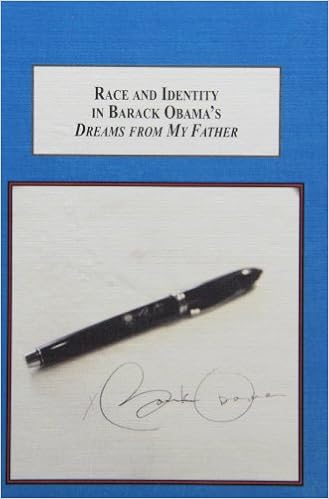
  • Race and Identity in Barack Obama’s Dreams from My Father: A Collection of Critical Essays

    Edwin Mellen Press
    June 2012
    308 pages
    ISBN10:  0-7734-1601-3; ISBN13: 978-0-7734-1601-7

    Edited by:

    Michael A. Zeitler, Associate Professor of English
    Texas Southern University, Houston

    Charlene T. Evans, Professor of English
    Texas Southern University, Houston

    This book examines significant aspects of President Barack Obama’s Dreams from My Father both in relation to the African American literary tradition and to the context of the relevant historical and cultural productions that inform it. The authors view the book a work of literature and compare it to other works by black authors such as Toni Morrison, Frederick Douglass, and Ralph Ellison among others. Some authors contest the idea that the book was written during a pre-political stage in President Obama’s life because it was released to coincide with his first political campaign in Chicago, Illinois in the mid-1990’s. For autobiographical reasons the book is important because it shows various aspects of President Obama’s upbringing, and put in his own words his experience of being black in America. There is also a discussion of why he chose the less Americanized Barack when he went into college, rather than the homogeneous, whitened name Barry, which was the name he preferred in grammar school (out of being teased by other children)—and how he chose this name precisely because it constructed his identity as antithetical to the dominant paradigms of whiteness that he had been confined to while growing up in Hawaii. One article even describes President Obama’s father being ostracized from Kenyan politics after a coup d’etat forced a leader out of power who he had publically supported, which lead the family to America. It also tells the story of a turgid paternal influence on the young Barack Obama, where caught in a vicious cycle of perpetually working for his father’s approval, he spiraled into low self-esteem, which may have fueled his political ambitions later in life (as overcompensation for a lack of fatherly approval).

    Table of Contents

    • Foreword / Molefi Kete Asantei
    • Acknowledgements
    • Introduction / Michael A. Zeitler
    • A Knot to Bind Our Experiences Together: Storytelling in Barack Obama’s Dreams from My Father and Critical Race Theory / Erin Ponton Fiero
    • No Apology for the Show: Performance and Oratorical Self-Creation in Obama, Douglass, and Ellison / Granville Ganter
    • Slumming and Self-Making in Barack Obama’s Dreams from My Father / David Mastey
    • In Search of My Father’s Garden: Kenya as the Focal Point for the Study of a New Kind of Narrative in African American Autobiography / Claire Joly
    • An Image of Africa: Race and Identity in Barack Obama’s Rewriting of Conrad’s ‘Heart of Darkness’ / Michael Zeitler
    • Obama, Ellison, and the Search for Identity / Rita Saylors
    • Voices of His Mothers: Feminist Interventions and Identity in Barack Obama’s Dreams from My Father / Letizia Guglielmo
    • Queer Coherence: Loss and Hybridity in Barack Obama’s Dreams from My Father / Patricia Harris Gillies
    • The Search for Race and Masculine Identity in Barack Obama’s Dreams from My Father / Dolores Sisco
    • Beyond Race: Racial Transcendence in Jean Toomer’s Cane and Barack Obama’s Dreams from My Father / Charlene T. Evans
    • Glorious Burdens: A Lacanian Reading of Racial Passing, Inheritance, and Paternal Desire in Obama’s Dreams from My Father / Nicholas Powers
  • The Heart of Hyacinth

    University of Washington Press
    2000 (Originally published in 1903)
    288 pages
    5-1/2 x 8-1/2
    Paperback ISBN: paperback (9780295979168

    Onoto Watanna (Winnifred Eaton) (1875-1954)

    Introduction by:

    Samina Najmi, Professor of English
    California State University, Fresno

    The Heart of Hyacinth, originally published in 1903, tells the coming-of-age story of Hyacinth Lorrimer, a child of white parents who was raised from infancy in Japan by a Japanese foster mother and assumed to be Eurasian. A crisis occurs when, 18 years after her birth, her American father returns to Japan to reclaim her just as Hyacinth has become engaged to a Japanese aristocrat, and she forcefully asserts her Japanese ties only to find that her prospective father-in-law will not tolerate a white wife for his son. Onoto Watanna creates in her protagonist a young white woman who not only claims a Japanese identity but shifts between her Japaneseness and her whiteness as expediency dictates. In this novel Watanna is on the cutting edge of what we now call race theory, using that theory-of racial constructions and fluidity-in the service of an avant-garde feminism.

    Onoto Watanna (pen name for Winnifred Eaton) was a popular writer of American romance novels. Daughter of a Chinese mother and English father, she used her own mixed heritage to explore diverse social issues and exploited the Orientalist fantasies of her readership to become a best-selling author. Samina Najmi is visiting assistant professor in English at Wheaton College and has written extensively on women and race in Asian American literature.

  • Ambivalent passages: racial and cultural crossings in Onoto Watanna’s The Heart of Hyacinth

    MELUS: Multi-Ethnic Literature of the U.S.
    Volume 34, Number 1 (Spring 2009)
    pages 211-229
    DOI: 10.1353/mel.0.0004

    Huining Ouyang, Professor of English
    Edgewood College, Madison, Wisconsin

    Appearing in the early fall of 1903 in time for the Christmas season, The Heart of Hyacinth, like other Japanese romances by Onoto Watanna (Winnifred Eaton), was widely promoted as a holiday gift book, enchanting readers with its “exquisite” Japanese design and its “delicate,” “charming” tale of Japan. For many, their pleasure in the novel’s Japanese appearance and sentiment was enhanced by their knowledge of its author’s alleged Japanese nativity or ethnicity. As one reviewer emphasizes: “We have a childish pleasure in things Japanese. . . . There is, therefore, a piquant pleasure for us in a story of Japanese life written by a native” (Heart, Republican). Similarly, another reviewer opens by introducing the author as “Onoto Watanna, the dainty little gentlewoman from Japan, who writes so delightfully of her native country” (“Heart,” Banner). Others, on the other hand, attribute the author’s “sympathy with Japanese life” (Kinkaid) or her portrayal of Japanese life “as seen from the inside” (Heart, Register) to her half-Japanese parentage. Thus, still largely convincing to the reading public, Watanna’s Japanese writing persona continued to allow her to dissimulate as an exemplar of the feminine, simple aesthetic and authentic ethnographer of Japan.

    Watanna’s performance of Japaneseness, through her “Japanese” romances and especially her Japanese authorial persona, links her with the practice of “passing,” or the crossing of identity boundaries by those on the racial and cultural margins. An act of transgression, passing allows an individual in the liminal position, as Elaine K. Ginsberg puts it, to “assume a new identity, escaping the subordination and oppression accompanying one identity and accessing the privileges and status of the other” (3). As a woman of Chinese and English descent living and writing in an era of virulent anti-Chinese sentiments in North America, Onoto Watanna devised strategies of passing not only to escape personal and racial persecution but also to achieve authorship in a white-male-dominant literary marketplace. By appropriating the popular genre of Japanese romance and adopting the guise of an exotic half-Japanese woman writer, she exploited her white reading audience’s orientalist fantasies and enabled herself to achieve visibility and authority in a field dominated by such luminaries as Lafcadio Hearn, Pierre Loti, and John Luther Long.
     
    In The Heart of Hyacinth, however, passing serves as not only a tactic of ethnic female authorship but also an important narrative strategy that governs both theme and plot. Although reviewers have variously described it as “an ideal gift-book,” “a Japanese idyll,” or a delicate “Japanese love story,” Watanna’s novel weaves, in effect, a complex narrative of identity in which she negotiates with orientalist binary constructions of the East and the West and explores through the Eurasian figure the promise and perils of boundary crossing. As its title suggests, Watanna’s novel centers on the tale of Hyacinth, a white American “orphan” who has been adopted and reared by a Japanese woman and who discovers her white racial origin when her American father attempts to claim her seventeen years after her birth. Although she eventually comes to terms with her white parentage, her heart belongs to her Japanese adoptive mother and to Komazawa, the Eurasian foster-brother she grew up with and with whom she now falls in love. However, like Watanna’s first novel, Miss Numè of Japan, The Heart of Hyacinth tells more than what its title seems to imply. Hyacinth’s struggles with her familial, cultural, and racial allegiances intersect with her adoptive Eurasian brother’s negotiations of his own mixed heritage. Despite her discovery of her white heritage, Hyacinth claims a Japanese identity and resists Western colonial paternalism, while Komazawa passes into British society and navigates his biraciality with apparent ease in his endeavors to become “English.”

    A coming-of-age narrative of two Eurasians, one actual and the other metaphorical, Watanna’s novel thus imagines passing in two different forms. On the one hand, through Komazawa’s physical and…

  • A Mulatto Area Gets Own School

    The New York Times
    1962-09-16
    page 73

    Hedrick Smith, Special to the New York Times

    Desegregation Moves Roi Louisiana Caste System

    BURAS, La., Sept. 13—Freda’s Hi-Lo Bar sits just off State Highway 23 as the road chases the Mississippi River on its last 100 miles from the suburbs of New Orleans to the Gulf of Mexico.

    It is a white-frame building only slightly larger than the small cottages that surround it on the west bank of the river.

    For the last week, workmen have been refurbishing it and improving its lighting and plumbing. For the second time since World War II It is being transformed into a school for mulattoes, or, as they are sometimes called here, Hi-Lo’s.

    The bar, long patronized exclusively by mulattoes, is a symbol of one of the most extensive caste systems of the South.

    In the life, of Plaquemines Parish (County), and particularly of the town of Buras, there are not just two, but three, racial groupings. At the top of what one writer has called a “layer cake of color” are the whites. At the bottom are the dark Negroes. In between are lighter-skinned Negroes, or mulattoes, whose ancestry is racially mixed.

    500 Families in Parish

    The mulattoes are sprinkled throughout the parish. Local officials estimate there are about 500 families. The largest group of them lives just north of Buras, in the houses surrounding the Hi-Lo Bar and a Roman Catholic school for mulattoes.

    Their faces have a Latin appearance. Many have straight hair, sharp noses, thin lips and freckles. Within families, their color can range from a rich mahogany to a tawny yellow.

    Who determines whether they are mulattoes or Negroes?

    “They determine it themselves.” say the whites.

    Some Negroes assent with bitterness.

    “They try to be something: they are not.” said Mrs. Joseph Powell, a Negro woman who tried last year to send her daughter to the Catholic mulatto school but was turned down.

    The mulattoes’ presence in this marshy delta territory antedates slave times. Old parish records note a number of slave owners who were “freemen of color.” Some of these are believed to have come here from Santo Domingo

    …Archdiocese Desegregates

    The move toward a public school for mulattoes followed the decision of the Archdiocese of New Orleans to desegregate its parochial schools this fall.

    Five Negro children went to the white parochial school here on Aug. 29. A white boycott followed, and the parish priest, the Rev. Christopher Schneider, closed down the school briefly because of “threats of physical Violence and economic reprisals.”

    Some white students have since returned, but the five Negroes have never been back. Two of them, however, began attending the school for mulattoes.

    Luke Petrovich, Commissioner of Public Safety, said that because of this the county was converting the bar into a public school for mulattoes. “Some of the mulatto parents contacted us concerning public school facilities for them” he said.

    Others think, however, that the new public school may be an attempt to lure mulattoes away from the parochial school where some racial distinctions are being erased. They think that whites want to keep mulattoes as a buffer between them and the darker Negroes.

    But there are indications that the bitterness and” jealousy between the dark Negroes and the mulattoes may be dissolving. Some mulatto parents say they will refuse to take their children out of the Catholic school just because Negroes are there.

    Read or purchase the entire article here.

  • Creeks and Southerners: Biculturalism on the Early American Frontier

    University of Nebraska Press
    2005
    202 pages
    Hardcover ISBN: 978-0-8032-2016-4
    Paperback ISBN: 978-0-8032-6841-8

    Andrew K. Frank, Allen Morris Associate Professor of History
    Florida Atlantic University

    Creeks and Southerners examines the families created by the hundreds of intermarriages between Creek Indian women and European American men in the southeastern United States during the eighteenth and early nineteenth century. Called “Indian countrymen” at the time, these intermarried white men moved into their wives’ villages in what is now Florida, Georgia, and Alabama. By doing so, they obtained new homes, familial obligations, occupations, and identities. At the same time, however, they maintained many of their ties to white American society and as a result entered the historical record in large numbers.

    Creeks and Southerners studies the ways in which many children of these relationships lived both as Creek Indians and white Southerners. By carefully altering their physical appearances, choosing appropriate clothing, learning multiple languages, embracing maternal and paternal kinsmen and kinswomen, and balancing their loyalties, the children of intermarriages found ways to bridge what seemed to be an unbridgeable divide. Many became prominent Creek political leaders and warriors, played central roles in the lucrative deerskin trade, built inns and taverns to cater to the needs of European American travelers, frequently moved between colonial American and Native communities, and served both European American and Creek officials as interpreters, assistants, and travel escorts. The fortunes of these bicultural children reflect the changing nature of Creek-white relations, which became less flexible and increasingly contentious throughout the nineteenth century as both Creeks and Americans accepted a more rigid biological concept of race, forcing their bicultural children to choose between identities.

    Contents

    • Acknowledgments
    • Series Editors’ Introduction
    • Introduction: The Problem of Identity in the Early American Southeast
    • Chapter 1: The Invitation Within
    • Chapter 2: “This Asylum of Liberty”
    • Chapter 3: Kin and Strangers
    • Chapter 4: Parenting and Practice
    • Chapter 5: In TwoWorlds
    • Chapter 6: Tustunnuggee Hutkee and the Limits of Dual Identities
    • Chapter 7: The Insistence of Race
    • Epilogue: Race, Clan, and Creek
    • Abbreviations
    • Notes
    • Selected Bibliography
    • Index