• The Future of the ‘Tan Generation’

    The Root
    2012-06-08

    Jenée Desmond-Harris

    Browner America: Marcia Alesan Dawkins says an increase in nonwhite births doesn’t mean more social justice.

    (The Root)—Recent census data reveal that, for the first time, racial and ethnic minorities make up more than half of all children born in the United States, with 50.4 percent of children under age 1 identified as Hispanic, black, Asian American or members of another ethnic minority group.

    In terms of the overall population, African Americans are the second-largest minority group in the nation (after Hispanics), with a 1.6 percent increase between 2010 and 2011. Minorities now make up nearly 37 percent of the overall U.S. population, and it’s predicted that by 2042, a minority of Americans will be non-Hispanic whites.

    What do all these numbers mean for our understanding of race, for the issues that affect communities of color and for our very concept of who is a “minority” in this country? The Root has gathered a variety of perspectives on the significance of America’s becoming a browner nation for a series of interviews on whether, and why, we should pay attention to these demographic changes.

    For the second in the series, The Root talked to Marcia Alesan Dawkins, visiting scholar at Brown University and author of the forthcoming Clearly Invisible: Racial Passing and the Color of Cultural Identity. She describes her extensive writing on racial identity as an expression of her interest in “how people figure out who they are and how they connect with others,” and has warned against rushing to assume that demographic changes will do away with America’s troubled racial past

    …The Root: Are we going to need a new vocabulary, a new word for “minority,” when minorities become the majority? As more Americans have nonwhite ancestry, will the definition of whiteness itself be affected?

    Marcia Dawkins: Yes, on both counts. We are going to need new terms that reflect numerical reality and social-political reality. Part of that implies thinking about what race and ethnicity mean in general and what specific racial and ethnic, and multiracial and multiethnic, identities mean in particular. At the same time, we’ve got to remember that every racial or ethnic community has some issues and experiences in common and is also unique.

    For one, these changes mean that the white-black and white-people of color binaries need to be rethought and replaced with a full-color perspective on race and ethnicity. A full-color perspective acknowledges that racial and ethnic mixing has been part of our social fabric since Europeans met and mated with Native Americans; that it continued on through African enslavement and segregation and Asian exclusion and internment; that it progressed with increased rates of Hispanic immigration and is still with us as increasing numbers of interracial and multiracial couples get together and have children today. A full-color perspective must also acknowledge that racial and ethnic mixing has been occurring for centuries in same-sex communities as well.

    On one hand, sociologists predict that the definition of whiteness will expand to include Hispanic and Asian groups but will always exclude those with African-American descent in order to maintain political and social power. On the other hand, this prediction is reductive because it assumes that only those who will continue to identify as white will be privileged and that those who will continue to identify as black will be non-privileged. It also ignores the fact that, generally speaking, to be African American is to be racially mixed

    Read the entire article here.

  • Librarian of Congress Appoints Natasha Trethewey Poet Laureate

    Library of Congress
    News from the Library of Congress
    2012-06-07

    Librarian of Congress James H. Billington today announced the appointment of Natasha Trethewey as the Library’s Poet Laureate Consultant in Poetry for 2012-2013.

    Trethewey, the 19th Poet Laureate, will take up her duties in the fall, opening the Library’s annual literary season with a reading of her work on Thursday, September 13 in the Coolidge Auditorium. Her term will coincide with the 75th anniversary of the Library’s Poetry and Literature Center and the 1937 establishment of the Consultant-in-Poetry position, which was changed by a federal law in 1986 to Poet Laureate Consultant in Poetry.
     
    “Natasha Trethewey is an outstanding poet/historian in the mold of Robert Penn Warren, our first Poet Laureate Consultant in Poetry,” Billington said. “Her poems dig beneath the surface of history—personal or communal, from childhood or from a century ago—to explore the human struggles that we all face.”…

    Read the entire press release here.

  • Although race is void of biological foundation, it has a profound social reality. All too apparent are disparities in health and welfare. Despite all the evidence indicating that “race” has no biological or evolutionary meaning, the biological-race concept continues to gain strength today in science and society, and it is reinforced by those who design and market DNA-based technologies. Race is used more and more in forensics, medicine and the genetic-ancestry business. Tattersall and DeSalle confront those industries head on and in no uncertain terms, arguing that “race-based medicine” and “raced-based genomics” are deeply flawed. Individuals fall ill, not populations. Belonging to any socioculturally defined race is a poor predictor of an individual’s genes, and one’s genes a poor predictor of one’s health.

    Jan Sapp, “Race Finished: Book Review,” American Scientist, April-May, 2012. http://www.americanscientist.org/bookshelf/pub/race-finished.

  • Selected Poems by Natasha Trethewey

    The New York Times
    2012-06-06

    Poems by Natasha Trethewey, the newly named poet laureate.

    PASTORAL

    In the dream, I am with the Fugitive
    Poets. We’re gathered for a photograph.
    Behind us, the skyline of Atlanta
    hidden by the photographer’s backdrop —
    a lush pasture, green, full of soft-eyed cows
    lowing, a chant that sounds like no, no. Yes,
    I say to the glass of bourbon I’m offered.
    We’re lining up now — Robert Penn Warren,
    his voice just audible above the drone
    of bulldozers, telling us where to stand.
    Say “race,”
    the photographer croons. I’m in
    blackface again when the flash freezes us.
    My father’s white,
    I tell them, and rural.
    You don’t hate the South?
    they ask. You don’t hate it?

    Read the poems here.

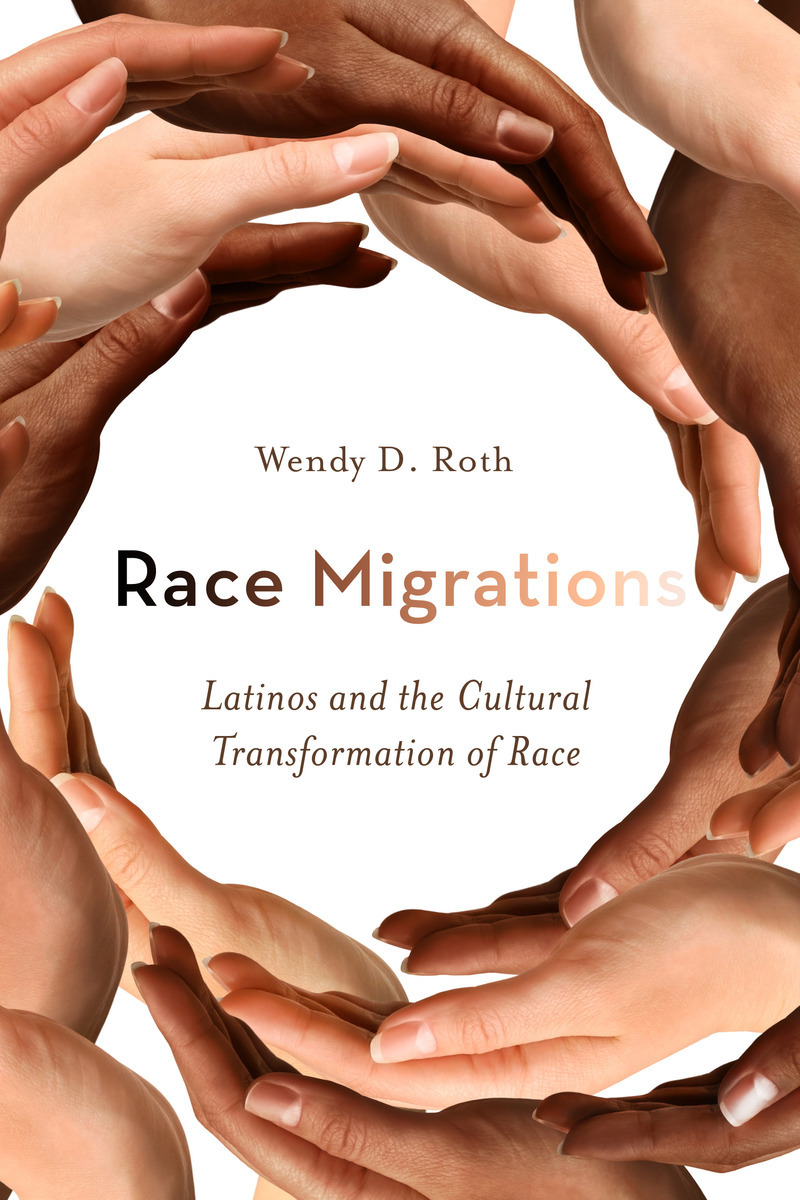
  • Race Migrations: Latinos and the Cultural Transformation of Race

    Stanford University Press
    April 2012
    268 pages
    6 tables, 1 figure, 20 photographs
    Cloth ISBN: 9780804777957
    Paper ISBN: 9780804777964
    E-book ISBN: 9780804782531

    Wendy D. Roth, Associate Professor of Sociology
    University of British Columbia, Canada

    In this groundbreaking study of Puerto Rican and Dominican migration to the United States, Wendy D. Roth explores the influence of migration on changing cultural conceptions of race—for the newcomers, for their host society, and for those who remain in the countries left behind. Just as migrants can gain new language proficiencies, they can pick up new understandings of race. But adopting an American idea about race does not mean abandoning earlier ideas. New racial schemas transfer across borders and cultures spread between sending and host countries.

    Behind many current debates on immigration is the question of how Latinos will integrate and where they fit into the U.S. racial structure. Race Migrations shows that these migrants increasingly see themselves as a Latino racial group. Although U.S. race relations are becoming more “Latin Americanized” by the presence of Latinos and their views about race, race in the home countries is also becoming more “Americanized” through the cultural influence of those who go abroad. Ultimately, Roth shows that several systems of racial classification and stratification co-exist in each place, in the minds of individuals and in their shared cultural understandings of “how race works.”

    Contents

    • List of Illustrations
    • Acknowledgments
    • 1. How Immigration Changes Concepts of Race [Read an excerpt here.]
    • 2. Beyond the Continuum: Race in the Dominican Republic and Puerto Rico
    • 3. Migrant Schemas: Race in the United States
    • 4. Transnational Diffusion
    • 5. Multiple Forms of Racial Stratification
    • 6. Performing Race Strategically
    • 7. Is Latino Becoming a Race?
    • Cultural Change and Classifications
    • Appendix: Notes on Methodology
    • Notes
    • Index
  • The Origin of the Van Guilders

    History’s Faces
    2012-05-25

    Debra Winchell

    Recently the Associated Press published an article by Travis Loller saying that DNA study seeks the origin of Appalachia’s Melungeons. In a excerpt Mr. Loller wrote:

    In recent years, it has become a catchall term for people of mixed-race ancestry and has been applied to about 200 communities in the eastern U.S. — from New York to Louisiana.

    Among them were the Montauks, the Mantinecocks, Van Guilders, the Clappers, the Shinnecocks and others in New York. Pennsylvania had the Pools; North Carolina the Lumbees, Waccamaws and Haliwas and South Carolina the Redbones, Buckheads, Yellowhammers, Creels and others. In Louisiana, which somewhat resembled a Latin American nation with its racial mixing, there were Creoles of the Cane River region and the Redbones of western Louisiana, among others.

    As a result of researching the Van Guilders for over fifteen years, I know that the Van Gilders/Van Guilders from western Massachusetts, upstate New York and Vermont are not Melungeon.   The founder of the family was Jan Van Gelder, a MohicanWappinger man who married the German Palatine woman Anna Maria Koerner in Kingston, New York, in 1719.  They lived in what is now present day Berkshire County on the west bank of the Green River, southwest of Great Barrington

    Read the entire article here.

  • New Laureate Looks Deep Into Memory

    The New York Times
    2012-06-06

    Charles McGrath

    The Library of Congress is to announce Thursday that the next poet laureate is Natasha Trethewey, the Pulitzer Prize-winning author of three collections and a professor of creative writing at Emory University in Atlanta. Ms. Trethewey, 46, was born in Gulfport, Miss., and is the first Southerner to hold the post since Robert Penn Warren, the original laureate, and the first African-American since Rita Dove in 1993.

    “I’m still a little in disbelief,” Ms. Trethewey said on Monday.

    Unlike the recent laureates W. S. Merwin and her immediate predecessor, Philip Levine, both in their 80s when appointed, Ms. Trethewey, who will officially take up her duties in September, is still in midcareer and not well-known outside poetry circles. Her work combines free verse with more traditional forms like the sonnet and the villanelle to explore memory and the racial legacy of America. Her fourth collection, “Thrall,” is scheduled to appear in the fall. She is also the author of a 2010 nonfiction book, “Beyond Katrina: A Meditation on the Mississippi Gulf Coast.”…

    Read the entire article here.

  • Some Anthropological Characteristics of Anglo-Negro Children

    The Journal of the Royal Anthropological Institute of Great Britain and Ireland
    Volume 73, Numbers 1/2 (1943)
    pages 57-73

    K. L. Little, M.A., Ph.D.
    The Duckworth Laboratory
    University Museum of Archaeology and Ethnology, Cambridge

    I. Introduction

    Although fairly large Negro communities have been in existence in Liverpool, Cardiff, London and other ports of the kingdom since the time of the Great War, very little advantage has so far been taken of the opportunities ostensibly available there for the study of racial mixture. The work of Miss R. M. Fleming (1939), who examined a large number of Anglo-Negro and other crosses, mainly in Liverpool, is an exception, but she designed her investigations more from the standpoint of family than of group inheritance. In the present inquiry, which was carried out during a series of visits to Cardiff, Hull and Liverpool in the summer months of 1941, 1942, and 1943, an attempt has been made—so far as the nature of the material allows—to examine certain aspects of mixture on linen more familiar to the anthropologist. The data presented relate to groups rather than to individuals. Perhaps a word on the methodological implications of this point may be permitted. It is evident, in the popular discussion of the topic, that a great deal of confusion has arisen in this country, as well as elsewhere, through failure to appreciate the significance of individual, as opposed to group, situations. Yet the issue is quite plain, provided its nature is understood. Since the term “race” is essentially a concept relating to a group of people, it is incorrect to speak of certain results following from racial mixture unless such results can be shown as well marked characteristics of a “hybrid” population, regarded not as the product of individuals genetically more or less unrelated to each other, but as the product of racially unrelated groups of individuals. This significant distinction has been made somewhat pungently by Ruth Benedict (1942) in a book in which she points out that miscegenation, like race, is an abstraction: the mating of two persona is a reality. It is possible, also, that a great deal of unnecessary controversy, as well as confusion, would be obviated if it was realised more widely that biological differences between individual members of the same racial group are usually greater than the differences between typical individuals representing different racial groups. Marked “overlapping ” in anthropological characteristics is nearly always found in comparisons between different populations, even when they are racially quite distinct.

    The urgency of clarification of this matter needs to be emphasised. Until the biological and sociological aspects of the problem are recognised as quite separate parts of the field, and until the problem has been shorn of biological mysticism, the study of racial mixture in this country, considered as a topic concerning human biology, will remain a difficult and unenviable task for the investigator.

    II. Anthropometric Criteria Employed

    The data which are analysed in the following Tables and Figures relate to some 460 male and female ” English” and Anglo-Negro children, the offspring of members of the seafaring communities of the ports mentioned. Most of these subjects were living in Cardiff and Liverpool, and they had an environment, in their dockland habitat, which is not unlike that of other children of the same social and economic class as themselves. On nearly all these subjects some two dozen measurements and a number of observations regarding the colours of hair, eye and skin, and the condition of the teeth, were taken. The object of the investigation was to compare the Anglo-Negro (“hybrid”) and ” English ” populations in terms of the central tendency, variation and growth of physical characters. The latter sample may reasonably be regarded as being made up by juvenile representatives of one of the parental stocks from which the former was derived.   As wide an assortment of characters as was practicable was employed, and having regard to the racial elements concerned—-i.e. Negroid and Caucasoid — special attention was paid to features such as nasal breadth and shape, thickness of lip, colour of skin, etc., which make the clearest distinction between the parental groups. In view of the relative consistency of environmental factors, it was thought best to include for secondary consideration some of the more modifiable characters such as stature, height sitting, and weight…

  • A Color Problem in England

    The Journal of the American Medical Association
    Volume 95, Number 3 (1930-07-19)
    Foreign Letters: London Letter
    pages 210-211
    DOI: 10.1001/jama.1930.02720030040020

    From Our Regular Correspondent (1930-06-21)

    There is no color line in England such as exists in America. This does not mean that the English do not appreciate differences of race. They are keen on such differences, even between European races, and often contrast the Latin races with themselves. They are by no means without race prejudices but at the same time they have a strong tendency to take a man for what he is, regardless of race or of color. His color may arouse prejudice but this may be overcome when he is known. This absence of a color line has given rise to a color problem. The great seaport of Liverpool is frequented by seamen of many races, including Chinese and many Negroes from West Africa. The cohabitation of these races with the women of the city has given rise to a half-caste population. The number of Anglo-Negroid families is about 450 and the children born of this union amount to about 1,350. On the other hand, the Anglo-Chinese children do not provide any particular problem. The Anglo-Chinese child is declared to be mentally equal if not superior to the white, and since coloring and features are far less distinctive than those of the Anglo-Negroids they are not such a handicap. Further, the family life appears to be stable, the man remaining faithful to one woman though not married to her. The Anglo-Negroid family is far different. A Liverpool association for the welfare of half-caste children has been formed. The chairman, Prof. P. M. Roxby, says that the conditions under which colored seamen from West Africa enter Liverpool are a social menace and detrimental to the best interests of blacks and whites alike.

    Miss Muriel E. Fletcher has for nearly two years been occupied with an inquiry for the association into the condition of half-caste children in Liverpool, where they are more numerous than in any other port. Of the Anglo-Negroid unions she says there is little harmony between the parents; the colored man generally despises the woman with whom he consorts, while the majority of the women have little affection for the men. They regret their union but stay for the sake of the children. The mothers are generally good to the children while they are small but later resent the fact that the children cannot get work and grudge having to keep them. The children find their lives full of conflict, and all the circumstances give undue prominence to sex. These families have a low standard of life morally and economically, and there appears to be little future for the children. They attend school in the poor districts and do not show any inferiority of health or proneness to infections compared with white children. The balance of evidence is that their intelligence is below the average. Their relations with the white children are friendly but they begin to feel outcast when they leave school and this feeling develops rapidly. There is no evidence that they have any special delinquent tendencies, but all their circumstances give undue prominence to sex. Owing to their unemployment, fondness of dress and finery, and the persistence of men, it is practically impossible for them to remain chaste, even if they desire to do so. As employers are unwilling to engage colored labor, the association has tried training schemes for colored girls but with limited success. It is thought that a larger and more intensive scheme might have greater success. It has been suggested that the obvious solution of the difficulty is to replace colored firemen by white on all British ships coming to this country, but the shipowners say that white men could not work in the heat of the stokeholds on the West Coast of Africa. However, the National Union of Seamen denies this. Other suggestions are the signing on of men in Africa so that they would be obliged to take the round trip and receive no pay in this country, and greater discrimination in the issue of British passports.

  • AmSt 201 W: The American Experience: Institutions and Movements: Mixed Race in America

    University of Hawaii
    Spring 2010

    Students will gain familiarity with American Mixed Race theory, and politics as well as explore first hand literary accounts by mixed race individuals. Analysis of social and political narratives about Mixed Race people will be facilitated by examining fiction, media, and popular culture as well as government documents and official U.S. Government websites. Topics include European and Native American contact; the Dawes Commission; Jim Crow laws and One Drop ideology; U.S. anti-miscegenation laws; Supreme Court decisions; Blood Quotas in Native American and Hawaiian contexts; the Homestead Act and the Akaka Bill; the U.S. Census and Multi-Racial Americans; Mixed Race activism; and the political effect of bi-raciality on President Obama’s election campaign.