• Off white

    The Indian Express
    New Delhi, India
    2012-05-19

    Census data confirms America’s enduring ability to bring the world home

    The United States has crossed a demographic tipping point, driven by changes in immigration, fertility and mortality patterns. By now, more than half the babies born in the US belong to a racial or ethnic minority. The US Census Bureau has confirmed what was clear ever since the 2000 census, where 49.8 per cent of infants under one were members of a minority — more than a quarter was Hispanic, 13.6 per cent blacks and 4.2 per cent Asian. Almost one in 20 births was a mixed-race baby. Of course, this counting is complicated. For instance, many mixed-race people and Latinos consider themselves white. However, it is clear that the United States of America is set to look markedly different than it did a few decades ago…

    Read the entire article here.

  • Rodney King juror: ‘My father was black’

    Ventura County Star
    Camarillo, California
    2012-04-28

    Gretchen Wenner, Staff Reporter

    SQUAW VALLEY — Juror No. 8 from the Rodney King beating trial has always heard the 12-member panel described as either all white or as having no blacks.
     
    Now, he wants the public to know that’s not the whole story: His father was a black man.
     
    “Nobody’s ever guessed that I was black,” Henry King Jr. told The Star.
     
    From the get-go, the media made a big thing about the jury having no blacks, said King, a 69-year-old retiree living in Fresno County.

    “It made you feel like they didn’t think we could come out with a fair verdict because we were supposed to be an all-white jury,” he said…

    …”There are a few things about me that people don’t know,” he initially said, then choked back tears before saying his father was black.
     
    It’s something he didn’t share with other jurors during the trial and doesn’t recall sharing when they occasionally socialized afterward. Nor had he talked about it with a reporter.
     
    “Forty years ago, you really didn’t say that you were part black,” said King. “Now, I’m proud of it.”
     
    When he applied last year to be on the Fresno County Grand Jury, one of the first things he told them was that his father was black.
     
    “They thought I was joking,” he said.
     
    During interviews on the phone and at his home on 5 acres in the southern Sierra Nevada foothills, King shared family photos and thoughts on his background and the trial. Both of his parents have since died.
     
    “I look pretty white,” said King, whose friends call him Hank. “If you looked at me, you wouldn’t know I had black blood in me.”
     
    His eyes are blue; his skin is light.
     
    King variously described himself as part black, as having black blood and occasionally as black or mixed-race.
     
    “I don’t know if you would say mulatto or what,” he said at one point.
     
    In his younger years, he didn’t often think about his racial background…

    Read the entire article here.

  • ‘Beautiful Hybrids’: Caroline Gurrey’s Photographs of Hawai‘i’s Mixed-race Children

    History of Photography
    Volume 36, Issue 2 (May 2012)
    pages 184-198
    DOI: 10.1080/03087298.2012.654947

    Anne Maxwell, Associate Professor of English
    University of Melbourne, Australia

    In the early years of the twentieth century the Hawaiian-based American photographer Caroline Gurrey produced a much praised set of the photographs of Hawai‘i’s ‘mixed race’ children. Critics have noted that stylistically Gurrey’s photographs belong to the pictorialist school and possibly even to the high art style of the Photo-Seccessionists, however research into her background and life, and the contexts in which these photographs were produced and consumed, suggests that if we want a fuller understanding of both Gurrey’s intentions and these photographs’ historical importance, we should also take note of the part they played in the burgeoning eugenics movement and indigenous Hawaiians’ reactions to American imperialism.

    According to Naomi Rosenblum, professional women photographers did not emerge until the 1880s, following a shift in attitudes concerning female education and employment opportunities. When this occurred, there was a veritable explosion of female interest in the medium so that bv the early twentieth century not only were there thousands of amateur women photographers but the numbers taking up photography (or professional and artistic reasons were also large. Historians of photography have investigated the achievements of these early women photographers, with the result that over the last decade a rough consensus as to who were the most important has emerged. Not surprisingly, most of those singled out are from the USA, Great Britain, France and Germany, where the technology and the professional and social networks supporting early photography were most advanced. Missing are the professional women photographers who lived and worked in the smaller western and non-western countries adjacent or peripheral to these larger ones. Although fewer in number, these women warrant historical and critical attention, if only because the limited institutional support available in these places meant they had to labour that much harder to achieve recognition.

    One such is the Hawai‘i-based American photographer Caroline Gurrey (whose name before marriage was Haskins), who was active during the first two decades of the twentieth century. Gurrey gained limited critical acclaim while she was alive, but because of her Hawaiian location, and because she was obliged to abandon her artistic ambitions for photojournalism, her name has now virtually sunk into oblivion. Of the few contemporary critics who know of Gurrey’s achievements, most agree that her most important works are the artistic portraits of Hawai‘i’s…

    Read or purchase the article here.

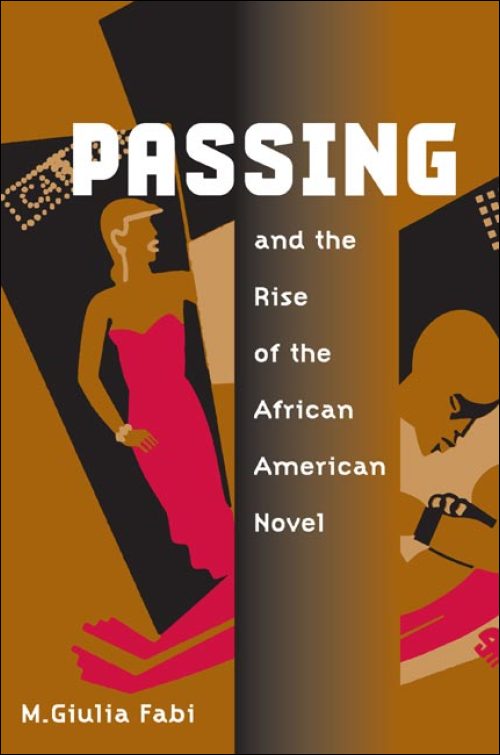
  • Passing and the Rise of the African American Novel

    University of Illinois Press
    2001
    208 pages
    6 x 9 in.
    Paper ISBN: 978-0-252-07248-2

    M. Giulia Fabi, Associate professor of American literature
    University of Ferrara, Italy

    Revealing the role of light-skinned black characters passing for white in African American literature

    A CHOICE Outstanding Academic Title, 2003

    Passing and the Rise of the African American Novel restores to its rightful place a body of American literature that has long been overlooked, dismissed, or misjudged. This insightful reconsideration of nineteenth-century African American fiction uncovers the literary artistry and ideological complexity of a body of work that laid the foundation for the Harlem Renaissance and changed the course of American letters.

    Focusing on the trope of passing—black characters lightskinned enough to pass for white—M. Giulia Fabi shows how early African American authors such as William Wells Brown, Frank J. Webb, Charles W. Chesnutt, Sutton E. Griggs, Frances E. W. Harper, Edward A. Johnson, and James Weldon Johnson transformed traditional representations of blackness and moved beyond the tragic mulatto motif. Challenging the myths of racial purity and the color line, these authors used passing to celebrate a distinctive, African American history, culture, and worldview.

    Fabi examines how early black writers adapted existing literary forms, including the sentimental romance, the domestic novel, and the utopian novel, to express their convictions and concerns about slavery, segregation, and racism. Chesnutt used passing as both a structural and a thematic element, while James Weldon Johnson innovated by parodying the earlier novels of passing and presenting the decision to pass as the result, rather than the cause, of cultural alienation. Fabi also gives a historical overview of the canon-making enterprises of African American critics from the 1850s to the 1990s and considers how their concerns about promoting the canonization of African American literature affected their perceptions of nineteenth-century black fiction.

  • Contemporary US multiple heritage couples, individuals, and families: Issues, concerns, and counseling implications

    Counselling Psychology Quarterly
    Volume 25, Issue 2, (June 2012)
    Special Issue: Race, Culture, and Mental Health: Metissage, Mestizaje, Mixed “Race”, and Beyond
    pages 99-112
    DOI: 10.1080/09515070.2012.674682

    Mark Kenney, Adjunct Professor
    Kutztown University, Kutztown, Pennsylvania
    Multicultural Education and Consulting, Sinking Spring, Pennsylvania

    Kelley Kenney, Professor of Counseling & Human Services
    Kutztown University, Kutztown, Pennsylvania
    Multicultural Education and Consulting, Sinking Spring, Pennsylvania

    This article introduces the special edition by providing an overview of how policies and attitudes have influenced the experience of multiple heritage couples, individuals, and families in the American context. This history is linked to the developmental tasks of multiracial individuals and families in contemporary context. This paper also discusses the counseling implications emphasizing the importance of delivering culturally competent and sensitive services.

    Introduction

    Multiple heritage couples and individuals historically have been the subject of controversy and scrutiny. Myths and stereotypes that pervade our society suggest that individuals who couple interracially are dysfunctional (Yancey, 2002); are attempting to make a statement (Root, 2001); or have ulterior motives for doing so (Wardle, 1992, 1999). Motives speculated upon include quests for the exotic, sexual curiosity and promiscuity, economic and social status or achievement, domination, potential citizenship, rebellion against society or family, low sell-esteem, or racial self-hatred (DaCosta, 2007; Karis, 2003: Root, 1992; Spickard, 1989; Yancey, 2002); that persons of color are more willing to accept children of interracial unions than are white people (Wardle, 1992, 1999); and that the difficulties faced by interracial individuals and families are based on race (Root, 2001: Wehrly, 1996). Myths and stereotypes about multiple heritage individuals suggest that they are doomed to a life of rejection, and confusion about who they are (Wardle, 1999; Yancey, 2002).

    This paper examines contemporary multiple heritage couples, individuals, and families in the US; the salient issues and concerns that have historically confronted this population; and the counseling implications of which those working with this growing population need to be aware. In this article, we address multiple heritage individuals, couples, and families drawing on a literature that uses multiple terms to identify them “Interracial couples” are defined as partners, married or not, of a different racial background (Root, 1992; Spickard, 1989). “Multiracial individuals” are defined as individuals whose biological parents or whose lineage are of two or more different racial backgrounds (Funderburg, 1994; Gibbs, 1989; Root, 1992)…

    Read or purchase the article here.

  • The Origins of Mixed Race Populations

    New African
    January 2005

    Carina Ray, Associate Professor of African and Afro- American Studies
    Brandeis University, Waltham, Massachusetts

    While rape played a huge part in the origins of Africa and the Diaspora’s mixed race populations, it is wrong to attribute it all to rape, argues Carina Ray.

    In the February 2004 issue of New African, the columnist Stella Orakwue threw the covers off one of the European empire’s dirtiest secrets–the widespread rape of black women by white men. Her expose, headlined “History’s Most Sordid Cover-Up” went on to declare that the historical origins of mixed race populations in Europe’s former colonies in North and South America, the Caribbean and Africa are located in this silenced history of rape.

    In the following months, Orakwue’s pronouncement drew a lively response from several New African readers. Yet, each piece of writing in the thread left me with a distinct sense that the discussion had taken a wrong turn—or gotten off on the wrong foot to begin with, sweeping historical claims, such as the one made by Orakwue, are bound to be both true and false. Exceptions to the rule aside, her argument is valid for North America, particularly in the South during the era of slavery and to a decreasing extent through the period of Jim Crow segregation.

    The origins of mixed race populations in South America and the Caribbean, however, fit less neatly into a single pattern of explanation. This should not be taken as a denial of the partial role that rape played in the development of mixed race populations in these regions, but to identify it as the predominant causal factor obscures the complicated history of race mixing in these areas.

    Many countries in South America and the Caribbean are home to populations that are almost entirely mixed. Their numbers cannot be accounted for primarily by rape, but rather result in large part from complex patterns of inter-marriage, concubinage and consensual sex between indigenous peoples, Africans, Europeans and multi-racial people themselves. With respect to Europe’s former African colonies, the link between rape and the origins of mixed race people is strongest, although by no means definitive, in the settler colonies of Southern Africa, where rape often formed part of a regime of white domination. It also functioned in areas like the Cape Colony, in modern-day South Africa, as a violent form of slave labour reproduction, not unlike the American South during slavery. The paradigm of rape, however, is far less adequate for explaining the historical origins of mixed race people in other parts of Africa…

    …One need only look at the lineage of many of Ghana’s Afro-European families, like the Bannerman, Brew, Wulff-Cochrane, Reindorf, casely-Hayford, Hutchison, Lutterodt, VanHein, Vroom and Van der Puije families, to name just a few, to know that their female progenitors were not enslaved women, but rather members of indigenous families who married European men.

    Unions of this type, as well as less formal consensual relationships, were not unique to Ghana; rather they formed an important aspect in the development of many of West Africa’s coastal societies. This key facet of West African history is eclipsed when the history of mixed race people is collapsed inside the history of rape.

    It is often forgotten that in many instances during the first 400 years of the colonial encounter, Europeans were at the mercy of their African hosts. One of the ways European men survived and even thrived during this period of the colonial encounter was by marrying or cohabiting with African women, who not only provided companionship, medical assistance and domestic services, but also valuable local connections.

    Contrary to the notion that colonialism was a one-way street which led to the Europeanisation of Africans, European men were also Africanised—in large part through their relationships with African women. Marriage was used as a means of cementing alliances to advance the interests of both groups, particularly in coastal trade, and importantly such arrangements were made at the behest of Africans…

    Read the entire article here.
  • Rewriting a slave’s journey

    Trinidad and Tobago Newsday
    2012-04-29

    Corey Connelly

    In his latest publication, Caribbean History from Pre-Colonial Origins to the Present, Dr Tony Martin recaps the many social, economic and political phenomena that have shaped world history over the centuries.

    However, the renowned historian tackles the topics in an unapologetically fresh and detailed style, quite unlike the typical and often sedate material contained in survey history publications.

    In what might be regarded as a major departure from current texts, contemporary developments such as the collapse of insurance giant Clico and the 2011 riots in the United Kingdom, have also been given space in the 366-page book, Martin’s 14th publication.

    “This book has given me the opportunity to put my discontent to some positive purpose and it represents 30 to 40 years of research into Caribbean history and a variety of new perspectives,” Martin, Professor Emeritus of African Studies, Wellesley College, United States, said in a recent Sunday Newsday interview.
     
    He was alluding to what he considered to be the downfall of many current history texts.

    “What I have tried to do is practically re-write Caribbean history and so in every aspect of this book you will find information on new perspectives,” he said.

    While most books have tended to focus on the period following Christopher Columbus’ conquering of the new world, Caribbean History from Pre-Colonial to the Present examines, in some detail, the fact that “Old World” peoples may very well have come to the Americas before Columbus…

    …Martin lamented that history texts, have for the most part, dealt superficially with the sexual abuse of women. He observed, however, that the frequent abuse of women at that time has manifested itself in contemporary society through persons of mixed heritage.

    He said, “All you have to do is look around anywhere in the Americas and you will see the percentage of African descendants who are mixed—in Brazil, Trinidad, US.

    “Nowadays the racial mixing is voluntary and goes both ways. But for most of the period of our history that racial mixing was one way. It was the white man forcing himself on the African woman who had no rights and could not defend herself in any way.”

    Asked why there has not been tremendous emphasis on slavery and the treatment of Africans by authors over the generations, Martin reasoned: “Non-Caribbean people wrote the books and they had a vested interest in not wanting to get the people vexed. I did not write this book to get anybody vexed, but at the same time it is hard to read the stuff and not get upset. As an historian, I feel I have an obligation to set the record straight and wherever the record takes us, I will go.” Martin, in the publication, also addressed the fact that some Africans, for fear of death, had conspired with the white slave masters to oppress their own people…

    Read the entire article here.

  • Children of the banished dragon

    The Daily Post
    Liverpool, England
    2006-01-23

    Lew Baxter

    Lew Baxter reports on a shameful episode after World War II when Chinese sailors who had risked their lives for Britain were deported back to China, many leaving behind distraught British wives and children.

    Even 60 years later, tears and trauma trail in the wake of a callous official decision to forcibly repatriate hundreds of Chinese seamen who helped crew the British merchant fleets on the dangerous Atlantic wartime convoys ensuring the country’s vital lifeline.

    Hundreds of other Chinese sailors lost their lives in those bitterly cold waters.

    As a result of Home Office policy of the time, families were broken up and many of the British-born wives and children left behind became destitute, some women even thought of suicide as a way out of their misery. Others remarried and tried to forget the past. Many believed their husbands had deserted them and, for years, explained away their embarrassment by claiming they had drowned at sea.

    The truth is much harsher and more brutal.

    From October 1945 to July 1946, hundreds of Chinese sailors were rounded up, largely in Liverpool—quite a few at night by crack squads of police led by Special Branch—and repatriated. In reality, almost 5,000 were sent back to China under specially altered directives that affected their landing rights.

    Their children—at least 450—were told little of their fathers, or that they were dead or had left, others were adopted by strangers who knew nothing of their background. Their early lives were cloaked in mystery and confusion.

    Today the story of these perfidious and shabby deeds has been unearthed by the tenacity of a small number of these lost children of the Chinese dragons.

    A memo locked away for decades in the Public Record Office in Kew—amongst a fascinating archive that reveals the shocking depth and extent of the iniquity—dated November 9 1945 reads: “I am directed by the Secretary of State to say that, with the ending of the war against Japan, deportation to China is likely to become possible before long and the Ministry of Transport will shortly be making available transport for the repatriation of Chinese now in this country.”

    Many of the men had settled in Britain after “doing their duty” and had married local girls, particularly in Liverpool. There were hundreds of Eurasian children from these relationships and most of these sailors from Shanghai, Ningbo, Hong Kong and even Singapore assumed they had a right to remain in the country they had defended…

    …It was the same mission that drove Yvonne Foley, who first learned of the facts after the BBC documentary and she became determined to trace her own background.

    “My interest was stirred by that programme and I met Keith. We agreed to help each other. He gave me the names of others and there are now about nine of us. We have called ourselves the Dragons of the Pool,” says Yvonne, who has actually lived in Hong Kong and visited China many times. In many ways, the “dragons” are now a family forged out of a shared heartache.

    In the wake of these post war deportations came awful distress and even attempted suicides amongst broken, distraught families: women who had no idea where their men had gone, some believing they had deserted them while generations of children never knew their fathers or their true bloodlines. Official records show that more than 230 married Chinese sailors were given no choice or chance to say goodbye to loved ones…

    Read the entire article here or here.

  • Eurasians: The First British Born Chinese?

    DimSum: The British Chinese community website
    2007-06-30

    Yvonne Foley

    I am a Eurasian.  I am the daughter of an English mother and a Shanghai father.  In traditional Chinese culture, having a Chinese father, I am regarded as being Chinese.

    I am part of a community that has been around for over 100 years.  We pre-date by many decades what many people seem to think is the point at which Britains’ Chinese community came into being.  The 1950s, when people from Hong Kong’s New Territories started to come to the UK.

    Our fathers’ origins

    Chinese men started to settle down in Britain in the last years of the nineteenth century. Right from the start they seemed to have few problems in getting partners amongst the working class girls of the cities in which they settled. Not very surprising when up to World War Two and even beyond it marriage for a young woman could mean violence and the most desperate poverty.  John Chinaman, as he was called at the time, was clean, sober, hard working and a good father. And, of course, more often than not he was quite a handsome man!

    But where did these men come from?  For many, the answer they gave to any official who asked was ‘Hong Kong’. But that tells us little.  A Chinese seaman had to take an English language test – unless he was from Hong Kong.  So there were few who were prepared to say that they were not from Hong Kong unless they had confidence in their English language skills!  Where they were actually from ranged from Hainan Island to Fukien and Tientsin.  But since Shanghai was by far the most important commercial city in China and its major port, it seems that many were recruited there and in the nearby city of Ningbo

    Read the entire article here. For more information about Liverpool’s early Chinese Community, see http://www.halfandhalf.org.uk

  • Mixed heritage voices – Multiple identities, varied experiences, diverse views

    British Association for Adoption & Fostering
    Woburn House Conference Centre
    20 Tavistock Square
    London WC1H 9HQ
    2012-11-29, 10:00-16:00Z

    One in ten people in the UK define themselves as mixed heritage, and it seems that young people think it is ‘cool’ to be ‘mixed’. But what meaning do young people and their families give to their mixed heritage identities and how do these identities develop in mixed adoptive and foster care families?

    The profiles of children in ‘Be My Parent’ (BAAF’s family finding service) and the Adoption Register demonstrate the multiple and complex ethnicities of children waiting for placements and this brings challenges to practitioners making decisions for mixed heritage children in the public care system. There are also challenges for adoptive parents and foster carers who need to value and promote the child’s heritage and help them achieve a positive identity, alongside an ability to cope with racism to make their way in the world.

    This conference will bring together mixed heritage young people, families and researchers to share their experiences and perspectives on identity, and will look at the implications of these issues for practice.

    Aims

    • to understand the experiences of mixed heritage children, young people and their families
    • to identify how adoptive parents and foster carers might help their mixed heritage child develop their identities
    • to explore how practitioners can make better decisions for mixed heritage children in the public care system

    Chair & Speakers

    • Professor Ann Phoenix, Co-Director, Thomas Coram, Research Unit (Invited)
    • Dr. Suki Ali, Senior Lecturer, Department of Sociology, London School of Economics
    • Dr. Vicki Harman, Lecturer, Centre for Criminology & Sociology, University of Royal Holloway
    • Dr. Daniel McNeil, Lecturer in Media & Cultural Studies, University of Newcastle
    • Dr. Fiona Peters, Consultant Perspectives from Adoptive Parents & Foster Carers, Sheffield City Council

    Who should attend

    Children’s services social workers and managers, family placement practitioners, independent reviewing officers, decision-makers, panel members, health and education professionals, youth services, CAFCASS children’s guardians, social work students, adopted adults, adoptive parents and foster carers.

    For more information, click here.