• The Winton Triangle

    The State of Things
    WUNC 91.5
    North Carolina Public Radio
    2011-06-17

    Frank Stasio, Host

    Susan Davis, Senior Producer

    Marvin Jones, Historian
    Chowan Discovery Group

    More Americans marked at least two boxes for “race” on the 2010 Census than ever before. The country may not be increasingly multiracial but it certainly is increasingly conscious of its multiracial identity. In Northeastern North Carolina there is a community that is historically mixed race. Landowning free people of color have lived together in The Winton Triangle for 260 years. Their ancestors include people who moved from the Chesapeake Bay area as well as Chowanoke, Meherrin, and Tuscarora Indians, Africans and East Indians. As part of WUNC’s series “North Carolina Voices: The Civil War,” Winton Triangle historian Marvin Jones, a photographer and the Executive Director of the Chowan Discovery Group, joins host Frank Stasio with the story of this unique North Carolina communnity.

    Download the audio here.

  • Norbert Rillieux and a Revolution in Sugar Processing

    American Chemical Society
    National Historic Chemical Landmarks: Norbert Rillieux and a Revolution in Sugar Processing
    2002

    Judah Ginsberg
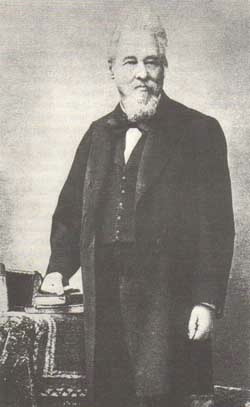

    Portrait of Norbert Rillieux (undated).

    Dedicated April 18, 2002 at Dillard University in New Orleans, Louisiana

    Norbert Rillieux: Chemist and Engineer

    The birth record on file in New Orleans City Hall is spare: “Norbert Rillieux, quadroon libre, [free quadroon] natural son of Vincent Rillieux and Constance Vivant. Born March 17, 1806. Baptized in St. Louis Cathedral by Pere Antoine.”

    Vincent Rillieux was an inventor himself who designed a steam-operated press for baling cotton. He appears to have had a long relationship with Constance Vivant, “a free woman of color,” and one of their sons, Norbert, became what is now called a chemical engineer. The use of the father’s surname and the baptism in New Orleans’ cathedral indicate the paternity was publicly acknowledged.

    As a boy the precocious Norbert showed an interest in engineering, and his father sent him to France for his education. By the age of 24, Rillieux was an instructor in applied mechanics at the Ecole Centrale in Paris. Around 1830, Rillieux published a series of papers on steam engines and steam power.

    While in France, Rillieux began working on the multiple effect evaporator. As George Meade, a sugar expert, wrote in 1946: “The great scientific contribution which Rillieux made was in his recognition of the steam economies which can be effected by repeated use of the latent heat in the steam and vapors.” What Rillieux did, and what became the basis for all modern industrial evaporation, was to harness the energy of vapors rising from the boiling sugar cane syrup and pass those vapors through several chambers, leaving in the end sugar crystals.

    Rillieux’s evaporator was a safer, cheaper, and more efficient way of evaporating sugar cane juice than the method then in use, the Jamaica train. In this system, teams of slaves ladled boiling sugar juice from one open kettle to another. The resulting sugar tended to be of low quality since the heat in the kettles could not be regulated, and much sugar was lost in the process of transferring juice from kettle to kettle.

    Some Louisiana sugar planters quickly understood the significance of Rillieux’s invention, and he returned to New Orleans in the early 1830s, years that coincided with a sugar boom. Rillieux tinkered with his invention over the next decade, and in 1843 he was hired to install an evaporator on Judah Benjamin’s Bellechasse Plantation. Benjamin, a Jewish lawyer who later served as secretary of war in the Confederacy, became Rillieux’s staunchest supporter in Louisiana sugar circles. Benjamin wrote in 1846 that sugar produced with the Rillieux apparatus was superb, the equal of “the best double-refined sugar of our northern refineries.”

    The success of his evaporator apparently made Rillieux, according to a contemporary, “the most sought after engineer in Louisiana,” and he acquired a large fortune. But while his invention no doubt enriched sugar planters, Rillieux was still, under the law, “a person of color” who might visit sugar plantations to install his evaporator but who could not sleep in the plantation house. (Nor, for that matter, could a man of Rillieux’s accomplishments be expected to stay in slave quarters. Some planters, it appears, provided Rillieux with a special house with slave servants while he visited as “a consultant.”). As the Civil War approached, the status of free blacks deteriorated with the imposition of new restrictions on their ability to move about the streets of New Orleans and other draconian laws.

    It was about this time that Rillieux moved back to France. Race relations may have played a part in his decision. At one point, Rillieux became incensed when one of his applications for a patent was denied initially because authorities mistakenly believed he was a slave and thus not a citizen of the United States. The declining profitability of the sugar industry in Louisiana also may have been a factor. In any event, in Paris, Rillieux developed a passion for Egypt. In 1880, a visiting Louisiana sugar planter found Rillieux deciphering hieroglyphics at the Bibliotheque Nationale. Rillieux died in 1894 and was buried in the famed Paris cemetery of Pere Lachaise. His wife, Emily Cuckow, lived comfortably for another eighteen years…

    …Neither slave nor free

    Americans pouring into the newly purchased Louisiana Territory encountered a social caste virtually unknown in the Eastern seaboard States: gens de couleur libre, free people of color. In the early years of the nineteenth century, free blacks comprised 25 percent of the population of New Orleans, far higher than in most other areas of the American South, where nearly all blacks were slaves.

    The number of free blacks in New Orleans was due in part to the French and Spanish heritage of Louisiana. Both France and Spain had lenient manumission policies and both encouraged slaves to purchase their freedom. But the majority of free blacks resulted from sexual relations between white men and black women. One Spanish bishop lamented, “a good many inhabitants live almost publicly with colored concubines” and they consider the issue of such liaisons “as their natural children.” Finally, the ranks of the gens de couleur libre swelled in the early years of American control of New Orleans with the influx of thousands of light-skinned freemen fleeing the internecine warfare in the new black Republic of Haiti.

    In the eighteenth century, Louisiana free blacks enjoyed a higher social status and had more rights than the small free black population of the English colonies. Their condition would deteriorate under American control, but it remained true that free blacks maintained a privileged status in the antebellum years. As late as 1856, the Louisiana Supreme Court ruled that under Louisiana law there is “all the difference between a free man of color and a slave, that there is between a white man and a slave.” Indeed, a few free blacks even belonged to the planter class, owning slaves themselves…

    Read the entire article here.

  • Blue Coat or Powdered Wig: Free People of Color in Pre-Revolutionary Saint Domingue

    University of Georgia Press
    March 2001
    344 pages
    6.125 x 9.25
    Paper ISBN: 978-0-8203-3029-7

    Stewart R. King, Associate Professor of History
    Mount Angel Seminary, St. Benedict, Oregon

    By the late 1700s, half the free population of Saint Domingue was black. The French Caribbean colony offered a high degree of social, economic, and physical mobility to free people of color. Covering the period 1776-1791, this study offers the most comprehensive portrait to date of Saint Domingue’s free black elites on the eve of the colony’s transformation into the republic of Haiti.

    Stewart R. King identifies two distinctive groups that shared Saint Domingue’s free black upper stratum, one consisting of planters and merchants and the other of members of the army and police forces. With the aid of individual and family case studies, King documents how the two groups used different strategies to pursue the common goal of economic and social advancement. Among other aspects, King looks at the rural or urban bases of these groups’ networks, their relationships with whites and free blacks of lesser means, and their attitudes toward the acquisition, use, and sale of land, slaves, and other property.

    King’s main source is the notarial archives of Saint Domingue, whose holdings offer an especially rich glimpse of free black elite life. Because elites were keenly aware of how a bureaucratic paper trail could help cement their status, the archives divulge a wealth of details on personal and public matters.

    Blue Coat or Powdered Wig is a vivid portrayal of race relations far from the European centers of colonial power, where the interactions of free blacks and whites were governed as much by practicalities and shared concerns as by the law.

    Table of Contents

    • Acknowledgements
    • Introduction
    • Part One. The Colony and Its People
      • Chapter One. The Notarial Record and Free Coloreds
      • Chapter Two. The Land
      • Chapter Three. The People
      • Chapter Four. Free Colored in the Colonial Armed Forces
    • Part Two. The Free Colored in Society and the Economy
      • Chapter Five. Slaveholding Practices
      • Chapter Six. Landholding Practices
      • Chapter Seven. Entrepreneurship
      • Chapter Eight. Non-Economic Components of Social Status
      • Chapter Nine. Family Relationships and Social Advancement
    • Part Three. Group Strategies for Economic and Social Advancement
      • Chapter Ten. Planter Elites
      • Chapter Eleven. The Military Leadership Group
      • Chapter Twelve. Conclusion
    • Appendix One. Family Tree of the Laportes of Limonade
    • Appendix Two. Surnames
    • Appendix Three. Incorporation Papers of the Grasserie Marie Josephe
    • Appendix Four. Notarized Sale Contract for a House
    • Notes
    • Works Cited
    • Index
  • Racial and ethnic self-identification have economic consequences because the choice of self-identity is likely to be entwined with the acceptance of and acculturation into dominant social norms. If race or ethnicity is endogenous in certain circumstances, a self-identity may or may not be selected to distance oneself from a subordinate group or to improve one’s standing with or acceptance into the dominant group. In a study of people of Mexican descent, Mason (2001) tests a model in which acculturation is a dominant strategy, and finds that light-complected people of Mexican descent may acculturate more easily. Murguia and Telles (1996) report different educational opportunities for Mexicans of light and dark complexion and argue that these may result from conscious choices. Phenotypic differences, they argue, influence individual strategies. Light-skinned people of Mexican descent learn early in life that by assimilating or acculturating they can defuse negative stereotypes and attain more than their dark-complected counterparts. Later in life, light-skinned Mexicans are able to increase their incomes by adopting a non-Hispanic white identity (Mason 2001). Yet there may also be situations in which members of the subordinate group decide to maintain identities separate from the dominant group.

    Howard Bodenhorn and Christopher S. Ruebeck, “The Economics of Identity and the Endogeneity of Race,” National Bureau of Economic Research: Working Paper 9962 (September 2003): 3-4.

  • In 1850 the mulattoes and others of mixed blood formed about eighty percent of Louisiana’s total free Negro population.” Some of them came from stable families which had been free for generations,” But almost all had their origins in some extramarital union (by this time perhaps quite far removed) between a white man and a black woman. The beginnings of this long-established practice dated back to the early eighteenth century when Louisiana was first being settled by the French. The small group of early settlers consisted mostly of those “in the pay of … the King” and especially garrison soldiers. Among the hardships faced by these men in their pioneering work of founding a colony was a scarcity of women. They solved the problem, according to the French Governor Bienville, by running “in the woods after Indian girls.”

    Laura Foner, “The Free People of Color In Louisiana and St. Domingue: A Comparative Portrait of Two Three-Caste Slave Societies,” Journal of Social History, Volume 3, Number 3 (1970): 408.

  • Beyoncé, beauty and the all mighty dollar

    Insight News
    Minneapolis, Minnesota
    2012-03-09

    Irma McClaurin, Ph.D., Culture and Education Editor

    Just for the record, we are not in, nor has there ever been, a post-racial moment in America.  And so, we must dive deep into historical memory of this country to understand why all the fuss about L’Oréal’s  latest advertisement for cosmetics featuring Beyoncé…

    Read the entire article here.

  • More children identify as ‘biracial’: just a choice or a good thing?

    The Washington Post
    2012-04-26

    Mary C. Curtis

    It’s been happening for a while — census data show it. The number of mixed-race babies has quickly grown in the last decade, a trend that’s no surprise in an increasingly diverse country. Men and women are choosing partners of different races and identifying their children using the array of hyphenated options now available on forms that still ask the question.

    More than 7 percent of the 3.5 million children born in the year before the 2010 Census were of two or more races, up from 5 percent a decade earlier, the Washington Post reports. In the story, William H. Frey, a Brookings Institution demographer who analyzed the information, said, “I think people are more comfortable in identifying themselves, and their children, as mixed race.” He added, “It’s much more socially acceptable, more mainstream, to say, ‘That’s what we want to identify them as.’ ”

    What is come down to is choice, and if it remained just that, it would be fine. But Frey goes on to assign value to this particular choice. “This is a huge leap,” he said. “This is a ray of hope that we’re finally moving into an era where this very sharp black-white divide is breaking apart.”

    That’s where he makes a leap, that it’s a matter of, well, black and white. Identifying as biracial is a choice now, but does it have to be better? Is Tiger Woods’ “Cablinasian” option more enlightened than Halle Berry’s decision to self-identify as black?

    Frey isn’t the only one who judges the trend as a “ray of hope,” a necessary step forward in relationships between races. When President Barack Obama checked off one race, black, on his census form, he was criticized by some, accused of somehow denying his white mother. It may have marked the first time such indignation over the issue reached a fever pitch, though if it were Barack the bank robber I hardly think whites would be clamoring to claim him.

    At the time, a white woman married to a black man told me she was angry and disappointed for her two children’s sake. “He’s president. He could have been an example,” she told me. That we were walking through a Charlotte science museum exhibit “Race: Are We So Different?” that proved the many ways humans are more alike than any other species made our discussion both fraught and beside the point. Since she wanted freedom to choose, how could she criticize the president for his? I asked her. He would certainly know his motives better than a stranger whose reaction might have more to do with her own…

    …My grown-up son fills out his own census form now, a black man with a white father and a special relationship with a white grandmother he loves with all his heart. It’s not confusing at all…

    Read the entire article here.

  • Ownership, Entrepreneurship, and Identity: The Gens de Couleur Libres and the Architecture of Antebellum New Orleans, 1830-1850

    Graham Foundation
    Chicago, Illinois
    2011

    The recipient of the 2011 Carter Manny Award for doctoral dissertation writing is Tara Dudley, The University of Texas at Austin, School of Architecture
     
    This dissertation examines the architectural activities of New Orleans’s gens de couleur libres or free people of color, their influence on the physical growth of New Orleans, and the implications—historical, cultural, and economic—of their contributions to nineteenth-century American architecture as builders, developers, and property owners. A unique group of people building in a specific time and place, the activities of gens de couleur libres builders and patrons set standards within and without predominantly black Creole communities. Their activities informed the types of economic endeavors suitable for black Creoles and allowed the persistence of Francophone culture in the wake of Americanization. This dissertation utilizes as case studies the Dolliole and Soulié families who were active in the building trades in the antebellum era, emphasizing their socioeconomic backgrounds as a tool to understanding their professional motivations and the creation of a specific ethnic and architectural identity in antebellum New Orleans.
     
    Tara Dudley, a native of Lafayette, Louisiana, lives in Uhland, Texas, with her husband David and two toddlers, Zoya and Aria. Dudley’s specializations are nineteenth-century architecture and interior design, and historic preservation. Her research interests include material culture, gender studies, and African-American architectural history. Dudley received her BA in Art History from Princeton University and her MS in Historic Preservation from the University of Texas at Austin. She has interned at Cooper-Hewitt National Design Museum, the Metropolitan Museum of Art, and at Shadows-on-the-Teche. She is an architectural historian at Hardy-Heck-Moore, Inc., a cultural resource management firm based in Austin, Texas.

    For more information, click here.

  • Number of biracial babies soars over past decade

    The Washington Post
    2012-04-26

    Carol Morello, Demographics Reporter

    The number of mixed-race babies has soared over the past decade, new census data show, a result of more interracial couples and a cultural shift in how many parents identify their children in a multiracial society.

    More than 7 percent of the 3.5 million children born in the year before the 2010 Census were of two or more races, up from barely 5 percent a decade earlier. The number of children born to black and white couples and to Asian and white couples almost doubled.

    “I think people are more comfortable in identifying themselves, and their children, as mixed race,” said William H. Frey, a Brookings Institution demographer who analyzed detailed census data on mixed-race infants. “It’s much more socially acceptable, more mainstream, to say, ‘That’s what we want to identify them as.’”…

    …Frey said the census statistics on children with black and white parents in particular show a country that is advancing toward the day when race loses its power to be a hot-button issue.

    People who identify themselves as one race tend to be older. They reflect a society in which laws prohibited interracial marriage and states such as Virginia enforced a “one drop” rule designating anyone as black if they could trace even one drop of their blood to an African American ancestor. President Obama, for example, identified himself as one race — black — on his census form, even though his mother was white…

    Read the entire article here.

  • Investing in Citizenship: Free Men of Color of Color and the case against Citizens Bank ~ Antebellum Louisiana

    University of New Orleans
    December 2011
    58 pages

    Hannah J. Francis

    A Thesis Submitted to the Graduate Faculty of the University of New Orleans in partial fulfillment of the requirements for the degree of Master of Arts in History

    Despite the popularity of free people of color in New Orleans as a research topic, the history of free people of color remains misunderstood. The prevailing view of free people of color is that of people who: engaged in plaçage, attended quadroon balls, were desperately dependent upon the dominant population, and were uninterested or afraid to garner rights for themselves. Contemporary historians have endeavored to amend this stereotypical perception; this study aims to be a part of the trend of revisionist history through an in-depth analysis of the co-plaintiffs in Boisdoré and Goulé, f.p.c., v. Citizens Bank and their case. Because Boisdoré and Goulé sue at critical time in New Orleans history, three decades after the Louisiana Purchase during the American transformation of New Orleans, their case epitomizes the era in which it occurs. In bringing suit, Boisdoré and Goulé attempted to thwart some of those forth coming changes.

    Table of Contents

    • Abstract
    • Investing in Citizenship: Free Men of Color of Color and the case against Citizens Bank ~ Antebellum Louisiana
      • Historiography of Citizens Bank and Free People of Color
      • Historical Scholarship of Free People of Color in New Orleans
      • Francois Boisdoré and John Goulé as Free People of Color in New Orleans
      • Citizens Bank
      • Boisdoré and Goulé’s Legal Counsel: Judah Benjamin and Christian Roselius
      • Boisdoré and Goulé v. Citizens Bank
      • Implications of the Case
      • Changes in Nineteenth Century New Orleans
    • Bibliography
    • Vita

    Read the entire thesis here.