• A Phenomenological Study of the Life Experiences of Biracial Adolescents

    The Chicago School of Professional Psychology
    September 7, 2004
    86 pages
    Publication Number: AAT 3177441
    ISBN: 9780542168468

    Nicole Alease Tefera

    A Dissertation Submitted to the Faculty of The Chicago School of Professional Psychology In Partial Fulfillment of the Requirements For the Degree of Doctor of Psychology

    The “biracial baby boom” (Root, 1996, p. xv) in the United States started approximately 25 years ago around the time the final laws against miscegenation were repealed by the United States Supreme Court 1967 decision (Loving v. Virginia, 1967). After the historical ruling, the number of children being born to parents with different racial backgrounds tripled from less than 400,000 in 1970 to 1.5 million in 1990 (Wright, 1994). The emergence of a racially mixed population is rapidly changing the face of the United States causing Americans to ask questions related to our identity such as: (a) Who are we?, (b) How do we see ourselves?, and (c) Who are we in relation to one another? These questions originate in a country that has maintained particular views of race and one that subscribed to race as a fixed construct, perceived itself as White, and has been dedicated to preserving racial lines. Therefore, the questions posed in relation to race and identity can only be expected to contribute to an identity crisis that this country is unprepared to resolve. Resolving the identity crisis may force Americans to reexamine our construction of race and the hierarchal social order it supports (Root, 1992).

    During the past two decades, interracial marriages have produced biracial children, many of whom are now adolescents and young adults, located primarily in urban areas in the East, the Midwest, and the West Coast (Gibbs, 1987). According to the 2000 U.S. Census, there are approximately 6.8 million individuals in this country who identify as two or more races (U.S. Census Bureau, 2000). However, no reliable estimates of Black-White youth are available. Based on the current statistics of Black-White marriages, it can only be hypothesized that these unions produce nearly one-fourth of biracial children in the United States of America. The dual racial identity of a biracial adolescent is likely to pose a challenge in the development of a cohesive, well-integrated self-concept.

    This phenomenological study explored the life experiences of six biracial adolescents (Travis, Karen, Shelly, Michael, Erin, and Ayana) of European American and African American decent living in both the inner city and surrounding suburbs of a large urban city located in the Midwest. Data was analyzed horizontally and vertically to ascertain the meanings of being biracial, specifically during adolescence. Themes emerged with respect to the participants’ ethnic/racial identification, experiences in adolescence, social influences, and racial resemblance.

    This study revealed tasks for identity formation and biracial identity development during adolescence. Participants in this study clearly struggled with normal adolescent identity formation while simultaneously attempting to integrate their dual racial heritage. As with identity formation models, peer influences were most influential in how participants’ identified themselves. Therefore, one can hypothesize that biracial identity development and identity formation are not mutually exclusive. With respect to clinical implications, this theory offers the assumption that treatment interventions should focus on helping the adolescent to effectively navigate through normal identity formation while simultaneously addressing conflict surrounding their dual racial/ethnic background.

    Table of Contents

    • Copyright.
    • Signature Page.
    • Acknowledgements
    • Abstract
    • List of Tables
    • Chapter 1: Introduction
      • Statement of Topic
      • Rationale for the Study
    • Chapter 2: Literature Review
      • Identity Formation in Adolescence
      • Racial/Ethnic Identity Development
      • Biracial Identity Development
      • Models of Biracial Identity Development
      • Review of Research on Biracial Youth and Young Adults
    • Chapter 3: Methodology
      • Methodology and Participants
      • Procedures
      • Analysis
    • Chapter 4: Presentation of Data Analysis
      • Participant #2: Travis
      • Participant #3: Karen
      • Participant #4: Shelly
      • Participant #5: Michael
      • Participant #6: Erin
      • Participant #7: Ayana
      • Composite Description of Participant Interviews
    • Chapter 5 Summary, Implications, and Outcomes
      • Emerging Themes
      • Limitations of the Study
    • References
    • Appendix A: Demographic Questionnaire
    • Appendix B: Study Participant (ages 12-17) Assent Form
    • Appendix C: Study Participant (Age 18) Informed Consent Form
    • Appendix D: Parent Informed Consent Form
    • Appendix E: Interview Guide
    • Appendix F: Advertisement

    Purchase the dissertation here.
  • Feminist Race Theorist and Sociologist to Lecture

    Hamilton College, Clinton New York
    College News
    2012-04-07

    France Winddance Twine, professor of sociology at the University of California, Santa Barbara, will present a lecture on Tuesday, April 10, at 4:15 p.m., in Dwight Lounge, Bristol Campus Center. Twine will discuss “The Future of Anti-Racism & Racial Literacy After The Trayvon Martin Murder.” The lecture is free and open to the public.
     
    In addition to editing several collections on race, class and gender, she has authored Outsourcing the Womb: Race, Class and Gestational Surrogacy in a Global Market and Racism in a Racial Democracy: The Maintenance of White Supremacy in Brazil, as well as A White Side of Black Britain

    For more information, click here.

  • I Do Choose To Run: Personal boxes and the ethics of race

    The Stanford Daily
    2012-04-09

    Miles Unterreiner

    In an eloquently argued New York Times Sunday Review article on March 16th, entitled “As Black as We Wish to Be,” author Thomas Chatterton Williams advances a provocative and thought-provoking argument: “mixed-race blacks have an ethical obligation to identify as black — and interracial couples share a similar moral imperative to inculcate certain ideas of black heritage and racial identity in their mixed-race children, regardless of how they look.”
     
    Is this a good argument? Do mixed-race individuals have an ethical obligation to identify as members of one race, rather than many or none? And is there a special obligation in the case of mixed-race African-Americans, given this country’s long history of racial discrimination?
     
    I must respectfully disagree with Mr. Williams and answer all three with “no.”…

    Read the entire opinion piece here.

  • One thing that I learned while doing all my research was that there was a lot that I hadn’t learned in school.  For instance, I learned the Southeast was just a empty wilderness when the settlers arrived at Jamestown. But in my research I discovered that it was crawling with people. Hundreds of thousands of natives. If you look at the maps of their villages they’re all over the place. There were also a lot of European and Africans who were there for various reasons and they were mostly young men, so they were mixing and melding with the native women. So the earliest years of our country, the population was quite mixed. I mean the whole melting pot idea didn’t come in with the nineteenth century; it was here all along. So, these earliest people, as Britain won out over Spain and Portugal, everyone wanted to be English, so everybody denied the rest of their heritage.

    Lisa Alther, “Author Explores Racial Mixing In New Historical Novel,” VPR News, Vermont Public Radio, (March, 14, 2012): 00:01:45-00:02:45. http://www.vpr.net/news_detail/93768/author-explores-racial-mixing-in-new-historical-no/.

  • Author Explores Racial Mixing In New Historical Novel

    VPR News
    Vermont Public Radio
    2012-03-14

    Neal Charnoff, Reporter; Local Host
    All Things Considered

    We last heard from writer Lisa Alther in 2007, when she spoke with VPR’s Neal Charnoff about her memoir, Kinfolks.

    Alther has returned to fiction in a big way with her epic historical novel, Washed In The Blood.

    The book is a three-part multi-generational novel that combines romance with a study of Appalachian culture and racial mixing in the south.

    Lisa Alther, who shares time between Vermont and her native Tennessee has written seven books.

    Listen to the interview (00:07:33) here or download it here.

  • A Heritage Celebration: Event recognizes both Hispanic and Native American roots with symposium and several performances

    San Marcos Daily Record
    San Marcos, Texas

    2011-08-12

    San Marcos — San Marcos will experience a unique, two-in-one heritage celebration in a combination of two nationally recognized heritage months — Hispanic and Native American — on Saturday, Oct. 1 from 10 a.m. to 5 p.m. at the Centro Cultural Hispano de San Marcos, 211 Lee Street.

    A Sunday Matinee will also take place at 3 p.m. the next day at the Texas Music Theater.

    “We’re bringing attention to the fact that most Hispanics in Texas have Native American ancestors and can celebrate two national heritage months,” says Dr. Mario Garza, chair of the Indigenous Cultures Institute that is producing this event. “Most Hispanics can legitimately embrace a Native American identity because they still retain much of their indigenous culture like customs, foods and even their Native language.”…

    …“Roberto Dr. Cintli Rodriguez will be one of the speakers in our Indigenous-Hispanics Symposium,” said Dr. Lydia French, managing editor of Nakum, the Institute’s online journal. “Dr. Rodriguez is one of the major figures in the historic struggle against the Arizona legislature’s anti immigrant law SB 1070 and ban on ethnic studies programs.”…

    …Dr. Nicole M. Guidotti-Hernández and Margaret E. Cantú-Sánchez will be joining Dr. Rodriguez as presenters on the “Education: The Indigenity Challenge” panel.  Dr. Guidotti- Hernández teaches Women’s Studies at the University of Arizona and her published articles include “Reading Violence, Making Chicana Subjectivities” and “Dora the Explorer, Constructing ‘Latinidades’ and the Politics of Global Citizenship.”

    Cantú-Sánchez is pursuing her doctorate degree in English at the University of Texas at San Antonio and is developing her “mestizaje” theory, which proposes that a balance of cultural and institutional philosophies of human knowledge ensures a better grasp of one’s identity…

    Read the entire article here.

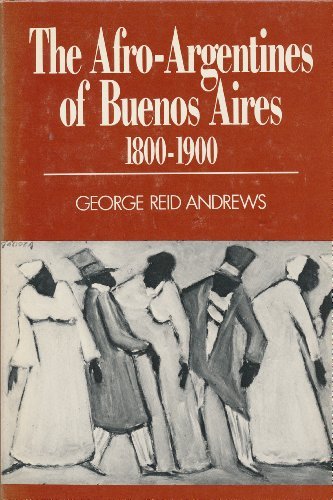
  • The Afro-Argentines of Buenos Aires, 1800–1900

    University of Wisconsin Press
    November 1980
    308 pages
    6 x 9, 15 illus. or photos, several tables
    ISBN-10: 0299082903
    ISBN-13: 978-0299082901

    George Reid Andrews, Distinguished Professor of History
    University of Pittsburgh

    George Reid Andrews has given us a major revision and reconstruction of black history in Argentina since the time of independence, making an exciting and important contribution to both Latin American and Afro-American history. Along the way, he explodes long-held myths, solves a major historical mystery, and documents contributions of blacks to a society that has, in its pursuit of “whiteness,” virtually denied their existence.

    While historians have devoted much attention to Afro-Latin American slavery of the colonial period, Andrews is among the first to examine the history of the post-abolition period. He illuminates the social, economic, and political roles of black people in the evolving societies of the national period, effectively destroying the myths that the Afro-Argentines virtually disappeared over the course of a century, that they played no significant role in Argentine history after the independence, and that they were quietly and peacefully integrated into the larger society. While similar studies have been carried out for the black experience in the United States, this is the first such attempt for any Spanish American country.

  • Bob Marley: the regret that haunted his life

    The Guardian
    2012-04-07

    Tim Adams, Staff Writer

    Director Kevin Macdonald explains how he pieced together his new film about reggae legend Bob Marley, from troubled early years in Jamaica to worldwide adulation – even after death

    In 2005, the director Kevin Macdonald was working in Uganda on his film The Last King of Scotland. In the slums of Kampala he was struck by a curious fact. There seemed to be images of Bob Marley and “Get up, stand up” slogans and dreadlocks wherever he went.

    Marley had been on Macdonald’s mind anyway: he had been asked by Chris Blackwell, founder of Island Records, if he would be interested in getting involved in a film project about the Jamaican musician’s enduring legacy.

    The original plan had been to follow a group of rastafarians on their journey from Kingston to their spiritual homeland of Ethiopia, to attend a celebration of the 60th anniversary of Marley’s birth. As it worked out, that film was never made, but, when the opportunity arose for Macdonald to make a more ambitious documentary about Marley, he jumped at the chance…

    Read the entire article here.

  • Afro-Latin America, 1800-2000

    Oxford University Press
    May 2004
    304 pages
    15 illus. & 3 maps; 6-1/8 x 9-1/4
    Hardback ISBN13: 9780195152326; ISBN10: 0195152328
    Paperback ISBN13: 978-0-19-515233-3; ISBN10: 0-19-515233-6

    George Reid Andrews, Distinguished Professor of History
    University of Pittsburgh

    Winner of the Arthur P. Whitaker Prize of the Middle Atlantic Council of Latin American Studies

    While the rise and abolition of slavery and ongoing race relations are central themes of the history of the United States, the African diaspora actually had a far greater impact on Latin and Central America. More than ten times as many Africans came to Spanish and Portuguese America as the United States.

    In this, the first history of the African diaspora in Latin America from emancipation to the present, George Reid Andrews deftly synthesizes the history of people of African descent in every Latin American country from Mexico and the Caribbean to Argentina. He examines how African peoples and their descendants made their way from slavery to freedom and how they helped shape and responded to political, economic, and cultural changes in their societies. Individually and collectively they pursued the goals of freedom, equality, and citizenship through military service, political parties, civic organizations, labor unions, religious activity, and other avenues.

    Spanning two centuries, this tour de force should be read by anyone interested in Latin American history, the history of slavery, and the African diaspora, as well as the future of Latin America.

    Table of Contents

    • Introduction
    • Chapter 1: i8oo
    • Chapter 2: “An Exterminating Bolt of Lightning”: The Wars for Freedom, 1810-1890
    • Chapter 3: “Our New Citizens, the Blacks”: The Politics of Freedom, 1810-1890
    • Chapter 4: “A Transfusion of New Blood”: Whitening, 1880-1930
    • Chapter 5: Browning and Blackening, 1930-2000
    • Chapter 6: Into the Twenty-First Century: 2000 and Beyond
    • Appendix: Population Counts, 1800-2000
    • Glossary
    • Notes
    • Selected Bibliography
    • Index
  • A Mestizaje of Epistemologies in American Indian Stories and Ceremony

    Nakum
    Volume 2.1 (2011)
    49 paragraphs

    Margaret Cantú-Sánchez
    Department of English
    University of Texas, San Antonio

    A close examination of Native American literature reveals that some Native Americans find it difficult to retain ties to their cultural epistemologies once introduced to the assimilationist pedagogies of U.S. schools. In some cases, their cultures, ethnicities, and communal epistemologies are completely rejected by U.S. school systems. Such rejections have created feelings of regret, alienation, fear of failure, and confusion. For the purposes of this article, I focus on the alienation that Native Americans, specifically members of the Dakota and Laguna Pueblo tribes, experience once they are subjected to the assimilationist, patriarchal methods of the U.S. education system. I frame my exploration of this dilemma with the following questions: how do U.S. school systems affect Native Americans’ tribal identity and the Native student’s interaction with his/her family and community, and what can Native American do to reconcile the institutional education they achieve in school with indigenous knowledge? A possible solution emerges when Native Americans encounter the education/indigenous knowledge conflict, an imbalance of epistemologies caused by the clash between U.S. institutional education and indigenous knowledge, an imbalance leading to alienation from school and/or Native students’ home/cultural communities. Acknowledgement of this conflict is the first step towards one solution embodied in a mestizaje of epistemologies, a balance of institutional education and indigenous knowledge…

    Read the entire article here.