• The construction of ethnoracial identity within situational contexts: A study of triracial family histories

    University of Pennsylvania
    2007
    263 pages
    Publication Number: AAT 3270863
    ISBN: 9780549087526

    Samuel M. Lemon, Director of Master of Science in Strategic Leadership Program
    Division of Continuing Adult and Professional Studies
    Neumann University, Aston, Pennsylvania

    Presented to the Faculties of the University of Pennsylvania in Partial Fulfillment of the Requirements for the Degree of Doctor of Education

    Based largely on data collected from oral history interviews, this study examines the construction of triracial ethnoracial identities (African American-Caucasian-American Indian). Here in-depth narratives and analyses of two triracial family histories surface the complex, dynamic, and interactional social contingencies that act on individual and family psychologies to share ethnic identity; these processes are illustrative of the anthropological construct of situationality. In the role of a participant observer, the author reports the history of his own family, the Ridleys of Media, Pennsylvania, which he compiled from the family’s oral tradition, genealogies and archival documents, and the U.S. Census. His narrative revolves around three prominent family members on his mother’s side: Cornelius, a venerated, light-complexioned ancestor who escaped from slavery on an antebellum plantation in southeastern Virginia, and “passing” as white fled north to Pennsylvania on the Underground Railroad in the 1860s; Josefa, a mysterious, legendarily clairvoyant woman from the Danish West Indies, who married into the Ridley family in the 1880s; and Maud, the author’s remarkable maternal grandmother, whose story begins in Media, Pennsylvania, in the 1890s. The author’s narrative history of the Harveys, another triracial family of Delaware County, Pennsylvania, well known to the author, offers illuminating points of comparison and contrast with the Ridleys. Concepts and arguments drawn from the fields of cultural theory, social history, and Southern literature provide the theoretical framework for the study.*

    *This dissertation is a compound document (contains both a paper copy and a CD as part of the dissertation). The CD requires the following system requirements: Adobe Photoshop; Roxio; CD Now.

    Table of Contents

    • 1 Introduction
      • 1.1 Background of the researcher
      • 1.2 Mulatto identity versus Native American identity
      • 1.3 The Original Impetus to Construct a Family History:
      • A Grandmother’s Inspiration
      • 1.4 Purpose, Significance, and Conceptualization of the Study
      • 1.5 Research questions
      • 1.6 Families selected for the study
      • 1.7 The Harvey Family
      • 1.8 The Ridley Family
      • 1.9 Supporting Families Tangentially Included in this Study
      • 1.10 Notes for Chapter One
    • 2 The Nexus of Ethnoracial Identity and Culture
      • 2.1 Etymological Perspectives on Race and Ethnicity
      • 2.2 Difficulties in Discerning Ethnic and Cultural Differences
      • 2.3 Methods Used in the Study
      • 2.4 Interview Script
      • 2.5 Notes for Chapter Two
    • 3 Culture, Ethnicity, and Assimilation: A Literature Review
      • 3.1 Historical and contemporary examples of the construction of culture
      • 3.2 The Great Melding Pot: Perspectives on Immigration and Globalization
      • 3.3 New country, new culture, new people
      • 3.4 Notes for Chapter Three
    • 4 New People: Triracial Families and Their Traditions
      • 4.1 The Harvey Family: background
        • 4.1a Mrs. Lee Ethel Gregory Harvey
        • 4.1b Life in the North for the Harvey Family
        • 4.1c The Children of Dr. Reginald and Mrs. Lee Harvey
        • 4.1d LeRoy Harvey
        • 4.1e Reginald Olive Harvey, II
        • 4.1f Robert Bruce Harvey
        • 4.1g Bonnie Lee Harvey Elliot
      • 4.2 The Ridley Family
      • 4.3 Situational Variables in the Construction of Ethnoracial Identity
      • 4.4 A Gift and a Curse
      • 4.5 Ridley Family Belief System
      • 4.6 Experientially Based Beliefs
        • 4.6a Helena Ortiga Miller
        • 4.6b Tomas Ridley Ortiga, Sr.
        • 4.6c Josepha Ortiga Allen
      • 4.7 Samuel M. Lemon
      • 4.8 Notes for Chapter Four
    • 5 The Self-Determination of Ethnoracial Identity: Findings
      • 5.1 Importance of Oral Tradition
      • 5.2 Ethnoracial identities are constructed within situational contexts
      • 5.3 Conflicts in Cultural Perspectives
      • 5.4 Self-determination of ethnoracial identity
      • 5.5 Crossing Ethnic Boundaries
      • 5.6 Conclusion
      • 5.7 Notes for Chapter Five
    • Index to Photographic Appendices
    • Bibliography
    • Appendices (on compact disc)
      • Ridley Family Photographs and Documents
      • Harvey Family Photographs
      • Oye Family Information
      • Genograms: Ridley and Harvey Families

    Introduction

    In late July 2006, my next-door neighbor, Gilbert, a quiet and dignified black man with graying hair and a large and spirited extended family, invited me to his backyard barbecue to celebrate his sixty-first birthday. Although I had made a prior commitment for that same evening to attend another barbecue (an asada, in Portuguese) at the home of my Brazilian neighbors across the street, I felt that it would be rude of me not to stop at least briefly at Gilbert’s house for a spare rib or bottle of beer. Although we are acquaintances rather than friends, I have known Gilbert’s family since they moved to my hometown of Media, PA, from the nearby city of Chester, about forty years ago. They are one branch of a larger family that includes cousins who live in Media who were among my childhood friends and classmates. And because my family has lived on the same block where I currently reside for over eighty years and on the same street for over one hundred and thirty years, we have strong communal ties and have always felt a social obligation to attend community events whenever we are invited. However, this invitation gave me some vague sense of trepidation, the reasons for which I could not pinpoint. My neighbor, Gilbert, although a man of very few words, has always been polite to me. But he readily admits that some of the members of his extended family who still reside in Chester are often ill-mannered, and he refers to them disdainfully as “Chester niggers”

    As I walked around the side of Gilbert’s house and approached the gathering, I heard the quiet rumblings of imaginary thunder in the distant regions of my mind. I chided myself for having qualms, and reassured myself that this was just a party I was visiting briefly. But I sensed that something unpleasant was about to happen. Upon entering Gilbert’s back yard, I spoke to several individuals sitting under a canopy that shaded them from the still hot, late afternoon summer sun. I recognized a few of his guests as members of his family, and another as a neighbor who lives two doors down from me. By virtue of their cool stares and lack of an audible greeting, the rest of the group seemed to view me as an uninvited guest. I also noticed that there were no white people present. As a person of color, I immediately notice the racial or ethnic composition of any large group, as it gives me clues about the nature of the event and the social and cultural dynamics at work—all of which are helpful in assessing and navigating an unfamiliar social situation.

    Normally, there would be one or two white people—often, one male and one female, though not necessarily related—conspicuously present at Gilbert’s parties. But on this occasion, they were conspicuous by their absence. I didn’t see Gilbert in the crowd, so I asked his daughter if he was around. When she called for him, he came out of the house and we exchanged pleasantries. He then invited me to sample some of his array of could still hear that quiet, distant, imaginary thunder.

    Gilbert’s daughter, a tall, slightly muscular, dark brown woman in her late thirties with a charming smile, led the way. As I stepped into the house, she introduced me to a group of mostly middle-aged black women who were enjoying the air conditioner on this steamy ninety-five degree day. I recognized one woman as Gilbert’s girlfriend—a stocky, serious, street-tough woman in her late fifties, from Chester. His girlfriend and I exchanged casual hellos. Next, Gilbert’s daughter introduced me to another woman who looked resembled the girlfriend enough for me to assume that they were sisters, explaining to the woman that my brothers and I had grown up in this neighborhood. She exclaimed in a very loud voice tinged with derision, “Oh you mean, them ‘yallow’ [sic] brothers who used to live up the street?”

    I was taken aback by her verbal slap and had a visceral reaction to it. I punctured the sudden pregnant pause in the room with an assertive, visibly annoyed and equally voluminous, “Yeah, that’s right.” I shot a glance at Gilbert’s brown-skinned daughter across the room, who was smiling an uncomfortable smile of embarrassment. I replied to her smile with a classic rolling of my eyes, which she appeared to enjoy and gestured to me that it was the appropriate response to the offensive remark. Though it was difficult, out of respect for my host, I succeeded in controlling my anger. But I was seething as I exited the room with the racial insult still stuck in my craw. Passing by the food table, I picked up a massive beef rib and moments later found myself absent-mindedly gnawing on it—sitting at a table under the canopy, chatting with my host, who was unaware that anything awkward had just occurred. After making customary small talk, I excused myself, wished Gilbert a happy birthday, and headed for the cultural comfort of my Brazilian friends, in whose multiracial culture of origin, or so they tell me, this incident would probably never have occurred—because most people in Brazil consider themselves mixed-race. As I crossed the street, still seeing only the ignorant woman’s face in my crosshairs, I muttered quietly to myself: “It never ends. It just never f— ends!”

    This incident was just the most recent in a lifetime of similar disquieting experiences—actually, many lifetimes of such experiences—in the history of my family, always posing the same question: “Why? Why do they say these things to us?” This deeply personal and perennial question has in large part prompted my interest in the construction of ethnoracial identity within situational contexts. Why have so many of our African American neighbors routinely treated us with such disdain? This vexing question once inspired me to write the following poem entitled, Who Am I? during my early teenage years—circa 1963.

    Who am I?
    My skin is light,
    Why not black
    Why not white?

    Where are my roots?
    And were they born,
    To hold African spear
    Or English horn?

    Perhaps I am,
    The bubbling foam,
    Some inward ocean
    Washes home.

    The quandary and frustration regarding the challenges of racial hybridity are palpable in this poem. The last three lines of verse may at first blush seem simplistic. However, the metaphor refers to the desire to be genetically restored to one original racial identity prior to miscegenation—i.e. either black or white—rather than to be forever condemned to the racial limbo inhabited by mixed-race people in America. Regarding the personal construction of ethnoracial identity, Dr. Martin Luther King, Jr. addressed this very query when he stated “Every man must ultimately confront the question of ‘Who am I?’ and seek to answer it honestly. One of the first principles of personal adjustment is the principle of self-acceptance. The Negro’s greatest dilemma is that in order to be healthy he must accept his ambivalence. The Negro is the child of two cultures—Africa and America. The problem is that in the search for wholeness all too many Negroes seek to embrace only one side of their natures… The old Hegelian synthesis still offers the best answer to many of life’s dilemmas. The American Negro is neither totally African nor totally Western. He is Afro-American, a true hybrid, a combination of two cultures.”…

    Purchase the dissertation here.
  • Multiracial Identity

    Bullfrog Films
    2010
    77 minutes/56 minutes
    DVD ISBN: 1-59458-913-5
    Directed by Brian Chinhema
    Produced by Abacus Production
    Narrated by Dieter Weber
    Director of Photography: Jay Cornelius
    Editor: Jay Cornelius
    Music: Ed Beceril, Elizabeth Nicholson

    Explores the social, political and religious impact of the multiracial movement.

    Note: There are two versions of this program on the same DVD: 77-minutes and 56-minutes.

    Multiracial people are the fastest growing demographic in America, yet there is no official political recognition for mixed-race people. MULTIRACIAL IDENTITY explores the social, political, and religious impact of the multiracial movement and the lived experience of being multiracial.

    Different racial and cultural groups see multiracialism differently. For some Whites multiracialism represents the pollution of the White race. For some Blacks it represents an attempt to escape Blackness. And for some Asians, Latinos, and Arabs, multiracialism can be seen as ill equipped to perpetuate cultural traditions and therefore represents the dilution of the culture.

    Also features commentary from noted scholars, Rainier Spencer, Naomi Zack, Aliya Saperstein, Aaron Gullickson, Susan J. Hayflick and Pastor Randall Sanford.

  • Existential hazards of the multicultural individual: Defining and understanding “cultural homelessness.”

    Cultural Diversity and Ethnic Minority Psychology
    Volume 5, Number 1 (February 1999)
    pages 6-26.
    DOI: 10.1037/1099-9809.5.1.6

    Veronica Navarrete-Vivero
    University of North Texas

    Sharon Rae Jenkins, Professor of Psychology
    University of North Texas

    Discusses cultural homelessness (CH), the unique experiences and feelings reported by some multicultural individuals. Ethnically related concepts found in the cross-cultural and multiethnic literature (eg., marginality, intercultural effectiveness, ethnic enclaves, and reference group) are used to explain how CH may arise from cross-cultural tensions within the ethnically mixed family and between the family and its culturally different environment, especially due to geographic moves. CH is conceptualized as a situationally imposed developmental challenge, forcing the child to accommodate to contradictory and changing norms, values, verbal and nonverbal communication styles, and attachment processes. Culturally homeless individuals may enjoy a broader, stronger cognitive and social repertoire because of their multiple cultural frames of reference. However, code-switching complexities may lead to emotional and social confusion, which, if internalized, may result in self-blame and shame. Culturally encoded emotion labeling may be disrupted, leading to alexithymia.

    Read or purchase the article here.

  • Identity and Marginality: Issues in the Treatment of Biracial Adolescents

    American Journal of Orthopsychiatry
    Volume 57, Issue 2
    (April 1987)
    pages 265–278
    DOI: 10.1111/j.1939-0025.1987.tb03537.x

    Jewelle Taylor Gibbs, Emeritus Professor
    School of Social Welfare
    University of California, Berkeley

    Teenagers of mixed black and white parentage face peculiar difficulties in the developmental tasks of adolescence. The major conflicts and coping mechanisms of this group are examined, as are the clinical and sociocultural issues in its assessment and diagnosis. Specific treatment techniques are delineated.

    Read or purchase the article here.

  • Study of HLA antigens of the Martinican population

    Tissue Antigens
    Volume 26, Issue 1 (July 1985)
    pages 1–11
    DOI: 10.1111/j.1399-0039.1985.tb00928.x

    Nicole Monplaisir
    Blood Transfusion Center of Martinique

    Ignez Valette
    Blood Transfusion Center of Martinique

    Virginia Lepage
    Groupe de Recherches d’Immunogenetique de la Transplatation Humaine, INSERM – U 93, Paris, France

    Veronique Dijon
    Blood Transfusion Center of Martinique

    Elizabeth Lavocat
    Blood Transfusion Center of Martinique

    Colette Ribal
    Blood Transfusion Center of Martinique

    Colette Raffoux
    Groupe de Recherches d’Immunogenetique de la Transplatation Humaine, INSERM – U 93, Paris, France

    This is the first time a study has been undertaken on the HLA profile of the Martinican population, a population which is essentially the product of intermixture between African-Negroes and French Caucasians. Two hundred and thirty-eight non-related subjects were typed for the A and B loci, 158 subjects for C locus and 128 for DR locus.

    After analysis of our parameters (antigen and gene frequencies, linkage disequili-bria, etc.) and their comparison to those found in the Black and Caucasian control populations, we came to the conclusion that our racially-mixed population is closer to the African-Negro population than to the French Caucasian. A study of the average gene flow enabled us to evaluate the Caucasian contribution as being about 30%. This figure is subject to change inasmuch as racial intermixture continues. Socio-cultural variables are assumed to play a minimal role, given the high rate of illegitimacy.

    Read or purchase the article here.

  • Black People in Britain: Response and Reaction, 1945-62

    History Today
    Volume 36, Issue 1 (January 1986)

    Paul B. Rich

    Paul Rich argues that while the official response to post-war immigration was slow to develop, the tensions and white backlash of the late fifties marked its emergence as a national political issue.

    The Settlers from the West Indies and South Asia who arrived in Britain from the late 1940s up to the 1960s found a society remarkably unprepared for their incorporation into its elaborate class and cultural networks. Almost from the very start of this post-war migration, when the SS Empire Windrush docked at Tilbury in June 1948 with 492 passengers from the West Indies, there was a mixture in governmental circles of either panic and fear of impending racial conflict or a more detached dismissal of the whole issue as a storm in a teacup. One Home Office civil servant minuted for example that ‘sooner or later action must be taken to keep out the undesirable elements of our colonial population’, for otherwise their presence in Britain would present ‘a formidable problem’ to the various government departments concerned, such as the Home Office, the Colonial Office and the Ministry of Labour. Some government ministers, including the Prime Minister Clement Attlee, refused to take the ‘Jamaican party’ to the United Kingdom ‘too seriously’, though the worry in official circles continued to increase over the following years. It was pointed out, however, to the Colonial Secretary, Arthur Creech Jones, as early as 1948 that any attempt by legislation to restrict this immigration would have to come from Britain itself rather than in the Colonial context, since otherwise there would be massive opportunities for evasion. ‘In the case of Jamaica’, some ministerial notes pointed out, ‘the next country would be Cuba, and obviously we cannot control the Government of Cuba’…

    …The local councils of social service up and down the country approached the area of black immigration with a very limited fund of experience. The ideal of ‘social service’ had quite a long tradition in British philanthropy and can be traced to the rise of a secularised Anglican conscience at the end of the nineteenth century centred around the notion of ‘duty’. The National Council of Social Service was established in 1919 and had developed the notion of ‘community service’ in the inter-war years in response to growing patterns of sub-urbanisation around housing estates. Local councils of social service had concerned themselves with local community centres, clubs for the unemployed and rural community councils in villages. They had not been concerned with ‘multi-racial” issues, which had been mainly confined to the seaport towns where, in Liverpool for example, the local university settlement had got involved in the issue in the late 1920s and 1930s through the Liverpool Association for the Welfare of Half-Caste Children. Other issues surrounding colour like the problems confronting black students in Britain, had been taken up either by activist bodies like the West African Students Union (WASU) in London, run by a Nigerian, Ladipo Solanke, or the various universities concerned. In addition, the Colonial Office had taken a welfare interest in students during the war years through fear of rising colonial nationalism, but by the early 1950s had devolved its responsibility in this sphere to the British Council. In the early 1950s, therefore, the councils of social service approached the issue of post-war black immigration with few clear guidelines and tended to resort to whatever ‘expert’ advice there was available – whether from missionaries with a colonial experience of race, a small number of interested social workers or social anthropologists and sociologists who were by this time becoming interested in the new subject area of ‘race relations’…

    …This association of the black presence with moral decline became to some extent popularised through the popular media, such as the 1959 film Sapphire which still linked the mixed race ‘half-caste’ with prostitution and the underworld (though the film did contain many useful documentary aspects which pointed out the social diversity of the immigrants and the problems of white racism). The National Council of Social Service tried to defend the immigrants, especially the West Indians, from charges of ‘loose living’ in its circular, Nacoss News, but nevertheless admitted ‘of all the possible causes of difficulty and tension… differences of outlook and ways of living remain the most intractable’, and noted the charges of some whites of ‘the noisy social habits’ of some immigrants. ‘Race relations’ began to become a serious industry as growing ties were forged with the newly established Institute of Race Relations in London, which had hived off from the Royal Institute of International Affairs in 1958 under the Directorship of Philip Mason and developed a British interest as well as a wider international one. The recognition, though, that social work and the easing of racial tensions in many inner cities required increasingly specialised expertise which the older generation of voluntary workers in the local councils of social service did not possess, encouraged a climate favouring immigration control in order that resources could be geared to coping with those immigrants who had already settled in Britain. There was, therefore, a concern about the ability of the social services to maintain an adequate level of social control in the inner city areas which enhanced the back-bench Conservative and constituency pressure by 1960 in favour of legislative restriction. After years of resisting these appeals through fear of antagonising opinion in the West Indies and India, the Conservative government finally decided to introduce a bill in the Autumn of 1961. Speaking in support of the measure, the Home Secretary, R.A. Butler, noted that the essence of the bill was ‘control’, for the voluntary sector could ‘deal with limited numbers only, and, if the numbers of new entrants are excessive, their assimilation into our society presents the gravest difficulty’.

    The 1962 Commonwealth Immigrants Act thus reflected an important new government determination to intervene in the area of Commonwealth immigration and initiate a measure of restriction on the numbers of black immigrants. There had been previous measures before the First World War to control alien immigration through the 1905 and 1914 Alien Acts, and in 1925 the Special Restriction (Coloured Alien Seamen) Order had been passed to restrict the entry of black ‘alien’ seamen, some of whom claimed British citizenship but were unable to produce the necessary documentation. But there had traditionally been powerful political pressures inhibiting the restriction of Commonwealth immigrants, and it was this concern for the Commonwealth connection which the 1962 Act overrode. Initiating a new pattern of restriction of immigrants from the Caribbean and South Asia, the legislation in some respects brought Britain, as the former imperial mother country, into line with her more racially conscious colonial daughters. Restriction of black immigration had first been initiated in Australia and New Zealand in 1901 to exclude Asian and Chinese immigrants and prevent competition with white labour. Based on an education test developed in Natal, these restrictions had been initiated in a militant climate of racial Anglo-Saxonism and belief in the inherent superiority of white racial stocks. The supporters of the 1962 legislation (apart from an extreme right-wing fringe) desisted from justifying it in such terms, but the measure did nevertheless echo some of the previous patterns of restriction in the white dominions, even though the criterion of admittance was through a voucher system gearing the numbers of likely ‘newcomers’ to the likely number of jobs available for them…

    Read the entire article here.

  • Philanthropic racism in Britain: The Liverpool university settlement, the anti-slavery society and the issue of ‘half-caste’ children, 1919-51

    Immigrants & Minorities
    Volume 3, Issue 1 (1984)
    Pages 69-88
    DOI: 10.1080/02619288.1984.9974570

    Paul B. Rich

    The history of racial ideology in Britain has focused mainly on extreme groups of the political right. Less attention has been paid to more ‘respectable’ forms of racism. This paper attempts to redress the balance. It concentrates upon two groups, the Anti-Slavery Society and the Settlement Movement and, with particular reference to Liverpool and Cardiff between 1919 and 1951, examines their attitudes towards Britain’s ‘half-caste’ population.

    The history of racial ideology in Britain has tended mostly to focus upongroups on the extreme right-wing fringe to the exclusion of what may be termed ‘middle opinion’. This rather narrow range of analysis, centred around the yardstick of fascism and its political variants, can lead to the downplaying in certain aspects of British racial attitudes which can be seen to represent a continuation, in a somewhat different guise, of Victorian racial ideas. It was Hugh Tinker who originally suggested this possible linkage between more modern British race attitudes and what he termed ‘neo-Victorianism’, though the thesis has been given no substantial institutional anchorage. This article, therefore, proposes to look at one particular set of institutional links between the Victorian era and the more modern arena of race relations in the 1920s and 1930s by looking at the role of the Anti-Slavery Society and the Settlement Movement in the debate on ‘half-castes’ in the seaport towns of Liverpool, and to a lesser degree Cardiff, between the wars.

    This issue is of importance to students of race in Britain for a number of reasons. Both the Anti-Slavery Society and the Settlement Movement had roots in the Victorian philanthropic concern with the lower social orders and the less privileged. Though the anti-slavery movement had its heyday during the middle of the nineteenth century before and after the American Civil War of 1861-5, it left a strong legacy in middle-class liberal thought in Britain which was to enjoy a renewed upsurge on the issue of ‘forced labour’ in the Belgian Congo during the Edwardian years through the campaign of E.D. Morel and the Congo Reform Association. Similarly, the university settlement movement was a product of middle-class concern with the lower class—especially in London—in the 1880s as rising class consciousness and residential separation between classes made older and more paternalistic methods of social control increasingly ineffective. Both these Victorian movements carried on in…

    Read or purchase the article here.

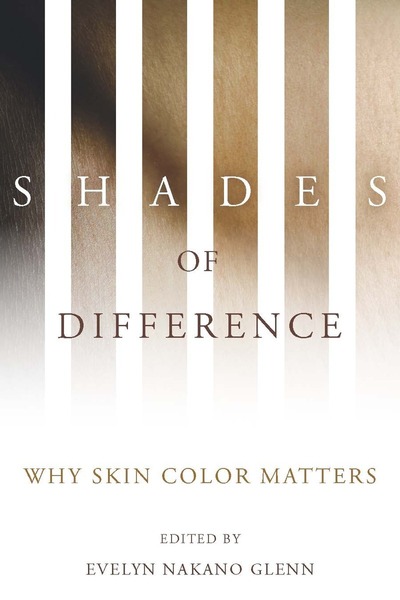
  • Shades of Difference: Why Skin Color Matters

    Stanford University Press
    2009
    312 pages
    11 tables, 15 figures, 16 illustrations
    Cloth ISBN: 9780804759984
    Paper ISBN: 9780804759991
    E-book ISBN: 9780804770996

    Edited by:

    Evelyn Nakano Glenn, Professor of Asian American Studies
    University of California, Berkeley

    Shades of Difference addresses the widespread but little studied phenomenon of colorism—the preference for lighter skin and the ranking of individual worth according to skin tone. Examining the social and cultural significance of skin color in a broad range of societies and historical periods, this insightful collection looks at how skin color affects people’s opportunities in Latin America, Asia, Africa, and North America.

    Is skin color bias distinct from racial bias? How does skin color preference relate to gender, given the association of lightness with desirability and beauty in women? The authors of this volume explore these and other questions as they take a closer look at the role Western-dominated culture and media have played in disseminating the ideal of light skin globally. With its comparative, international focus, this enlightening book will provide innovative insights and expand the dialogue around race and gender in the social sciences, ethnic studies, African American studies, and gender and women’s studies.

    Contents

      Contributors

    • Introduction: Economies of Color—Angela P. Harris
    • Part I The Significance of Skin Color: Transnational Divergences and Convergences
      • 1. The Social Consequences of Skin Color in Brazil—Edward Telles
      • 2. A Colorstruck World: Skin Tone, Achievement, and Self-Esteem Among African American Women—Verna M. Keith
      • 3. The Latin Americanization of U.S. Race Relations: A New Pigmentocracy—Eduardo Bonilla-Silva and David R. Dietrich
    • Part II Meanings of Skin Color: Race, Gender, Ethnic Class, and National Identity
      • 4. Filipinos and the Color Complex: Ideal Asian Beauty—Joanne L. Rondilla
      • 5. The Color of an Ideal Negro Beauty Queen: Miss Bronze 1961-1968—Maxine Leeds Craig
      • 6. Caucasian, Coolie, Black, or White? Color and Race in the Indo-Caribbean Diaspora—Aisha Khan
      • 7. Ihe Dynamics of Color: Mestizaje, Racism, and Blackness in Veracruz, Mexico—Christina A. Sue
    • Part III Consuming Lightness: Modernity, Transnationalism, and Commodification
      • 8. Skin Tone and the Persistence of Biological Race in Egg Donation for Assisted Reproduction—Charis Thompson
      • 9. Fair Enough? Color and the Commodification of Self in Indian Matrimonials—Jyotsna Vaid
      • 10. Consuming Lightness: Segmented Markets and Global Capital in the Skin-Whitening Trade—Evelyn Nakano Glenn
      • 11. Skin Lighteners in South Africa: Transnational Entanglements and Technologies of the Self—Lynn M. Thomas
    • Part IV Countering Colorism: Legal Approaches
      • 12. Multilayered Racism: Courts’ Continued Resistance to Colorism Claims—Taunya Lovell Banks
      • 13. The Case for Legal Recognition of Colorism Claims—Trina Jones
      • 14. Latinos at Work: When Color Discrimination Involves More Than Color—Tanya Katerí Hernandez
    • Acknowledgments
    • Notes
    • Index

    Read the Introduction here.

  • Mandy Oxendine

    University of Illinois Press
    September 1997
    136 pages
    ISBN-10: 0252063473
    ISBN-13: 9780252063473

    Charles W. Chesnutt (1858-1932)

    Foreword by

    William L. Andrews, E. Maynard Adams Professor of English
    University of North Carolina, Chapel Hill

    In a novel rejected by a major publisher in the 19th century as too shocking for its time, writer Charles W. Chesnutt (1858-1932) challenges the notion that race, class, education, and gender must define one’s “rightful” place in society. Both a romance and a mystery, Mandy Oxendine tells the compelling story of two fair-skinned, racially mixed lovers who chose to live on opposite sides of the color line.

    Foreword

    Mandy Oxedine is Charles W. Chesnutt’s first novel, though it has had to wait one hundred years to find a publisher. The leading African American fiction writer at the turn of the century, Chesnutt apparently began Mandy Oxendine a few years after he made his initial literary success as a short story writer for the prestigious Atlantic Monthly. Failing to interest his publisher in Mandy Oxendine, Chesnutt decided to focus his energies on making a book of short fiction, an effort that was doubly rewarded in 1899 with the publication of The Conjure Woman and The Wife of His Youth and Other Stories of the Color Line. Mandy Oxendine returned to its creator’s file of unpublished manuscripts; evidently Chesnutt never placed it in circulation again.

    The effect of Mandy Oxendine on the long evolution of The House behind the Cedars (1900), Chesnutt s first published novel, was significant, for in both stories the central issue is the dilemmas a fair-skinned African American woman must confront in passing for white. When compared with Mandy Oxendine, The House behind the Cedars has reater narrative density and is more sure-handed in its development of secondary characters and plots. On the other hand, with regard to the depiction of the mixed-race woman, the central figure in both stories, the earlier unpublished novel is more resistant to popular notions of femininity and less willing to accommodate itself to the protocols of “tragic mulatta” fiction than is The House behind the Cedars. Perhaps the fate of Mandy Oxendine helped convince Chesnutt that to get his version of the novel of passing into print, he would have to tone down and conventionalize some of the qualities that make Mandy Oxendine remarkable. Certainly next to Rena Walden, the pathetic ingenue who plays the victimized heroine in The House behind the Cedars, Mandy Oxendine seems almost italicized by her bold self-assertiveness and her canny sense of how a woman of color must operate if she is to protect and advance her interests in the post-Reconstruction South. Through her plainspoken southern vernacular, Mandy Oxendine articulates a tough-minded assessment of her racial, gendered, and class-bound condition, which sheds a good deal of light on her creator’s firsthand experience of life along the color line in a region of North Carolina very much like Mandy’s own milieu.

    Whether Chesnutt agrees with Mandy s solution to her situation or whether he favors the strategy espoused by her eventual husband, Tom Lowrey, is left deliberately vague in Mandy Oxendine. In the later published novels, Chesnutt usually states or strongly implies his moral perspective on social issues, but in Mandy Oxendine he seems more reticent, as though testing the waters. He may have been trying to determine for himself just how far a writer in his position should go in representing forthrightly and objectively the complex web of personal desire, racial obligation, and socioeconomic ambition that held the mixed-blood in social suspension in the post-Civil War South. Is Mandy Oxendine to be condemned for having spun her own web of deceit, or has she always been caught in a cage designed by the new southern social order to restrain those who might challenge its official deceptions about color and class? However a reader responds to these questions, one suspects that the social and gender issues that probably caused Mandy Oxendine to seem beyond the pale one hundred years ago are likely to make the novel of more than passing interest today, for Mandy Oxendine is a prototype of a new brand of African American literary realism in the early twentieth century.

  • Census Data Presents Rise in Multiracial Population of Youths

    The New York Times
    2011-03-24

    Susan Saulny, National Correspondent

    WASHINGTON — Among American children, the multiracial population has increased almost 50 percent, to 4.2 million, since 2000, making it the fastest growing youth group in the country. The number of people of all ages who identified themselves as both white and black soared by 134 percent since 2000 to 1.8 million people, according to census data released Thursday.

    Census 2010 is the first comprehensive accounting of how the multiracial population has changed over 10 years, since statistics were first collected about it in 2000. It has allowed demographers, for the first time, to make comparisons using the mixed-race group—a segment of society whose precise contours and nuances were largely unknown for generations. The data shows that the multiracial population is overwhelmingly young, and that, among the races, American Indians and Native Hawaiians and Pacific Islanders are the most likely to report being of more than one race. Blacks and whites are the least likely.

    In what experts view as a significant change from 2000, the most common racial combination is black and white. Ten years ago, it was white and “some other race”—a designation overwhelmingly used by people of Hispanic origin, which is considered by the government to be an ethnicity not a race.

    “I think this marks a truly profound shift in the way Americans, particularly African-Americans, think about race and about their heritage,” said C. Matthew Snipp, a professor in the sociology department at Stanford University…

    Read the entire article here.