• Media and Performance in Racial Passing: 2007 Heterodox Identities – LCST 2007 A

    Eugene Lang College
    The New School for Liberal Arts
    Spring 2009

    Orville Lee, Assistant Professor of Sociology

    Racial passing is a ubiquitous and contentious feature of social and cultural life in the United States. Taking “passing” as an object of analysis, this course is organized around the question of whether social identity should be understood as a set of essential characteristics or as a type of “performance.” Readings and discussions center on the conceptualization of race; the dynamics and meaning of racial passing; the movement for the recognition of biracial identities; and the question of racial “authenticity” and the politics of the self. The case of racial passing is also compared to other cases of heterodox identity involving gender, sexuality, and social class.

  • Whiteness in the Novels of Charles W. Chesnutt

    University Press of Mississippi
    2004
    248 pages
    bibliography, index
    Cloth ISBN: 1578066670 (9781578066674)
    Paper ISBN: 9781604732481

    Matthew Wilson, Professor of English and Humanities
    Pennsylvania State University, Harrisburg

    An examination of race and audience in an American innovator’s writings

    Charles W. Chesnutt (1858-1932), critically acclaimed for his novels, short stories, and essays, was one of the most ambitious and influential African American writers of the late nineteenth and early twentieth centuries. Today recognized as a major innovator of American fiction, Chesnutt is an important contributor to de-romanticizing trends in post-Civil War Southern literature, and a singular voice among turn-of-the-century realists who wrote about race in American life.

    Whiteness in the Novels of Charles W. Chesnutt is the first study to focus exclusively on Chesnutt’s novels. Examining the three published in Chesnutt’s lifetime—The House Behind the Cedars, The Marrow of Tradition, and The Colonel’s Dream—as well as his posthumously published novels, this study explores the dilemma of a black writer who wrote primarily for a white audience.

    Throughout, Matthew Wilson analyzes the ways in which Chesnutt crafted narratives for his white readership and focuses on how he attempted to infiltrate and manipulate the feelings and convictions of that audience.

    Wilson pays close attention to the genres in which Chesnutt was working and also to the social and historical context of the novels. In articulating the development of Chesnutt’s career, Wilson shows how Chesnutt’s views on race evolved. By the end of his career, he felt that racial differences were not genetically inherent, but social constructions based on our background and upbringing. Finally, the book closely examines Chesnutt’s unpublished manuscripts that did not deal with race. Even in these works, in which African Americans are only minor characters, Wilson finds Chesnutt engaged with the conundrum of race and reveals him as one of America’s most significant writers on the subject.

  • Between boxes

    the Burr
    Kent State University
    Fall 2005
    pages 50-55

    Story by Jessica Rothschuh
    Photo illustration by Clarissa Westmeyer
    Photos by Lauren Arendt

    For some multiracial students, college becomes a time to discover their heritages and shape their identities

    HER DARK HAIR IS PULLED BACK IN BRAIDS, LEAVING HER FACE OPEN, TWO large, dark eyes peering out from long eyelashes. Her skin is a warm almond color. Her ethnicity is hard to put a finger on. She could pass as Hispanic or Native American.

    Jalayna Nadal, freshman Latin American studies major from Edinboro, Pa., is both. Her father is black and Cherokee, and her mother is Puerto Rican and white.

    Developing her multicultural identity has been a lifelong process for Nadal, and college is a time to further explore her multiple heritages, shaping her cultural identity as she learns more about herself and her roots.

    For biracial and multiracial students like Nadal, college may prove both exciting and difficult. Mixed-race students in particular can experience an intense desire to discover their heritages and create their racial identities, but they also can feel pressure to define themselves. For the first time, students are searching for identities outside the environment in which they were raised, without the constant support of family…

    …College is another step away from his culture, Isaacs says. “Because I’m not around my father as much, I don’t assert my Hawaiian identity as much.” Here, he hasn’t found a place he really fits in, and when he returns to Hawaii, it is hard to feel he still belongs there, either. “You’re just stuck in limbo,” Isaacs says. “You have to be kind of like a cultural chameleon in a sense.” Isaacs says he adapts his identity to those around him, and it is easy for him to blend in because he looks white.

    For some biracial students, however, being a chameleon is hard. “The problem that they face saying, ‘I am biracial,’ is other people saying, ‘No, you’ve got to choose,’ ” says Angela Neal-Barnett, associate professor and research psychologist. “With biracial adolescents, you get two things happening: They choose to identify with one race or they choose to develop a biracial identity.”

    For more than five years, Neal-Barnett has been studying the phenomenon of “white acting” in minority adolescents. Through her research, she has talked with biracial youth, most of whom are primarily black and white. “One’s skin color can run the gamut, and one’s hair color and texture can run the gamut. You have students who look white, but their racial identity is black or biracial,” she says. In fact, the biracial adolescents Neal-Barnett has spoken with almost always choose to identify as black or biracial. Very few identify as white…

    Read the entire article here.

  • World Premiere of “Family Portrait in Black and White” at 2011 Sundance Film Festival

    Family Portrait in Black and White
    2011
    Interfilm Productions, Inc.
    Vancouver, British Columbia, Canada
    Directed by: Julia Ivanova
    Producted by Boris Ivanov

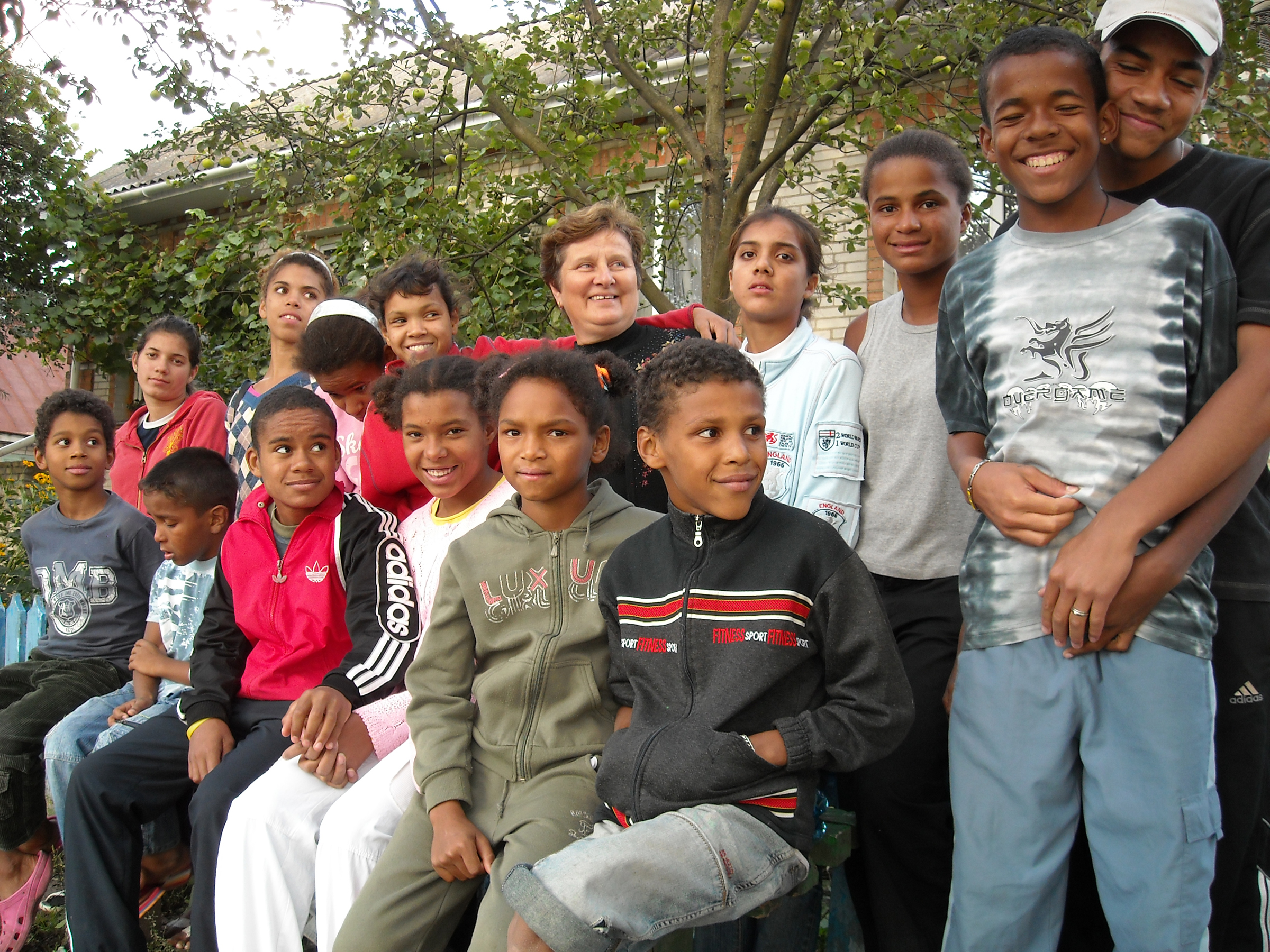
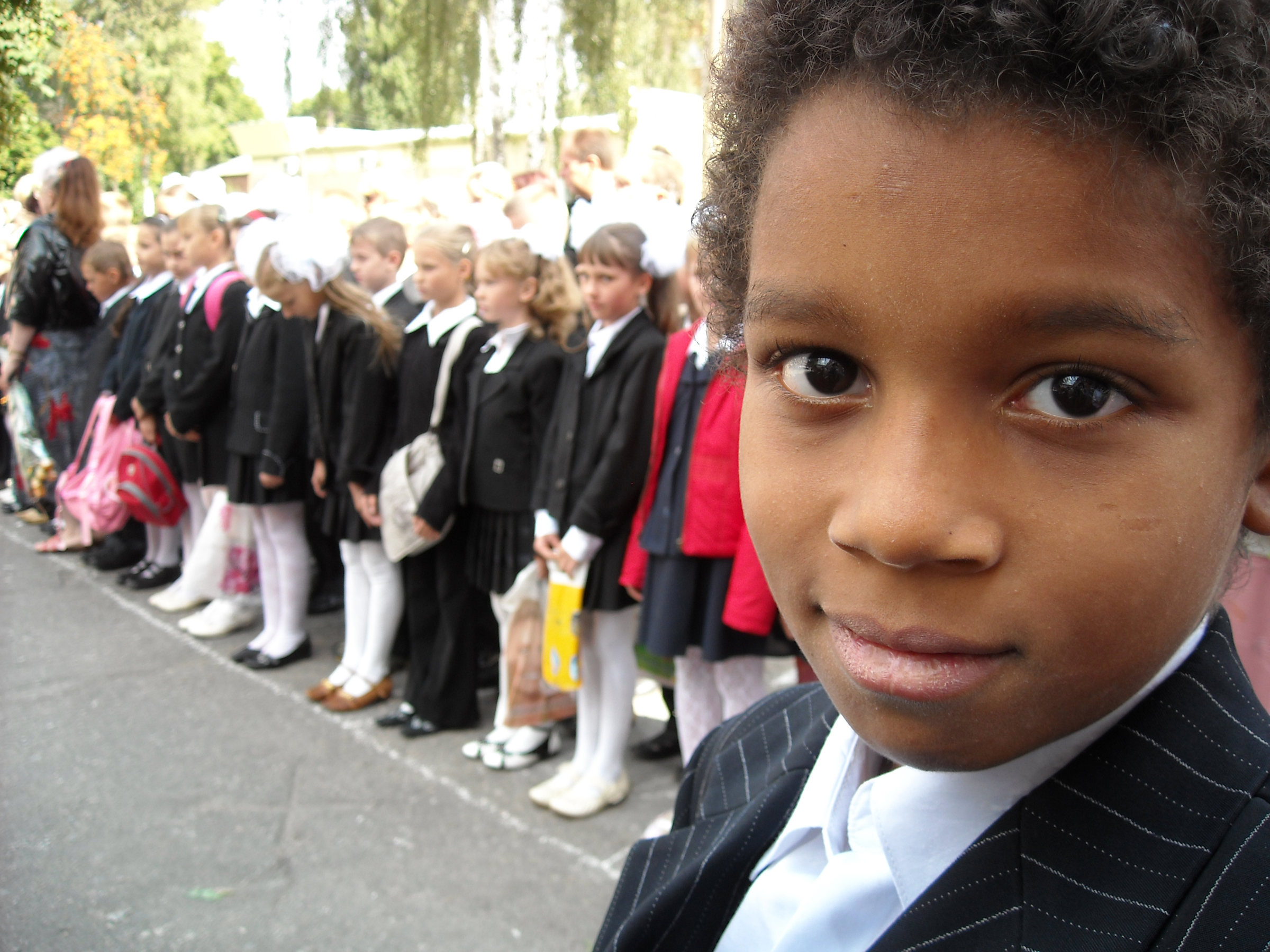
    OLGA NENYA is a foster mother to SIXTEEN BLACK ORPHANS in Ukraine—where 99.9% of the population is white and where race DOES matter. Forced to constantly defend themselves from racist neighbors and skinheads, these children have to be on guard against the world that surrounds them.

    No one is related by blood in this family, but everyone is connected by the color of their skin and by the woman who chose to be their foster mother. Olga is a loving mother but she is not Mother Teresa; she bears much more resemblance to a platoon leader. Some kids have learned to manipulate her, some obey, and only one constantly battles with her. Kiril, a 16-year-old boy nicknamed ‘Mr. President’ for his intelligence and effortless aristocracy, is the one who dares to openly argue with Olga—and pays dearly for it. The modern world is interconnected: not only did the British Charity buy the house for the family, but these kids from a tiny place in Ukraine have been spending summers with host families in France and Italy year after year. When European families offer to adopt the kids, Olga refuses despite being aware of what awaits a black Ukrainian beyond the protective shield of her family. For her, these children already have a family and, as she says, “The bird should only have one nest”. This film is a multi-dimensional portrait of one family, the country they live in, and the bigger world they are a part of.

    For more information, click here.

    2010-12-01
    Park City, Utah

    PARK CITY, UT – Sundance Institute announced today the lineup of films selected to screen in the U.S. and World Cinema Dramatic and Documentary Competitions for the 2011 Sundance Film Festival. In addition to the four Competition Categories, the Festival presents films in six out-of-competition sections to be announced on December 2. The 2011 Sundance Film Festival runs January 20-30 in Park City, Salt Lake City, Ogden and Sundance, Utah. The complete list of films is available at www.sundance.org/festival

    …World Cinema Documentary Competition

    This year’s 12 films were selected from 796 international documentary submissions.

    Family Portrait in Black and White / Canada (Director: Julia Ivanova) – In a small Ukrainian town, Olga Nenya, raises 16 black orphans amidst a population of Slavic blue-eyed blondes. Their stories expose the harsh realities of growing up as a bi-racial child in Eastern Europe. World Premiere

  • American Mixed-Race Literature: Cultural History, Precursors, Identities, and Forms of Expression

    Purdue University
    2004
    116 pages
    Publication Number: AAT 3166693
    ISBN: 9780542022999

    Gino Michael Pellegrini, Adjust Assistant Professor of English
    Pierce College, Woodland Hills, California

    This dissertation focuses on recent instances of mixed race literature in American culture such as Danzy Senna’s novel Caucasia, Rebecca Walker’s Black, White, and Jewish: Autobiography of a Shifting Self, and Kip Fulbeck’s Paper Bullets: A Fictional Autobiography. This dissertation suggests that these mixed race literary texts, as well as the multiracial experiences, sensibilities, themes, and expressions communicated therein, differ from traditional conceptions and descriptions of race and mixed race in American society, history, and literature that are based on the logic of the binary racial system. Mixed race literature attempts to phrase and communicate suppressed, distorted, and/or neglected multiracial experiences, sensibilities, and possibilities. Mixed race literature is also coextensive with the emergence of the multiracial social formation and movement in the post-civil rights era. “Precursors” to mixed race literature fall short in their attempt to phrase and to communicate complexities and experiences of mixed race lived existence. I read Jean Toomer’s Cane as one of the most significant precursors to mixed race literature in American literature. Mixed race literature also differs from “mixed race in American literature” insofar as the later, in the presentation of mixed race characters and themes, both relies on and validates the categorical, hierarchical, and dichotomous logic of the binary racial system. Notable examples in the canon of American and American Ethnic literature are William Faulkner and Toni Morrison who, from a mixed race perspective, extend and promote in their texts the suppression and distortion of multiracial complexities, possibilities, and lived realities in the service of the binary racial system.

    Table of Contents

    • Abstract
    • Chapter One: Multiracial Identity in the Post-Civil Rights Era: A Personal Narrative Essay
      • The Summer of 1999
      • Growing up Racially Mixed in the 1970s and 1980s
      • Negotiating Raciated University in the 1990s
      • Conclusion
    • Chapter Two: Cane and Jean Toomer: Percursors, American Mixed Race Literature
    • Chapter Three: Danzy Senna’s Caucasia: A Novel About Growing Up Racially Mixed and Becoming Multiracial in the Post-Civil Rights Era
    • Chapter Four: American Mixed Race Ficiational Autobiographies: Rebecca Walker’s Black, White and Jewish and Kip Fulbeck’s Paper Bullets
    • List of References
    • Vita

    Purchase the dissertation here.

  • From Manenberg to Soweto: race and coloured identity in the black consciousness poetry of James Matthews 

    African Studies
    Volume 62, Issue 2 (December 2003)
    pages 171-186
    DOI: 10.1080/0002018032000148740

    Mohamed Adhikari, Associate Professor of Historical Studies,
    University of Cape Town

    The Black Consciousness poetry of James Matthews, internationally recognised Coloured writer from the Cape Flats, reflects the growing popularisation amongst politicised Coloured people during the 1970s of the idea that racial distinctions in general, and Coloured identity in particular, had historically been used by the white supremacist establishment to divide and rule the black majority. This insight, by no means novel, provided the main thrust to the popular rejection of Coloured identity in the anti-apartheid movement of the 1980s. Coloured rejectionism had, however, originated within a small section of the Coloured intelligentsia, in particular amongst those active within the Non-European Unity Movement (NEUM) in the early 1960s (Adhikari 2002: 186-87, 213-14, 243-48) and grew into a significant movement by the time it peaked at the end of the 1980s. Though confined to a politicised minority within the Coloured community itself, and observed mainly in public discourse or for pragmatic reasons, the disavowal of Coloured identity had by the early 1980s nevertheless become a politically correct orthodoxy within the anti-apartheid movement, especially in the Western Cape. In response to the overt racism of apartheid, the democratic movement embraced non-racism as a cornerstone of its philosophy and any recognition of Coloured identity was condemned as a concession to apartheid thinking. This tendency was, however, reversed during the four-year transition to democratic rule as radical changes to the political landscape in the first half of the 1990s once again made the espousal of Coloured identity acceptable in left-wing and “progressive” circles (Adhikari 2000: 349; 2002: 23-24, 281-87). 

    Read or purchase the article here.

  • Race Classification at the University of KwaZulu-Natal: Purposes, Sites and Practices

    IOLS‐Research, Dr. Shaun Ruggunan and ccrri
    For: Centre for Critical Research on Race and Identity (ccrri)
    University of Kwazulu-Natal
    2010-11-08
    59 pages

    Race classification has long been a feature of South African life, in daily life and its cognitive processes, and also in formal state-driven bureaucratic forms. In the post-apartheid period, classification of individuals on the basis of race has continued despite a stated commitment to principles of non-racialism. Primarily, this is justified in its formal manifestation because of the acknowledged need for redress of apartheid generated inequalities both in the labour market and in access to opportunities and resources (such as higher education).

    Investigating the purposes and practices of race classification in an institution of higher learning in South Africa—in this case, the University of KwaZulu-Natal as one of the largest employers in the province of KwaZulu-Natal, as well as one of the largest national universities—offers a particularly interesting insight into these issues and provides an example of sites where this occurs. The research project has three key aims. Firstly it seeks broadly to identify the purpose of race classification, secondly the project investigates the processes followed in classifying people according to race, thirdly the study is interested in the effects, if any, of both classifying and being classified (from the perspective of the classifier) and the challenges involved in race classification. The project concludes by suggesting alternatives to race based classification.

    7. Challenges of classification

    The challenges of classification on the basis of race at UKZN identified by interviewees mainly relate to ‘misclassifications’ (a term that holds true only if there is a notion of true/accurate classification of race). These cases of misclassification result from a myriad of problems including:

    1. Problems with inaccurate data capturing. For example the data capturer could accidentally misclassify someone, or even make a subjective judgement call and change the person’s self classification to match a racial category deemed more appropriate by the data capturer.
    2. The difficulties in making judgements of race classification in a society that is increasingly integrated and becoming increasing racially mixed. This problem extends beyond the mixed race category of ‘coloured’ (Erasmus, 2007).
    3. The problem presented by the current four categories in use (African, Indian, Coloured and White). The use of these four categories has meant that Chinese South Africans, for example, have seen their identity collapsed under the generic category of Black. Racial classification in this sense assumes an economic currency and imperative (see Erasmus and Park, 2008) when related to Broad-Based Black Economic Empowerment (BBBEE) for example.
    4. The challenges related to race classification where it is perceived to relate to access to jobs, funding or placement at University were noted…

    7.2. The ‘Coloured’ question

    Classifying people of ‘mixed race’ heritage is becoming more and more difficult and this challenge was noted by a number of respondents. ‘Coloured’ in South Africa may be understood to refer to people of ‘mixed race’ heritage but it is also sometimes seen as tied to a particular cultural identity, that of ‘Cape Coloured’; or of specific races in the mix. As a result, people of mixed race heritage that do not belong to this cultural formation that is tied to a ‘black-white’ racial heritage may feel uncomfortable adopting this category for classification. Interviewees observed:

    The one might be when it comes to this classification of coloured which is a bit of a, you know, what does it mean (Interview Fihlela, 2009).

    If they want to keep the mixed box or the bi-racial box they can maybe have subsections under that because I think that is really going to grow in the future. There’s more interracial families […] coming forward (Interview Van Soelen et al, 2009).

    Read the entire report here.

  • It is known that neither the Indian nor Negro contends in dignity and esteem with the Spaniard; nor do any of the others envy the lot of the Negro, who is the “most dispirited and despised”. […] It is held as systematic that a Spaniard and an Indian produce a mestizo; a mestizo and a Spaniard, a castizo; and a castizo and a Spaniard, a Spaniard. It is agreed that from a Spaniard and a Negro a mulatto is born; from a mulatto and a Spaniard, a morisco; from a morisco and a Spaniard, a torna atrás; and from a torna atrás and a Spaniard, a tente en el aire. The same thing happens from the union of a Negro and Indian, the descent begins as follows: Negro and Indian produce a lobo; lobo and Indian, a chino; and chino and Indian, an albarazado, all of which incline towards the mulatto. [For more terms, see here.]

    Pedro Alonso O’Crowley, 1774

  • The whole story on being ‘hafu’

    CNN International
    CNN Go
    2010-11-29

    Daniel Krieger

    The movie ‘Hafu’ explores the limbo world of people who are half-Japanese and half something else, as they try to find their place in society

    What does it mean to be half-Japanese in 21st-century Japan?

    This is what filmmakers Megumi Nishikura and Lara Takagi set out to explore in their documentary film, “Hafu,” of which they showed a preview screening last month at the Kansai Franco-Japanese Institute in Kyoto.

    The film, which is not yet completed, is an offshoot of the Hafu Project, which was set up in London two years ago by sociologist Marcia Yume Lise and photographer Natalie Maya Willer, both half-Japanese.

    The project profiles hafus with photos and interviews that shed light on the experience of living between two cultures.

    “We wanted to create an opportunity to discuss contemporary Japan through the lens of half Japanese,” says Lise…

    Read the entire article here.

  • Biracial Youth and Families in Therapy: Issues and Interventions

    Journal of Marital and Family Therapy
    Volume 26, Issue 3
    (July 2000)
    pages 305–315
    DOI: 10.1111/j.1752-0606.2000.tb00300.x

    Stephanie Milan, Assistant Professor of Psychology
    University of Connecticut

    Margaret K. Keiley, Professor Director of Clinical Research
    Center for Children, Youth, and Families
    Auburn University

    Empirical research and clinical resources focusing specifically on minority youth and families have increased tremendously in the last 2 decades. Despite this trend, certain groups continue to be relatively neglected. In particular, very few resources exist for understanding the unique challenges that often face biracial youth and their families. In this article, we use a nationally representative database to compare functioning in biracial youth to white adolescents and other minority adolescents. Results suggest that biracial/biethnic youth are a particularly vulnerable group in terms of self-reported delinquency, school problems, internalizing symptoms, and self-regard. As a group, they are also more likely to receive some form of psychological intervention. Given these findings and the shortcoming of clinical resources for work with this population, we provide an in-depth discussion of why biracial youth may be particularly vulnerable from a social-constructionist framework and offer several strategies based on narrative family therapy for working with biracial youngsters and their families.

    Read or purchase the article here.