• “A gallant heart to the empire.” Autoethnography and Imperial identity in Mary Seacole’s Wonderful Adventures

    Philological Quarterly
    Volume 83, Number 2, Spring, 2004

    Sarah Salih, Professor of English
    University of Toronto

    A portrait of Mary Seacole in oils, c. 1869, by the obscure London artist Albert Charles Challen (1847–81). The original was discovered in 2003 by historian Helen Rappaport, and acquired by the National Portrait Gallery in London in 2008.

    It seems fitting that the bi-centenary year of Mary Seacole’s birth has been marked by a spate of discoveries and publications about the author of Wonderful Adventures of Mrs Seacole in Many Lands (1857). In January 2005 a “lost” portrait of Seacole, painted in 1879 by an obscure London artist named Albert Challen, was placed on view in the National Portrait Gallery. Coincidentally, Jane Robinson’s rather clumsily-titled biography, Mary Seacole: The Charismatic Black Nurse Who Became a Heroine of the Crimea, was published only weeks later, and in the same month the Home Office named one of its new buildings after Mary Seacole. (1) To round off these events, a Channel 4 documentary screened in April 2005 revealed the identity of Seacole’s husband Horace (hitherto unknown), and Wonderful Adventures was published as a Penguin Classic at the beginning of that year. (2) Assuredly, Seacole is enjoying a second heyday (albeit a posthumous one), having already taken her place amidst a burgeoning group of “Great Black Britons” whose achievements are receiving belated recognition. (3) This is not to imply that Seacole has been rescued from obscurity: between her death in 1881 and Alexander and Dewjee’s edition of Wonderful Adventures of Mrs Seacole in Many Lands almost a century later, a steady trickle of articles and publications concerning Seacole appeared both in Britain and Jamaica. Moreover, since 1984, Seacole has received increasing academic attention, and she has long been installed as a figurehead for a number of different groups including Jamaicans, black British people and nurses.

    Still, it does seem to be the case that during the last decade or two, “Seacole” has become something of a brand name for Caribbean nurses, so-called “ethnic minorities” in Britain, and Jamaicans both patriate and expatriate. There are already numerous buildings called “Mary Seacole” in Britain and Jamaica, and a Mary Seacole Street almost came into existence in London during the 1990s. (4) It is not only Seacole’s name that is being invoked; people are also reading her text, or sections of it, since it is widely available in its entirety (Wonderful Adventures has been issued at least three times since Alexander and Dewjee’s 1984 edition) and in excerpted form. Moreover, there is a growing canon of critical literature about Seacole and her autobiography, and well-known scholars such as Moira Ferguson and Simon Gikandi have tackled the thorny question of Seacole’s national, cultural and racial identifications–a question on which I wish to focus here. Certainly, Seacole has been adopted by different groups both inside and outside the academy, and she has been made to stand for (not always complementary) national, racial and cultural causes. Is there something about Seacole’s text that lends itself to these multiple interpretations? Why does “Seacole” mean so many different things to so many different people? Both in the country of her birth (Jamaica) and the country she adopted (Britain), Seacole is a national heroine, and yet sometimes it does seem as though the Seacole text (by which I mean Wonderful Adventures, as well as reconstructions of “Mary Seacole” by different generations of critics) is being pulled in quite different directions. Can Seacole be “black,” “British,” and “Jamaican” at the same time? If these ontological vectors are in fact compatible, then is it important for contemporary readers and critics to take into account how Seacole constructed herself; or how she was constructed by her nineteenth-century contemporaries?…

    Reading Wonderful Adventures as a transcultural autoethnography in conjunction with the responses of Seacole’s nineteenth-century critics to both author and text will yield broader insights into the construction and representation of “mixed race” women, both now and in Seacole’s era. My analysis of Wonderful Adventures will accordingly draw on the growing cluster of paratexts that has surrounded Seacole’s autobiography since the time of its publication. In particular, I wish to dwell on how Jamaican and British newspaper articles featuring Seacole exemplify Benedict Anderson’s idea of national identity as an imagined, textual community that is linguistically, rather than consanguineously, constructed. It is my hope that such a discussion will contribute to a more wide-ranging investigation into the naming, representation and construction of the “mixed race” female subject in imperial contexts….

    Purchase the entire article here.

  • The rape which you gentlemen have done against helpless black women in defiance of your own laws is written on the foreheads of millions of mulattoes, and in ineffable blood.

    W. E. B. DuBois

  • The Silence of Miss Lambe: Sanditon and Fictions of ‘Race’ in the Abolition Era

    Eighteenth-Century Fiction
    Volume 18, Issue 3 (Spring 2006)
    pages 329-353

    Sarah Salih, Professor of English
    University of Toronto

    Although it would be difficult to argue that Sanditon (1817) is “historical” in any immediately obvious sense, it is nonetheless clear that the social history of England is central to Jane Austen’s last, unfinished text. Critics appear to agree that the novel, which, as Warren Roberts points out, was written during a period of social turbulence in England, reflects anxieties about the shift from one socio-economic structure to another. Once a fishing village and agricultural community, Sanditon has been “perverted” into a resort, a “sandy town,” where the sea is an exploitable resource and invalidism is a social activity engaged in by characters who are “urban, rootless, irresponsible and self-indulgent.” As Tony Tanner puts it, “[Sanditon is] a little parable of change—supersession, supplanting, and substitution.” These are certainly accurate characterizations, and yet the majority of the novel’s commentators overlook what Edward Said would call its “geographical problematic,” the fact that the seaside resort is dependent on economic resources from outside—from other areas of England, and, it seems, from England’s Caribbean colonies. I am referring to Miss Lambe, Austen’s only “brown” character—so briefly invoked and so tantalizingly incomplete. Certainly, Miss Lambe does not take up much of Sanditon’s eleven and a half chapters, and as my title suggests, she never utters a word. All the same, the characters’ allusions to the “West India” contingent, along with Miss Lambe’s presence in the text, certainly warrant closer critical attention than they have hitherto received.

    Read the entire article here.

  • You Have Given Me a Country

    Sarabande Books
    2010-08-15
    208 pages
    9 x 6
    Paperback ISBN: 13: 978-1-932511-82-6

    Neela Vaswani, Teacher in the Master of Fine Arts in Writing Program
    Spalding University

    You Have Given Me a Country is a mixed-genre exploration of blurred borders, identity, and what it means to be bicultural. Combining memoir, history, and fiction, the book follows the paths of the author’s Irish-Catholic mother and Sindhi-Indian father on their journey towards each other and the biracial child they create. Vaswani’s second full-length work thematically echoes such books as The Color of Water, Running in the Family, or Motiba’s Tatoos, but is entirely unique in approach, voice, and story. The book reveals the self as a culmination of all that went before it, a new weave of two varied, yet ultimately universal backgrounds, that spans continents, generations, languages, wars, and, at the center of it all, family.

  • Monstrous Intimacies: Making Post-Slavery Subjects

    Duke University Press
    August 2010
    264 pages
    21 illustrations
    Cloth ISBN: 978-0-8223-4591-6
    Paperback ISBN: 978-0-8223-4609-8

    Christina Sharpe, Associate Professor of English and Director of American Studies
    Tufts University

    Arguing that the fundamental, familiar, sexual violence of slavery and racialized subjugation have continued to shape black and white subjectivities into the present, Christina Sharpe interprets African Diasporic and Black Atlantic visual and literary texts that address those “monstrous intimacies” and their repetition as constitutive of post-slavery subjectivity. Her illuminating readings juxtapose Frederick Douglass’s narrative of witnessing the brutal beating of his Aunt Hester and Essie Mae Washington-Williams’s declaration of freedom in Dear Senator: A Memoir by the Daughter of Strom Thurmond, as well as the “generational genital fantasies” depicted in Gayl Jones’s novel Corregidora and a firsthand account of such “monstrous intimacies” in the journals of an antebellum South Carolina senator, slave-holder, and vocal critic of miscegenation. Sharpe explores the South African-born writer Bessie Head’s novel Maru—about race, power, and liberation in Botswana—in light of the history of the Khoi San woman Saartje Baartman, who was displayed in Europe as the “Hottentot Venus” in the nineteenth century. Reading Isaac Julien’s film The Attendant, Sharpe takes up issues of representations of slavery, display, and the sadomasochism of everyday black life. Her powerful meditation on intimacy, subjection, and subjectivity culminates in an analysis of the black and white silhouettes created by Kara Walker and the subtexts of the critiques leveled against the silhouettes and the artist.

    Table of Contents

    • Acknowledgments
    • Introduction. Making Monstrous Intimacies: Surviving Slavery, Bearing Freedom
    • 1. Gayl Jones’s Corregidora and Reading the “Days That Were Pages of Hysteria”
    • 2. Bessie Head, Saartje Baartman, and Maru Redemption, Subjectification, and the Problem of Liberation
    • 3. Isaac Julien’s The Attendant and the Sadomasochism of Everyday Black Life
    • 4. Kara Walker’s Monstrous Intimacies
    • Notes
    • Bibliography
    • Index
  • Plum Bun: A Novel without a Moral

    Beacon Press
    Published in 1929
    408 pages
    Paperback ISBN: 978-080700919-2
    Size: 5-3/8″ X 8″ Inches

    Jessie Redmon Fauset

    Written in 1929 at the height of the Harlem Renaissance by one of the movement’s most important and prolific authors, Plum Bun is the story of Angela Murray, a young black girl who discovers she can pass for white. After the death of her parents, Angela moves to New York to escape the racism she believes is her only obstacle to opportunity. What she soon discovers is that being a woman has its own burdens that don’t fade with the color of one’s skin, and that love and marriage might not offer her salvation.

  • The Tapestry of Walter White’s Contradictions [Book Review]

    Sewanee Review
    Volume 118, Number 3, Summer 2010
    pages lxxxii-lxxxiv
    E-ISSN: 1934-421X
    Print ISSN: 0037-3052

    Sanford Pinsker, Emeritus Professor of English
    Franklin and Marshall College, Lancaster, Pennsylvania

    Tom Dyja. “Walter White: The Dilemma of Black identity in America”.  The Library of African American Biography.  Lanham, Maryland: Ivan R. Dee Publishsers, 2008.  224 pp.. (hardcover).  ISBN1-56663-766-X / 978-1-56663-766-4.

    In the early stages of his campaign for the presidency, many blacks regarded Barack Obama as too “white”; later many whites regarded him as too “black.” To his credit the biracial Obama presented himself as a mainstream American—and, more than that, as an exemplar of the postracial age. He did not play the race card although others, alas, did. No doubt there are still many folks, most of them over sixty, who are as ignorant, as mean-spirited, and as prejudiced as were their forefathers. Racial identity, always complicated, always contentious, is a current that alternates between how people are defined by others and how they define themselves.

    The now nearly forgotten Walter White (1893–1955) belongs to an earlier time when lynching was commonplace in the Jim Crow South, and when the National Association for the Advancement of Colored People spent much of its time trying to get federal antilynching laws passed. Because White was fair-skinned—and had blond hair and blue eyes to boot—he could not only “pass” for white, but also play the trickster in the bargain: White would amble into a small southern town, posing as an insurance salesman (which he had, in fact, been for the black-owned Standard Life Insurance Company) and engage the locals in conversation about a recent local lynching. For their part the rednecks were happy to oblige, often bragging about what had occurred in bloodcurdling…

    Read or purchase the review here.

  • 1111 ENG 126: Racial Passing, Black and White

    The College of Saint Rose
    Albany, New York
    Fall 2009

    Eurie Dahn, Assistant Professor of English

    In this course, we will analyze depictions of racial passing in American literature. In particular, we will examine narratives where African Americans “pass” for white and vice versa. While the popularity of passing as a historical phenomenon is debatable, it is incontestably a source of literary richness. This course is also about interraciality and the meaning of race itself, as the possibility of passing exposes hidden ambiguities and anxieties about race in the United States. Texts we will read may include those by Jessie Fauset, Nella Larsen, James Weldon Johnson, Mark Twain, and Walter Mosley. This is a discussion-based course, so come prepared to participate. Fulfills diversity requirement.

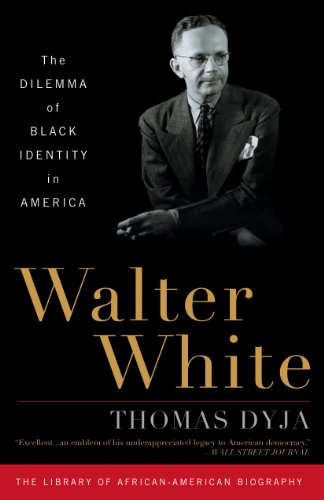
  • Walter White: The Dilemma of Black Identity in America

    Ivan R. Dee
    October 2008
    224 pages
    Electronic ISBN: 1-56663-815-1 / 978-1-56663-815-9
    Cloth ISBN: 1-56663-766-X / 978-1-56663-766-4
    Paper ISBN: 1-56663-865-8 / 978-1-56663-865-4

    Thomas Dyja

    The day Walter White was buried in 1955 the New York Times called him “the nearest approach to a national leader of American Negroes since Booker T. Washington.” For more than two decades, White, as secretary of the NAACP, was perhaps the nation’s most visible and most powerful African-American leader. He won passage of a federal anti-lynching law, hosted one of the premier salons of the Harlem Renaissance, created the legal strategy that led to Brown v. Board of Education, and initiated the campaign demanding that Hollywood give better roles to black actors. Driven by ambitions for himself and his people, he offered his entire life to the advancement of civil rights in America.

    Table of Contents

    • A World of His Own
    • The Life Insurance Temperament
    • Undercover Against Lynching
    • At the Center of the Harlem Renaissance
    • Conflict, Control, and the Making of Mr. NAACP
    • Fighting on All Fronts
    • “I am white and I am black”
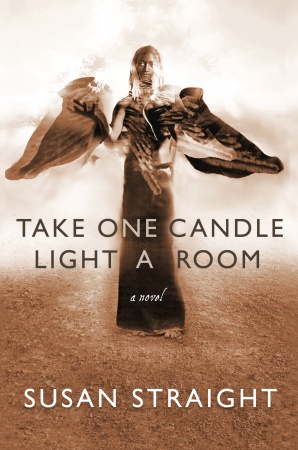
  • Take One Candle, Light a Room: A Novel

    Pantheon Books an Imprint of Random House
    2010-10-12
    336 pages
    Hardcover ISBN: 978-0-307-37914-6 (0-307-37914-0)

    Susan Straight, Professor of Creative Writing
    University of California, Riverside

    Fantine Antoine is a travel writer, a profession that keeps her happily away from her southern California home most of the time. When she returns to mark the fifth anniversary of the murder of her close friend Glorette, she finds herself pulled into the tumultuous life of Glorette’s twenty-one-year-old son, Victor. After getting involved in a shooting, Victor— Fantine’s godson—has fled to Louisiana. Together with her father, Fantine follows Victor, determined to help him avoid the criminal future that he suddenly seems destined for.
     
    But Fantine’s own fate will be altered on this journey as well: her father will reveal the wrenching secrets of his past, and she will be compelled to question the most essential choices she’s made in her life. And all three characters will come face-to-face with the issues of race that beset them: Fantine, whose light black skin has eased her way in the world; her father, who grew up in the Jim Crow South; and Victor, whose fall into violence mirrors the path of so many other black men his age.
     
    Take One Candle, Light a Room is a powerfully moving story about the intricacies of human connection, and about the ways in which we find a place for ourselves within our families and the world.