Mixed Race Studies

Scholarly perspectives on the mixed race experience.

    • About This Site
    • Bibliography
    • Contact Information
    • Date and Time Formats
    • Forthcoming… (Updated 2021-09-01)
    • Likely Asked Questions
    • List of Book Publishers
    • List of Definitions and Terms
    • My Favorite Articles and Papers
    • My Favorite Posts
    • My Recent Activities
    • Praise for Mixed Race Studies
    • Tag Listing
      • Tag Listing (Ordered by Count)
    • US Census Race Categories, 1790-2010
    • 1661: The First ‘Mixed-Race’ Milestone
    • 2010 U.S. Census – Some Thoughts

recent posts

  • The Routledge International Handbook of Interracial and Intercultural Relationships and Mental Health
  • Loving Across Racial and Cultural Boundaries: Interracial and Intercultural Relationships and Mental Health Conference
  • Call for Proposals: 2026 Critical Mixed Race Studies Conference at UCLA
  • Participants Needed for a Paid Research Study: Up to $100
  • You were either Black or white. To claim whiteness as a mixed child was to deny and hide Blackness. Our families understood that the world we were growing into would seek to denigrate this part of us and we would need a community that was made up, always and already, of all shades of Blackness.

about

  • Twitter
  • Facebook
  • Instagram
  • Psychophysiological Stress Responses to Bicultural and Biracial Identity Denial

    2019-10-26

    Psychophysiological Stress Responses to Bicultural and Biracial Identity Denial

    Journal of Social Issues
    First published: 2019-08-14
    DOI: 10.1111/josi.12347

    Analia F. Albuja, Social Psychology Ph.D. Student
    Rutgers, The State University of New Jersey

    Sarah E. Gaither, Assistant Professor of Psychology and Neuroscience
    Duke University, Durham, North Carolina

    Diana T. Sanchez, Associate Professor of Psychology
    Rutgers, The State University of New Jersey

    Brenda Straka, Ph.D. Student
    Duke University, Durham, North Carolina

    Rebecca Cipollina, Social Psychology Ph.D. Student
    Rutgers, The State University of New Jersey

    Journal of Social Issues banner

    Bicultural and biracial individuals (those who identify either with two cultures or two races) are often denied membership in the groups with which they identify, an experience referred to as identity denial. The present studies used an experimental design to test the effects of identity denial on physiological and self‐reported stress, and naturalistic behavioral responses in a controlled laboratory setting for both bicultural (Study 1; N = 126) and biracial (Study 2; N = 119) individuals. The results suggest that compared to an identity‐irrelevant denial, bicultural participants who were denied their American identity and Minority/White biracial individuals who were denied their White identity reported greater stress and were more likely to verbally reassert their identity. Bicultural participants also demonstrated slower cortisol recovery compared to those in the identity‐irrelevant denial condition. The results are the first to highlight the negative physical health consequences of identity denial using an experimental design for both bicultural and biracial populations, underscoring the necessity to promote belongingness and acceptance.

    Read or purchase the article here.
  • With dark skin, a braided wig, a feathered war bonnet, and a name like Young Deer, he could easily “pass” for a Plains Indian and entertain audiences with thrilling stories of the Old West or dance to the beat of a tom-tom. His marriage to Lillian St. Cyr (1884-1974) would give him that chance.

    2019-10-26

    Instead, [James] Young Deer began to create a new identity and in his own way “discovered” his Indian roots. After all, “going Indian” might open the door to other opportunities, especially in an era of dime novels and Wild West Shows. With dark skin, a braided wig, a feathered war bonnet, and a name like Young Deer, he could easily “pass” for a Plains Indian and entertain audiences with thrilling stories of the Old West or dance to the beat of a tom-tom. His marriage to Lillian St. Cyr (1884-1974) would give him that chance.

    Angela Aleiss, “Who Was the Real James Young Deer?” Bright Lights Film Journal, April 30, 2013. https://brightlightsfilm.com/who-was-the-real-james-young-deer-the-mysterious-identity-of-the-pathe-producer-finally-comes-to-light.

  • “That fascinates me that there was a black person who had white privilege and was cognizant of his ethnicity,” he said. “When you really think about it, he kinda wasn’t a black person when he was there. That’s such a juxtaposition for me.”

    2019-10-26

    “That fascinates me that there was a black person [Samuel Codes Watson] who had white privilege and was cognizant of his ethnicity,” he said. “When you really think about it, he kinda wasn’t a black person when he was there. That’s such a juxtaposition for me.” —Tylonn J. Sawyer

    Micah Walker, “He passed as a white student at U-M — but was actually college’s first black enrollee,” The Detroit Free Press, October 19, 2019. https://www.freep.com/story/entertainment/2019/10/19/samuel-codes-watson-unviersity-michigan-tylonn-j-sawyer/3992118002/.

  • “Our society is racially illiterate in general, and the greatest illiteracy is to be in the presence of a multiracial person.”

    2019-10-26

    “It’s really hard for administrations to catch up,” says G. Reginald Daniel, PhD, professor and vice chair in the Department of Sociology at the University of California, Santa Barbara. One of the key areas lagging behind in universities is student counseling. “There are special kinds of microaggressions that come with multiracial identity,” says Daniel. “Our society is racially illiterate in general, and the greatest illiteracy is to be in the presence of a multiracial person.”

    Kristal Brent Zook, “Universities Are Still Struggling to Provide for Mixed-Race Students,” Zora, September 23, 2019. https://zora.medium.com/universities-are-still-struggling-to-provide-for-mixed-race-students-d291d89c5b60.

  • A Simplistic View of a Mixed-ish America

    2019-10-26

    A Simplistic View of a Mixed-ish America

    The Atlantic
    2019-10-26

    Hannah Giorgis


    ABC / Byron Cohen

    ABC’s Black-ish spinoff joins a new memoir by Thomas Chatterton Williams in presenting a seemingly enlightened but ahistorical view of race.

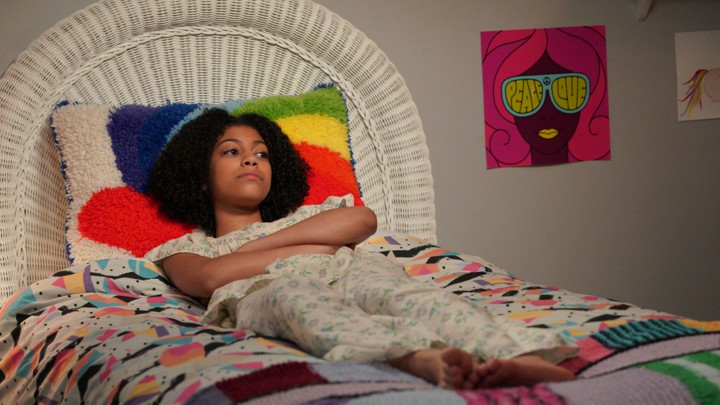
    Mixed-ish, the prequel of the Tracee Ellis Ross–fronted sitcom Black-ish, begins with a rupture. At the tender age of 12, Rainbow “Bow” Johnson (played by Arica Himmel) is ejected from the hippie commune where she and her family live. As the adult Bow, Ross narrates the predicament that follows the government raid of the utopian community: Bow’s black mother and white father must now raise their three biracial children in the harsh world of mid-1980s suburban America. Though it’s set during the broader tumult of the Reagan era, Mixed-ish is driven by the identity crisis that Rainbow and her siblings, Johan and Santamonica, face. On their first day at their new school, the trio are stopped by a pair of dark-skinned students who ask them, “What are you weirdos mixed with?” When the fairer-skinned Johnson kids naively respond, “What’s ‘mixed’?” their classmates laugh.

    Ross, who also serves as a series writer and executive producer, talks viewers through this confrontation in a didactic voiceover. “I know the idea of not understanding what it means to be mixed sounds crazy, but you have to understand—growing up on the commune, race wasn’t a thing,” she says. “Do you have any idea how many more mixed babies there are today? Probably because interracial marriage was illegal until the Loving Act of 1967,” she explains, adding that she and her siblings were “were basically the beta testers for biraciality.” In this scene and in later episodes, Mixed-ish falls into the trap of framing its protagonists as pioneers of mixed-race consciousness, rather than inheritors of a long and complex history…

    …In addition to Mixed-ish, Loving and the mythos surrounding it has provided fodder for another recent work about biraciality. In his new book, Self-Portrait in Black and White: Unlearning Race, the author Thomas Chatterton Williams notes that his “black” father and “white” mother met the year after the Loving decision. (In an author’s note, Williams explains that he sought “to cast doubt on and reject terms … such as ‘white,’ ‘black,’ ‘mixed,’ ‘biracial,’ ‘Asian,’ ‘Latino,’ ‘monoracial,’ etc.” by placing them in quotation marks.) The author’s second memoir, Self-Portrait was inspired by a moment of shock. When Williams’s white French wife gave birth to their daughter, he was stunned to see that the child had blond hair. The baby’s appearance upended Williams’s self-conception: How could he, a biracial man who’d identified as black and written Obama-era columns about his future children being undeniably black, produce a child who looked, well, white?…

    Read the entire article here.

  • New Evidence of Skin Color Bias and Health Outcomes Using Sibling Difference Models: A Research Note

    2019-10-26

    New Evidence of Skin Color Bias and Health Outcomes Using Sibling Difference Models: A Research Note

    Demography
    Volume 56, Issue 2 (April 2019)
    pages 753-762
    DOI: 10.1007/s13524-018-0756-6

    Thomas Laidley, Postdoctoral Fellow
    Institute of Behavioral Science
    University of Colorado

    Benjamin Domingue, Assistant Professor of Education and, by courtesy, of Sociology
    Stanford University

    Piyapat Sinsub
    Princeton University

    Kathleen Mullan Harris, James Haar Distinguished Professor of Sociology
    University of North Carolina

    Dalton Conley, Henry Putnam University Professor in Sociology
    Princeton University

    In this research note, we use data from the National Longitudinal Study of Adolescent to Adult Health (Add Health) to determine whether darker skin tone predicts hypertension among siblings using a family fixed-effects analytic strategy. We find that even after we account for common family background and home environment, body mass index, age, sex, and outdoor activity, darker skin color significantly predicts hypertension incidence among siblings. In a supplementary analysis using newly released genetic data from Add Health, we find no evidence that our results are biased by genetic pleiotropy, whereby differences in alleles among siblings relate to coloration and directly to cardiovascular health simultaneously. These results add to the extant evidence on color biases that are distinct from those based on race alone and that will likely only heighten in importance in an increasingly multiracial environment as categorization becomes more complex.

    Read the entire article in HTML or PDF format.

  • Opinion: The pernicious myth of a Caucasian race

    2019-10-26

    Opinion: The pernicious myth of a Caucasian race

    The Los Angeles Times
    2019-09-11

    Joel Dinerstien, Professor of English
    Tulane University, New Orleans Louisiana

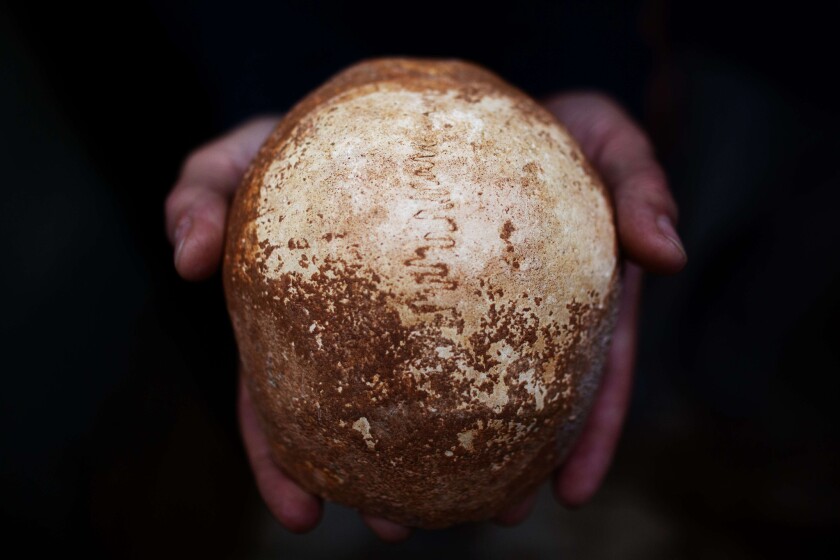
    Anthropologists have for centuries studied human skulls and drawn conclusions about human origins — some of them inaccurate.
    Anthropologists have for centuries studied human skulls and drawn conclusions about human origins — some of them inaccurate. (Menahem Kahana / AFP/Getty Images)

    How did a female skull lead to “Caucasians”?

    In the vocabulary of ethnicity, some designations are obvious. African Americans are of African descent; Latinos have Latin American roots. But what about Caucasians? If a Native American told a Caucasian to “go back where you came from,” where would that person go?

    Geographically, Caucasia is a region of Russia, a place from which few white Americans come. Yet the term Caucasian remains in wide use as a synonym for a white person.

    The classification dates back to 1795, when Johann Friedrich Blumenbach, a respected German physician and anthropologist, conducted research in which he measured skulls, a then-common practice for comparing disparate human groups…

    Read the entire article here.

  • Ep13 – Loving v. Virginia

    2019-10-26

    Ep13 – Loving v. Virginia

    Salacious History: Sex. Romance. Infamy.
    2019-10-16

    Sarah Duncan, Host

    At 2am on July 11, 1958, Mildred and Richard Loving were ripped from their beds in the middle of the night and thrown in jail. Their crime? Being married to someone of a different race. On today’s show, we get the background on the Lovings’ relationship, a brief history of miscegenation law, and how the Loving’s legal battle changed the United States forever.

    Listen to the episode (00:25:26) here. Download the episode here.

  • Blurring the Lines of Race and Freedom: Mulattoes in English Colonial North America and the Early United States Republic

    2019-10-26

    Blurring the Lines of Race and Freedom: Mulattoes in English Colonial North America and the Early United States Republic

    University of California at Berkeley
    Spring 2013
    183 pages

    Aaron B. Wilkinson

    A dissertation submitted in partial satisfaction of the requirements for the degree of Doctor of Philosophy in History

    This project investigates people of mixed African, European, and sometimes Native American ancestry, commonly referred to as mulattoes, in English colonial North America and the early United States republic. This research deconstructs nascent African American stratification by examining various types of privilege that allowed people of mixed heritage to experience upward social mobility, with a special focus on access to freedom from slavery and servitude in the colonies and states of the southeast Atlantic Coast. Additionally, this work provides a framework for understanding U.S. mixed-race ideologies by following the trajectory of how people of mixed descent and their families viewed themselves and how they were perceived by the broader societies in which they lived. This study contributes to historiographical and contemporary discussions associated with mixed-heritage peoples, ideas of racial mixture, “whiteness,” and African American identity.

    Read the entire dissertation here.

  • Who Was the Real James Young Deer?

    2019-10-24

    Who Was the Real James Young Deer?

    Bright Lights Film Journal
    Issue May 2013 (2013-04-30)
    10 pages

    Angela Aleiss, Full Time Lecturer, Information Systems
    California State University, Long Beach

    James Young Deer, 1909, at Bison

    The Mysterious Identity of the Pathè Producer Finally Comes to Light

    “With his acting experience and technical know-how, Young Deer soon advanced to one of Pathé’s leading filmmakers. His Indian identity served him well: no one in the cast or crew at that time would have taken orders from a black man.”

    Few in Hollywood knew that James Young Deer, general manager of Pathé Frères West Coast Studio from 1911 to 1914, was really an imposter. After all, Young Deer had earned a reputation as the first Native American producer and had worked alongside D. W. Griffith, Fred J. Balshofer, and Mack Sennett. As one of Hollywood’s pioneer filmmakers, Young Deer oversaw the production of more than 100 one-reel silent Westerns for Pathé, the world’s largest production company with an American studio in Edendale in Los Angeles.

    Young Deer was married to Lillian St. Cyr, a Winnebago Indian from Nebraska known as “Princess Red Wing” and star of Cecil B. DeMille’s 1914 classic The Squaw Man. He boasted of a full-blooded Winnebago heritage similar to his wife: his birthplace became Dakota City, Nebraska, and his father was “Green Rainbow” from the Winnebago reservation. He claimed he attended the Carlisle Indian Industrial School in Pennsylvania, the first off-reservation Indian boarding school.

    In a 2010 BBC Radio 3 segment, “James Young Deer: The Winnebago Film-Maker,” no one — including this author — could unscramble Young Deer’s murky past. Young Deer was elusive, and a search in his background leads to a maze of contradictions and discrepancies. But after ten months of poking through dusty archives and faded vital records and tracking down Lillian’s relatives, the identity of this mysterious filmmaker finally came to light. His real name: James Young Johnson, born about April 1, 1878, in Washington, D.C., to mulatto parents George Durham Johnson and Emma Margaret Young.

    “If Young Deer claimed to be Winnebago, he was lying to himself and others to promote himself,” says David Smith, Winnebago historian, author, and former director of Indian Studies at Little Priest Tribal College in Nebraska. Smith has heard endless stories about Young Deer’s supposed Winnebago heritage, and he’s had enough. His reaction is understandable: Native American identity is an especially sensitive issue, and no Indian tribe wants their name appropriated by some wannabe.

    Little did anyone know that Young Deer’s true heritage lies hidden within the small mid-Atlantic community of whites, African Americans, and Native Americans once known as the “Moors of Delaware.” So secluded were these people that the late historian Clinton A. Weslager referred to them as “Delaware’s Forgotten Folk.”…

    Read the entire article here.

Previous Page
1 … 128 129 130 131 132 … 1,428
Next Page

Designed with WordPress