• Stalking the Biracial Hidden Self in Henry James’s The Sense of the Past and “The Jolly Corner”

    The Henry James Review
    Volume 25, Number 3, Fall 2004
    pages 276-284
    E-ISSN: 1080-6555,
    Print ISSN: 0273-0340
    DOI: 10.1353/hjr.2004.0027

    Stephanie L. Hawkins, Assistant Professor of English
    University of North Texas

    This essay argues that, for James, the visible face and body conceal some genetic “reality” or heritage, which he figures in both The Sense of the Past and “The Jolly Corner” as the specter of unacknowledged racial difference. In both works, James fuses evolutionary biology and the ghostly, thematizing turn-of-the-century anxieties regarding miscegenation. By transforming a narrative of time travel into one of racial passing, James both literalizes the psychological phenomenon of a “hidden self” and exposes the central paradox of double-consciousness: the simultaneous recognition and rejection of one’s “hidden” racial differences and sense of estrangement from the national family.

    Read the entire article here.

  • Variablity in Race Hybrids

    American Anthropologist
    Volume 40, Issue 4 (October-December 1938)
    pages 680–697
    DOI: 10.1525/aa.1938.40.4.02a00090

    Wilson D. Wallis (1886-1970)

    In his revised edition of The Mind of Primitive Man [Read here], Professor [Franz] Boas warns against assuming “on the basis of a low variability that a type is pure, for we know that some mixed types are remarkably uniform. This has been shown for American Mulattoes, Dakota Indians, and made probable for the city population of Italy.” In a footnote to that passage he refers to the studies of Herskovits, Sullivan, and Boas, respectively, presumably in support of this position. Inasmuch as the test of variability used in those studies is the standard deviation of dimensions, and, for reasons which I shall indicate, this is not an acceptable test of variability for this purpose, it seems proper to reexamine the data on variability of race hybrids.

    Although several studies have been devoted to the results of race crossing, there are few definitive results. Some studies suggest hybrid vigor, that is, increase in dimensions over one or both parental strains. Other studies indicate that race hybrids are inferior to one or both parental strains. Some indicate that hybrids are less variable than parental strains; others, that they are more variable. The character of the results may, of course, depend upon the races crossed and upon proximity to original crossing; but on these matters there is little well attested information. Sullivan and Boas find half-breeds among Sioux and other groups taller than pure bloods among each sex. Wissler, in a series of Oglala Dakota, finds half bloods slightly shorter than full bloods. As Sullivan remarks: “NO satisfactory solution of these contradictory results can be given so long as our series are incomplete in lacking the measurements on the whites with whom the Indians have mixed.” When all the data are considered, it is not clear that in race crossing any physical trait behaves as a Mendelian recessive or dominant-despite portrayals in fiction. In Hawaiian-European hybrids in Hawaii, however, Dunn finds evidence that the brachycephaly of Hawaiians is inherited as a dominant, and the European type of head (? dolchocephaly) reappears as a recessive in later hybrid generations. Hawaiians are said to contribute to the cross relatively more dominant factors than do Europeans.  He finds evidence, also, of “segregation of ‘racial’ characters such as nose form, hair form, hair and skin color in diverse combinations in the F and backcross generation.” There is, however, no evidence of Mendelian inheritance in the ratios with which these traits occur, and no evidence of Mendelian inheritance of a cluster of traits…

    Read the entire article here.

  • Biological and Social Consequences of Race-Crossing

    American Journal of Physical Anthropology
    Volume 9, Issue 2 (April/June 1926)
    pages 145–156
    DOI: 10.1002/ajpa.1330090212

    W. E. Castle (1867-1962)
    Bussey Institution, Harvard University

    What constitute the essential differences between human races seems to be a question difficult for anthropologists to agree upon but from a biologist’s point of view those appear to be on safe ground who base racial distinctions on easily recognizable and measurable differences perpetuated by heredity irrespective of the environment.  See Hooton, 1926.  It is still a moot question how races originate, not merely in man, but also among lower animals and plants.  At one time natural selection was thought to be an all-sufficient explanation of the matter, but the more carefully the question is studied and the more exact and experimental in character the data which enter into its solution, the more fully we become convinced that forms of life are rarely static, that organic is the rule rather than the exception. Change is inevitable and is not limited to useful or adaptive variations.  Natural selection undoubtedly determines the survival of decidedly useful variations, which arise for any reason, and also the extinction of those which are positively harmful, but a host of there variations fall in neither of these categories and survive among the descendants as a matter of course, quite unaffected by natural selection.

    The experimental study of evolution indicates that genetic (hereditary) variations are all the time arising, and with especial frequency in such organism are bisexual and cross-fertilized.

    In a state of nature no species can long be separated by geographical barriers into  non-interbreeding groups, without the origins of specific or racial differences between such groups…

    Read or purchace the article here.

  • Hyperdescent is the practice of classifying a child of mixed race ancestry in the more socially dominant of the parents’ races.

    Hyperdescent is the opposite of hypodescent (the practice of classifying a child of mixed race ancestry in the more socially subordinate parental race). Both hyperdescent and hypodescent vary from other methods of determining lineage, such as patrilineality and matrilineality.

    Wikipedia

  • …The Korean word for a bi or multiracial person, despite the composition of their mixture, is honhyeol (in), which literally translates into impure blood. There has been a “pride” instilled in Koreans for their “ethnic homogeneity” which has resulted in “fear and distrust of outsiders” (The Economist, 2006). The connotation for Korea, which bases its national identity upon the notion of Koreans descending from one common ancestor and speaking one language, is that these offspring of interracial relationships are not Korean, because they have more than Korean blood coursing through their veins. It makes sense then that the oppositional identity of these “pure blooded” Koreans came about as a sort of resistance to the first Chinese invasion, then Japanese imperialism, and then finally Western imperialism in the form of American occupation after the Korean War. Korean nationalism was wrapped up in the idea of “consanguinity” to link “ethnic homogeneity” to a “profound sense of cultural distinctiveness and superiority.” (Kim, 2007) As these countries made their presence known, Korea began to rely on internal colonialism, which economically exploited and political excluded groups different from the dominant group, becoming a reminder there can be “colonial subjects – on the national soil.” (Gordon, 2006; Blauner 1972, p. 52) For many then, international marriages were “associated with the invasion of Korea by other countries” and were subsequently seen as “betrayals of nationalism” where the children resulting from those unions became physical reminders of that betrayal (Lee). Kim Sok-soo believes that the coupling of nationalism with ethnic homogeneity ultimately has became a “useful tool for the South Korean government when the country was embroiled in ideological turmoil. It was used as an effective tool to make its people obedient and easy to govern” (Park, 2006). The way the bodies of these bi and multiracial Koreans are, in both social and political realms, recognized, regulated, and ultimately utilized through relationships maintained by various institutions of the state is essential to a particular form of governmentality…

    Washington, Myra. “More than a Metaphor: Blood as Boundary for Korean Biracial Identity” Paper presented at the annual meeting of the NCA 95th Annual Convention, Chicago Hilton & Towers, Chicago, IL, Nov 11, 2009 Online <PDF>. 2010-08-09 <http://www.allacademic.com/meta/p368501_index.html>

  • Institutions, Inculcation, and Black Racial Identity: Pigmentocracy vs. the Rule of Hypodescent

    Social Identities
    Volume 14, Issue 5 (September 2008)
    pages 567-585
    DOI: 10.1080/13504630802343390

    Richard T. Middleton IV, Associate Professor of Political Science
    University of Missouri, St. Louis

    This research paper investigates the effect political institutions have on black racial identity. In particular, I study individual inculcation in contexts where political institutions institutionalize either of two forms of racial social structures—a pigmentocracy (the Dominican Republic), or the rule of hypodescent (the US South), and the effect such inculcation has on black racial identity. I sampled 101 respondents from the Dominican Republic and 102 from the state of Mississippi, USA. Consistent with the basic assumptions of my hypotheses, respondents in the Dominican Republic study sites showed a weaker degree of identification with blackness vis—vis something ‘whiter’. Nevertheless, respondents in the Dominican Republic sites demonstrated a stronger identification with blackness than what most conventional observers would have anticipated. Respondents in the Mississippi study sites showed a stronger sense of identification with blackness. Surprisingly, however, Mississippi respondents demonstrated a larger degree of neutrality than expected in their belief of being of a mixed racial heritage rather than just a black African heritage.

    Read or purchase the article here.

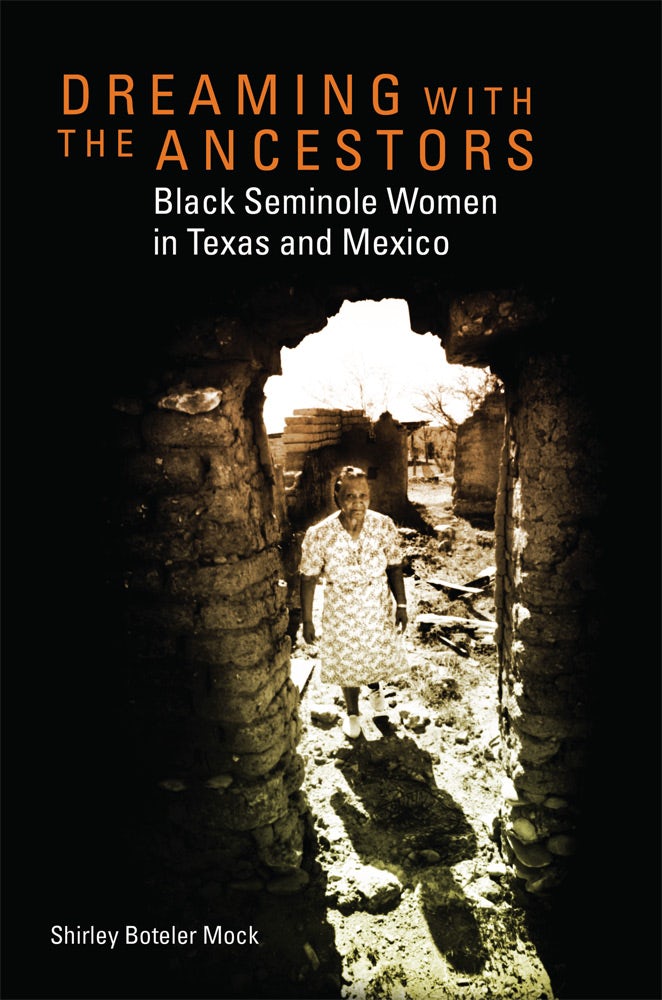
  • Dreaming with the Ancestors: Black Seminole Women in Texas and Mexico

    University of Oklahoma Press
    December 2010
    400 pages
    30 B&W Illus., 2 Maps
    6.125″ x 9.25″
    Hardcover ISBN: 9780806140537
    Paperback ISBN: 9780806168920

    Shirley Boteler Mock, Research Fellow
    Mesoamerican Archaeological Research Laboratory, University of Texas, Austin

    Explores a unique and eclectic culture rooted in African traditions

    Indian freedmen and their descendants have garnered much public and scholarly attention, but women’s roles have largely been absent from that discussion. Now a scholar who gained an insider’s perspective into the Black Seminole community in Texas and Mexico offers a rare and vivid picture of these women and their contributions. In Dreaming with the Ancestors, Shirley Boteler Mock explores the role that Black Seminole women have played in shaping and perpetuating a culture born of African roots and shaped by southeastern Native American and Mexican influences.

    Mock reveals a unique maroon culture, forged from an eclectic mixture of religious beliefs and social practices. At its core is an amalgam of African-derived traditions kept alive by women. The author interweaves documentary research with extensive interviews she conducted with leading Black Seminole women to uncover their remarkable history. She tells how these women nourished their families and held fast to their Afro-Seminole language—even as they fled slavery, endured relocation, and eventually sought new lives in new lands. Of key importance were the “warrior women”—keepers of dreams and visions that bring to life age-old African customs.

    Featuring more than thirty illustrations and maps, including historic photographs never before published, Dreaming with the Ancestors combines scholarly analysis with human interest to open a new window on both African American and American Indian history and culture.

  • Cinderella Story: A Scholarly Sketchbook about Race, Identity, Barack Obama, the Human Spirit, and Other Stuff that Matter

    AltaMira Press
    February 2010
    228 pages
    Cloth ISBN: 0-7591-1176-6 / 978-0-7591-1176-9  

    James Haywood Rolling, Jr., Associate Professor of Art Education
    Syracuse University

    Cinderella Story is an experimental autoethnography that explores critical racial issues in America through the media of language and images. Rolling asks, How do words and images-involving stories and paradigms, past and future, perceptions of beauty and ugliness-become flesh? How are they done and undone? In this supple and complex narrative, the author peers deeply into his own life and attitudes, and into the racial images and ideas made explicit by American history as a whole, to sort out fact from fiction in new and ingenious ways.

    Table of Contents

    Prologue: An Old Story
    Episode One: Borderlines
    Episode Two: Homelessness
    Episode Three: Origins
    Episode Four: Breech Births and Cinderella Endings
    Episode Five: Monsters Deconstructed
    Episode Six: Figuring Myself Out
    Episode Seven: Messing around with Identity Constructs
    Episode Eight: Disruptions
    Episode Nine: Secular Blasphemy
    Episode Ten: Propaganda
    Episode Eleven: Invisibility and In/di/visuality
    Episode Twelve: The Meeting
    Episode Thirteen: Self-Portrait, with Stern Resistance
    Episode Fourteen: (Re)Appearances
    Episode Fifteen: Self Portrait, with Backlighting
    Episode Sixteen: The One-Drop Rule
    Episode Seventeen: Self-Portrait, with Possibilities
    Episode Eighteen: Epilogue, with New Story Values

  • Europe’s Indians: Producing Racial Difference, 1500–1900

    Duke University Press
    2010
    296 pages
    Cloth ISBN: 978-0-8223-4745-3
    Paperback ISBN: 978-0-8223-4764-4

    Vanita Seth, Associate Professor of Politics
    University of California, Santa Cruz

    Europe’s Indians forces a rethinking of key assumptions regarding difference—particularly racial difference—and its centrality to contemporary social and political theory. Tracing shifts in European representations of two different colonial spaces, the New World and India, from the late fifteenth century through the late nineteenth, Vanita Seth demonstrates that the classification of humans into racial categories or binaries of self-other is a product of modernity. Part historical, part philosophical, and part a history of science, her account exposes the epistemic conditions that enabled the thinking of difference at distinct historical junctures. Seth’s examination of Renaissance, Classical Age, and nineteenth-century representations of difference reveals radically diverging forms of knowing, reasoning, organizing thought, and authorizing truth. It encompasses stories of monsters, new worlds, and ancient lands; the theories of individual agency expounded by Hobbes, Locke, and Rousseau; and the physiological sciences of the nineteenth century. European knowledge, she argues, does not reflect a singular history of Reason, but rather multiple traditions of reasoning, of historically bounded and contingent forms of knowledge. Europe’s Indians shows that a history of colonialism and racism must also be an investigation into the historical production of subjectivity, agency, epistemology, and the body.

    Table of Contents

    Acknowledgments
    Introduction
    1. Self and Similitude: Renaissance Representations of the New World
    2. “Constructing” Individuals and “Creating” History: Subjectivity in Hobbes, Locke, and Rousseau
    3. Traditions of History: Mapping India’s Past
    4. Of Monsters and Man: The Peculiar History of Race
    Epilogue
    Notes
    Bibliography
    Index

  • The Risks of Multiracial Identification

    The Chronicle of Higher Education
    2006-11-10

    Naomi Schaefer Riley

    The comment period has closed on proposed new guidelines from the U.S. Department of Education on how colleges should ask students about race. No longer, the guidelines say, should applicants simply be given the choice of black, white, Asian, American Indian (or Alaska Native), or native Hawaiian (or other Pacific Islander). Now they should be allowed to check off more than one box, as well as note whether they identify as Hispanic. Eugene L. Anderson, an associate director of the American Council on Education, told Diverse, a higher-education magazine, that he expected colleges would be pleased with the new guidelines: “They make sense; they respect peoples’ individual notion of racial identity, which is important.”

    No doubt colleges also appreciate the department’s instructions for practical reasons. The proliferation of multiracial options on a variety of forms, including college applications, reflects the new demographic reality in America. On the 2000 census, nearly seven million Americans checked off two or more racial boxes. And a study last year by researchers at Cornell University found that the number of interracial marriages involving white people, black people, or Hispanics each year in the United States has jumped tenfold since the 1960s.

    In a sense, these developments represent the realization of the dream of a melting pot. In 1963 Norman Podhoretz, the editor of Commentary, penned a controversial essay called “My Negro Problem—And Ours,” expressing despair about the chances for real racial integration in this country. That could not occur, he wrote, “unless color does in fact disappear: and that means not integration, it means assimilation, it means—let the brutal word come out—miscegenation.”…

    …But even those mixed-race groups cannot satisfy some students. One told the Crimson that her acquaintances at Harvard’s Hapa group focused too much on East Asian identities, instead of South Asian ones. They went out, she complained, for dim sum, “which I enjoy, but don’t identify with culturally.” But she didn’t feel welcome in the regular South Asian group, either, because in a theatrical performance the group’s leaders cast her in the role of a white person.

    The level of specificity that seems to be required for many young men and women to feel comfortable today is bordering on the absurd. Ultimately it’s sad. Advocates of diversity on college campuses insist that they are not just assembling faces of different colors for aesthetic purposes; they are trying to offer students a model of how to live in a multiracial, multiethnic society. But students do not seem to be learning to be more tolerant of people unlike them. They are demanding that they be surrounded and sheltered by people who are exactly like them.

    Colleges have long experienced what sociologists refer to as the “lunch-table problem.” That tendency toward racial self-segregation may find its origins in students’ upbringings, but it is surely furthered by campus multiculturalists. Over the years, I have had many students I’ve interviewed tell me that they were never encouraged to identify themselves by their race so much as when they set foot on a college campus. Both administrators and student-run organizations often pressured them to engage in activities that put them in a particular racial box. So it’s not surprising that students now want activities that conform to every contour of their ancestry…

    Read the entire article here.