• Color Her Conscious: Nathalie Emmanuel Is the Latest to Advocate for Accurately ‘Melanated’ Casting

    The Glow Up
    The Root
    2019-04-26

    Maiysha Kai, Managing Editor

    Nathalie Emmanuel arrives at HBO’s Post Emmy Awards Reception on September 17, 2018 in Los Angeles, California.
    Nathalie Emmanuel arrives at HBO’s Post Emmy Awards Reception on September 17, 2018 in Los Angeles, California.
    Photo: Emma McIntyre (Getty Images)

    She’s already won hearts as the endearing Missandei on Game of Thrones, but actress Nathalie Emmanuel may have won herself a few more since last Sunday’s episode, all due to a simple tweet.

    As Shadow & Act reported on Thursday, Emmanuel recently became the latest light-skinned actress to turn down a role for a darker-skinned character—even if only in a hypothetical sense…

    …In disavowing a role intended for a darker-complected actress, Emmanuel joined fellow colorblind casting-averse actors like Amandla Stenberg in affirming that simply being of color isn’t the sole criteria for every black role. Stenberg (who now uses they/them pronouns) famously backed out of the casting process for Black Panther’s beloved Shuri because they felt it inappropriate as a light-complected, biracial actor…

    Read the entire article here.

  • A Graphic Novel That Answers a Child’s Question About Being Biracial

    Book Review
    The New York Times
    2019-05-02

    Ed Park


    Mira Jacob

    For a person of color in America, the term person of color can be both useful and divisive, at once a form of solidarity and a badge of alienation. There’s a flattening effect, too: A multitude of ethnicities and cultures, with their own color-coded nuances, get crammed into the initials P.O.C.

    Among its many virtues, Mira Jacob’s graphic memoir, Good Talk (One World, $30), helps us think through this term with grace and disarming wit. The book lives up to its title, and reading these searching, often hilarious tête-à-têtes — with her parents and brother, confidantes and strangers, employers and exes — is as effortless as eavesdropping on a crosstown bus.

    Mira lives in New York with her husband, Jed, who is white and Jewish, and their young son, Z., who is dark-skinned like his mother — a poster for racial harmony that can, in the current climate, feel like a target. Born in New Mexico to parents who immigrated from India in 1968, Mira is simply “brown,” if ethnically obscure, while growing up (“You’re Indian like feathers or Indian like dots?” a boy asks her). Ironically, she first feels the stigma of skin color on trips to her parents’ native country, thanks to not being as “fair” as the rest of her family. As a girl, Mira envisions the “lighter, happier, prettier me.”…

    Read the entire review here.

  • Don’t Touch My Hair by Emma Dabiri review – a voyage to empowerment

    The Guardian
    2019-05-02

    Colin Grant


    Emma Dabiri records the external and internal pathologising of black hair as a chronic condition. Photograph: Silvana Trevale/The Guardian

    Combs, braids and Bob Marley’s bad-hair days are explored in this richly researched cultural history

    When Rita Anderson’s teenage boyfriend Bob was growing up in Jamaica’s Trenchtown ghetto, the fair-skinned future Rasta reggae star was so concerned to demonstrate his black heredity that he would get Rita to rub black shoe polish into his hair – so that, she says, it appeared “blacker, coarser and more African”. But after reading Emma Dabiri’s richly researched book, you wonder which model of African hair Bob Marley had in mind. For Dabiri shows that Africans have always paid close attention to the grooming and careful styling of hair, and in Yoruba the phrase for “dreadlocks” is irun were, which translates as “insane person’s hair-do”.

    Like Marley, Dabiri also has black and white parents, and has wrestled with her identity. As a child in Ireland, people volunteered opinions about her hair that made her feel ashamed and “like an abomination”. But her personal story merely serves in the book as a jumping off point for an exploration of many subjects, among them colourism and self-worth.

    Dabiri, who is a teaching fellow at SOAS, argues that the “desire to conform” to a European “aesthetic which values light skin and straight hair is the result of a propaganda campaign that has lasted more than 500 years”. European powers saw African culture as an impediment to productivity. “Idle husbands”, fumed one colonial administrator, wasted hours setting their wives the task of “braiding and fettishing out their woolly hair”…

    Read the entire review here.

  • Don’t Touch My Hair

    Allen Lane (an imprint of Penguin)
    2019-02-05
    240 pages
    Hardback ISBN: 9780241308349
    Ebook ISBN: 9780141986296

    Emma Dabiri, Teaching Fellow SOAS; Visual Sociology Ph.D. Researcher, Goldsmiths

    Despite our more liberal world views, black hair continues to be erased, appropriated and stigmatised to the point of taboo. Why is that?

    Recent years have seen the conversation around black hair reach tipping point, yet detractors still proclaim ‘it’s only hair!’ when it never is. This book seeks to re-establish the cultural significance of African hairstyles, using them as a blueprint for decolonisation. Over a series of wry, informed essays, the author takes us from pre-colonial Africa, through the Harlem Renaissance, Black Power and into today’s Natural Hair Movement, the Cultural Appropriation Wars and beyond. We look at the trajectory from hair capitalists like Madam CJ Walker in the early 1900s to the rise of Shea Moisture today, touching on everything from women’s solidarity and friendship, to forgotten African scholars, to the dubious provenance of Kim Kardashian’s braids.

    The scope of black hairstyling ranges from pop culture to cosmology, from prehistoric times to the (afro)futuristic. Uncovering sophisticated indigenous mathematical systems – the bedrock of modern computing – in black hair styles, alongside styles that served as secret intelligence networks leading enslaved Africans to freedom, Don’t Touch My Hair proves that far from being only hair, black hairstyling culture can be understood as an allegory for black oppression and, ultimately, liberation.

  • ABC Orders ‘Black-Ish’ Prequel ‘Mixed-Ish’ Starring Tika Sumpter, Renews Parent Series For Season 6

    Shadow And Act
    2019-05-02

    black-ish has been renewed for Season 6 and ABC has also officially ordered a prequel series, mixed-ish.

    The fact that mixed-ish has received an early series order ahead of upfronts shows the network’s heavy confidence in the second black-ish series following Freeform’s grown-ish. Initially set to air this season, the mixed-ish backdoor pilot will air as an episode of black-ish next season.

    The official description for mixed-ish: Rainbow Johnson recounts her experience growing up in a mixed-race family in the ’80s and the constant dilemmas they had to face over whether to assimilate or stay true to themselves. Bow’s parents Paul and Alicia decide to move from a hippie commune to the suburbs to better provide for their family. As her parents struggle with the challenges of their new life, Bow and her siblings navigate a mainstream school in which they’re perceived as neither black nor white. This family’s experiences illuminate the challenges of finding one’s own identity when the rest of the world can’t decide where you belong…

    Read the entire article here.

  • Hybrida: Poems

    W. W. Norton
    May 2019
    144 pages
    6.4 × 8.5 in
    Hardcover ISBN: 978-1-324-00248-2

    Tina Chang, Poet Laureate of Brooklyn, New York
    Brooklyn, New York

    A stirring and confident examination of mixed-race identity, violence, and history skillfully rendered through the lens of motherhood.

    In this timely, assured collection, Tina Chang confronts the complexities of raising a mixed-race child during an era of political upheaval in the United States. She ruminates on the relationship between her son’s blackness and his safety, exploring the dangers of childhood in a post–Trayvon Martin era and invoking racialized roles in fairy tales. Against the stark urban landscapes of threat and surveillance, Chang returns to the language of mothers.

    Meditating on the lives of Michael Brown, Leiby Kletzky, and Noemi Álvarez Quillay—lost at the hands of individuals entrusted to protect them—Chang creates hybrid poetic forms that mirror her investigation of racial tensions. Through an agile blend of zuihitsu, ghazal, prose poems, mosaic poems, and lyric essays, Hybrida envisions a childhood of mixed race as one that is complex, emotionally wrought, and often vulnerable. Hybrida is a twenty-first-century tale that is equal parts a mother’s love and her fury, an ambitious and revelatory exploration of identity that establishes Tina Chang as one of the most vital voices of her generation.

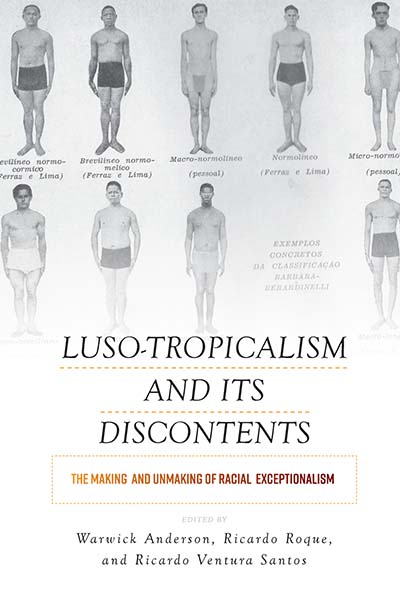
  • Luso-Tropicalism and Its Discontents: The Making and Unmaking of Racial Exceptionalism

    Berghahn Books
    April 2019
    346 pages
    15 illus., bibliog., index
    Hardback ISBN: 978-1-78920-113-0
    eBook ISBN: 978-1-78920-114-7

    Edited by:

    Warwick Anderson, Janet Dora Hine Professor of Politics, Governance and Ethics
    Department of History; Charles Perkins Centre
    University of Sydney

    Ricardo Roque, Research Fellow at the Institute of Social Sciences
    University of Lisbon

    Ricardo Ventura Santos, Senior Researcher at Fundação Oswaldo Cruz; Professor
    Department of Anthropology
    National Museum, Rio de Janeiro, Brazil

    Luso-Tropicalism and Its Discontents: The Making and Unmaking of Racial Exceptionalism

    Modern perceptions of race across much of the Global South are indebted to the Brazilian social scientist Gilberto Freyre, who in works such as The Masters and the Slaves claimed that Portuguese colonialism produced exceptionally benign and tolerant race relations. This volume radically reinterprets Freyre’s Luso-tropicalist arguments and critically engages with the historical complexity of racial concepts and practices in the Portuguese-speaking world. Encompassing Brazil as well as Portuguese-speaking societies in Africa, Asia, and even Portugal itself, it places an interdisciplinary group of scholars in conversation to challenge the conventional understanding of twentieth-century racialization, proffering new insights into such controversial topics as human plasticity, racial amalgamation, and the tropes and proxies of whiteness.

    Contents

    • List of Illustrations
    • Acknowledgments
    • Introduction: Luso-tropicalism and Its Discontents / Warwick Anderson, Ricardo Roque and Ricardo Ventura Santos
    • PART I: PICTURING AND READING FREYRE
      • Chapter 1. Gilberto Freyre’s view of miscegenation and its circulation in the Portuguese Empire (1930s-1960s) / Cláudia Castelo
      • Chapter 2. Gilberto Freyre: Racial Populism and Ethnic Nationalism / Jerry Dávila
      • Chapter 3. Anthropology and Pan-Africanism at the Margins of the Portuguese Empire: Trajectories of Kamba Simango / Lorenzo Macagno
    • PART II: IMAGINING A MIXED-RACE NATION
      • Chapter 4. Eugenics, Genetics and Anthropology in Brazil: The Masters and the Slaves, Racial Miscegenation and its Discontents / Robert Wegner and Vanderlei Sebastião de Souza
      • Chapter 5. Gilberto Freyre and the UNESCO Research Project on Race Relations in Brazil / Marcos Chor Maio
      • Chapter 6. An Immense Mosaic”: Race-Mixing and the Creation of the Genetic Nation in 1960s Brazil / Rosanna Dent and Ricardo Ventura Santos
    • PART III: THE COLONIAL SCIENCES OF RACE
      • Chapter 7. The Racial Science of Patriotic Primitives: Mendes Correia in ‘Portuguese Timor’ / Ricardo Roque
      • Chapter 8. Re-Assessing Portuguese Exceptionalism: Racial Concepts and Colonial Policies toward the Bushmen in Southern Angola, 1880s-1970s / Samuël Coghe
      • Chapter 9. “Anthropo-Biology”, Racial Miscegenation and Body Normality: Comparing Bio-Typological Studies in Brazil and Portugal, 1930-1940 / Ana Carolina Vimieiro Gomes
    • PART IV: PORTUGUESENESS IN THE TROPICS
      • Chapter 10. Luso-Tropicalism Debunked, Again: Race, Racism, and Racialism in Three Portuguese-Speaking Societies / Cristiana Bastos
      • Chapter 11. Being (Goan) Modern in Zanzibar: Mobility, Relationality and the Stitching of Race / Pamila Gupta
    • Afterword I / Nélia Dias
    • Afterword II / Peter Wade
  • Race After Technology: Abolitionist Tools for the New Jim Code

    Polity
    May 2019
    172 pages
    138 x 216 mm / 5 x 9 in
    Hardback ISBN: 9781509526390
    Paperback ISBN: 9781509526406
    Open eBook ISBN: 9781509526437

    Ruha Benjamin, Associate Professor of African American Studies
    Princeton University

    From everyday apps to complex algorithms, Ruha Benjamin cuts through tech-industry hype to understand how emerging technologies can reinforce white supremacy and deepen social inequity.

    Far from a sinister story of racist programmers scheming on the dark web, Benjamin argues that automation has the potential to hide, speed, and even deepen discrimination, while appearing neutral and even benevolent when compared to racism of a previous era. Presenting the concept of the “New Jim Code,” she shows how a range of discriminatory designs encode inequity: by explicitly amplifying racial hierarchies, by ignoring but thereby replicating social divisions, or by aiming to fix racial bias but ultimately doing quite the opposite. Moreover, she makes a compelling case for race itself as a kind of tool – a technology designed to stratify and sanctify social injustice that is part of the architecture of everyday life.

    This illuminating guide into the world of biased bots, altruistic algorithms, and their many entanglements provides conceptual tools to decode tech promises with sociologically informed skepticism. In doing so, it challenges us to question not only the technologies we are sold, but also the ones we manufacture ourselves.

  • Bodies complexioned: Human variation and racism in early modern English culture, c. 1600–1750

    Manchester University Press
    May 2019
    304 pages
    Hardback ISBN: 978-1-5261-3448-6
    eBook ISBN: 978-1-5261-3450-9

    Mark S. Dawson, Lecturer in Early Modern History
    Australian National University, Canberra

    Bodies complexioned

    • Challenges received wisdom regarding early modern conceptions of human physiology and their implications for social stratification
    • Demonstrates how assumptions concerning the causes of bodily diversity influenced English perceptions of non-Anglophone peoples
    • Uses diverse sources, both manuscript (letters, journals, commonplace books) and print (almanacs, newspapers, playbooks, sermons)
    • Makes a significant contribution to the history of embodiment and social inequality

    Bodily contrasts – from the colour of hair, eyes and skin to the shape of faces and skeletons – allowed the English of the seventeenth and early eighteenth centuries to discriminate systematically among themselves and against non-Anglophone groups. Making use of an array of sources, this book examines how early modern English people understood bodily difference. It demonstrates that individuals’ distinctive features were considered innate, even as discrete populations were believed to have characteristics in common, and challenges the idea that the humoral theory of bodily composition was incompatible with visceral inequality or racism. While ‘race’ had not assumed its modern valence, and ‘racial’ ideologies were still to come, such typecasting nonetheless had mundane, lasting consequences. Grounded in humoral physiology, and Christian universalism notwithstanding, bodily prejudices inflected social stratification, domestic politics, sectarian division and international relations.

    Contents

    • Introduction
    • 1 Contemplating Christian temperaments
    • 2 Nativities established
    • 3 Bodies emblazoned
    • 4 Identifying the differently humoured
    • 5 Distempered skin and the English abroad
    • 6 National identities, foreign physiognomies, and the advent of whiteness
    • Conclusion
    • Index
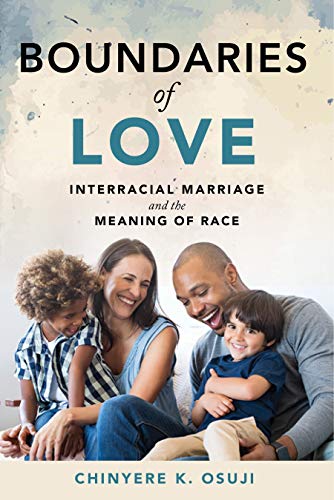
  • Boundaries of Love: Interracial Marriage and the Meaning of Race

    New York University Press
    May 2019
    320 pages
    16 black and white illustrations
    152.40 x 228.60 mm
    Cloth ISBN: 9781479878611
    Paper ISBN: 9781479831456

    Chinyere K. Osuji, Assistant Professor of Sociology
    Rutgers, The State University of New Jersey, Camden

    How interracial couples in Brazil and the US navigate racial boundaries

    How do people understand and navigate being married to a person of a different race? Based on individual interviews with forty-seven black-white couples in two large, multicultural cities—Los Angeles and Rio de JaneiroBoundaries of Love explores how partners in these relationships ultimately reproduce, negotiate, and challenge the “us” versus “them” mentality of ethno-racial boundaries.

    By centering marriage, Chinyere Osuji reveals the family as a primary site for understanding the social construction of race. She challenges the naive but widespread belief that interracial couples and their children provide an antidote to racism in the twenty-first century, instead highlighting the complexities and contradictions of these relationships. Featuring black husbands with white wives as well as black wives with white husbands, Boundaries of Love sheds light on the role of gender in navigating life married to a person of a different color.

    Osuji compares black-white couples in Brazil and the United States, the two most populous post–slavery societies in the Western hemisphere. These settings, she argues, reveal the impact of contemporary race mixture on racial hierarchies and racial ideologies, both old and new.